KISS OF PEACE
A.k.a.: Kiss of love (agape), Holy kiss, pax, oscul…
Romans 16:16 (NKJV):
Greet one another with a holy kiss.
1 Corinthians 16:20:
Greet one another with a holy kiss.
2 Corinthians 13:12:
Greet one another with a holy kiss.
1 Thessalonians 5:26:
Greet all the brethren with a holy kiss.
1 Peter 5:14:
Greet one another with a kiss of love (agape).
Webster’s New International Dictionary of the English Language, 1933, p. 41, “agape”:
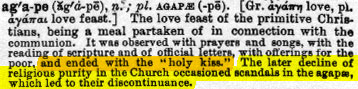
P. 1190, “kiss | kiss of peace”:
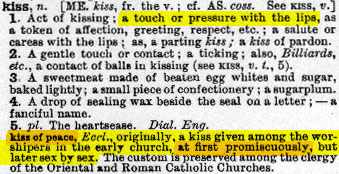
Webster’s Third New International Dictionary of the English Language (Unabridged), 1986, p. 1246, “kiss of peace”:

I detect a little change there (from 1933 to 1986).
… p. 1082, “holy kiss”:

Pp. 1658-1659, “pax”:
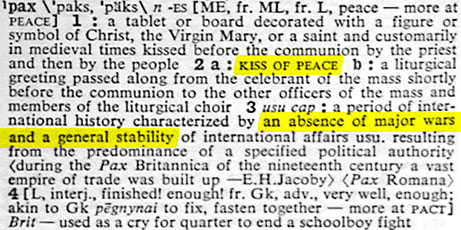
I guess if one would kiss those they are about to kill, there may be an emotion to not want to kill them. Christ is smart.
The New International Dictionary of New Testament Theology, Brown, Zondervan Publishing, 1976, vol. 2, p. 547, “Love | αγαπάω”:

“No details of this rite are known” except for all the many sex orgy accusations.
The Random House Dictionary of the English Language (Unabridged), 1987, p. 1060, “kiss of peace”:
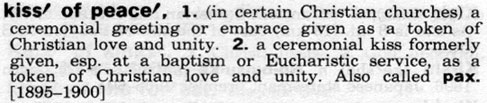
Webster’s Universal Dictionary of the English Language (unabridged), 1909, p. 924, “kiss | Kiss of peace”:

Encyclopædia of Religion and Ethics, Hastings, 1908-1927, vol. ?, p. 765, “WORSHIP (Christian)”:

http://www.wishop.com/philosophy/BibleInfo/persecution_of_christians.htm, Persecution of Christians, “Secrecy”:
Christians being accused of getting up to abominable things in their secret meetings. The accusations of lewd and immoral behavior are too widespread to dismiss, but are falsehoods, Christians say, perpetrated by their enemies, the Jews, or attributed to the misunderstanding of Christian acts of piety such as the "kiss of peace" instituted by Paul. And what are we to conclude when a prominent spokesman for the church, Clement of Alexandria, complained that some Christians "do nothing but make the church resound with their kisses."
http://www.1911encyclopedia.org/Salutations, 1911 Edition of the Encyclopaedia Britannica, “SALUTATIONS”:
On the other hand the kiss, the salute by tasting, appears constantly in Semitic and Aryan antiquity, as in the above cases from the book of Genesis and the Odyssey, or in Herodotus's description of the Persians of his time kissing one another - if equals on the mouth, if one was somewhat inferior on the cheek (Herod. i. 334). In Greece in the classic period it became customary to kiss the hand, breast or knee of a superior. In Rome the kisses of inferiors became a burdensome civility (Martial xii. 59). The early Christians made it the sign of fellowship: "greet all the brethren with an holy kiss" (1 Thess. v. 26; cf. Rom. xvi. 16, &c.). It early passed into more ceremonial form in the kiss of peace given to the newly baptized and in the celebration of the Eucharist; 3 this is retained by the Oriental Church. After a time, however, its indiscriminate use between the sexes gave rise to scandals, and it was restricted by ecclesiastical regulations - men being only allowed to kiss men, and women women, and eventually in the Roman Church the ceremonial kiss at the communion being only exchanged by the ministers, but a relic or cross called an osculatorium or pax being carried to the people to be kissed.
It just doesn’t make sense that Peter and Paul would order something that really, really pushes sexual desire, just so one can be condemned forever. Peter and Paul more told to do this Kiss whenever a Christian encountered another Christian, so there would be a sexual touch every time a Christian passed. Specifically the word “greet”: “To salute or welcome in a friendly and respectful way with speech or writing, as upon meeting or in opening a letter. To receive with a specified reaction.” It’s Strong Greek # 782: “To enfold in the arms,” “to salute,” “to welcome,” “to embrace, greet, salute.” It’s a way you identified yourself as a Christian.
A Dictionary of Euphemisms, Holder, 1995, p. 210, “kiss”:
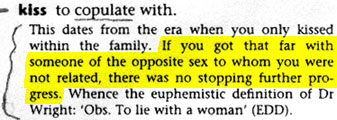
Westminster Dictionary of Theological Terms, McKim, p. 154, “kiss of peace (pax)”:

“Early Christians” means it’s something not acceptable to today’s Christians. It should be pretty easy to figure.
http://history.hanover.edu/texts/voltaire/volkiss.html, The Philosophical Dictionary: Voltaire, Selected and Translated by H.I. Woolf, New York: Knopf, 1924, “Kissing”:
The early Christians, men and women, kissed each other on the mouth at their agapae. This word signified " lovefeast." They gave each other the holy kiss, the kiss of peace, the kiss of brother and sister. This custom lasted for more than four centuries, and was abolished at last on account of its consequences. It was these kisses of peace, these agapae of love, these names of " brother " and '' sister," that long drew to the little-known Christians, those imputations of debauchery with which the priests of Jupiter and the priestesses of Vesta charged them. You see in Petronius, and in other profane authors, that the libertines called themselves " brother " and " sister." It was thought that among the Christians the same names signified the same infamies. They were innocent accomplices in spreading these accusations over the Roman empire.
There were in the beginning seventeen different Christian societies, just as there were nine among the Jews, including the two kinds of Samaritans. The societies which flattered themselves at being the most orthodox accused the others of the most inconceivable obscenities. The term of " gnostic," which was at first so honourable, signifying "learned," " enlightened," " pure," became a term of horror and scorn, a reproach of heresy. Saint Epiphanius, in the third century, claimed that they used first to tickle each other, the men and the women; that then they gave each other very immodest kisses, and that they judged the degree of their faith by the voluptuousness of these kisses; that the husband said to his wife, in presenting a young initiate to her: " Have an agape with my brother," and that they had an agapa.
…
If it is disagreeable for a young and pretty mouth to stick itself out of courtesy to an old and ugly mouth, there was a great danger between fresh, red mouths of twenty to twenty-five years old; and that is what finally brought about the abolition of the ceremony of kissing in the mysteries and the agapae.
That’s where my teaching to desire diversity in appearance comes in. Otherwise, yes, people will be appalled by the teachings of the New Testament.
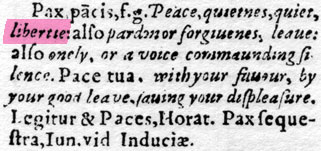
Dictionarium Linguae Latinae et Anglicanae (Dictionary Language Latin and English), Thomas, 1587, no page numbers, “Pax”:
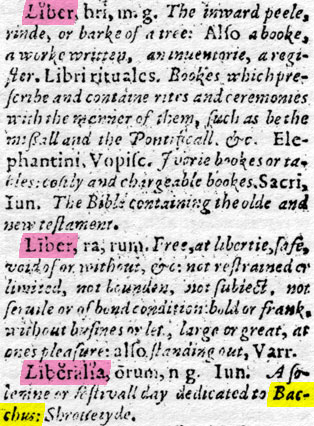
“Liber-“:
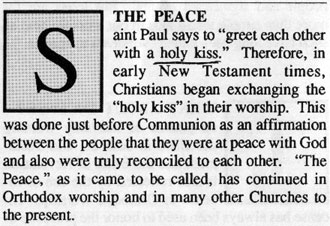
http://www.goarch.org/en/ourfaith/articles/article8049.asp (Greek Orthodox Archdiocese of America), A Dictionary of Orthodox Terminology - Part 1, Fotios K. Litsas, Ph.D., “Agape”:
The faithful express their brotherly love and exchange the kiss of love honoring the resurrected Christ.
Welcome! (brochure), obtained 12-9-98 at St. Dionysios Church (Greek Othodox), 8100 W. 95th St., Overland Park, KS:
The Oxford English Dictionary, 1989:
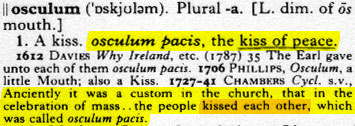
The Oxford English Dictionary: Supplement and Bibliography, 1933, p. 341:

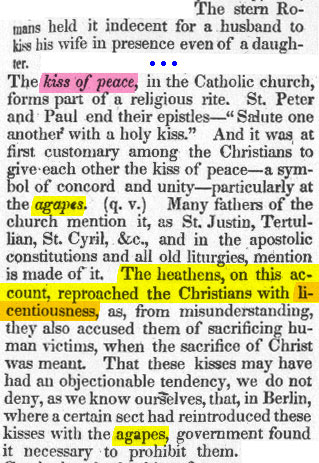
Encyclopaedia Americana, Vol. VII, 1831, pp. 333-334, “Kiss”:
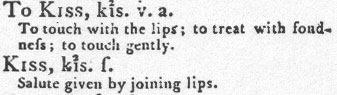
A Critical Pronouncing Dictionary and Expositor of the English Language, John Walker, 1791:
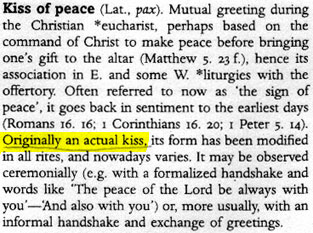
The Oxford Dictionary of World Religions, Bowker, 1997, p. 550, “Kiss of peace”:
Encarta World English Dictionary, 1999, p. 1325, “pax”:
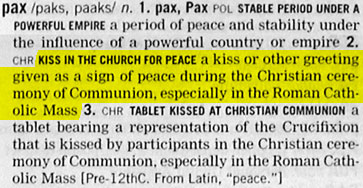
P. 994, “kiss of peace”:

http://www.newadvent.org/cathen/11594b.htm (Catholic Encyclopedia), Pax:
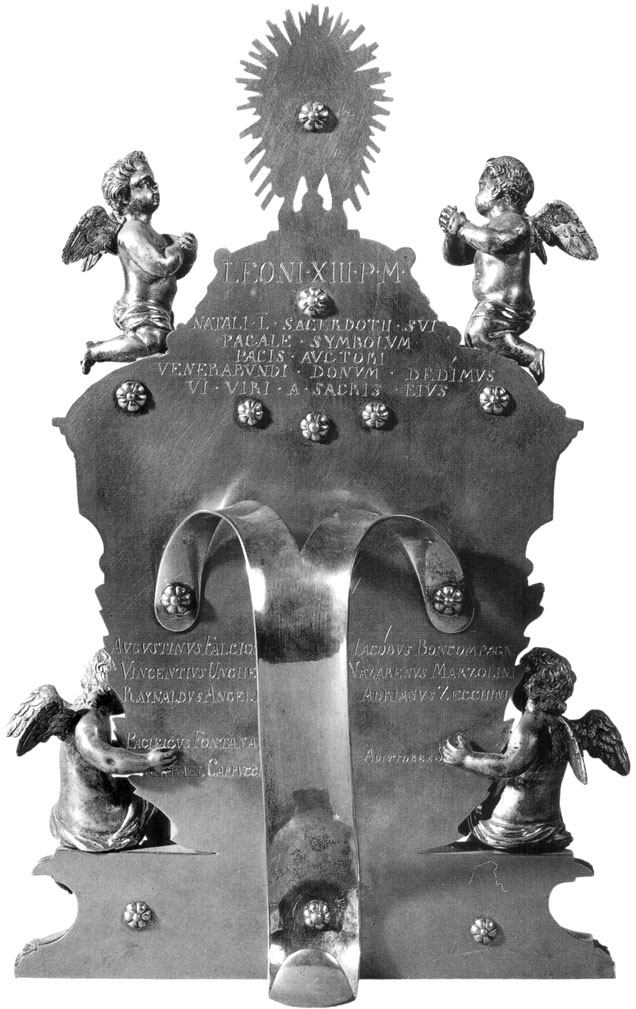
The primitive usage in the Church was for the "holy kiss" to be given promiscuously. Later (Const. Apostol., VIII, xxix) men of the laity saluted men with the kiss, while women kissed women. This latter manner of giving the peace among the laity seems to have been maintained till the thirteenth century, when a substitute for the actual kiss was introduced in the shape of a small wooden tablet, or plate of metal (osculatorium, deosculatorium, asser ad pacem etc.) bearing an image of the Blessed Virgin, of the titular of the church, or other saint, or more frequently of the crucifixion.
It makes sense that the “holy kiss” was sexual if it was given promiscuously. There’s a belief that the early Church knew more about what Christ wanted than the “later” church; which, emanated to today’s practice of (basically) no kiss at all, overruling the New Testament.
http://www.ourcivilisation.com/smartboard/shop/taylorgr/sxnhst/chap13.htm, Sex In History (1954), by Gordon Rattray Taylor: 13. From Shame To Guilt:
Then the kiss of peace was modified by ordering that instead of kissing each other, the brethren should only kiss the priest; later this was modified to saying that the brethren should kiss a piece of wood which was passed round and was handed to the priest. Finally, the kiss of peace was abolished altogether.
A Middle-English Dictionary (12th-15th century), Stratmann / Bradley, Oxford, 1891, p. 470:
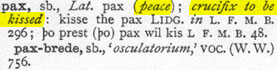
I am having difficulty understanding how kissing a crucifix can bring “peace” between people, but I can see how unbiased sexual kissing between people can bring peace, especially to those in current conflict; because, a lot of conflicts in marriages are resolved by sex.
http://www.agapetae.org/kiss.html, Kiss of Peace:
The history of the Kiss of Peace within the Church is indicative of the paradigm shift from celibate intimacy that finally saw the restriction and subsequent forbidding by the Church of the Love Feast. … The primitive usage in the Church was for the "holy kiss" to be given freely between the sexes. Later (Const. Apostol., VIII, xxix) men of the laity saluted men with the kiss, while women kissed women. This latter manner of giving the peace among the laity seems to have been maintained till the thirteenth century, when a substitute for the actual kiss was introduced in the shape of a small wooden tablet, or plate of metal. … The Kiss of Peace, referred to in scripture was a key element of the life and love of the early church, and was one of the central modes of the physical communication of 'agape' by Christians. … The kiss was freely given between all members of the church, both male and female, it was given on the lips, and was described as mystical, a uniting together and a merging of souls.
http://members.ozemail.com.au/~moorea/kiss.html, The Kiss of Peace: Osculum Pacis:
(Same as above, plus:) Then the Deacon cries aloud, "Receive ye one another; and let us kiss one another." –St Cyril of Jerusalem (315 -386 AD) (Cyril of Jerusalem Lecture 23 to the newly baptized) … But there are those, that do nothing but make the churches resound with a kiss, not having love itself within. –Clement of Alexandria (150 - 220 AD) (Clement of Alexandria Paedagog lib iii cii)) “Not having love itself within” sounds to me like some “looks discrimination” problems. … Martyrs also considered the kiss important: … they first kissed one another, that they might consummate their martyrdom with the kiss of peace. … Abundantly blessed are they who, from your number, passing through these footprints of glory, have already departed from the world; and, having finished their journey of virtue and faith, have attained to the embrace and the kiss of the Lord, to the joy of the Lord Himself. … It is worthwhile noting a snapshot given by Tertullian, c 200 AD: … For who would suffer his wife, for the sake of visiting the brethren, to go round from street to street to other men's, and indeed to all the poorer, cottages? Who will willingly bear her being taken from his side by nocturnal convocations (nightly gatherings), if need so be? Who, finally, will without anxiety endure her absence all the night long at the paschal solemnities? … Who will suffer her to creep into prison to kiss a martyr's bonds? nay, truly, to meet any one of the brethren to exchange the kiss? … If a pilgrim brother arrive, what hospitality for him in an alien home? No kiddin’.
http://www.ccel.org/ccel/renan/saintpaul.xii.html, The History of the Origins of Christianity. Book III. Saint Paul, “CONTINUATION OF THE SECOND JOURNEY OF PAUL—FIRST EPISTLES—INTERIOR CONDITION OF THE NEW CHURCHES”:
The sacramental words which were connected with the last supper of Jesus were present to all. It was believed that that bread, that wine, that water, were the body and blood of Jesus himself. Those who partook of it were accounted to eat Jesus, were united to him, and bound to him by an ineffable mystery. The prelude to it was the giving of “the holy kiss,” or “kiss of love,” without any of the scruples which came to trouble the innocence of another golden age. Ordinarily the men gave it to one another, and the women gave it amongst themselves. Some Churches, however, pressed the holy liberty to the point of not making any distinction of sexes in the kiss of love. Profane society, little capable of comprehending such purity, made this the occasion of divers calumnies. The chaste Christian kiss awakened the suspicions of the libertines, and soon the Church was constrained to the point of taking severe precautions; but in the beginning it was an essential rite inseparable from the Eucharist, and completing the high signification of the symbol of peace and love. Some abstained from it in youth, and in the time of mourning and of fasting.
http://reluctant-messenger.com/council-of-laodicea.htm, THE COMPLETE CANONS OF THE SYNOD OF LAODICEA IN PHRYGIA PACATIANA (c. 364 AD):
CANON XIX.
AFTER the sermons of the Bishops, the prayer for the catechumens is to be made first by itself; and after the catechumens have gone out, the prayer for those who are under penance; and, after these have passed under the hand [of the Bishop] and departed, there should then be offered the three prayers of the faithful, the first to be said entirely in silence, the second and third aloud, and then the [kiss of] peace is to be given. And, after the presbyters have given the [kiss of] peace to the Bishop, then the laity are to give it [to one another], and so the Holy Oblation is to be completed. And it is lawful to the priesthood alone to go to the Altar and [there] communicate.
The synod of Laodicea is the first one that ordered the beds out of the churchs, and for the agape love-feast to end (canon 28).
http://justus.anglican.org/resources/bcp/everyman_history/Chapt14.htm, Everyman's History of the Prayer Book, by Percy Dearmer, “CHAPTER 14: THE HOLY COMMUNION”:
|
JUSTIN MARTYR, c. 150. |
SYRIAN DOCUMENTS, |
|
II. LITURGY OF THE 2. THE OFFERTORY. |
I. LITURGY OF THE FAITHFUL. 2. THE OFFERTORY.
|
|
Kiss
of Peace
(here or later). |
Kiss
of Peace. |
http://www.bombaxo.com/hippolytus.html, The Apostolic Tradition of Hippolytus of Rome, c. 215:
18 When the teacher
finishes his instruction, the catechumens will pray by themselves,
separate from the faithful. 2The women will also pray in
another place in the church, by
themselves, whether faithful women or catechumen women. 3After the catechumens have
finished praying, they do not give the kiss of peace, for their kiss is not yet
pure. 4But the
faithful shall greet one another with a kiss, men with men, and women with
women. Men
must not greet women with a kiss.
5All the women should cover their heads
with a pallium, and not simply with a piece of
linen, which is not a proper veil.
Sounds like they’re changing the orders of Peter and Paul.
Encyclopedia of the Early Church, Oxford, 1992, Vol. 1, p. 467, “Kiss”:
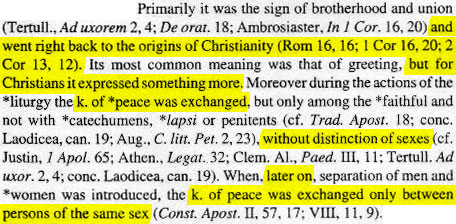
The Oxford Dictionary of the Christian Church, Cross / Livingstone, 1997, p. 1245, “pax brede”:
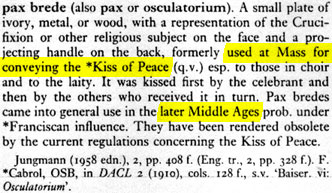
The Oxford English Dictionary, 1933, “Pax”:
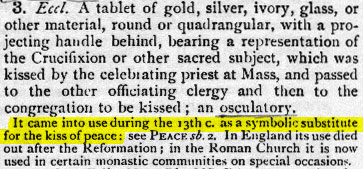
New Catholic Encyclopedia, 1967, vol. ?, p. 207, “KISS, LITURGICAL”:
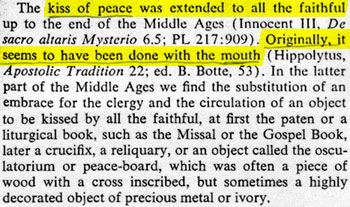
…
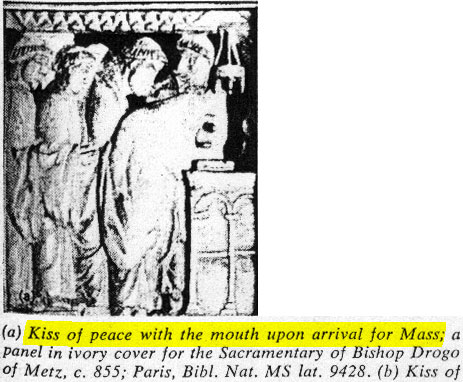
How about a better picture:
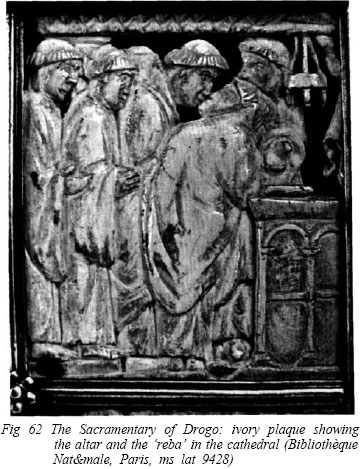
http://etd.library.pitt.edu/ETD/available/etd-04112006-125237/unrestricted/oberm_edtPitt2006.pdf, THE ROLE OF CHRODEGANG OF METZ (712-766) IN THE FORMATION OF WESTERN PLAINCHANT, p. 28 (pdf), “Figure 1. Back cover of Drogo’s Sacramentary (c.825)”:
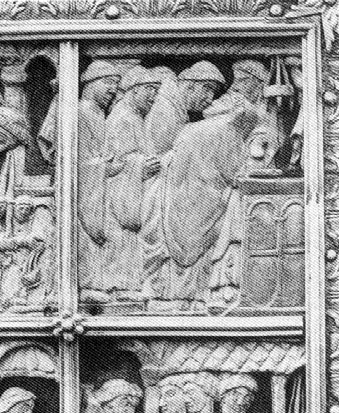
http://ads.ahds.ac.uk/catalogue/adsdata/cbaresrep/pdf/060/06007001.pdf, The iconography of architectural form:
Early Christian Art: AD 200-395: From the Rise of Christianity to the Death of Theodosius, André Grabar, 1968, p. 255, “3. The Art of the Fourth Century | Sarcophagus Reliefs | 283. Italy. Sarcophagus: Christ delivering the Law, with Various Scenes. San Giovanni in Valle, Verona”:
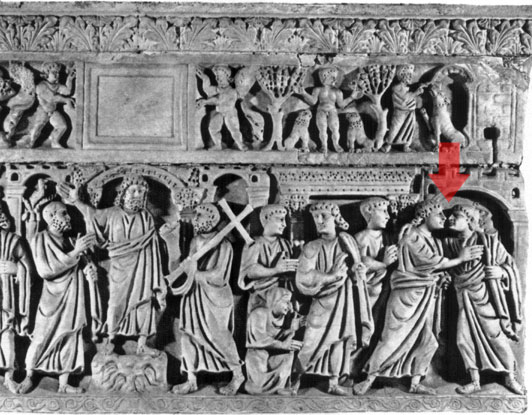
That looks like two guys to me, ready to kiss on the lips.
Another:
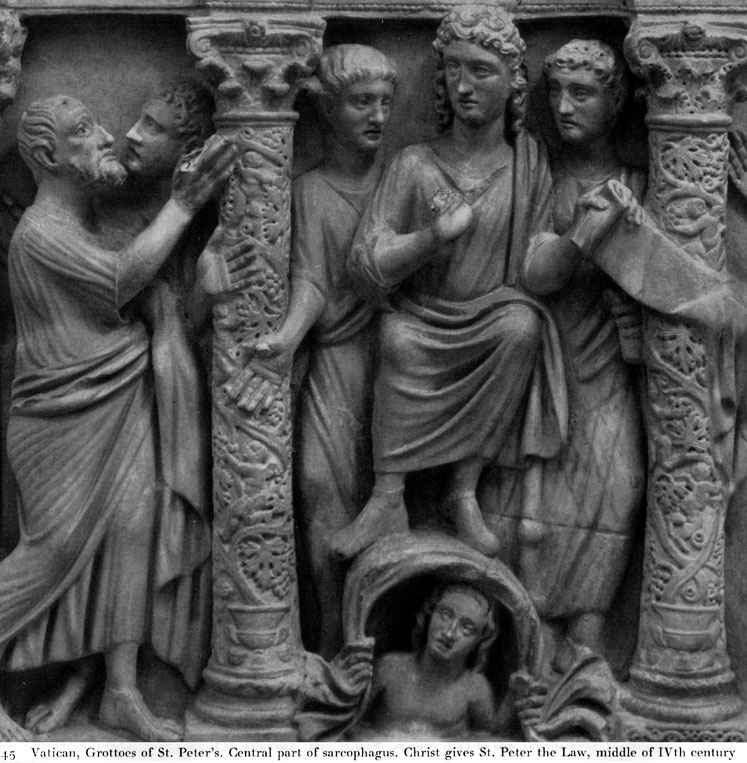
Early Christian Art, W. F. Volbach, 1961, plate 45, “Vatican, Grottoes of St. Peter’s. Central part of sarcophagus. Christ gives St. Peter the Law, middle of IVth century” [Eros & grape vines on columns]:
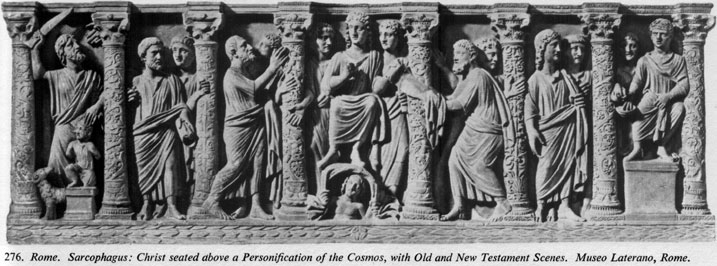
Early Christian Art: AD 200-395: From the Rise of Christianity to the Death of Theodosius, André Grabar, 1968, p. 35, “33. Rome. Sarcophagus, detail: Christ seated above a Personification of the Cosmos. Museo Laterano, Rome”:
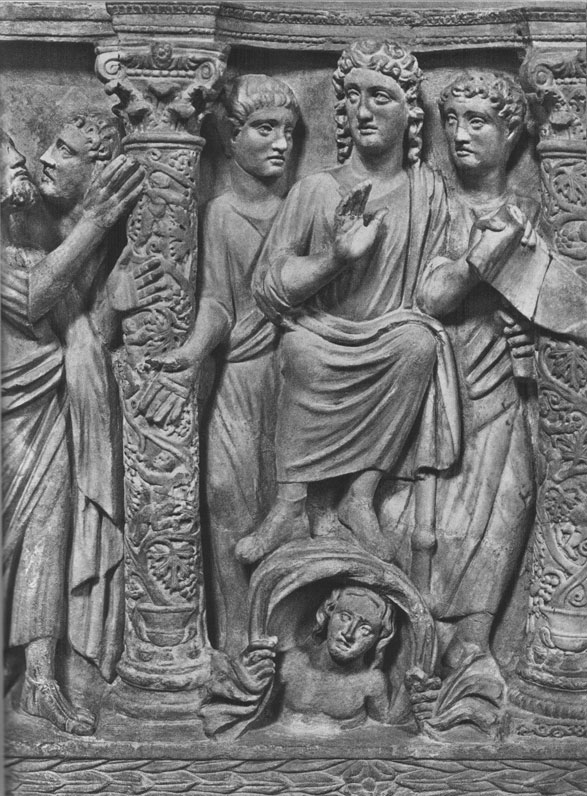
P. 277, “3. The Art of the Fourth Century | Sarcophagus Reliefs | 276. Rome. Sacophagus: Christ seated above a Personification of the Cosmos, with Old and New Testament Scenes”:
I Mosaici Paleocristiani di Santa Maria Maggiore Negli Acquarelli Della Collezione Wilpert, Nestori / Bisconti, Tav. XIII (kiss):
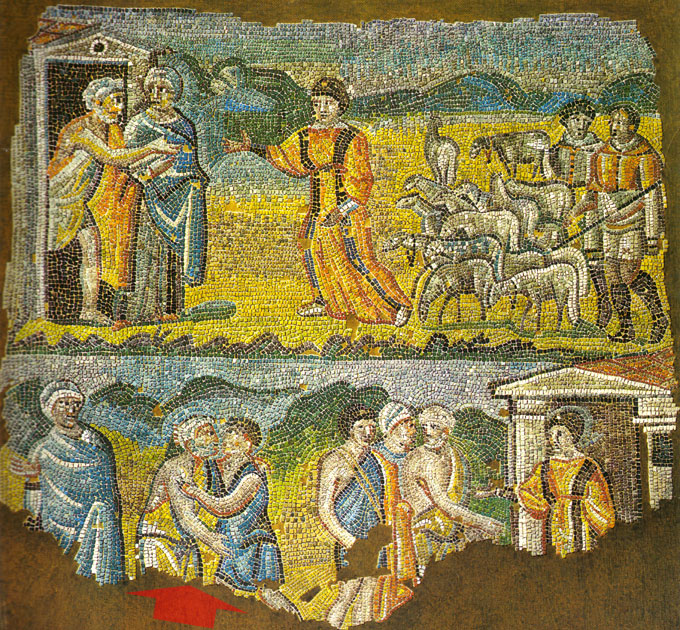
So, the assumption cop-out of the Kiss being only on the cheek is in pictorial error.
An Etymological Dictionary of the English Language, Skeat, 1983, p. 435, “PAX”:

Microsoft Encarta Dictionary (paperback), 2002, p. 651, “pax”:

The New York Times Everyday Reader’s Dictionary of Misunderstood, Misused, and Mispronounced Words, Urdang, 1985, p. 255, “osculate”:
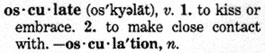
An American Dictionary of the English Language, Noah Webster, 1856, p. 780, “OSCULATORY”:

A Glossary of Liturgical and Ecclesiastical Terms, 1877, pp. 254-255, “OSCULATORIUM”:
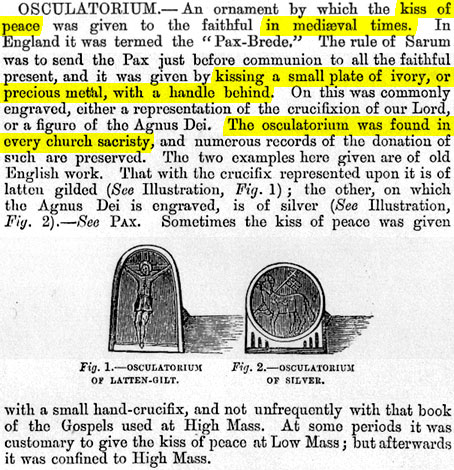
Pp. 278-279, “PAX”:
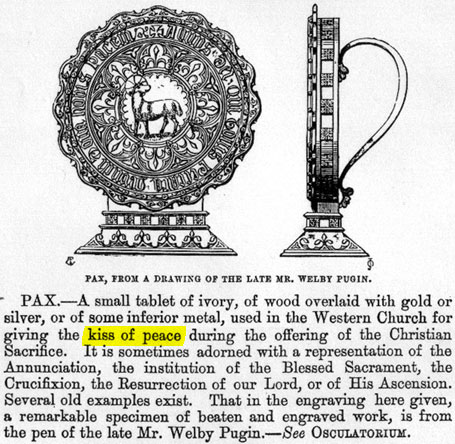
They must have understood the Kiss of Peace as an important instruction to have continued it with an object.
Webster’s Universal Dictionary of the English Language (unabridged), 1909, p. 1199, “pax”:
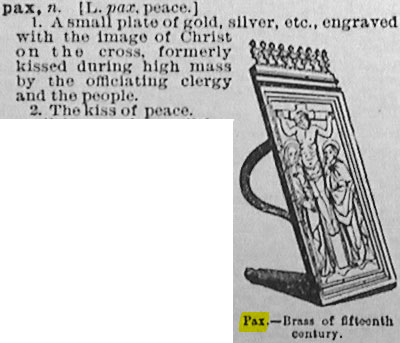
The Century Dictionary and Cyclopedia, 1897, p. 4338:
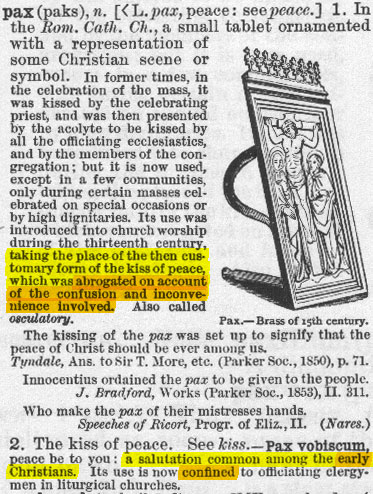
The Century Dictionary and Cyclopedia, 1897, p. 3294:
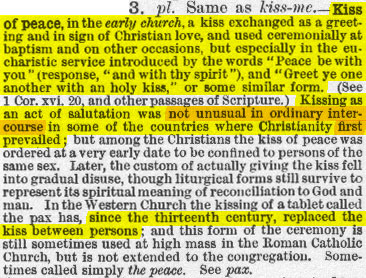
The International Encyclopaedic Dictionary, 1901, p. 3036:
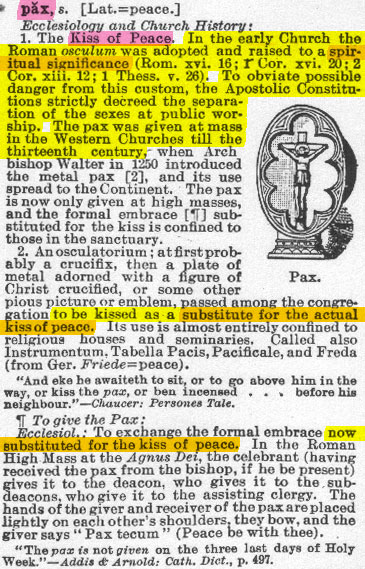
The Invisible Made Visible: Angels from the Vatican, Duston / Nesselrath, 1998, pp. 270-271, catalogue 86, “Angels and the Liturgy | Pax”:
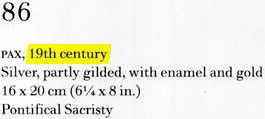
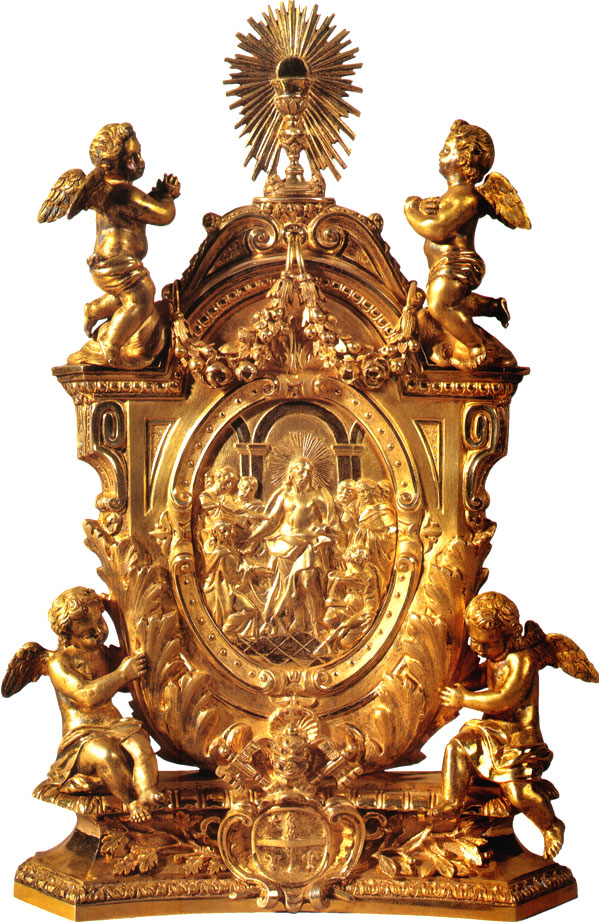
It sure would be nice to find Eros, the god of sexual love, adopted in the Christian pax.
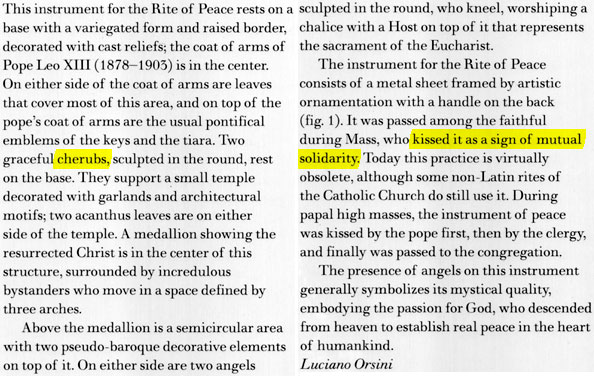
P. 270, catalogue 86, figure 1, “back view”:
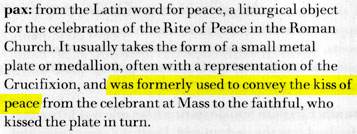
P. 313, “Glossary | pax”:
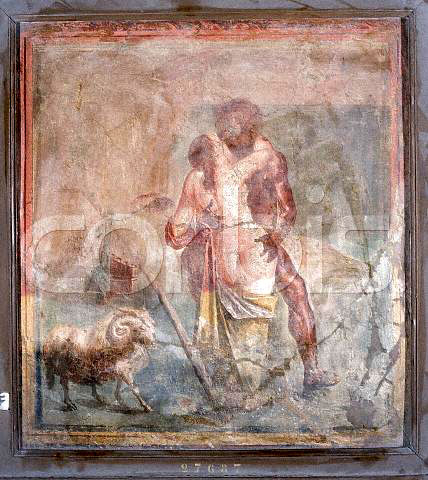
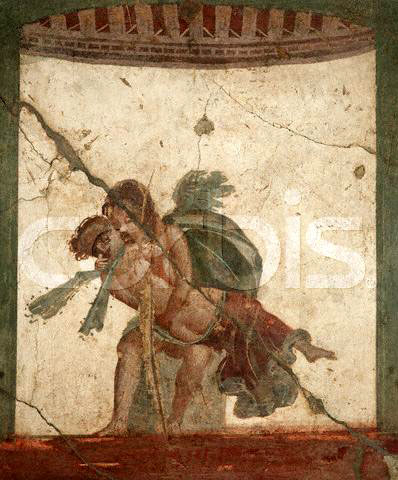
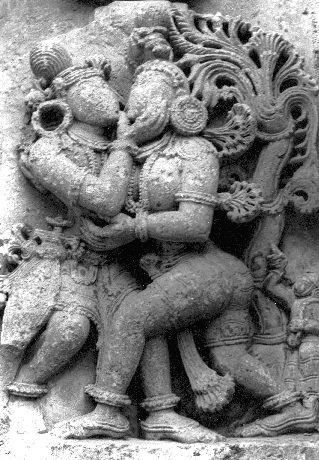
I can see how this kissing stuff relates to sex:
http://www.personal.psu.edu/users/w/x/wxk116/eros/sexart/sex29.html, Erotic Art of Ancient Rome -- The Museum:
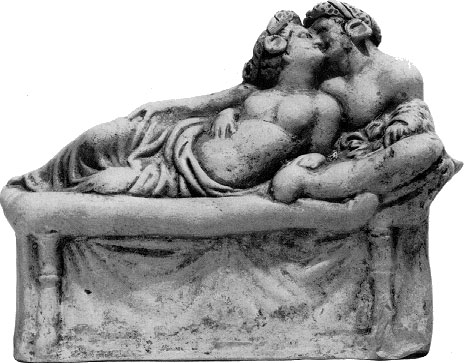
http://www.personal.psu.edu/users/w/x/wxk116/eros/sexart/sex32.html, Erotic Art of Ancient Rome -- The Museum:
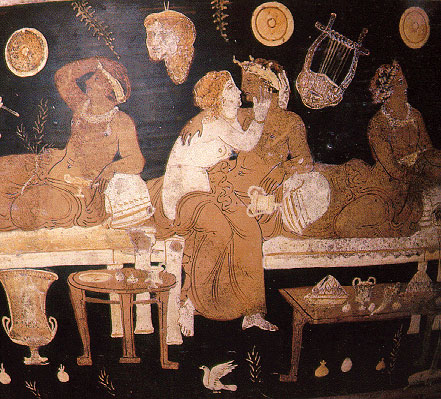
http://pro.corbis.com/, Search # MI001783, Erotic Fresco Painting From Pompeii:
http://pro.corbis.com/, Search # MI001792, Erotic Fresco Painting From Pompeii:
http://www.kamat.com/picoweek/011297.htm, The Kissing Couple, Jain Sculpture from Jinanathapura:
http://www.ancientimage.com/16.htm, The Kiss:
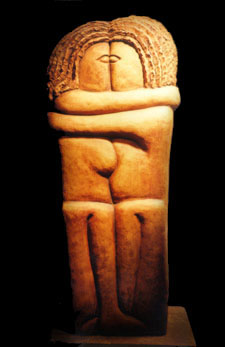
This kissing idea of Peter and Paul sure looks pretty erotic to me.
And, it sure looked like something people did during copulation:
http://www.personal.psu.edu/users/w/x/wxk116/eros/sexart/sex30.html (via http://www.personal.psu.edu/users/w/x/wxk116/eros/), Erotic Art of Ancient Rome -- The Museum:
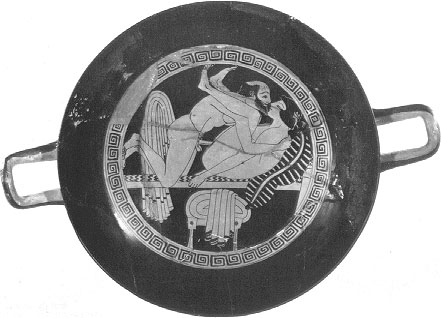
http://www.artshole.co.uk/polliwasowski.htm:
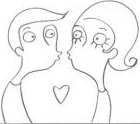
You just don’t do this today if these two were married to someone else, but you did in the early church.