JOHN CHRYSOSTOM
Saint John Chrysostom (347-407 AD), Homilies on the Gospel of St. Matthew (c. 390 AD): Homily 17.2
http://www.catholicprimer.org/chrysostom/matthew/homily017.htm, St. John Chrysostom: Homilies on the Gospel of St. Matthew: Homily XVII., “2.”:
What now can they say, who have those virgin inmates? [748] Why, by the tenor of this law they must be guilty of ten thousand adulteries, daily beholding them with desire. For this cause the blessed Job [749] also laid down this law from the beginning, blocking out from himself on all sides this kind of gazing.
…
[748] t sunokou parthnou, they were often called suneisakto. The practice of unmarried men, especially of the clergy, having single young women in their houses, is a frequent object of warning and censure both in the Homilies of the Fathers and in Church Canons. The earliest mention of such a thing, and of the sad abuse consequent on it, appears to be in St. Irenæus, i. 6, 3: who lays it to the charge of the Valentinian heretics. Tertullian (de Jejun. ad fin.) imputes it to the Catholics. St. Cyprian's fourth Epistle (ed. Fell.) was written to repress and punish an instance of it in the Church of Carthage. It was one of the charges against Paul of Samosata, and was forbidden by the third canon of Nicæa. See Dr. Routh's Reliquiæ Sacræ, 2,506, to which the editor is indebted for this note. The custom seems to have prevailed particularly at Antioch, ib. 482. See also an oration of Chrysostom on this subject, vi. 214.
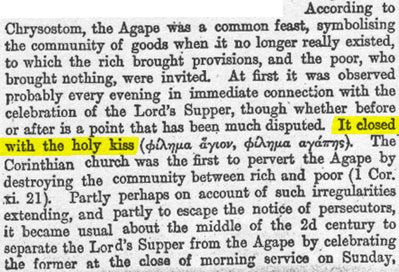
The Encyclopædia Britannica, Vol. 1, 1892, p. 274, “AGAPE”: