EROS in early CHRISTIAN ART: SARCOPHAGI
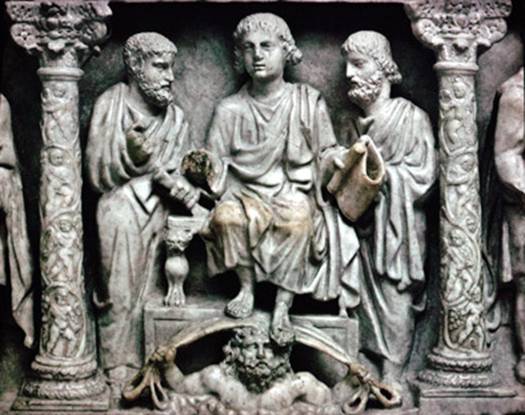
Sarcophagus of Junius Bassus:
http://www.newadvent.org/cathen/03510a.htm (Catholic Encyclopedia), Early Roman Christian Cemeteries, “The Vatican Cemetery”:
The "Grotte Vecchie" and the "Grotte Nuove", or subterraneous chapels and galleries in the vicinity of the tomb of St. Peter, cover the site of this ancient Christian cemetery; in them lie buried also a number of popes; St. Gregory I, Boniface VIII, Nicholas V, Alexander VI. The rich sarcophagus of Junius Bassus, important for early Christian symbolism, is in the "Grotte Nuove"
Early Christian Art, W. F. Volbach, 1961, plate 41, “Vatican, Grottoes of St. Peter’s. Sarcophagus of the Roman Prefect Junius Bassus (d. 359)” [Eros & grape vines on columns]:
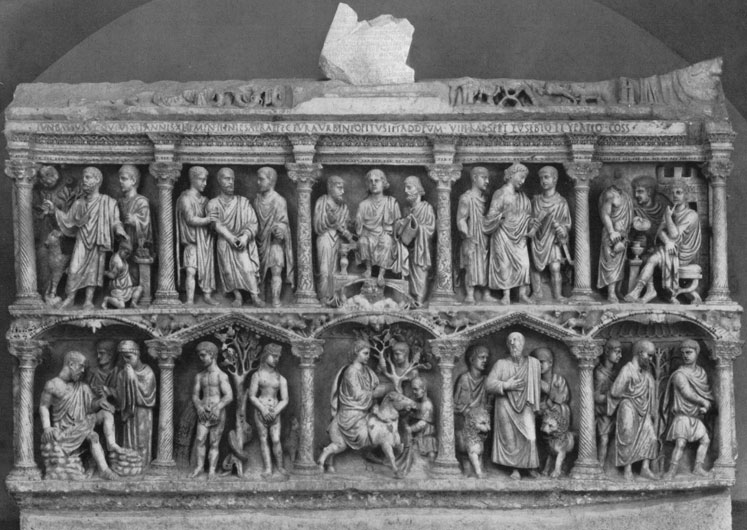
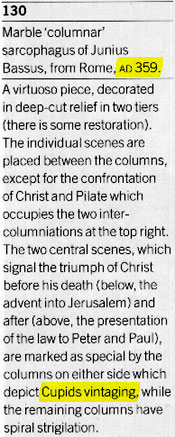
Imperial Rome and Christian Triumph, Elsner, 1998, pp. 194-195, illustration 130, “Marble ‘columnar’ sarcophagus of Junius Bassus, from Rome, AD 359”:
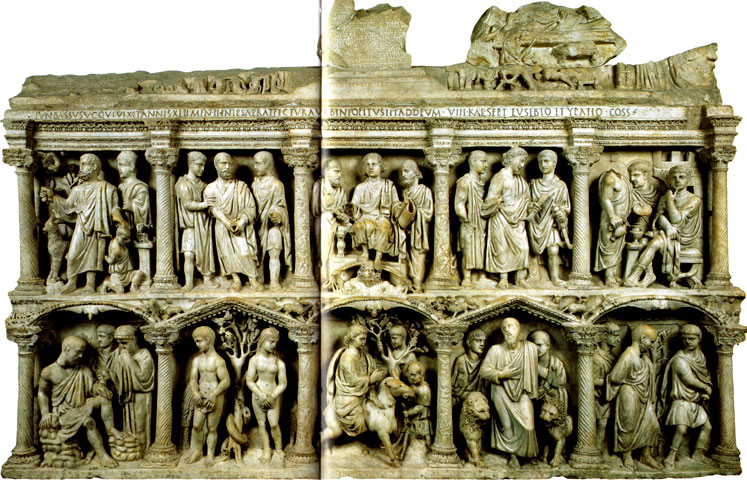
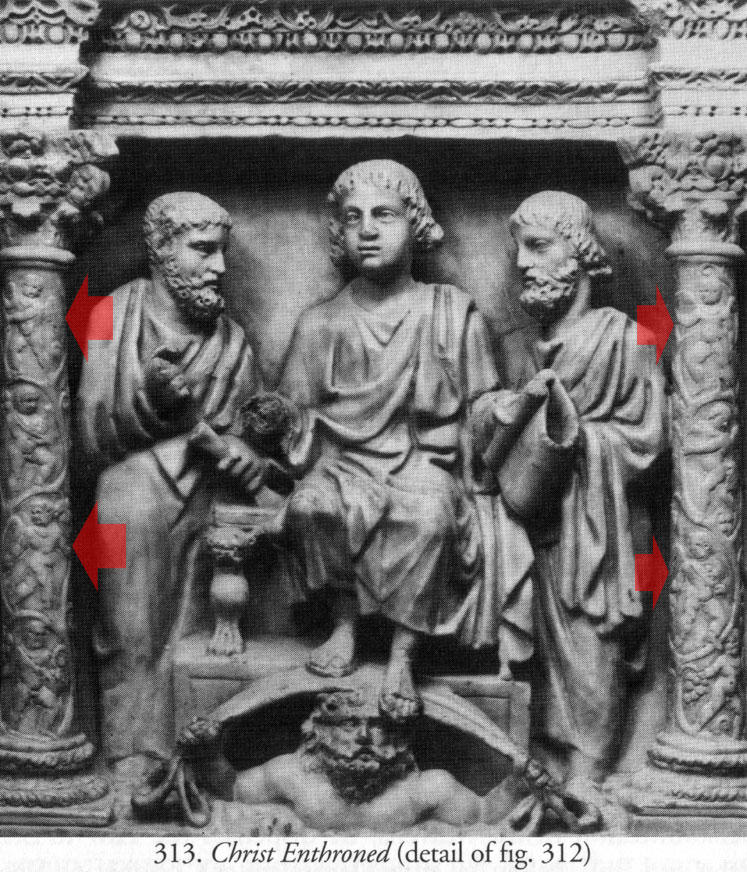
History of Art, Janson, 1997, pp. 243-244, figure 313, “Sarcophagus of Junius Bassus | who died in 359”:
Early Christian Art: AD 200-395: From the Rise of Christianity to the Death of Theodosius, André Grabar, 1968, p. 46, “41. Rome. Sarcophagus of Junius Bassus. Grotte Vaticane, Rome”:
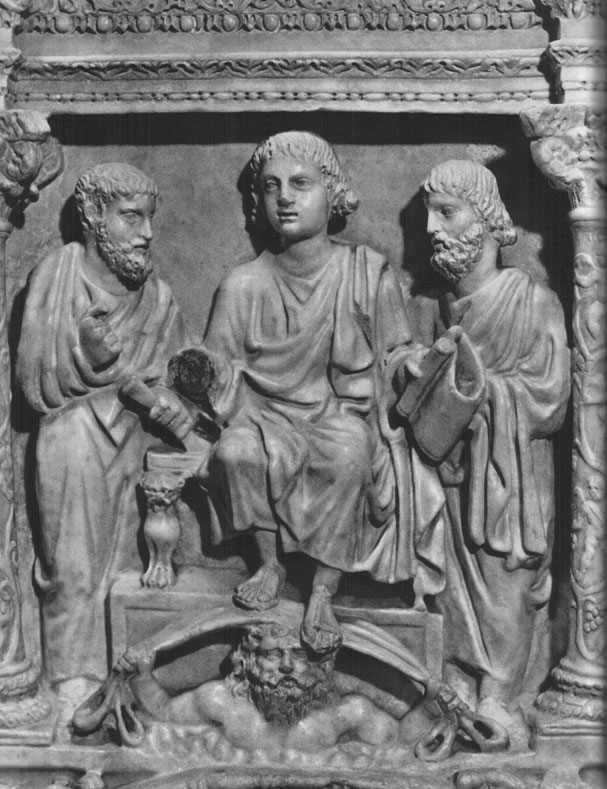
http://vandyck.anu.edu.au/introduction/earlychristian/L22-02b.htm (via http://vandyck.anu.edu.au/introduction/earlychristian/earlychristian.html), Detail: Sarcophagus of Junius Bassus:
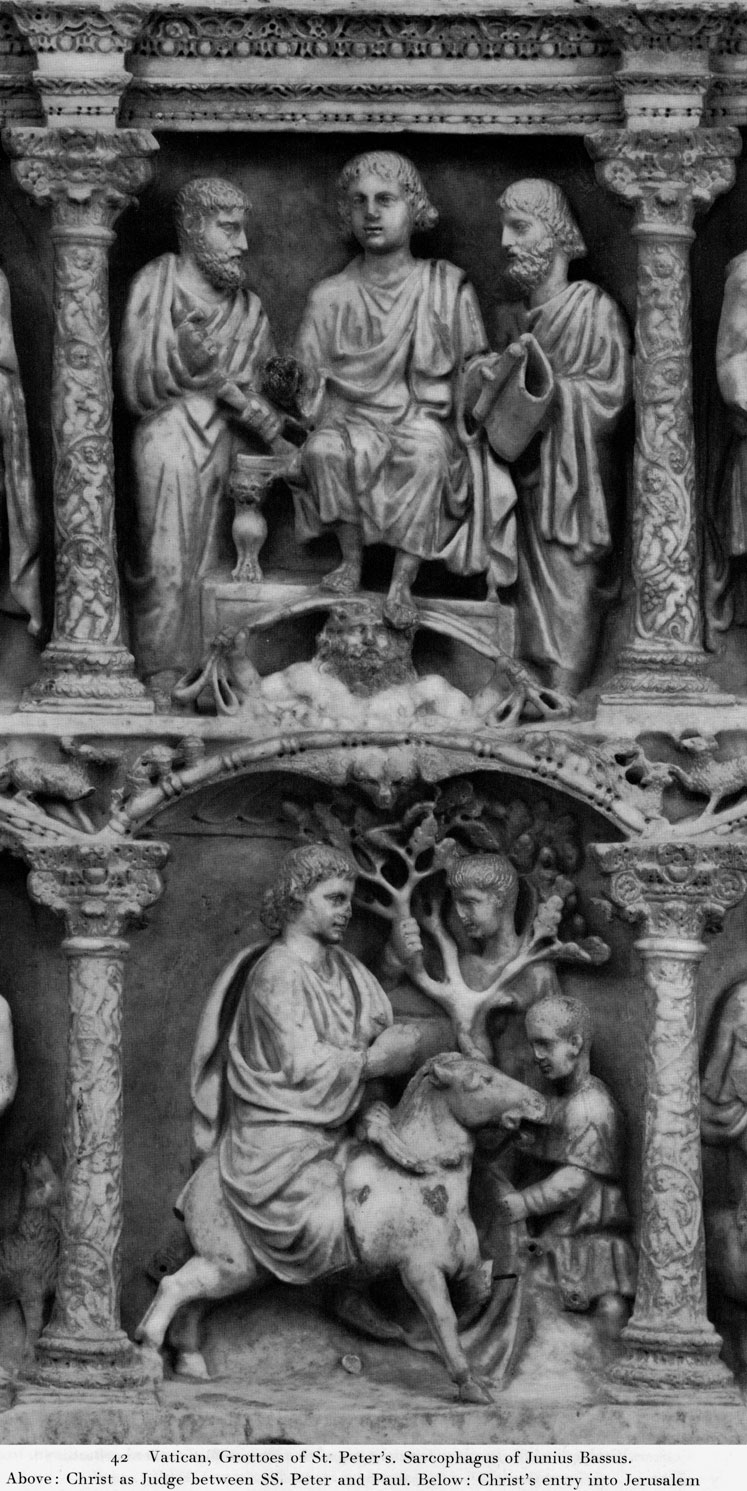
Early Christian Art, W. F. Volbach, 1961, plate 42, “Vatican, Grottoes of St. Peter’s. Sarcophagus of Junius Bassus. Above(below-top): Christ as Judge between SS. Peter and Paul. Below(below-bottom): Christ’s entry into Jerusalem” [Eros & grape vines on columns]:
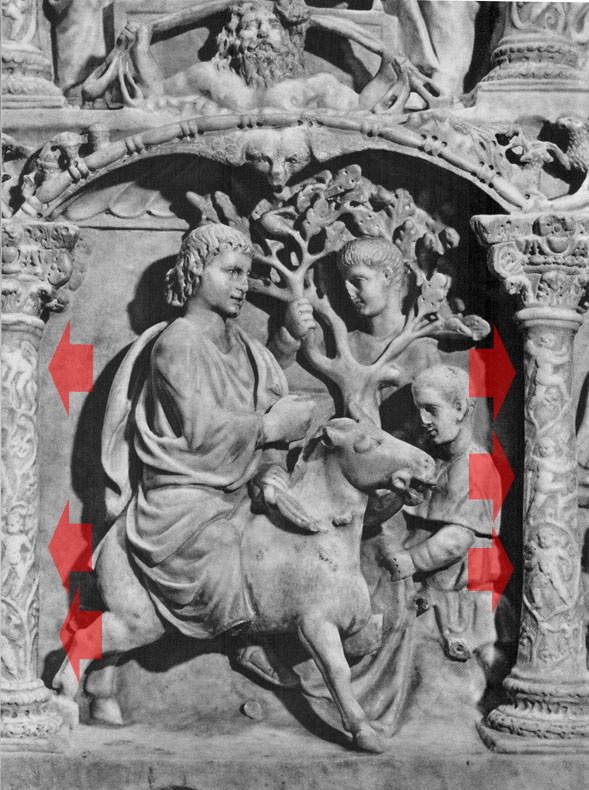
Early Christian Art: AD 200-395: From the Rise of Christianity to the Death of Theodosius, André Grabar, 1968, p. 238, “3. The Art of the Fourth Century | Sarcophagus Reliefs | 264. Sarcophagus of Junius Bassus, detail: Entry of Christ into Jerusalem. Grotte Vaticane, Vatican City”:
Early Christian & Byzantine Art, Lowden, 1997, pp. 50-51, illustration 27, “Art before Iconoclasm | God and Salvation | The Formation of a Christian art | Sarcophagus of Junius Bassus, 359 … (without lid) Treasure of St. Peter’s, Rome”:
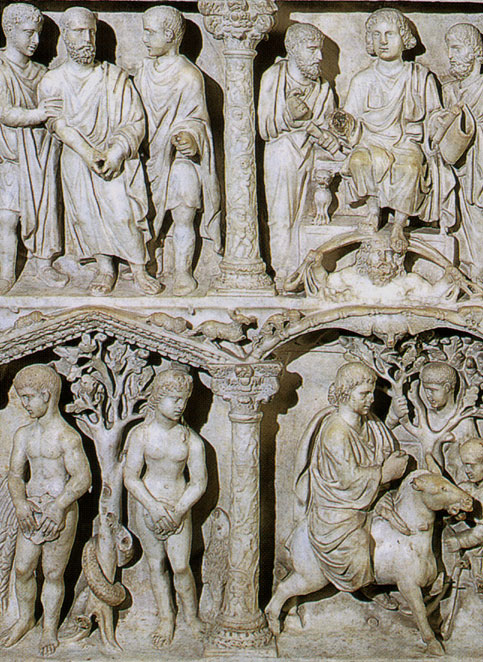
Early Christian Art, W. F. Volbach, 1961, plate 43, “Vatican, Grottoes of St. Peter’s. Sarcophagus of Junius Bassus. Adam and Eve” [Eros & grape vines on column]:
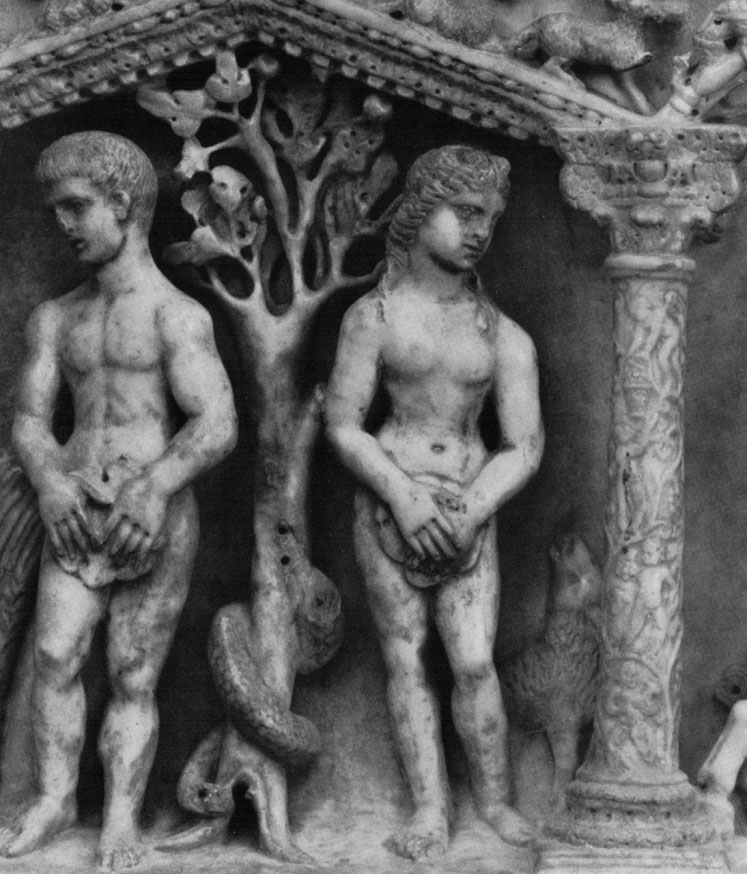
The Decline of Rome, Vogt, 1967 (translated from German), illustration 44, “Pagan into Christian Art”:
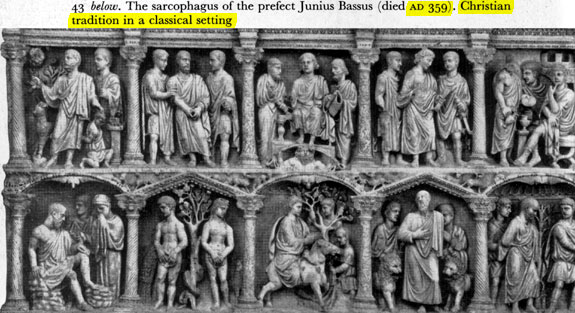
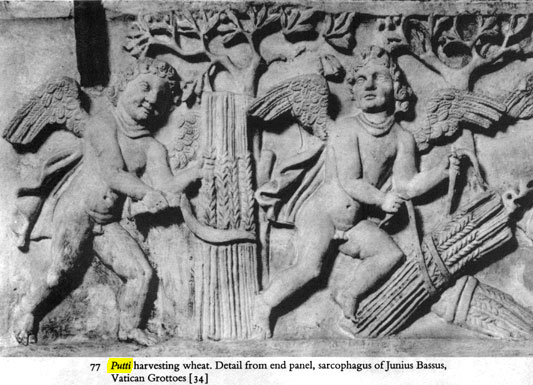
Christian Iconography: A Study of Its Origins, André Grabar, 1968, p. 34:
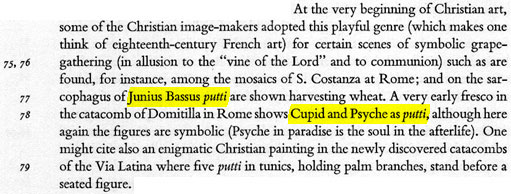
Illustration 77 [Eros with arrows]:
Basilica of Junius Bassus:
The Oxford History of Classical Art, Boardman, 1993, pp. 315-317, “(illustration) 314 (Colour Plate XXI)”:
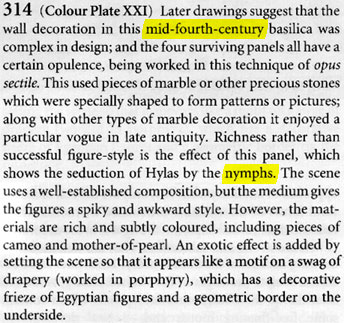
Plate XXI, illustration 314, “Opus sectile panel from Basilica of Junius Bassus: Hylas and the nymphs”:
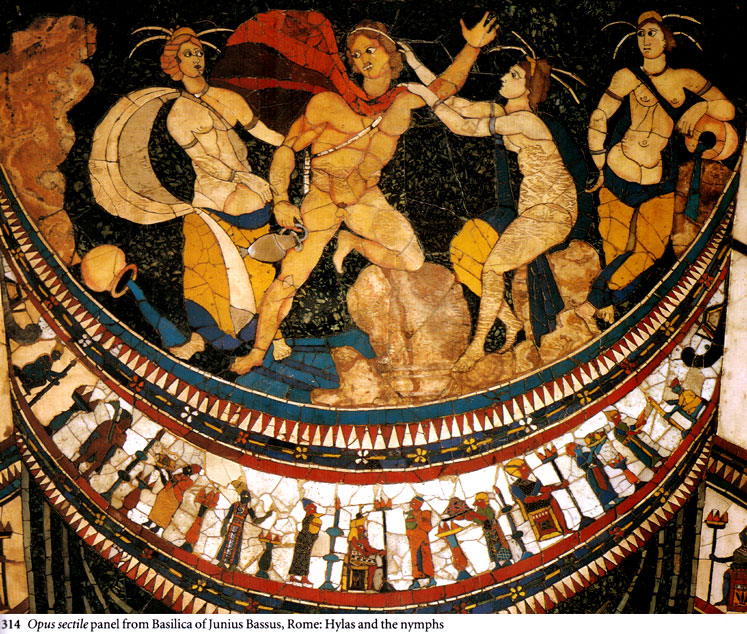
Similar Christian Columnar Sarcophagus:
Same kind of Eros and vines on columns, with two men just about to kiss (c. 350-360 AD):
Early Christian Art: AD 200-395: From the Rise of Christianity to the Death of Theodosius, André Grabar, 1968, p. 277, “3. The Art of the Fourth Century | Sarcophagus Reliefs | 276. Rome. Sacophagus: Christ seated above a Personification of the Cosmos, with Old and New Testament Scenes”:
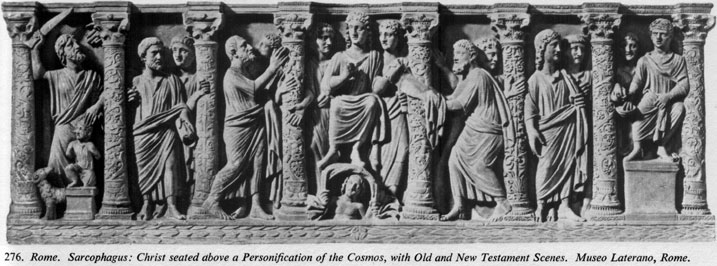
Enlargement:
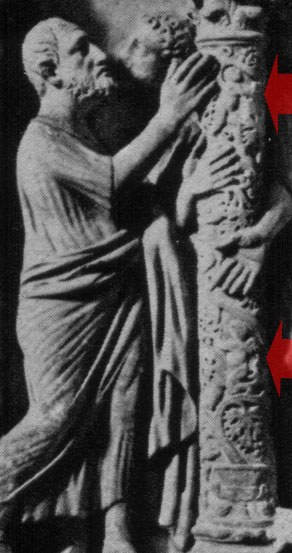
P. 250, “277. Rome. Sarcophagus, detail”:
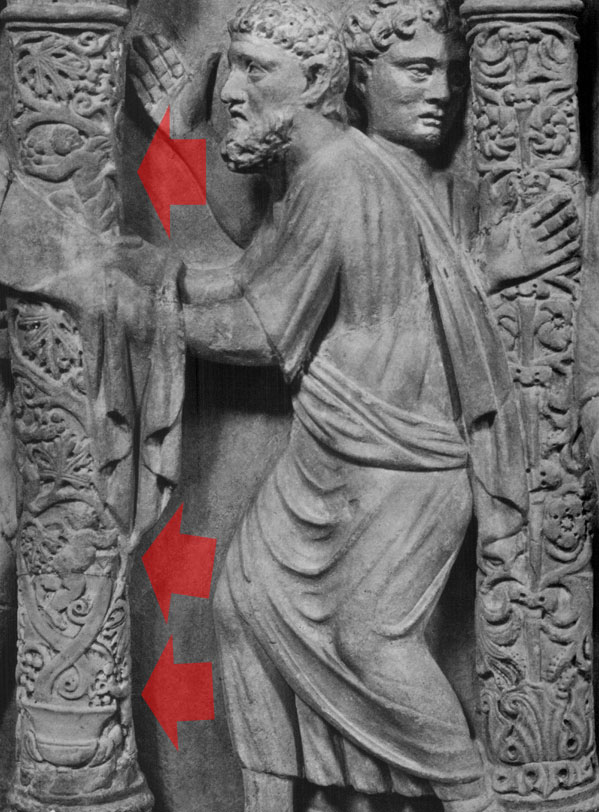
Early Christian Art: AD 200-395: From the Rise of Christianity to the Death of Theodosius, André Grabar, 1968, p. 35, “33. Rome. Sarcophagus, detail: Christ seated above a Personification of the Cosmos. Museo Laterano, Rome”:
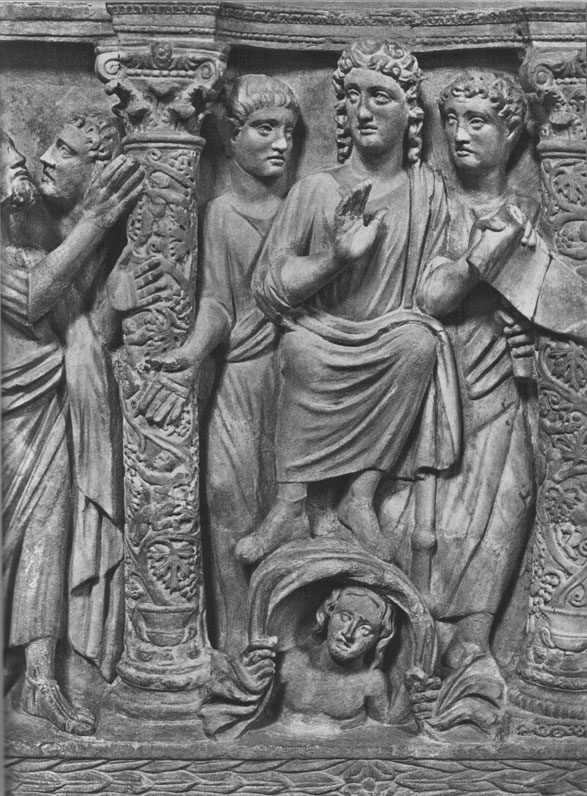
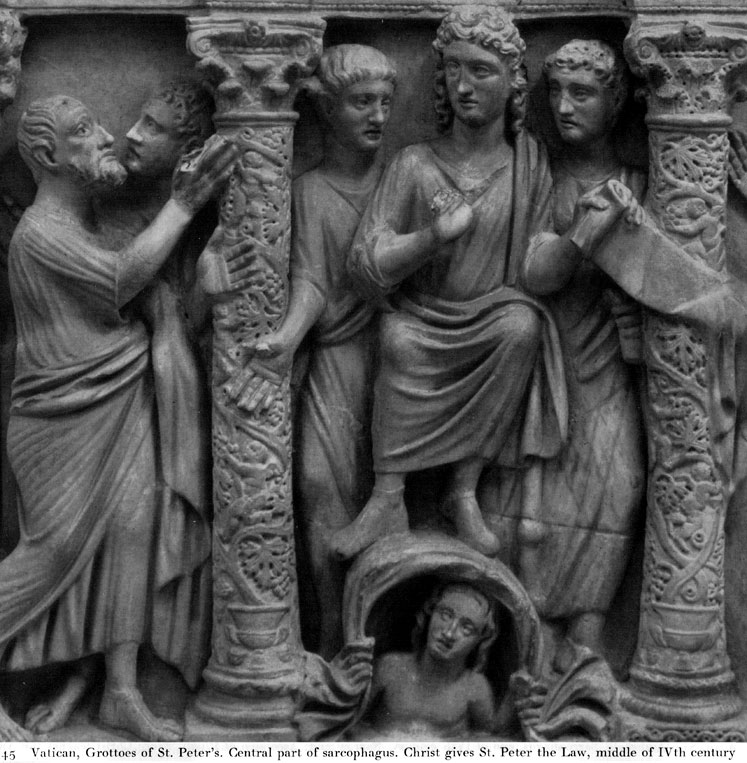
Early Christian Art, W. F. Volbach, 1961, plate 45, “Vatican, Grottoes of St. Peter’s. Central part of sarcophagus. Christ gives St. Peter the Law, middle of IVth century” [Eros & grape vines on columns]:
Right side:
Early Christian Art, W. F. Volbach, 1961, plate 44, “Vatican, Grottoes of St. Peter’s. Narrow end of a sarcophagus, right side. Healing of the woman with an issue of blood and cursing of the fig-tree, middle of IVth century. Cf. Pl. 45” [Grape vines on columns]:
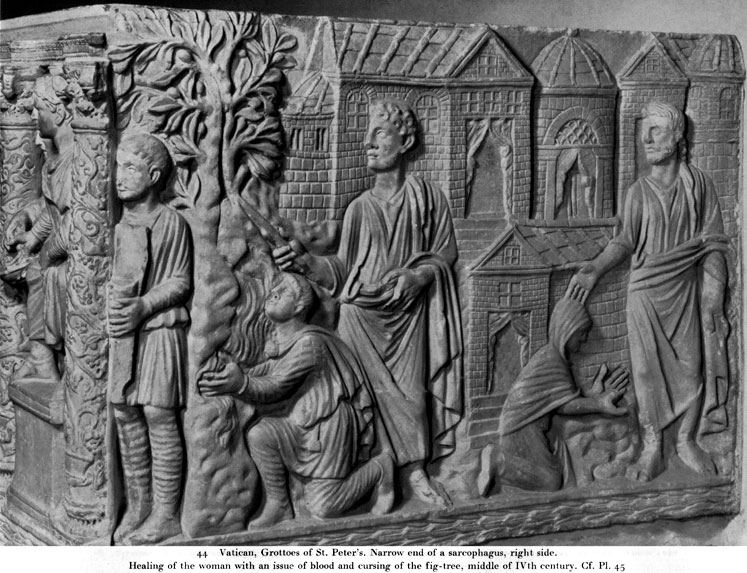
The Good Shepherd Sarcophagus:
Late 4th century
Early Christian Art: AD 200-395: From the Rise of Christianity to the Death of Theodosius, André Grabar, 1968, p. 259, “3. The Art of the Fourth Century | Sarcophagus Reliefs | 287. Sarcophagus of the Good Shepherd”:
P. 325, “List of Illustrations”:
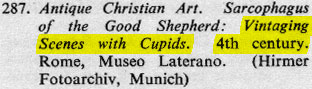
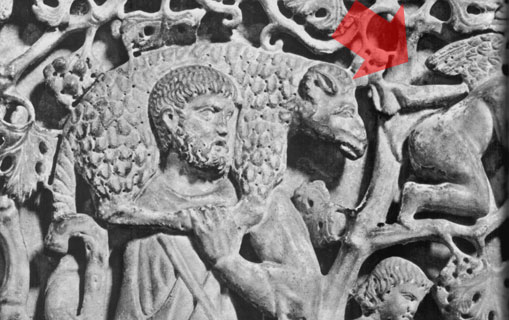
Early Christian Art: AD 200-395: From the Rise of Christianity to the Death of Theodosius, André Grabar, 1968, p. 260, “3. The Art of the Fourth Century | Sarcophagus Reliefs | 289. Sarcophagus of the Good Shepherd, detail: Vintaging Cupids. Museo Laterano, Rome”:
P. 325, “List of Illustrations”:
Early Christian Art: AD 200-395: From the Rise of Christianity to the Death of Theodosius, André Grabar, 1968, p. 258, “3. The Art of the Fourth Century | Sarcophagus Reliefs | 286. Sarcophagus of the Good Shepherd, detail: The Good Shepherd. Museo Laterano, Rome”:
Early Christian Art: AD 200-395: From the Rise of Christianity to the Death of Theodosius, André Grabar, 1968, p. 259, “3. The Art of the Fourth Century | Sarcophagus Reliefs | 288. Sarcophagus of the Good Shepherd, detail of one end: Vintaging Cupids”:
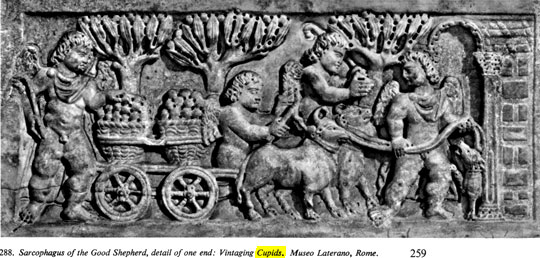
P. 325, “List of Illustrations”:
Early Christian Art, W. F. Volbach, 1961, plate 6, “Sarcophagus, second half of IVth century. The Good Shepherd and the Vintage”:
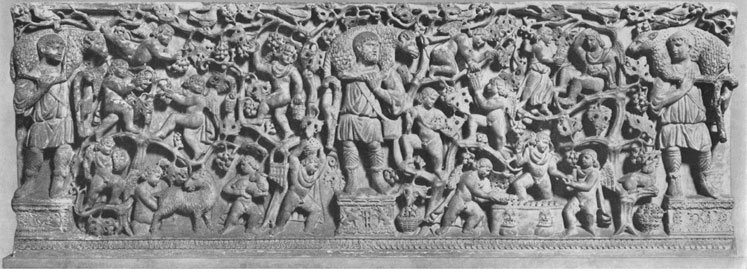
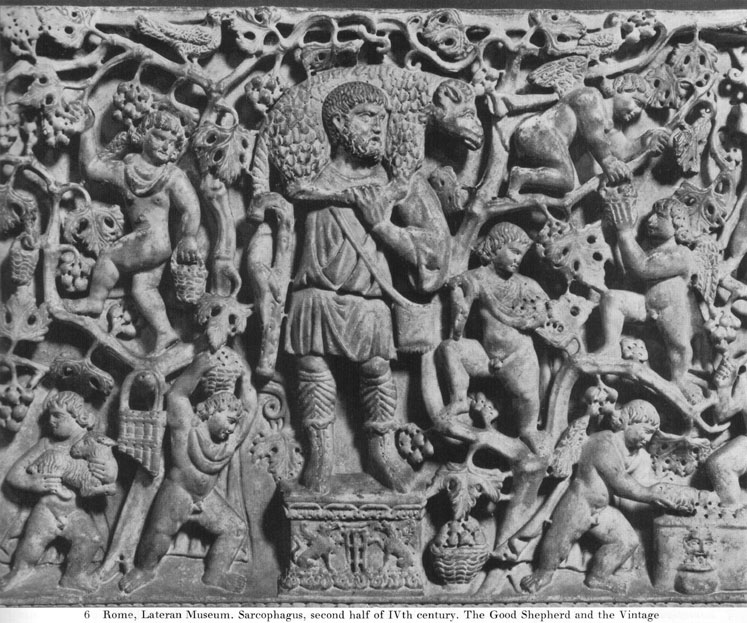
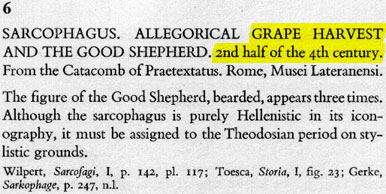
Early Christian Art, W. F. Volbach, 1961, p. 310, “Notes to the Plates”:
The Invisible Made Visible: Angels from the Vatican, Duston / Nesselrath, 1998, p. 68, “The Classical Origins of Angel Iconography”:
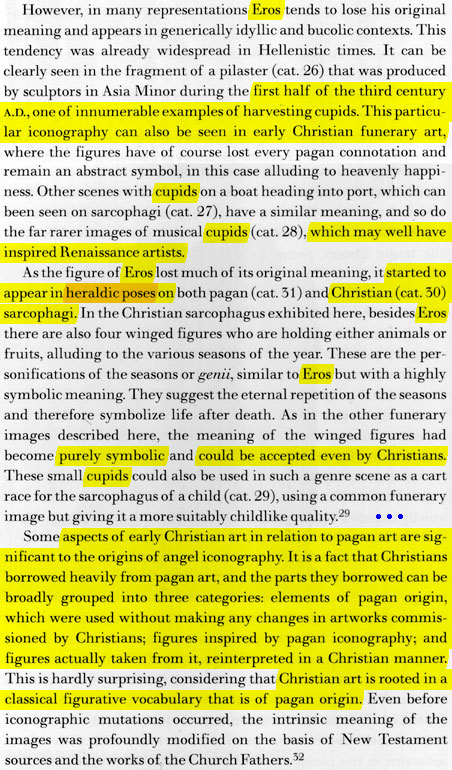
P. 130, catalogue 26, “Origins of Angel Iconography”:
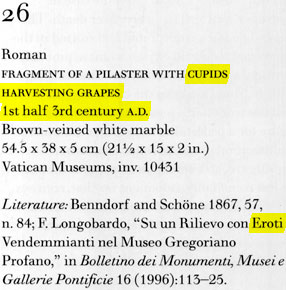
P. 131 (pagan art):
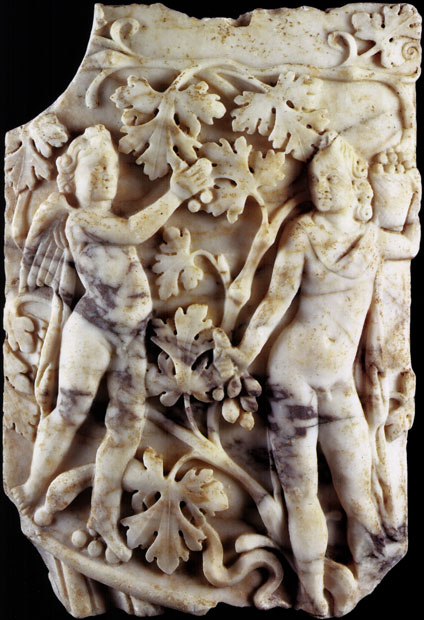
(Back to) p. 130:
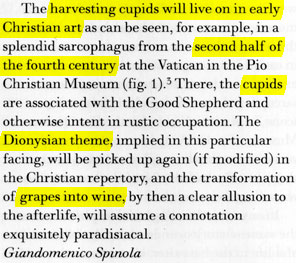
Fig. 1 (Christian art):

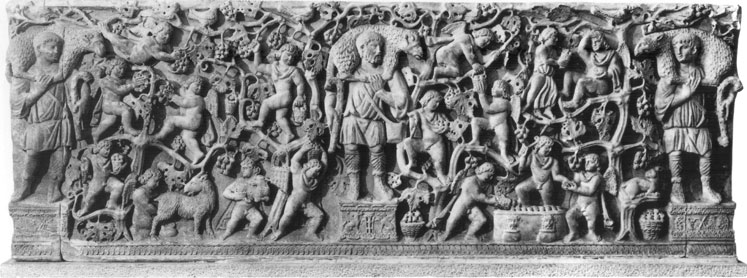
Pp. 132-133, catalogue 27, “Origins of Angel Iconography” (pagan art):
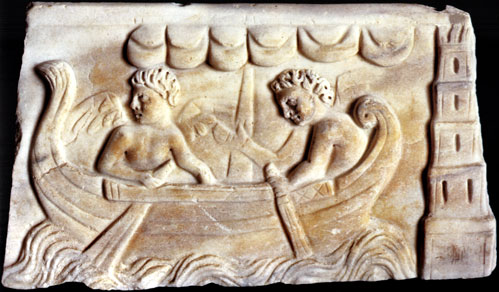
Pp. 134-135, catalogue 28, “Origins of Angel Iconography” (pagan art):
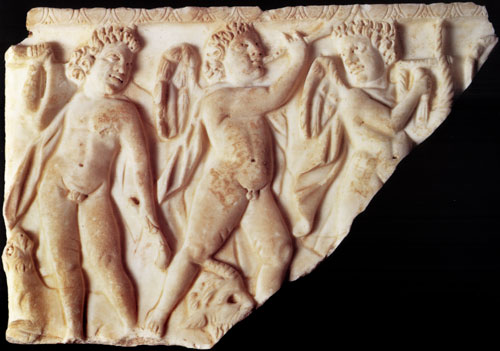
Pp. 140-141, catalogue 31, “Origins of Angel Iconography” (pagan art ?):
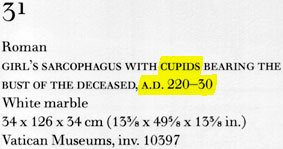
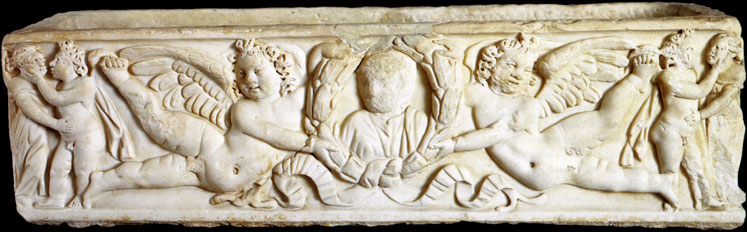
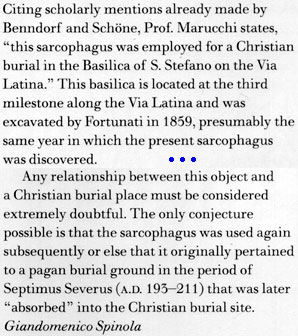
Pp. 138-139, catalogue 30, “Origins of Angel Iconography” (Christian art):
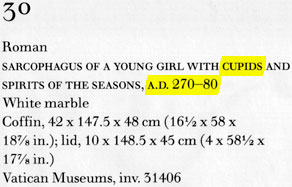
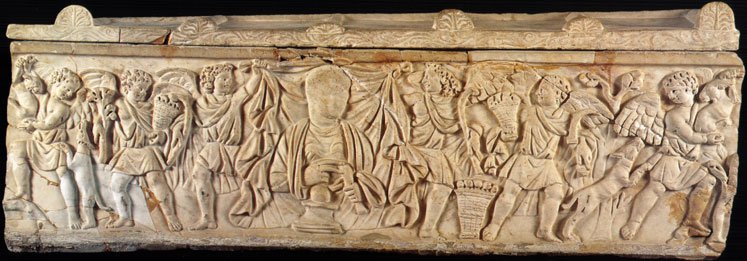
Pp. 136-137, catalogue 29, “Origins of Angel Iconography” (pagan art):
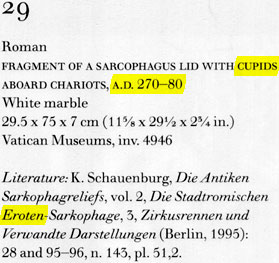
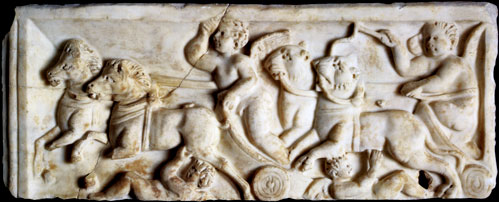
(With two panthers: attribute of Dionysus.)
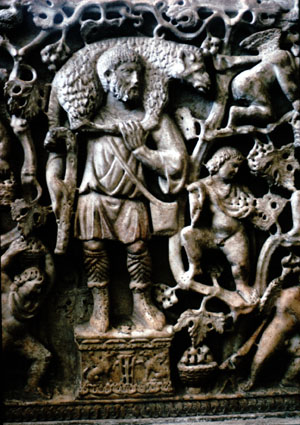
http://vandyck.anu.edu.au/introduction/earlychristian/L22-04b.htm (via http://vandyck.anu.edu.au/introduction/earlychristian/earlychristian.html), Detail: Good Shepherd Sarcophagus:
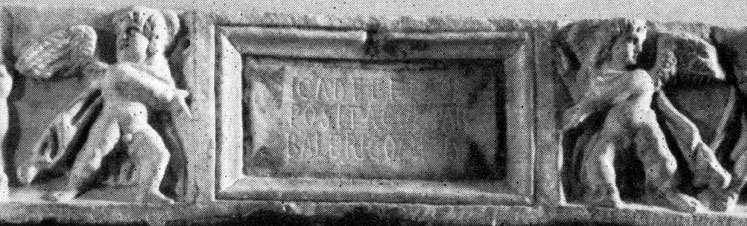
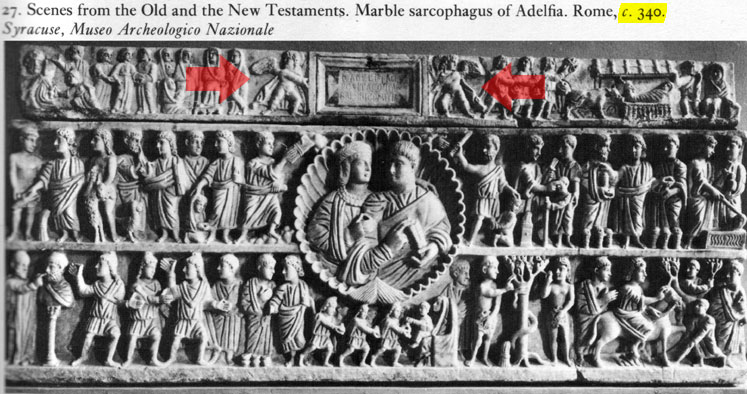
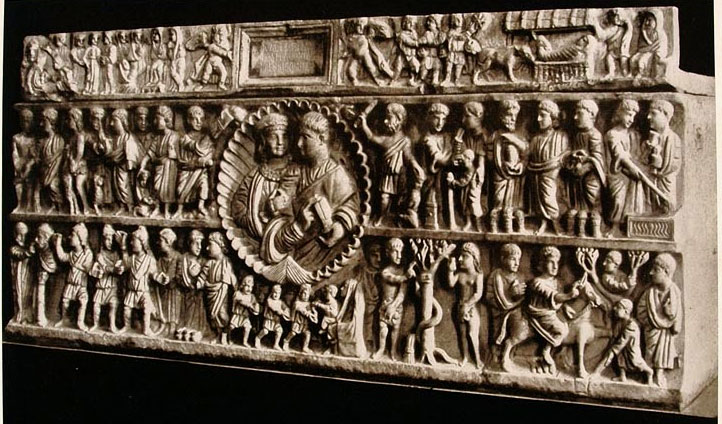
Sarcophagus of Adelphia:
Early Christian Art, W. F. Volbach, 1961, plate 37, “Syracuse, National Museum. Sarcophagus of Adelphia. c. 340”:
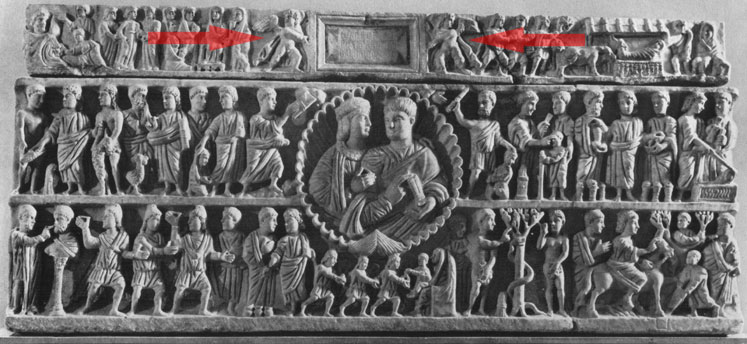
Enlargement:
Early Christian and Byzantine Art, Beckwith, 1979, p. 43, “Early Christian Art: Rome and the Legacy of the Caesars”:
http://cgi.ebay.com/1926-Carved-Sarcophagus-Adelfia-Syracuse-Sircusa-Sicily_W0QQitemZ310131514628QQcmdZViewItemQQssPageNameZRSS:B:SRCH:US:101 (via http://www.sarcophagus.net/shopping.html), 1926 Carved Sarcophagus Adelfia Syracuse Sircusa Sicily (photogravure print):
http://www.kean.edu/~jtuerk/images/4_Byzantine/01_EChSalvationalImagery/EChSalvationalImagery_thumbs.htm, Early Christian Salvational Imagery, “Sarcophagus of Adelphia, c. 340-435, Rome”:
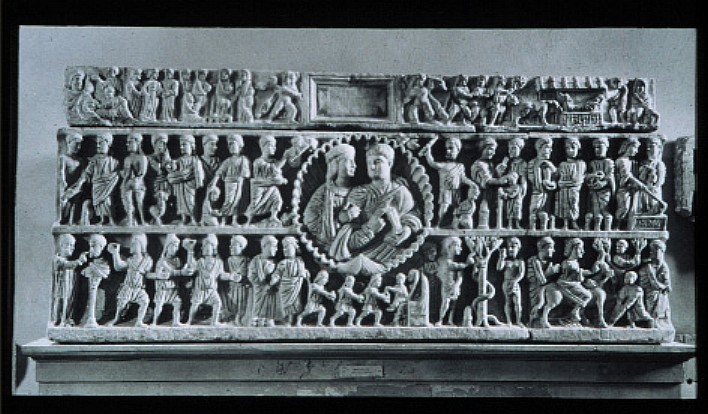
http://www.udel.edu/ArtHistory/nees/209/images.html, “Miracles, Adoration of the Magi, Entry into Jerusalem, Sarcophagus of Adelphia, Syracuse (Sicily), ca. 320”:
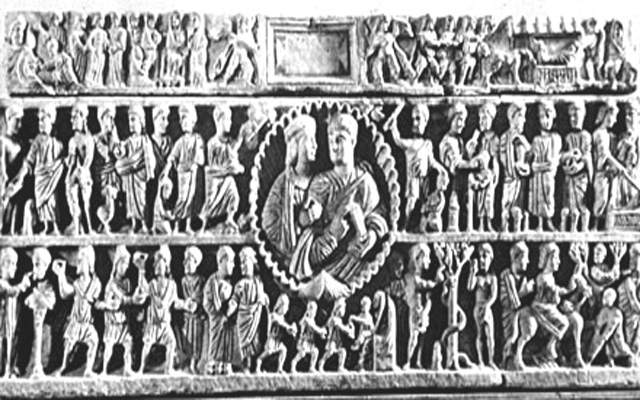
http://arts.unomaha.edu/art/SOWELL/ART4750/sarcadel.html (via http://arts.unomaha.edu/art/SOWELL/ART4750/4750ss1.html#sarc), Early Christian Sarcophagi, “SARCOPHAGUS OF ADELPHIA, 4TH C.”:
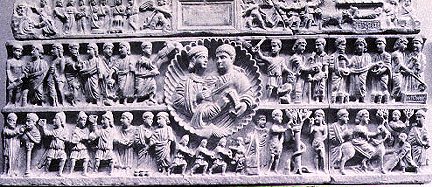
What kinds of imagery appears on this portrait sarcophagus? What aspects of Jesus' life and ministery are referenced here? What kinds of biblical imagery is used?
Art of the Christian World: A.D. 200-1500: A Handbook of Styles and Forms, Christe / Velmans / Losowska / Recht, 1982, p. 45 (image mirrored):
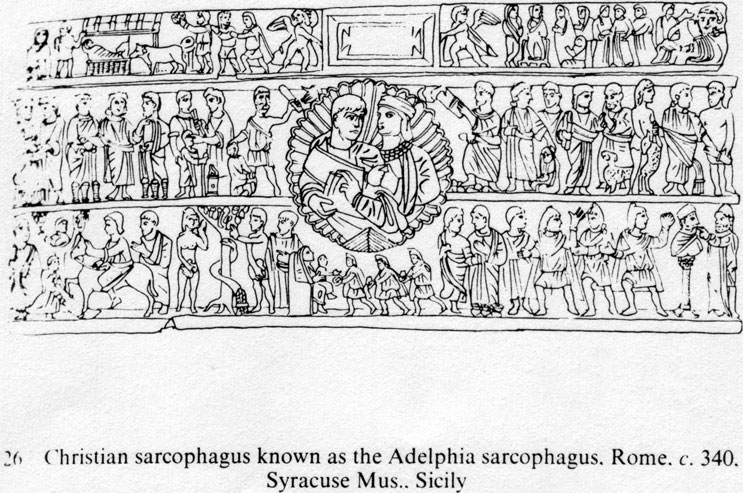
Sarcophagus of Lot:
http://www.mcah.columbia.edu/dbcourses/klein/large/BISCO~22.jpg (via http://www.mcah.columbia.edu/cgi-bin/dbcourses/item?skip=1180), Sarcophagus of Lot; Catacomb of S. Sebastiano, Rome (not sarcophagus of Adelphia):
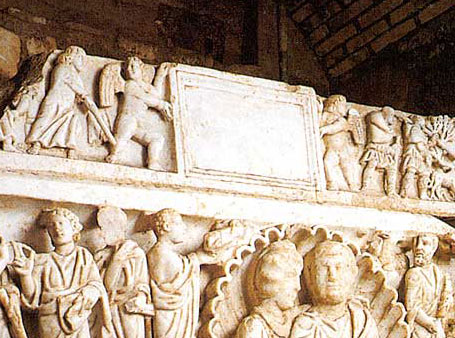
Sarcophagus of the Child:
The Catacombs of St. Callixtus; Baruffa; Published by L.E.V., Vatican City; 1993; p. 90; “The Area called St. Miltiades”:
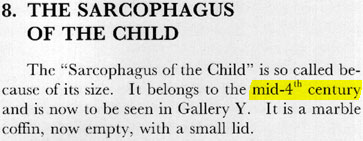
P. 91:
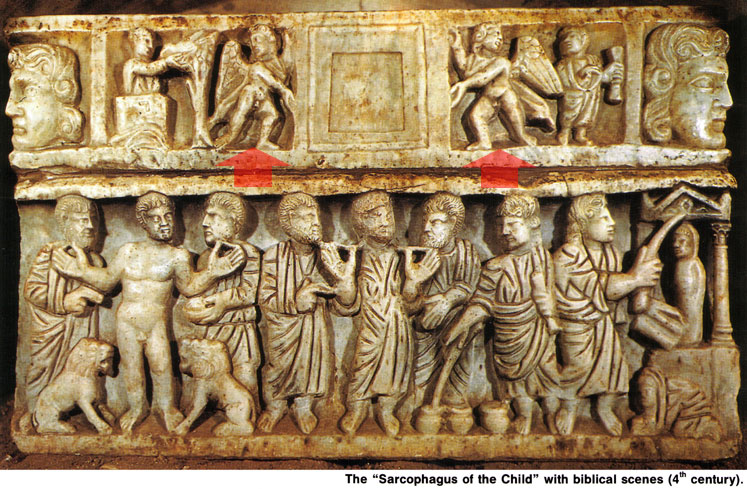
The Catacomb of St. Callixtus, Carletti, Pontifical Commission of Sacred Archaeology, no date (prob. early 70s), English edition, p. 26, “Pope Melchiades’ section”:
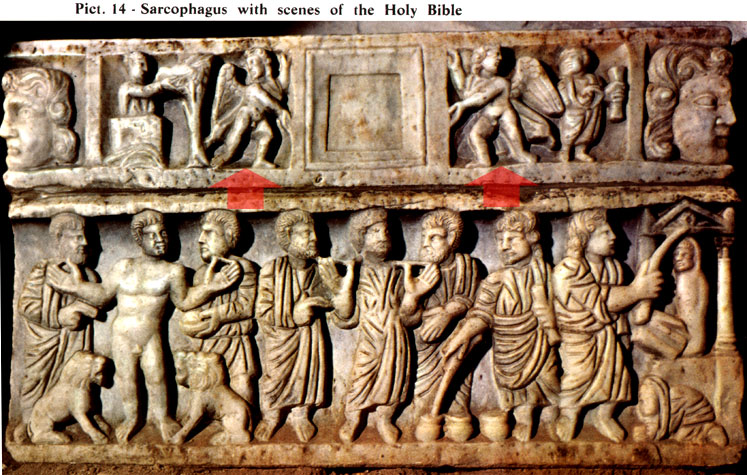
http://www.catacombe.roma.it/en/sopra.html, The Catacombs of Saint Callixtus: The Above-Ground Area, “Il Sarcofago del Bambino”:
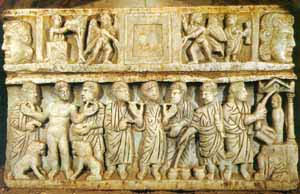
The most important one is
the sarcophagus of the Child, so called because of its size. It
now preserves only the entire front richly sculptured. The sarcophagus may be
regarded as a concise illustrated catechism. Here are the biblical scenes: Noah
in the ark with the dove above him, a prophet holding the scroll of the divine
law, Daniel in the lions' den, a child praying between two saints, the miracle
of Cana and the resurrection of Lazarus... Kneeling at the feet of Jesus is
Mary the sister of Lazarus (Jo 12,1-8). At the
centre of the lid two little genii are holding the tablet; at both ends two
ornamental faces are sculptured.
The scenes in this sarcophagus describe real events and reveal a profound symbolism. The succession of the
scenes is not fortuitous and the message is at once evident. A Christian is
born to divine life through Baptism (Noah). This divine life is nourished by
the bread (Habakkuk) and the wine (Cana) consecrated in the Mass, that is, with Holy
Communion. The Eucharist is offered as a pledge of final resurrection
(Lazarus).
In this way a Christian (the child) will reach and live in paradise (Orante).
We find the following words of Jesus echoed here: "He who eats my flesh
and drinks my blood has eternal life and I will raise him up at the last
day" (Jo 6.54).
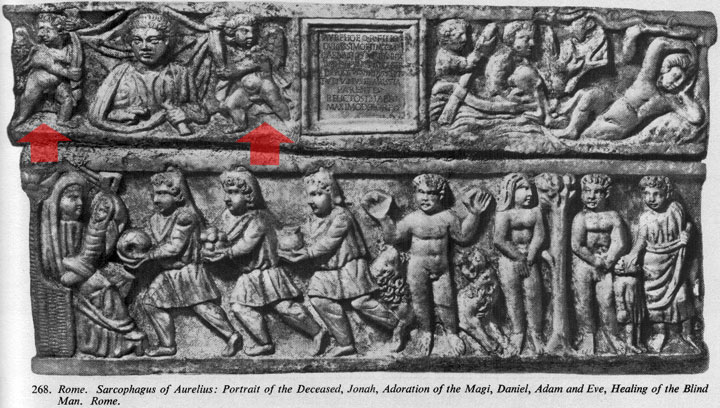
Sarcophagus of Aurelius:
Early Christian Art: AD 200-395: From the Rise of Christianity to the Death of Theodosius, André Grabar, 1968, p. 241, “3. The Art of the Fourth Century | Sarcophagus Reliefs | 268. Rome. Sarcophagus of Aurelius: Portrait of the Deceased, Jonah, Adoration of the Magi, Daniel, Adam and Eve, Healing of the Blind Man”:
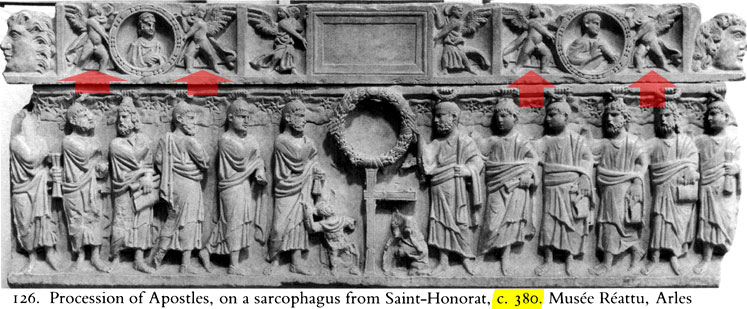
Sarcophagus from Saint-Honorat:
The Clash of Gods: A Reinterpretation of Early Christian Art, Mathews, 1993, p. 160, figure 126, “Procession of Apostles … c. 380”:
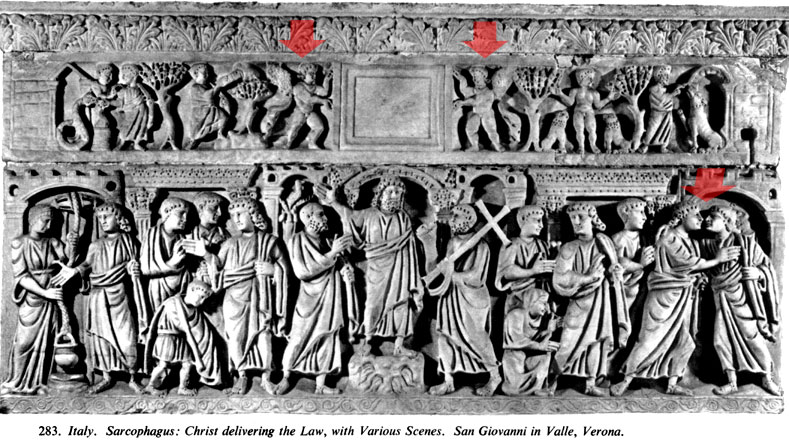
Sarcophagus located in San Giovanni in Valle, Verona:
Early Christian Art: AD 200-395: From the Rise of Christianity to the Death of Theodosius, André Grabar, 1968, p. 255, “3. The Art of the Fourth Century | Sarcophagus Reliefs | 283. Italy. Sarcophagus: Christ delivering the Law, with Various Scenes [with one mythological character represented twice (Eros)]”:
Sarcophagus located in the catacombs of Villa Torlonia:
http://www.catacombsociety.org/vom/116.html, Vaults of Memory:
The Vine
The plant most frequently seen in art and alluded to in writing was the grapevine, brought to the Greek and Roman world by Dionysos, a god associated with resurrection and eternal life. From Homeric times, wine was poured on the remains of heroes and royalty, and grapevines were part of the funerary ritual. As the garden where the vine grew, the vineyard signified the "house of Israel" for the Jews and the Church for early Christians.
A Laboring Putto
116.
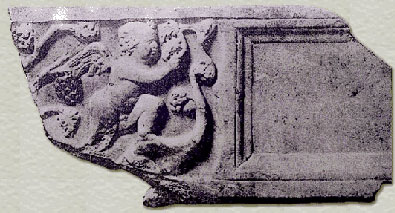
On a sarcophagus lid from the catacombs of Villa Torlonia, a putto harvests grapes.
Sarcophagus Lid with Identity Plaque and Epiphany Scene:
The Invisible Made Visible: Angels from the Vatican, Duston / Nesselrath, 1998, p. 69, “The Classical Origins of Angel Iconography”:
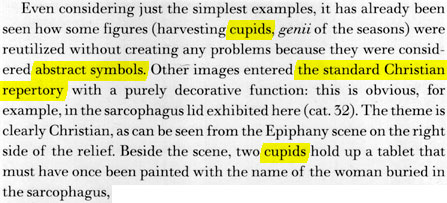
Pp. 142-143, catalogue 32, “Origins of Angel Iconography” (Christian art):
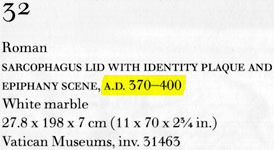

Enlargement:
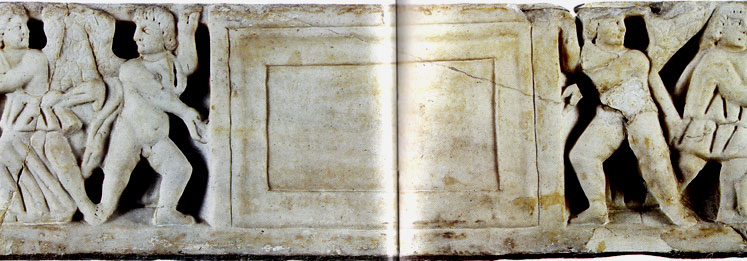
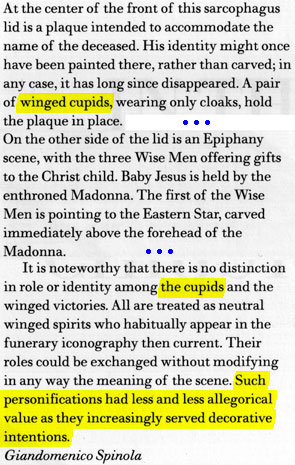
So Eros was established well enough in the earliest Christian art that he went from “allegorical value” to just a standard in Christian decoration. Therefore, his early “allegorical” “value” is the lost original message of “sexual love.”
(Back to) p. 69:
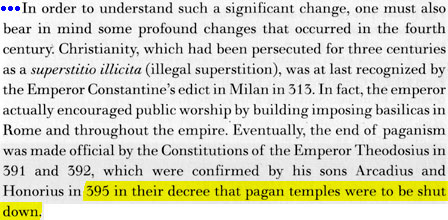
This shows that Eros was an established “Christian” icon by then.
Dogmatic Sarcophagus:
Early Christian & Byzantine Art, Lowden, 1997, pp. 48-49, illustration 23, “Art before Iconoclasm | God and Salvation | The Formation of a Christian art | ‘Dogmatic’ Sarcophagus, c.325-50 (with Biblical scenes)”:
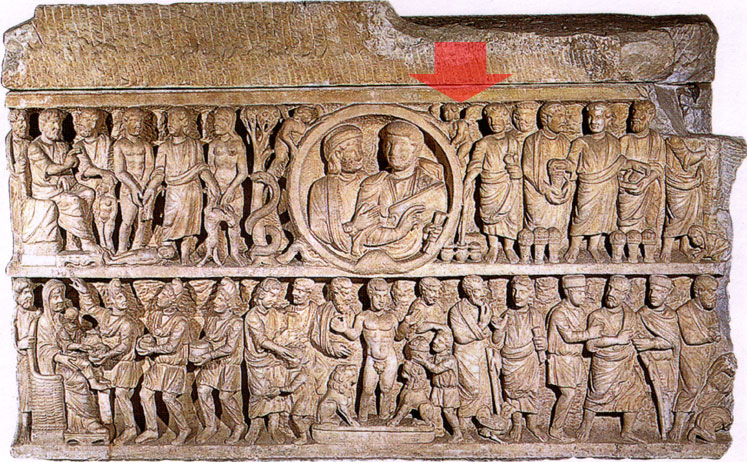
Christian Iconography: A Study of Its Origins, André Grabar, 1968, illustration 268:
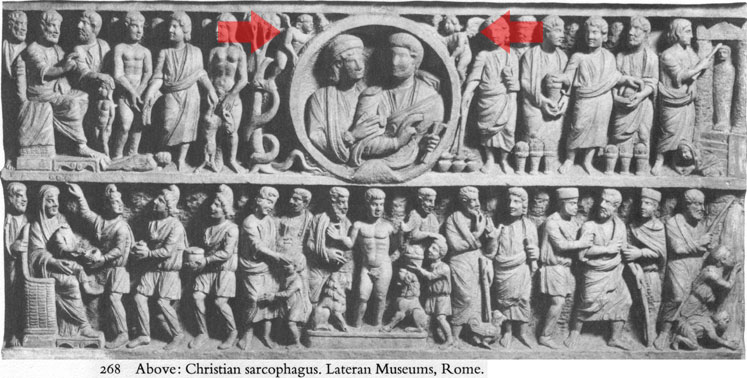
http://diglib.library.vanderbilt.edu/diglib-viewimage.pl?SID=20091015934936523&code=&RC=51286&Row=&code=act&return=act (via http://diglib.library.vanderbilt.edu/act-imagelink.pl?RC=51286), Art in the Christian Tradition, “Dogmatic Sarcophagus”:
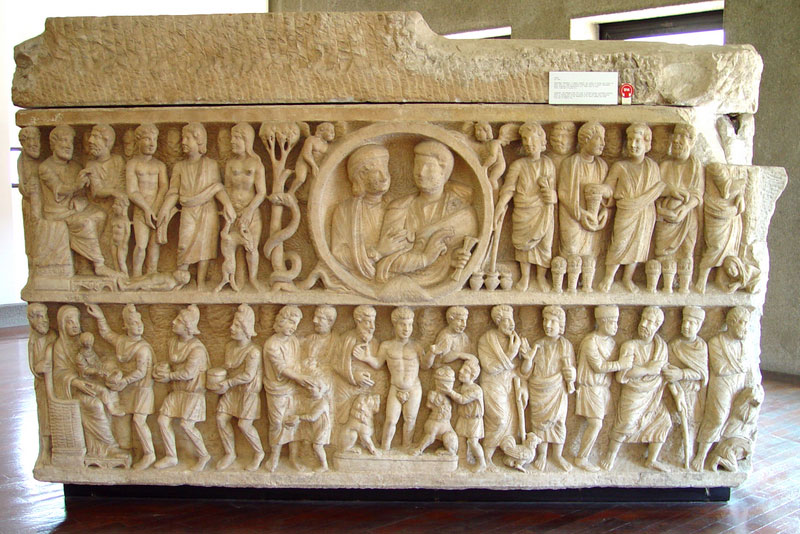
This particular sarcophagus is known as the Dogmatic Sarcophagus, or the "sarcophagus of the two Testaments." This sarcophagus features images of (upper register, left to right) the creation of Eve, bestowing the labors upon Adam and Eve, Moses receiving the law, the sacrifice of Isaac, the wedding at Cana, Pilate washing his hands, (lower register, left to right) the arrival of the Magi, the healing of the blind man, Daniel flanked by Cyrus and Habakkuk, the foretelling of Peter's denial, the arrest of Peter, Peter baptizing his jailers
Sarcophagus, Sant’Ambrogio, Milan, Italy:
Late 4th century
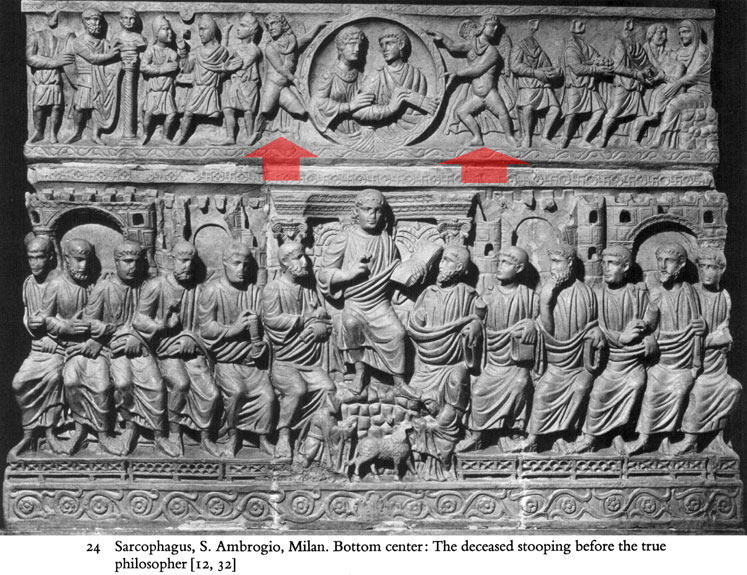
Christian Iconography: A Study of Its Origins, André Grabar, 1968, illustration 24:
Sarcophagus located in the catacomb of Pretestato:
Early Christian Art: AD 200-395: From the Rise of Christianity to the Death of Theodosius, André Grabar, 1968, p. 32, “30. Rome, Catacomb of Pretestato. Sarcophagus with Vintaging Scenes”:
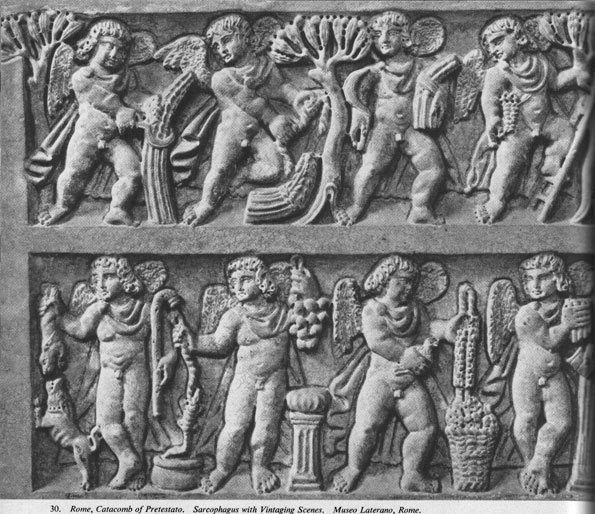
P. 318, “List of Illustrations”:
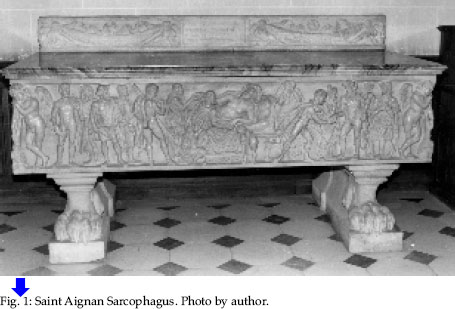
Alcestis Sarcophagus at Saint Aignan:
http://www.tau.ac.il/arts/projects/PUB/assaph-art/assaph2/articles_assaph2/01Mucznik.pdf, The Alcestis Sarcophagus at Saint Aignan (or Anianus): a New Interpretation1:
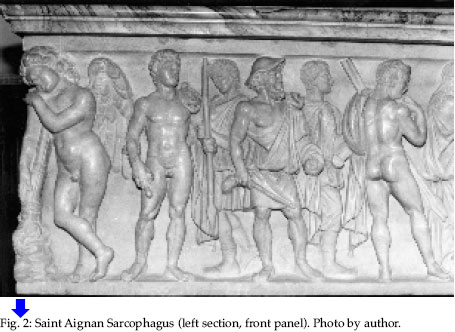
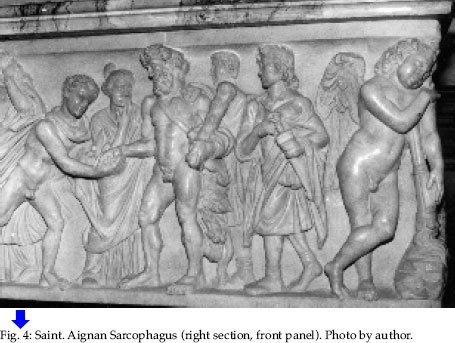
The Alcestis sarcophagus at the Chateau of Saint Aignan (Bishop of Orleans, died 453 AD), like most Alcestis sarcophagi, is composed of three scenes here framed by two large sleeping funerary Erotes standing at each end of the sarcophagus and holding lowered, burning torches.
…
…
The figure standing in the foreground, on the left next to the Eros, has generally been identified as Admetus returning from hunting, … A different reading can consequently be suggested for this part of the sarcophagus: the figure next to Eros and the four figures to his right could all be members of the chorus … To Herakles’ left, between him and the Eros on the right end of the panel, are two men, …
Miscellaneous:
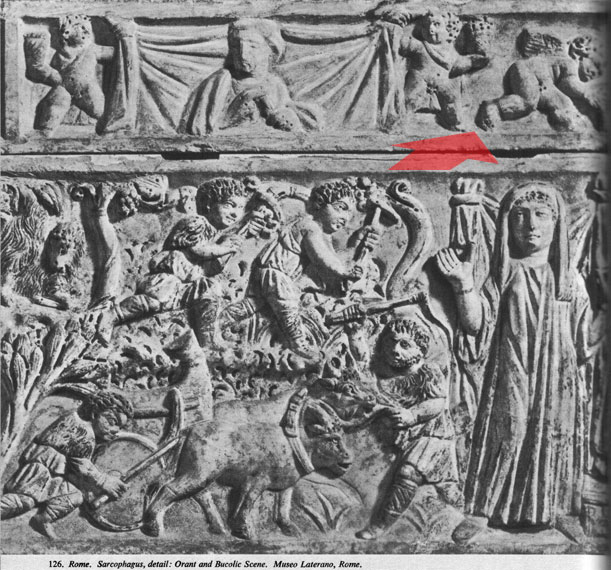
Early Christian Art: AD 200-395: From the Rise of Christianity to the Death of Theodosius, André Grabar, 1968, p. 126, “2. Christian Painting and Sculpture before the Peace of the Church (before AD 313) | 126. Rome. Sarcophagus, detail: Orant and Bucolic Scene”:
http://www.ostia-antica.org/~isolsacr/sarcophagi.htm (via http://www.ostia-antica.org/~isolsacr/is-menu.htm), Ostia: Isola Sacra(Sacred) Necropolis Sarcophagi:
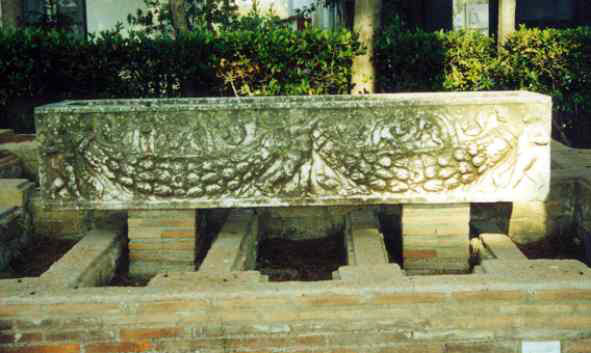
To avoid too much duplication, see my Sarcophagi / Sarcophagus (5) pages under Dionysus for many more Eros examples.