EROS – PICCADILLY CIRCUS
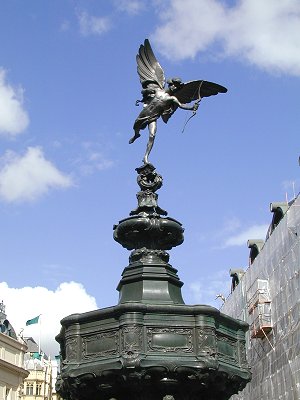
There’s a popular 1893 sculpture of the adolescent Eros in London. The sculptor (Alfred Gilbert) named it: “The Angel of Christian Charity”; which caused a major controversy.
http://inst.santafe.cc.fl.us/~jbieber/UK/Eros.htm, Piccadilly Circus: Eros Statue:
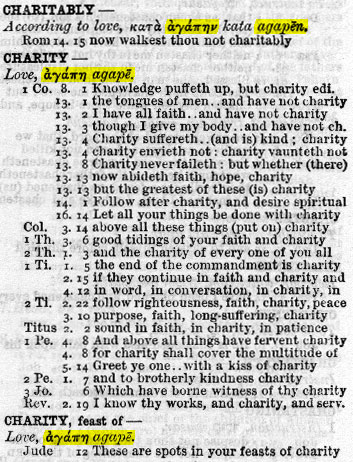
First, note that charity is used many times today to replace agape love:
Young’s Analytical Concordance to the Bible, Robert Young (1822-1888), p. 155, “CHARIT…”:
Also, note that the younger Eros is shown in many churches as an angel. Example:
Seeing Salvation: Images of Christ in Art, MacGregor, 2000, p. 196, plate 61, “Till Kingdom Come”:
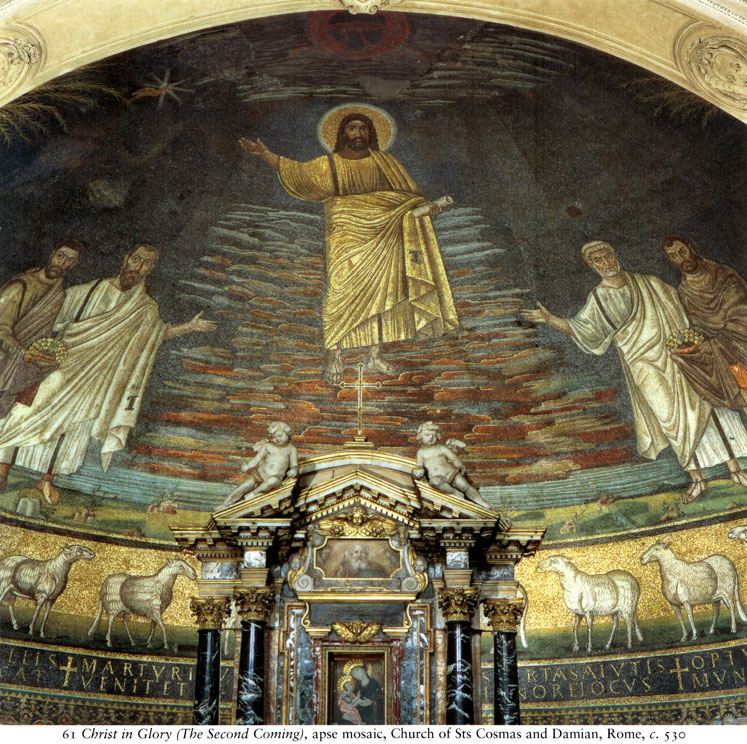
He’s even still naked while everyone else has clothes on.
http://www.icons.org.uk/what/Oct_Quiz/iconquestion.2005-06-29.2995482589/show_answer, Icons Quiz: A Portrait of England:
The statue in the middle of London’s Piccadilly Circus is in fact ‘The Angel of Christian Charity’, erected in 1893 to remember a famous philanthropist (the 7th Earl Shaftesbury). As it turned out, however, the statue looked rather too much like the Greek god of love, and although it was never officially renamed ‘Eros’, that is the name by which it has become popularly known.
http://www.smoothhound.co.uk/tourism/london/statue-eros.html, London Town Guide, “Statue of Eros”:
The most famous landmark in Piccadilly Circus is Alfred Gilbert's Statue of Eros. However, the name is misleading for it is neither a statue, nor the figure of Eros! It is actually a memorial fountain commemorating the Victorian philanthropist the Earl of Shaftesbury, and the figure is not the Greek god of love, but the Christian angel of Charity. Nevertheless the Statue of Eros has become one of the most famous landmarks in London and so most visitors want to have their photograph taken next to it - expect the area around it to be busy!
http://www.vinyl-junkies.com/soho-historylink(13).html, Piccadilly Circus:
As a traffic hub and neon-lit gathering place, Piccadilly Circus attracts visitors from throughout the world, many of whom sprawl on the steps of its stone island, which is crowned by the 1893 aluminium statue of Eros (formally entitled the Angel of Christian Charity (see this link as well), it was built as a memorial to the Anthony Cooper, the 7th earl of Shaftesbury by Alfred Gilbert).
http://www.alumni.sghms.ac.uk/Templates/Alumni%20Mag%20March.pdf (University of London), Common Ground Professor Sir William Asscher St George’s Gazette: George’s: The magazine for Alumni of St. George’s Hospital Medical School, March 2002 (1-3-02, Issue 2), “Gilbert’s Hunter | Dr Terry Gould (MBBS 1959) on the history of the bust of Hunter at St George's”:
The fountain was completed in 1893 when Gilbert's masterpiece in aluminium the Angel of Christian Charity was placed on the apex.
The memorial fountain was unveiled by the Duke of Westminster and the spectacle was completed by the Duchess drinking water from one of the supplied cups. Sadly this was stolen within hours of the unveiling. Gilbert did not attend the ceremony himself as by then he had completely fallen out with the memorial committee. He was facing financial ruin, having had to personally bear the cost of the committee's alterations. To make matters worse, his Angel was immediately viewed as a naked boy or 'Eros', a cupid and quite immoral and inappropriate as a memorial to a popular Victorian philanthropist. Deeply upset by the reception and his financial plight, Arthur Gilbert was only too pleased to accept the St George's commission and threw himself into his new task in the hope that he could overcome his misery. By March 1894 the work on Hunter's bust was well underway and the Board paid Gilbert a further £50 on account in August 1895. Regrettably, even his work on the Hunter bust, which he was later to describe as one of his finest and most successful pieces of sculpture, could not assuage Gilbert's misery over the public reaction to his 'Eros', so before he had completed and handed over the bust he escaped abroad. …
Still living abroad, Arthur Gilbert was knighted in 1932 on one of his rare visits to England but by then he was amused that his despised 'Eros' had become a national emblem and a major landmark. He would have been even more amused to have known that his Angel of Christian Charity became so valued and treasured that when Piccadilly Circus Underground Station was extended the statue was moved to the Embankment Gardens from 1922 until 1931 and to save it from possible bomb damage from German aircraft during the second World War it was kept at Egham from 1939 until 1948. And, of course, it has been boarded up every New Years Eve since 1937 to save it from the unwanted attention of revellers.
So the “Christians” denounced it, but the people liked it. That’s probably exactly how reaction to my research (and knowledge) will turn out. Because, the people will still know that they can continue in marriage, etc. if they want to: they will just have the religious “option” (or freedom) to choose what they want. I don’t see why the people would not like it. You see, prostitution, marriage, gold diggers, pussywhipped men, etc. will still be able to fully continue, only until there is a majority of sexually “free” women (to eliminate the trade), and that won’t overrule the current mindset for some time to come. So the government can continue to enforce its definition of “freedom for the people” (paternal financial child support) for the rest of this generation anyway. My duty and the Churches’ duty to God are to just allow the truth to be known. And, I don’t think there’s another person alive that could argue the morals of these truths better than me. I’ve never lost an argument on the subject (but I’ve made a lot of enemies). But, other than today’s Christian leaders and today’s government leaders, show me a person that wants to think with false information? Even the “Christian” gold diggers who despise me (for not getting down on my knees for them), are still probably glad they have the correct information. Again, don’t worry, as long as there is not a large quantity of “loose” women (which people think there is, but there really isn’t), women will still get men to do as they please, guaranteed! Also, women will be able to leave abusive men easier, because the “slut” taboo will be gone.
(“Eros Piccadilly "Alfred Gilbert"” gets 7,690 hits on Google, and “Eros Piccadilly "Albert Gilbert"” gets 233 hits. So the correct name is probably “Alfred.”)
http://www.heatherozell.com/2005_11_16_archive.html, Mannerism of an American, “The West’s Last Chance’: Will We Win the Clash of Civilizations”:
“Chapter one,” “The Nightmare Scenario”:
The author starts the book by identifying a Moroccan cleric that started a protest of a nude statue that is known as Eros. …
This
gives the impression as suggested that the
statue was merely used as guise to create disruption amongst Muslims
(you will have to read the entire passage to understand exactly what I mean).
The author then went on to make an assertion by first using the term ‘protest’ as an object of rejecting
and then characterised it (protest) as a ‘jihad’ assuming that it inferred to
a Muslim holy war: the art work is perceived as offensive. (for example,
Blankley, 2005, p.2). …
My impression is that he has already form an interpretation that demonised Muslims’ intention of organising a protest without first reflecting on the source of ‘reaction’ e.g. the status itself and how it is perceived amongst the Muslims. The author stated that it was deemed ‘impure’ for the people of Islam to live under, however, he attributed ‘positive’ connotations of illustrations about the status by providing a brief history of its origin. …
He failed to mentioned that during it construction the status was criticised and considered to be controversial (for details see comments made by The Manchester Evening Mail and its history of construction).
Understanding Symbolism:
Let me
try to provide you with a brief explanation about the Eros status. Originally,
the status was known as, The
Angel of Christian Charity named after a great philanthropist of
charity. When it first was designed, it appeared nude. Later its name changed
to Eros and this had a different symbolic meaning because it embodies the pagan
Greek god known as Eros. (see Greek mythology, and Evening Standard newspaper
masthead).
The
Greek god represented love, lust, and sex and gives a
different interpretation that its origin name. After reading this for
myself, questioned came to my mind.
Was the writer
aware that Eros was considered a god of love, lust, and sex and could be interpreted as the real source that
attributed to the protest by the Muslims?
Did the author know
the history of Eros
in the beginning, or did he just assume that the Muslims interpreted the status
in a negative way just to create trouble and went on a mission to incite
violence?
Blankley justification of the artwork is highlighted when he acknowledged that the status was world famous as one of “swinging London’s” landmark (see, pg. 2). And if you were to research this, you will certainly notice that it deals with lifestyles that have chosen to be indoctrinated in other forms of living—sexuality preferences.
Therefore, in my mind, I assumed that he knew what Eros history in Greek mythology meant, so why wouldn’t this be offensive to some individuals?
http://som.fio.ru/RESOURCES/FILIPPOVMA/2004/02/london/london3.htm, Short stories for reading and listening about London: Piccadilly:
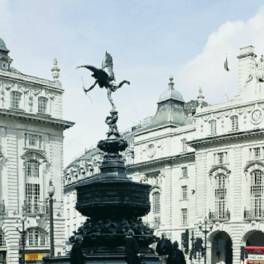
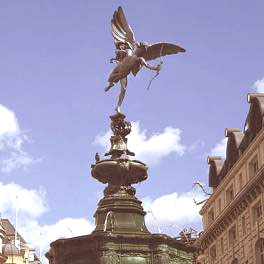
Visitors of all ages and from all around the world are drawn to the celebrated statue of Eros - the God of love and aware that the Wind Archer is really the angel of Christian charity and commemorates the life of Lord Shaftesbury, the great Victorian philanthropist. Unbelievable though it may seem today what is now one of London's best loved statues was greeted with howls of protest when it was unveiled in 1893 and its sculptor Alfred Gilbert went into self imposed exile in Belgium for many years.
http://www.theoriginaltour.com/virtual_tour2/tt_piccadilly_english.html, The Original London Sightseeing Tour, Piccadilly Circus:
A renowned romantic meeting point underneath "The Angel of Christian Charity", Eros Statue. The Spirit of London recalls the problems faced by the sculptor, Alfred Gilbert.
http://www.phuketairlines.com/travel/des_london.html, “Piccadilly Circus”:
Piccadilly Circus is home to the statue of the Angel of Christian Charity, commonly known as Eros and dedicated to Lord Ashley, the Victorian earl of Shaftesbury, who championed social and industrial reform. It was London's first memorial built of aluminium and was despised when it was unveiled in 1893.
http://en.wikipedia.org/wiki/Piccadilly_Circus, Piccadilly Circus, “Overview”:
It is renowned for its video display and neon signs mounted on the corner building on the northern side, as well as the Shaftesbury memorial fountain and statue known as Eros (strictly, The Angel of Christian Charity which would be better translated as 'Agape'). It is surrounded by several noted buildings, including the London Pavilion and Criterion Theatre. Directly underneath the plaza is the London Underground station Piccadilly Circus. …
“Shaftesbury Memorial and Eros”:
At the south-western side of the Circus, moved from its original position in the centre, stands the Shaftesbury Monument memorial fountain, erected in 1892-1893 to commemorate the philanthropic works of Lord Shaftesbury. It is topped by Alfred Gilbert's winged nude statue, officially known as The Angel of Christian Charity. It is popularly known as Eros after the mythical Greek God of Love. The statue has become a London icon, and a graphical illustration of the statue is used as the symbol of the Evening Standard newspaper and appears on its masthead.
The use of a nude figure on a public monument was controversial at the time of its construction, but it was generally well-received by the public. The Magazine of Art described it as, "...a striking contrast to the dull ugliness of the generality of our street sculpture, ... a work which, while beautifying one of our hitherto desolate open spaces, should do much towards the elevation of public taste in the direction of decorative sculpture, and serve freedom for the metropolis from any further additions of the old order of monumental monstrosities."'
http://www.thisislondon.com, The Evening Standard:

http://www.artandarchitecture.org.uk/stories/cooper_rockcircus/cooper_rockcircus01.html, The Rock Circus Statues: Part 1: Eros:
In 1893, Alfred Gilbert unveiled his memorial to the philanthropist Lord Shaftesbury. Titled ‘The Angel of Christian Charity’ and modelled on the iconic image of Agape, the Greek God of selflessness, it has been mistaken for ‘Eros’ by tourists and Evening Standard journalists ever since. The tale that lies behind it is a sad one. Public scandal over the sculpture’s explicit use of the naked male form dominated its reception, and Gilbert never received credit for its innovative design and revolutionary use of aluminium as a casting material for public sculpture. The sculptor’s subsequent bankruptcy and self-imposed exile in Belgium curiously foreshadowed later events relating to a statue in this location.
http://www.artandarchitecture.org.uk/images/conway/93d2289d.html, The Shaftesbury Memorial Fountain (Eros):
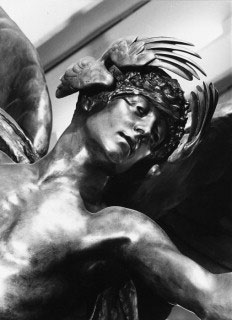
http://www.jssgallery.org/Other_Artists/Gilbert_Alfred/ShaftesburyMemorial.html, Alfred Gilbert's Shaftesbury Memorial "Eros":
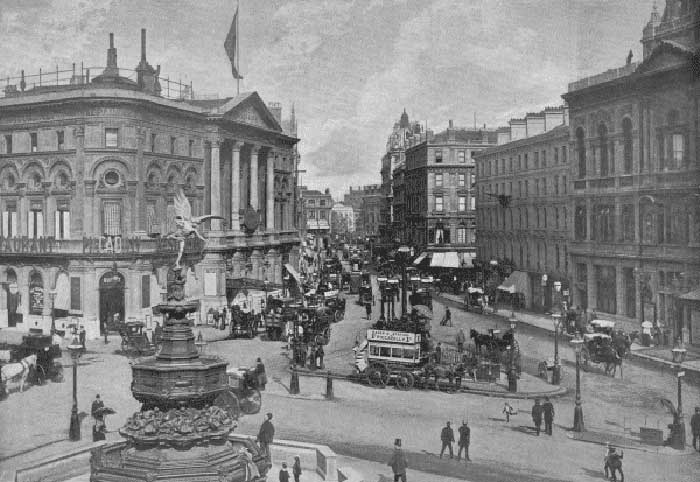
Piccadilly Circus, 1896. From The Queen's London
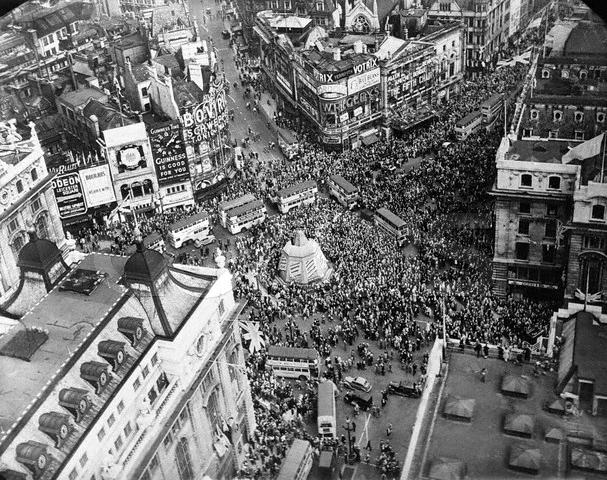
http://pro.corbis.com/, Search # U1017623INP, Aerial View of Piccadilly Circus VE Day Celebration:
http://www.lovatts.com.au/trivia/fillingthegaps/trivia_fig27_eros.htm, Eros:
In Greek mythology Eros is the son of Aphrodite and Ares. His name means 'sexual love' and he is most commonly depicted as a chubby baby holding a bow and arrow. Eros was originally pictured as an athletic youth and then as a young boy. The image of this god of love as a baby came later in the Hellenistic period. The statue of the winged archer at London's Piccadilly Circus is popularly known as EROS but this statue was intended to represent the angel of Christian charity. Situated atop the memorial fountain to the 7th Earl of Shaftesbury, this winged archer was the work of Sir Albert Gilbert and was unveiled in 1893.
http://www.answers.com/piccadilly%20circus, Wikipedia Image:
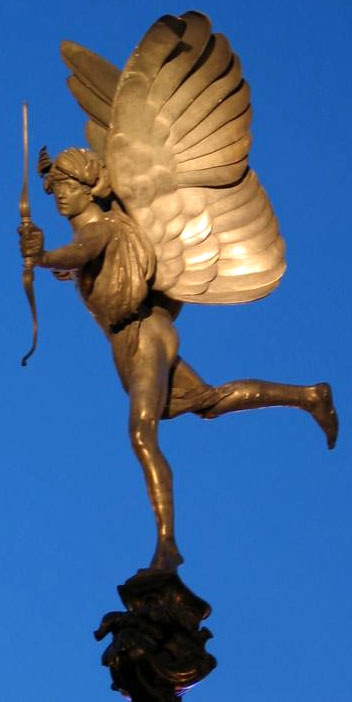
Statue of The Angel of Christian Charity at Piccadilly Circus in London.
http://www.painterofportraits.co.uk/UNDERGROUND.htm, London Transport Underground Poster commission:
The statue of Eros was originally intended to represent an angel of Christian charity. Sculptured by Sir Alfred Gilbert, it was a monument erected to the memory of the philanthropist, the seventh Earl of Shaftesbury .
http://www.virtualtourist.com/travel/Europe/United_Kingdom/England/Greater_London/London-309228/Things_To_Do-London-Piccadilly_Circus-BR-1.html, Piccadilly Circus, London, United Kingdom:
At the center of the area is the statue of Eros which was unveiled in 1893. It was intended by the sculptor, Sir Albert Gilbert, to be the Angel of Christian Charity, but Eros has persisted as the name. This famous statue is one of the great symbols of London.
They didn’t need to add the word “but.”
http://www.gowithcea.com/pf@city=london/why/if_you_were_here.html?print=yes, London, England: If You Were in London, You Could::
Have a picture taken by the fountain in Piccadilly Circus! This is the Times Square of London, full of tourists, neon signs, big red buses, and of course the statue of "Eros" (actually the Angel of Christian Charity, but nobody seems to remember that) in the middle of it all.
http://orbitz.wcities.com/en/record/150,526/1/record.html, Piccadilly Circus: Las Vegas lights in London:
Although affectionately known as Eros by Londoners, it’s actually the Angel of Christian Charity by Sir Alfred Gilbert, and it was so unpopular when first unveiled that he opted for self-imposed exile. Today the statue is one of London’s most famous sites and a haven for tourists and romantic couples alike.
http://www.junglerunner.com/England01/01journal.htm, Journal 1 - Adventure Travel in England:
Did you know that the angel with the bow and arrow on the fountain in the middle of Piccadilly circus is the most popular statue with tourists in London? The aluminum figure was supposed to be a monument to the Earl of Shaftesbury, a Christian who campaigned tirelessly against child labor. Known as Eros, it is not the god of love, it's actually the Angel of Christian Charity. I quite like it, but it was so unpopular with the local public when it was unveiled in 1893 that the sculptor lived in self-imposed exile for the next 30 years. That's some bad press!
Brewer’s Dictionary of Phrase and Fable, 1999, p. 400:
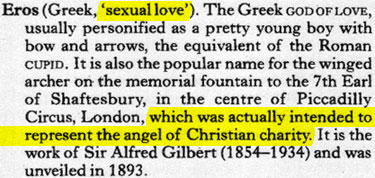
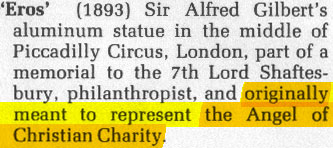
Webster’s Dictionary of Proper Names, 1970, p. 225:
http://www.phatnav.com/wiki/index.php?title=Eros (PhatNav’s Encyclodedia), “Eros”:
Eros can refer to: …
- The Greek word Eros, which means "sexual love". …
- A statue in Piccadilly Circus, London, which is commonly known as Eros but is in fact meant to represent The Angel of Christian Charity.
http://www.medical-news.info/er/eros-(god).html, Eros (god):
The statue commonly called Eros in Piccadilly Circus, London, is in fact meant to represent The Angel of Christian Charity.
http://www.spaceless.com/trivia3.html
The statue of Eros in Picadilly Circus in London is actually the 'Angel of Christian Charity'.
http://www.timeout.com/london/features/sightseeing/a_route_mastered/a_route_mastered_no_15.html:
At Piccadilly Circus, look left for the Shaftesbury Memorial Fountain, with its famous figure of Eros. The first London statue cast in aluminium, it’s actually intended to represent the angel of Christian charity, rather than the ancient Greek god of love.
http://www.worldbookonline.com/wb/Article?id=ar184140&st=Eros (subscription required):
Eros is the name popularly given to the large statue of a winged youth with a bow that stands on top of a fountain in Piccadilly Circus, in London. Eros, the mythical Greek god of love, is frequently shown in this way. However, the statue in Piccadilly Circus was intended as a portrayal of the angel of Christian charity.
The statue was cast in aluminum and set on a bronze fountain. It was designed by the sculptor Sir Alfred Gilbert and erected in 1893 as a memorial to the seventh Earl of Shaftesbury. Many people objected to the statue when it was first erected because of the figure's nudity and pagan associations. But it has become one of the most familiar symbols of London.
http://www.worldbookonline.com/wb/Article?id=ar751750&st=Eros (subscription required):
Shaftesbury, Earl of (1801-1885), was a British statesman and philanthropist. He served in the United Kingdom's House of Commons from 1826 to 1851 and in the House of Lords from 1851 to 1885. He sought to improve the treatment of the mentally ill and the living conditions of the poor.
Anthony Ashley Cooper was born in London on April 28, 1801. When his father died in 1851, he inherited his title, becoming the seventh Earl of Shaftesbury. The famous Eros monument in London's Piccadilly Circus was built as a memorial to Shaftesbury.
http://myweb.tiscali.co.uk/speel/sculpt/agilbert.htm, Sir Alfred Gilbert RA (1854-1934):
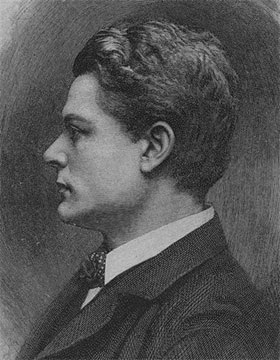
An important sculptor, born in London. He trained under J. E. Boehm, and then continued his studies in France and Italy, where he remained for some years developing his own personal style. He became ARA in 1887, at a time when under Leighton, himself a sculptor of repute, sculptors were in vogue - another one, E. Onslow Ford, became ARA the following year, and Hamo Thornycroft became RA also in that year. Gilbert was elected RA in 1892, and was Professor of Sculpture at the Academy from 1900-1905. This generation were the New Sculptors, and among them, Gilbert was a leading light. Further, much of his work around the turn of the century is rich in art nouveau detail. He was also a goldsmith of great merit. Gilbert's most well-known work is the Eros in Piccadilly Circus.