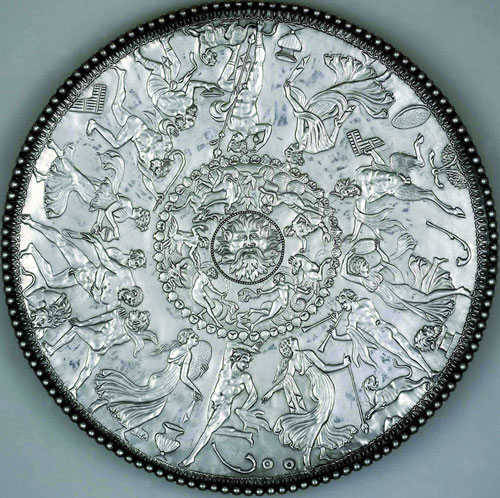
MILDENHALL DISH
Dionysian pagan art kept safe with Christian art, c. 350 AD
That’s like having a Playboy bunny dish in with your Christian collection today
http://www.bbc.co.uk/religion/programmes/lent_talks/scripts/mcgregor.html, The Human Face of God:
The great silver dish found at Mildenhall in Suffolk shows Bacchus the Roman god of wine drunkenly cavorting with pliant nymphs in an elegant but very alcoholic dance while the spoons found in the same hoard carry Christian symbols.
http://www.tarmac.co.uk/quarryville/pop/mildenhallDish.html, Mildenhall Dish:
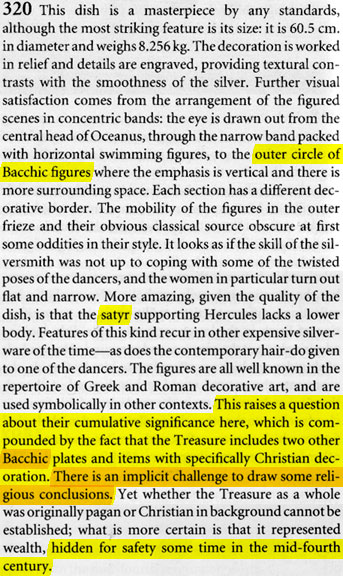
The Oxford History of Classical Art, Boardman, 1993, pp. 320-321, “Luxury Goods | Silverware | (illustration) 320”:
P. 321, illustration 320, “Great Dish from Mildenhall Treasure”:
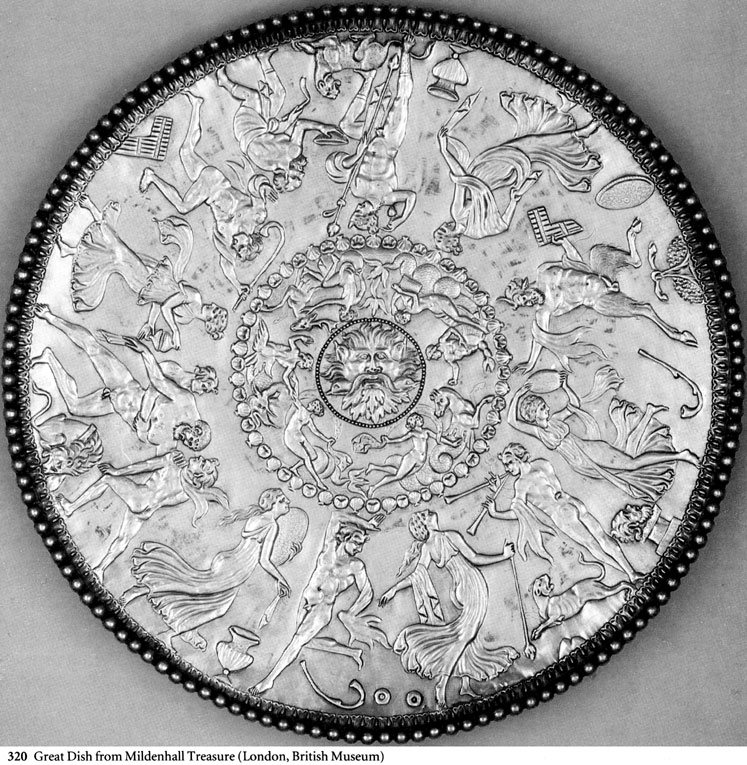
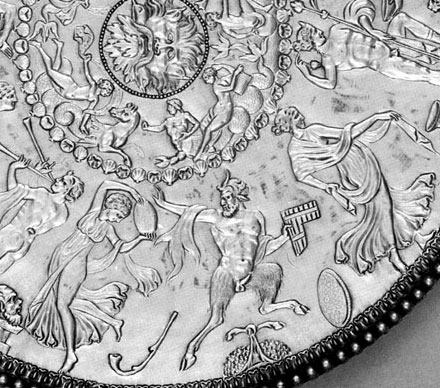
Notice Satyr with erection (rotated and cropped):
http://www.britannia.com/tours/bmrbgal/mildenhall.html, The Mildenhall Treasure, Mildenhall, Suffolk:
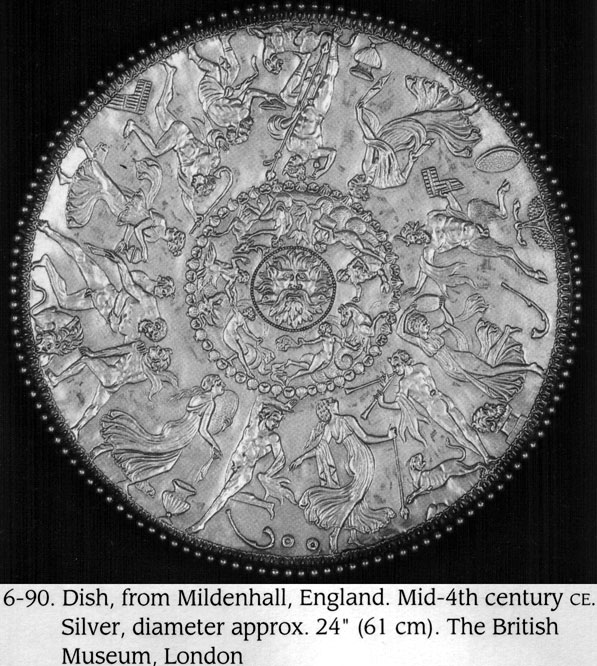
The most incredible find ever discovered, from the time of Imperial Rome's administration of Britain, can only be the Great Dish of the Mildenhall Treasure. This mid-fourth century silver-platter measures almost 2ft in diameter and weighs some 18lbs. It is one of the finest examples of the Roman whitesmith's craft surviving anywhere in the World. The decoration shows a central head of the sea-god, Oceanus, surrounded by nereids and fantastic sea creatures. The large outer band features Bacchic revellers. It was discovered in the 1940s, along with over thirty other items tableware, mostly with similarly elaborate decoration. There are smaller silver platters featured pan and maenads, a covered bowl a frieze of centaurs and wild animals, and numerous other bowls, ladles and spoons. They appear to be of Continental or North African origin. Most of the treasure is overtly pagan in nature and the Bacchic items probably had specific religious significance; though there are a number of christianized items including christening spoons bearing the chi-rho monogram.
Art History, Stokstad, Revised Edition, 1999, Vol. 1, pp. 284-285, “The Late Empire: Roman Traditionalism in Art After Constantine”:
P. 285, figure 6-90: