SANTA COSTANZA – APSE MOSAICS (2)
Early Christian and Byzantine Art, Beckwith, 1979, p. 28, “Early Christian Art: Rome and the Legacy of the Caesars”:
P. 29, illustrations 12 & 13:
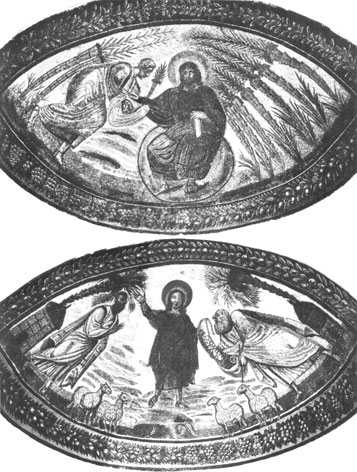
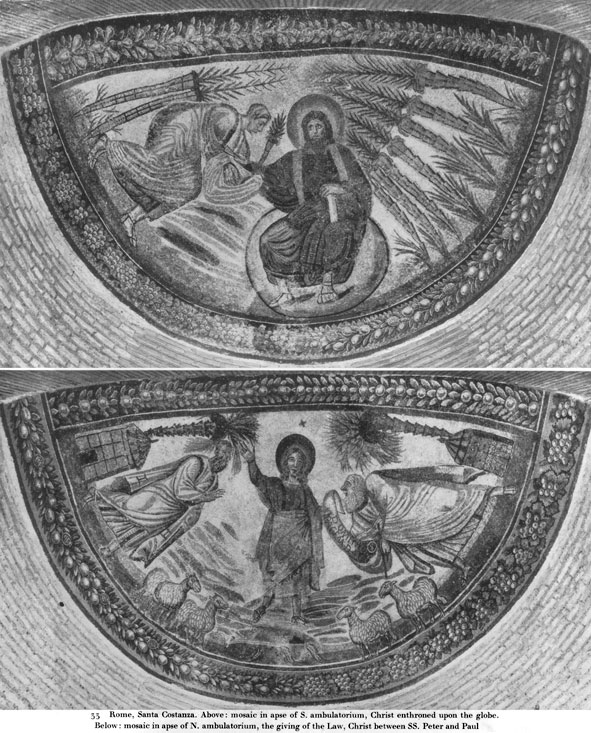
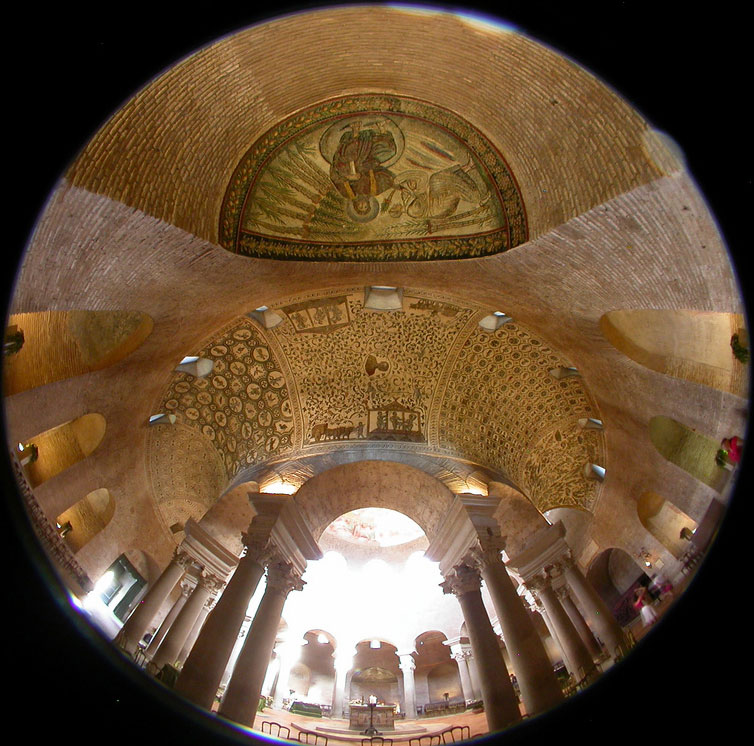
Early Christian Art, W. F. Volbach, 1961, plate 33, “Rome, Santa Costanza. Above (below top): mosaic in apse of S. ambulatorium, Christ enthroned upon the globe. Below (below bottom): mosaic in apse of N. ambulatorium, the giving of the Law, Christ between SS. Peter and Paul”:
Origins of Western Art, Dr. Donald E. Strong, 1965, p. 46, “Early Christian Art | 3rd-4th century”:
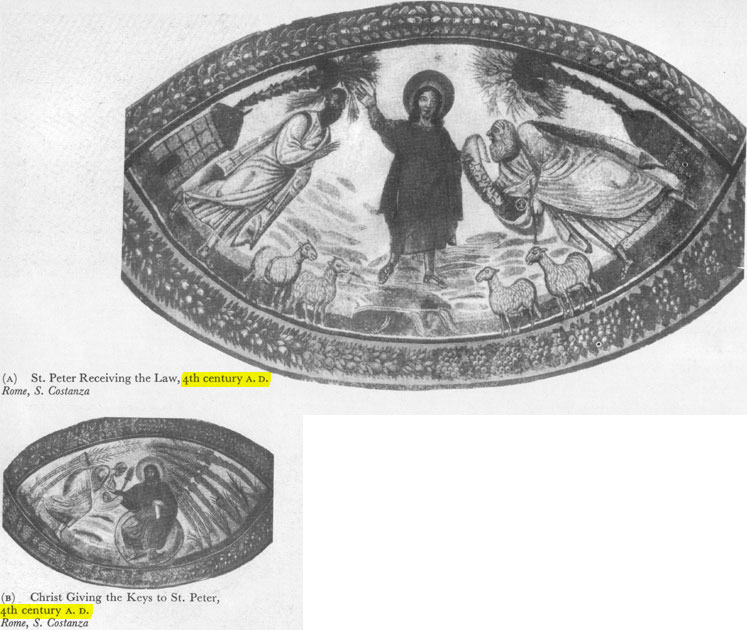
Apse mosaic: Traditio Clavium [2 person]:
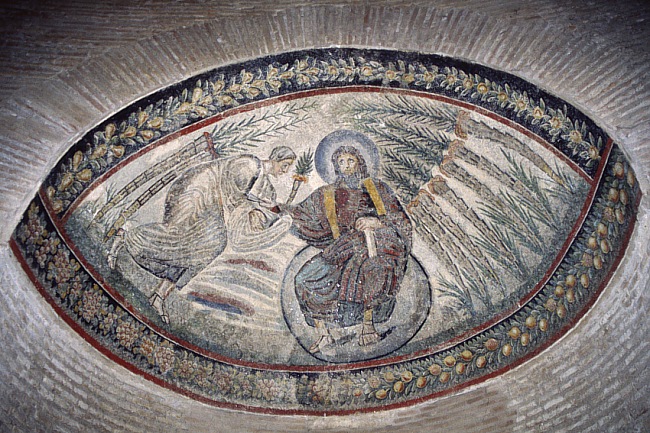
Early Christian Art: AD 200-395: From the Rise of Christianity to the Death of Theodosius, André Grabar, 1968, p. 192, “3. The Art of the Fourth Century | The Santa Costanza Mosaics | 207. Rome. Santa Costanza: The Lord delivering the Law to Moses”:
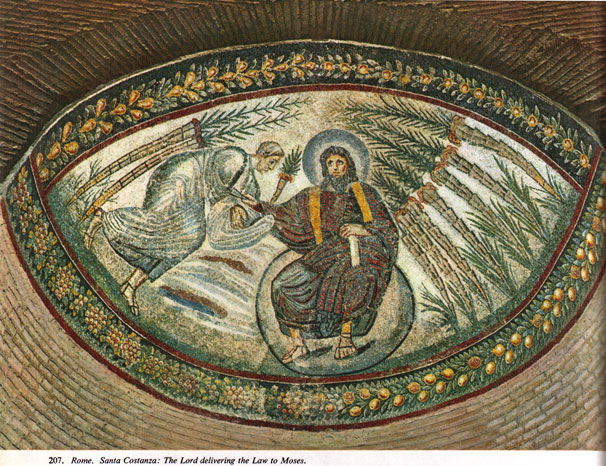
P. 323, “List of Illustrations”:
http://www2.siba.fi/%7Ekkoskim//rooma/pages/228_035B.HTM, “Constanza. Mosaic. Photograph from 1999”:
Early Christian Painting, Pierre du Bourguet, 1965, figure 136:
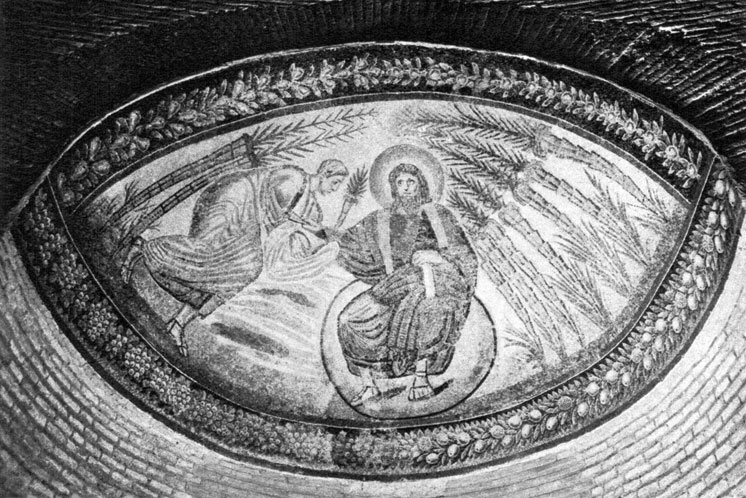
“List of Plates | Early Christian painting in other sites”:
The Origins of Christian Art, Gough, 1973, p. 20, illustration 12, “12 … the athlete’s palm …”:
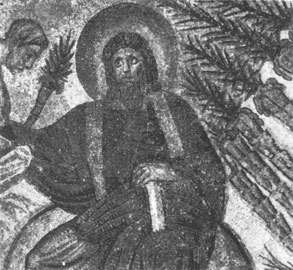
The Origins of Christian Art, Gough, 1973, p. 205, “List of Illustrations”:
http://www.sacred-destinations.com/italy/rome-santa-costanza.htm, Sacred Destinations, “Santa Costanza, Rome”:
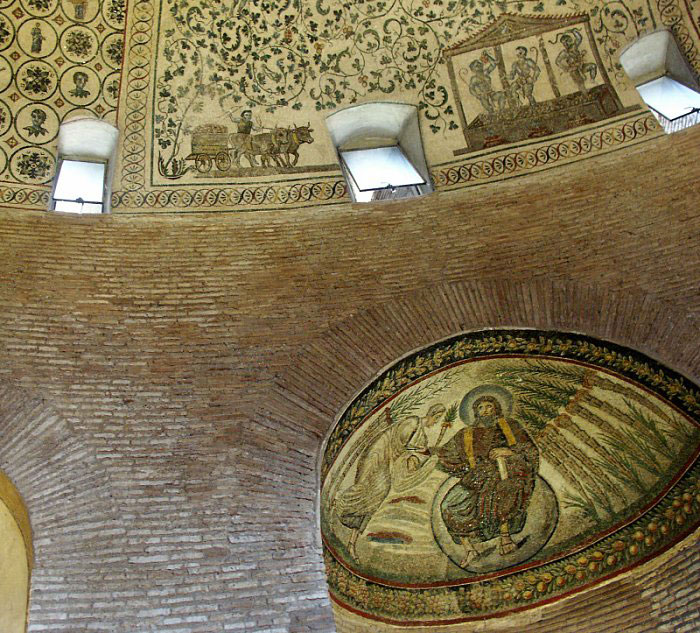
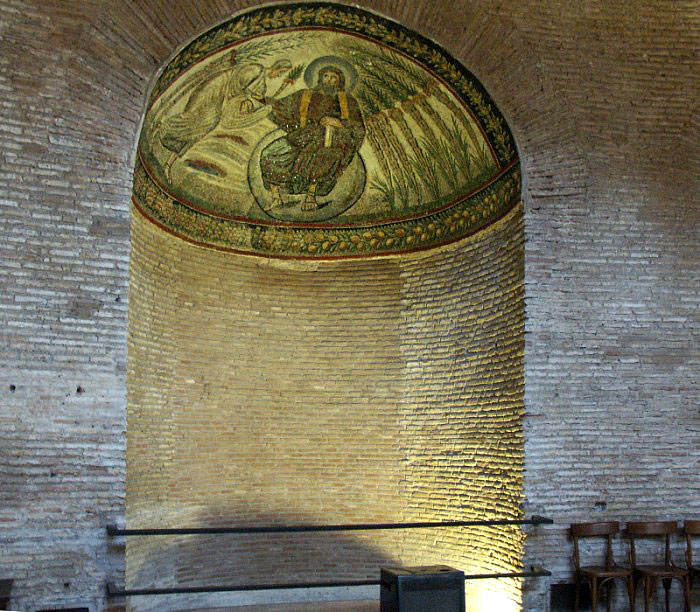
In the niche above are the remains of a mosaic with black stars on a white ground and traces of a gold Chi-Rho. In two of the larger side niches are mosaics dating from either the 5th or the 7th century. They have been poorly restored, but their richly decorated border reveal the quality of the originals. The first, to the left from the entrance, depicts the Traditio Clavium, in which Christ hands over the keys to the kingdom of Heaven to St. Peter (Matthew 16:9). The buildings represent Jerusalem.
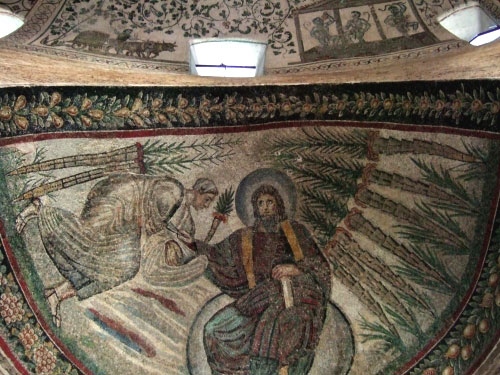
The 5th- or 7th-century Traditio Clavium mosaic.
http://www.bluffton.edu/~sullivanm/italy/rome/costanza/0041.jpg (via http://www.bluffton.edu/~sullivanm/italy/rome/costanza/costanza.html), Santa Costanza:
Mosaics in two of the larger side niches (or apse-like chapels) are thought to be 7th century restorations of 5th century mosaics.
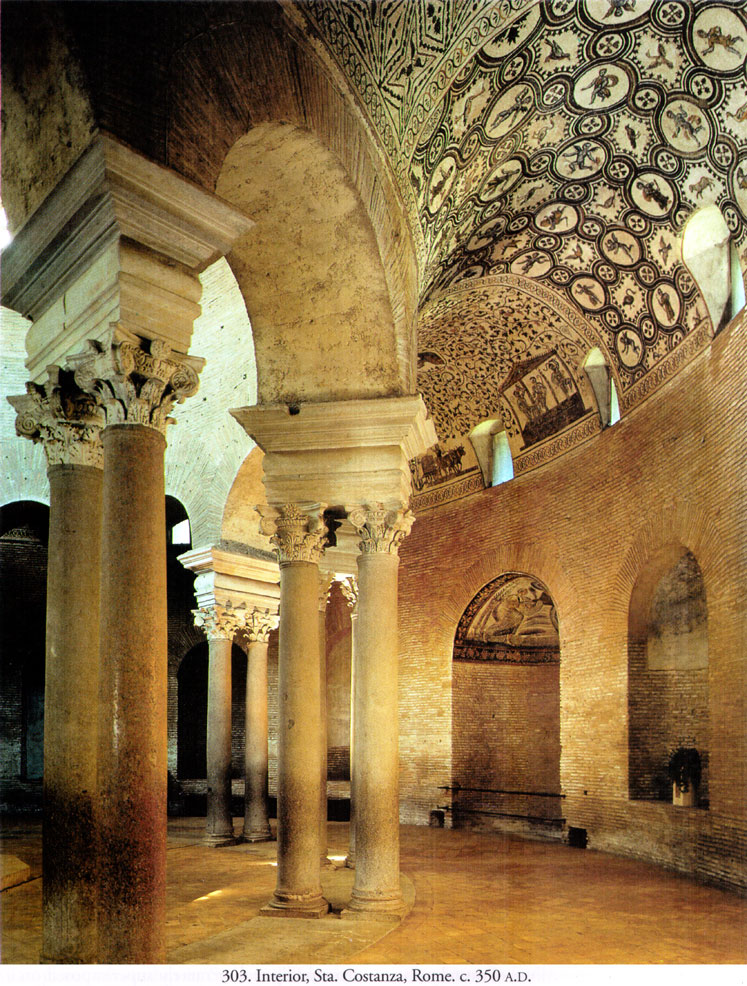
History of Art, Janson, 1997, p. 237, figure 303. Also at: http://www.mcah.columbia.edu/dbcourses/klein/large/JE-111.jpg (via http://www.mcah.columbia.edu/cgi-bin/dbcourses/item?skip=1100):
http://www.flickr.com/photos/35465707@N05/3307867271/ (via http://wiki.worldflicks.org/santa_costanza.html#coords=(41.9226135,%2012.517365)&z=19), Mausoleo di Santa Costanza 01:
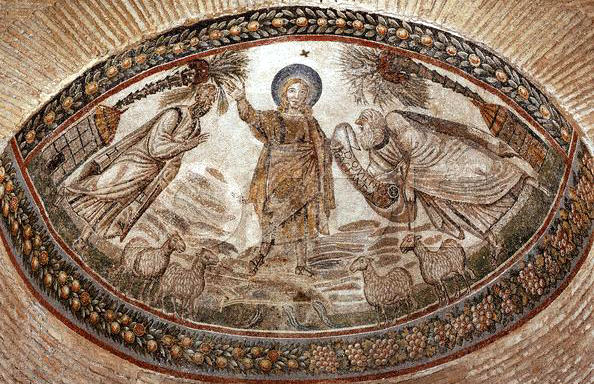
Apse mosaic: Traditio Legis [3 person]:
http://pro.corbis.com/, Search # CS004215, Christ Preaching Saint Peter and Saint Paul, 4th century A.D., Located in: Santa Costanza:
Early Christian Painting, Pierre du Bourguet, 1965, figure 137:
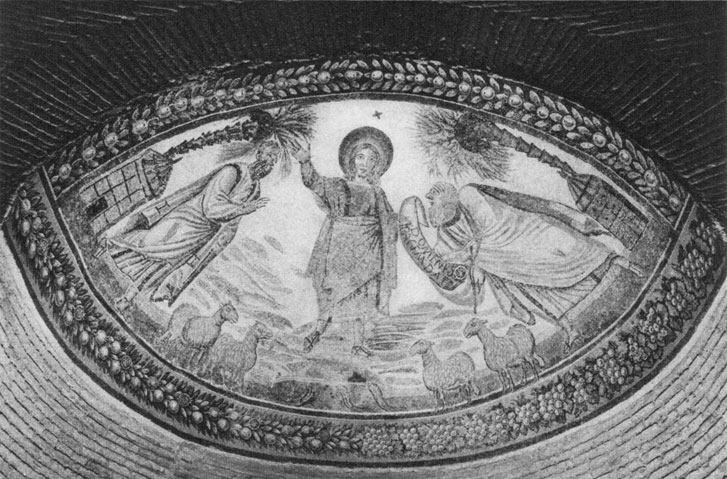
“List of Plates | Early Christian painting in other sites”:
Early Christian Painting, Pierre du Bourguet, 1965, figure 138:
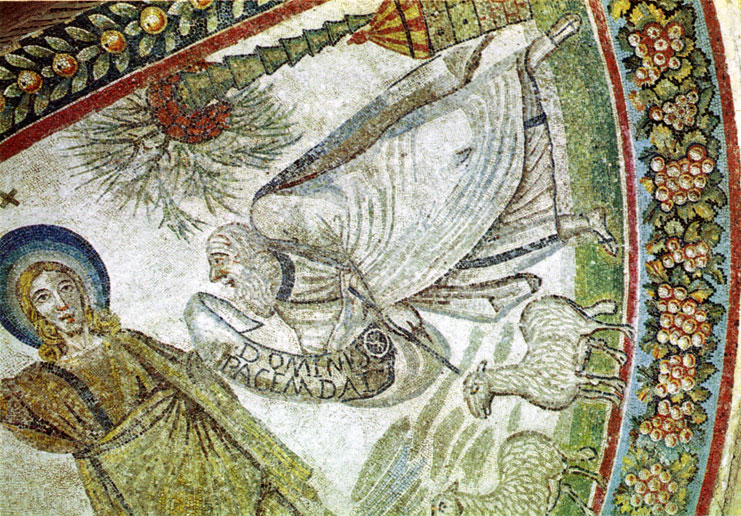
“List of Plates | Early Christian painting in other sites”:

http://www2.siba.fi/%7Ekkoskim//rooma/pages/228_032B.HTM, “S. Constanza. Mosaic. Photograph from 1999”:
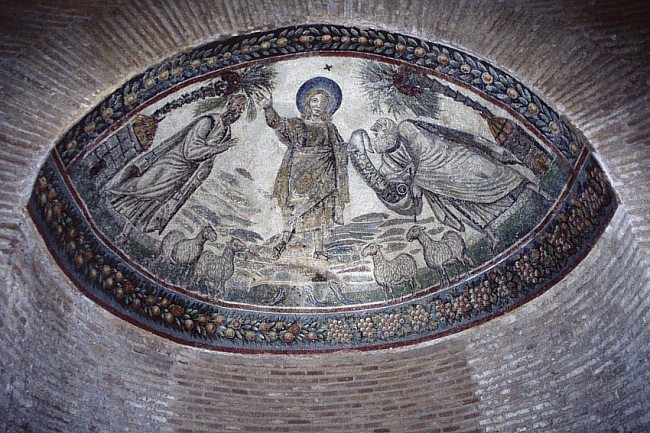
http://www.sacred-destinations.com/italy/rome-santa-costanza.htm, Sacred Destinations, “Santa Costanza, Rome”:
The other, on the right from the entrance, is of the Traditio Legis, in which St. Peter receives the right to govern on earth, symbolized by God handing Peter a Scroll of the Law, which reads DOMINVS PACEM DAT, "The Lord gives peace through his rule." The buildings in this mosaic represent Bethlehem. The date and interpretation of these two mosaics have been the subject of much scholarly debate.
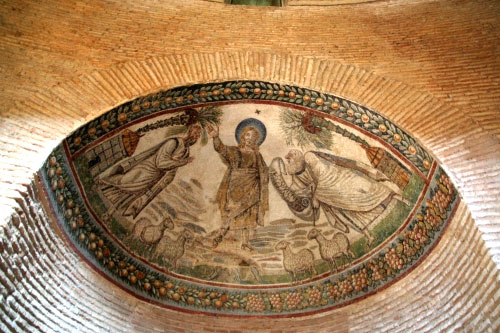
The 5th- or 7th-century Traditio Legis mosaic.
It looks like grapes on the lower right border.
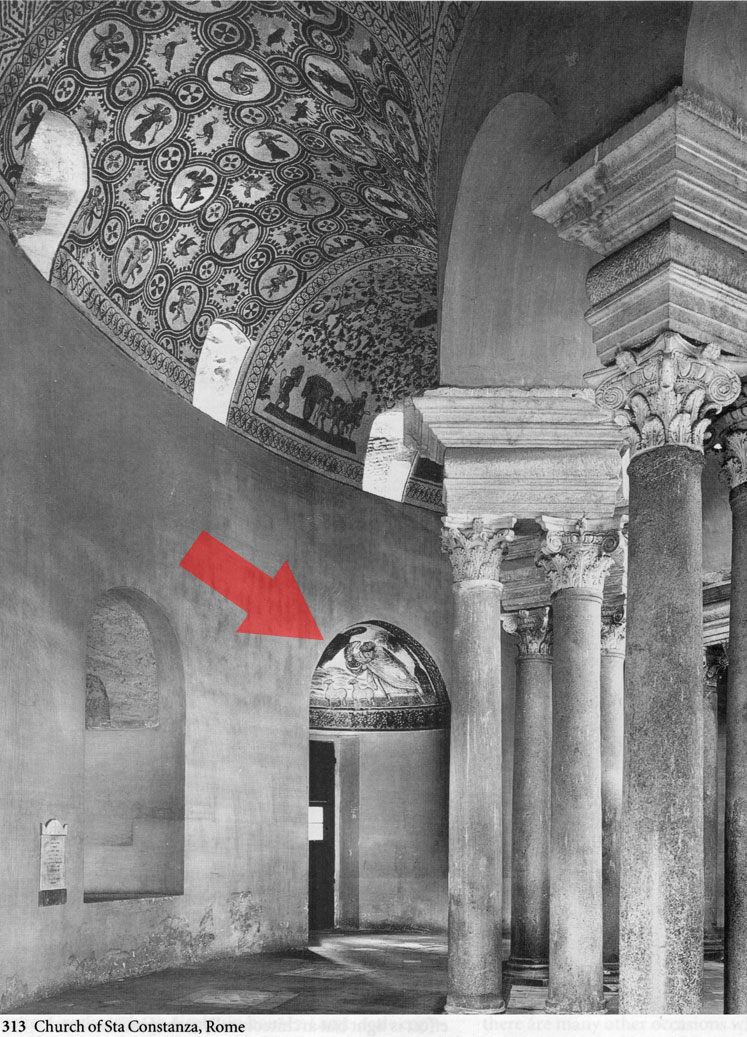
The Oxford History of Classical Art, Boardman, 1993, p. 317, illustration 313, “Church of Sta. Constanza, Rome”: