SARCOPHAGUS OF CONSTANTIA
(or, Constantina)
Daughter of Roman Emperor Constantine I the Great (who legalized Christianity in 313 with his Edict of Milan)
C. 350 AD
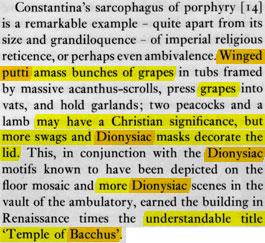
Early Christian and Byzantine Art, Beckwith, 1979, pp. 29-30, “Early Christian Art: Rome and the Legacy of the Caesars”:
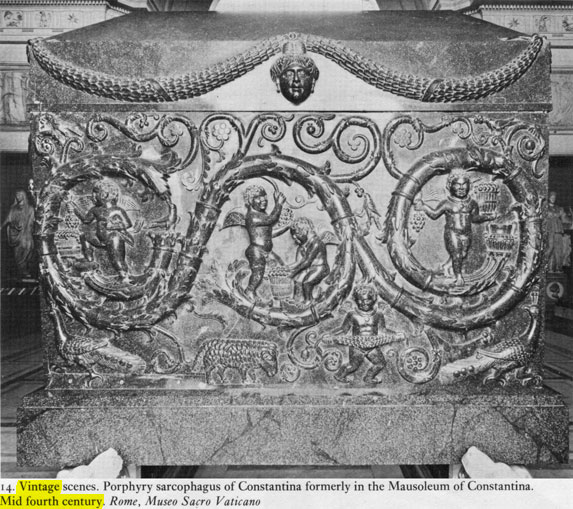
P. 30, illustration 14, “Vintage scenes”:
Early Christian Art, W. F. Volbach, 1961, p. 15:

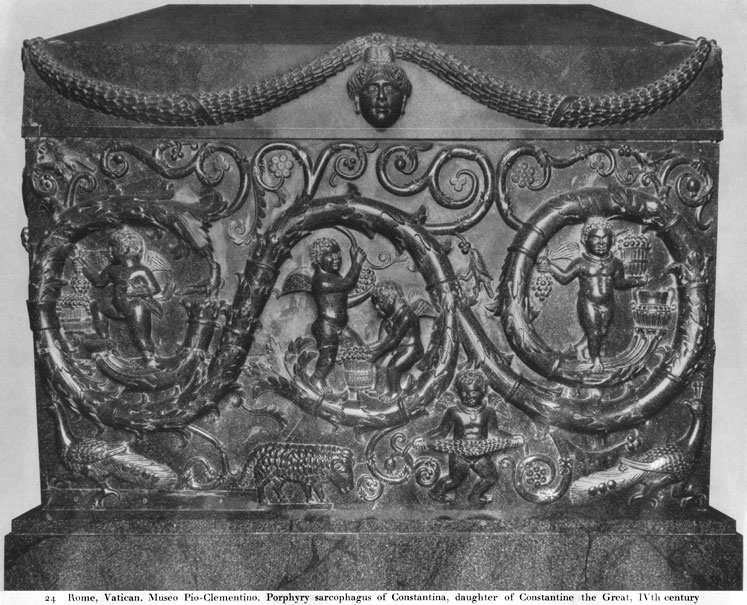
Plate 24, “Porphyry sarcophagus of Constantina, daughter of Constantine the Great, IVth century”:
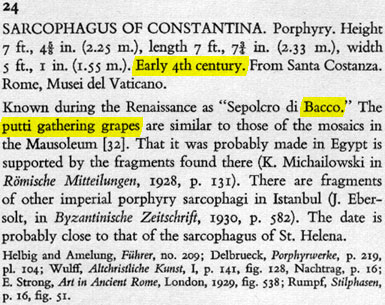
Early Christian Art, W. F. Volbach, 1961, p. 317, “Notes to the Plates”:
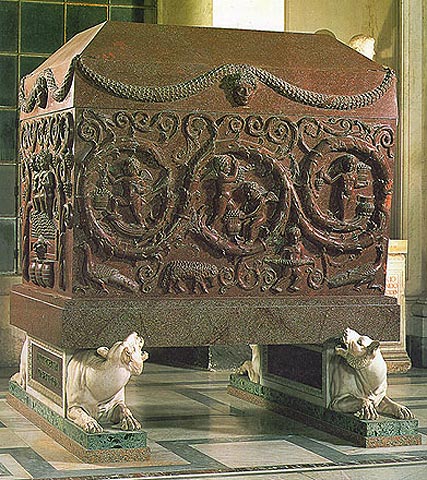
http://www.mcah.columbia.edu/dbcourses/klein/medium/JL-019.jpg (via http://www.mcah.columbia.edu/dbcourses/search.cgi?simplesearch=sarcophagus+of+constantia&root=items&search=simple), Sarcophagus of Constantia, c. 350 (base and supports later), Vatican Museums, Rome:
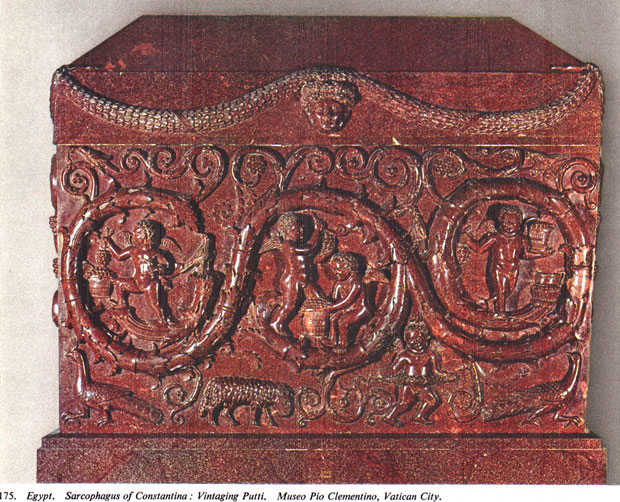
Early Christian Art: AD 200-395: From the Rise of Christianity to the Death of Theodosius, André Grabar, 1968, p. 168, “3. The Art of the Fourth Century | The Work of Constantine and his Family | 175. Egypt. Sarcophagus of Constantina: Vintaging Putti”:
P. 322, “List of Illustrations”:
…
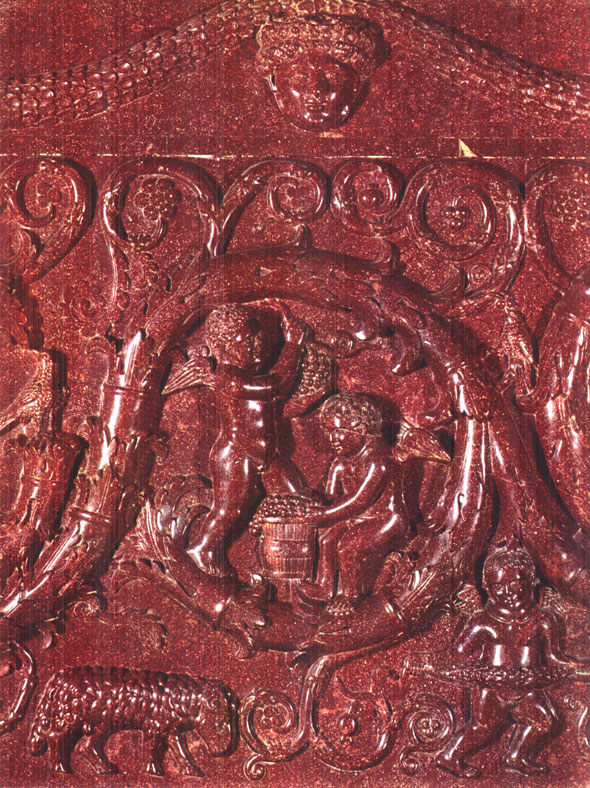
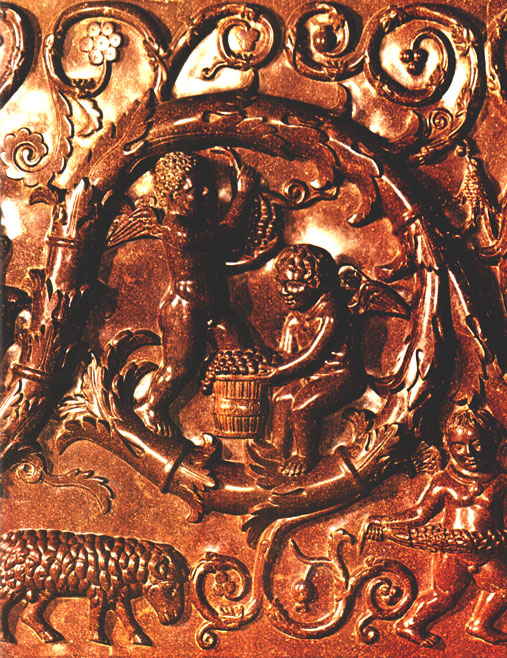
P. 144, “3. The Art of the Fourth Century | 149. Egypt. Sarcophagus of Constantina, detail: Vintaging Putti. Museo Pio Clementino, Vatican City”:
P. 321, “List of Illustrations”:
Vatican Museums, Rome, Newsweek, 1968, p. 32:
Pp. 32-33, “Sarcophagus of Constantia”:
http://goeurope.about.com/od/vaticanmuseums/ig/Vatican-Museums-pictures/vatican-porphyry-tomb.htm, Porphyry Sarcophagus Picture - Vatican Museums:
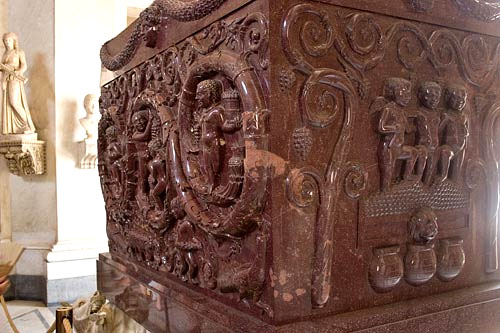
http://www.ou.edu/class/ahi4263/byzhtml/p01-03.html, The Early Christian Art:
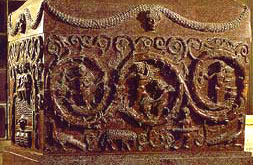
Sarcophagus of Constantia, c. 350. Vatican Museums, Rome.
Early Christian & Byzantine Art, Lowden, 1997, p. 43, “Art before Iconoclasm | God and Salvation | The Formation of a Christian art”:
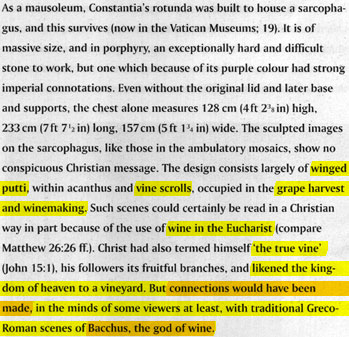
Pp. 42-43, illustration 19, “Sarcophagus of Constantia, c.350 (base and supports later). Vatican Museums, Rome”:
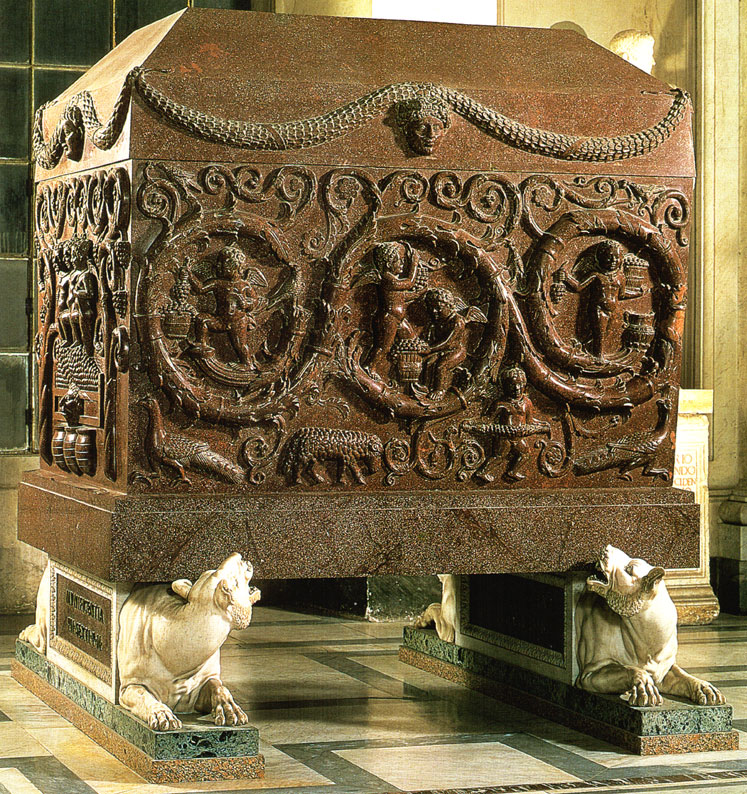
http://www.margaretvisser.com/part8a.html, The Geometry of Love: The Images: Part 8: Santa Costanza:
Cupids trampling grapes. This is one end of Constantina's porphyry sarcophagus, now in the Vatican Museums. A copy has taken its place in Santa Costanza's church. (pp.178-80):
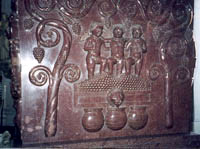
http://www.rome101.com/Christian/Costanza/, Santa Costanza:
The mausoleum once held a large porphyry sarcophagus, known as the Sarcophagus of Constantina, now in the Vatican Museum. … They include winged erotes who are harvesting grapes and making wine … all these images can appear along with biblical scenes on Christian sarcophagi. Because Christians were no doubt buried in sarcophagi made in generic non-Christian shops, the only indication of Christian usage might be the inscription or secondary addition of a chi-rho symbol or labarum. In other cases, partially-completed, "generic" sarcophagi were finished with the addition of Christian scenes the central panels. In such cases, it would be more accurate to state that Christians were able to tolerate certain pagan images on their sarcophagi than that Bacchic grape harvest scenes were Christian images.
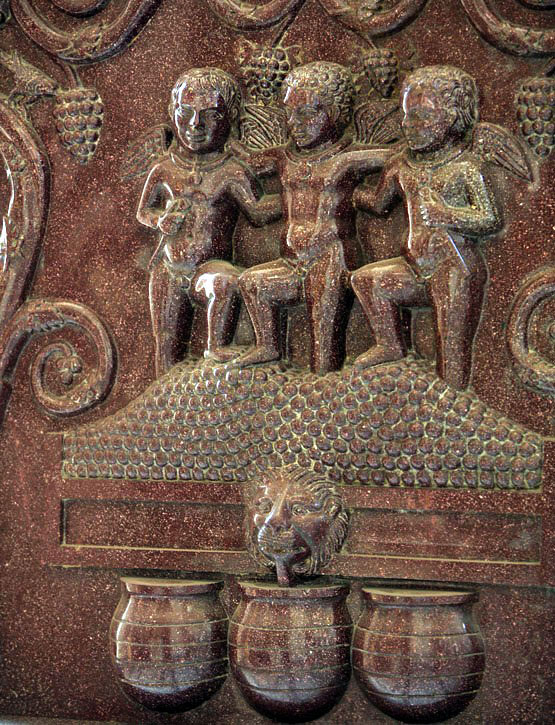
–Detail of Constantina Sarcophagus
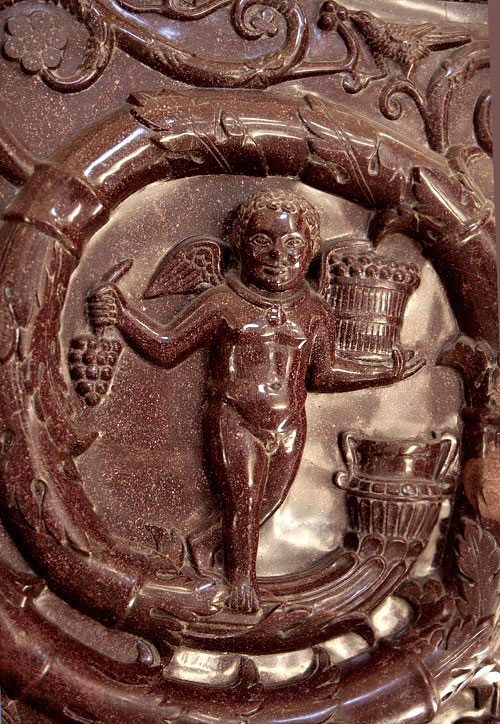
–Detail of Constantina Sarcophagus
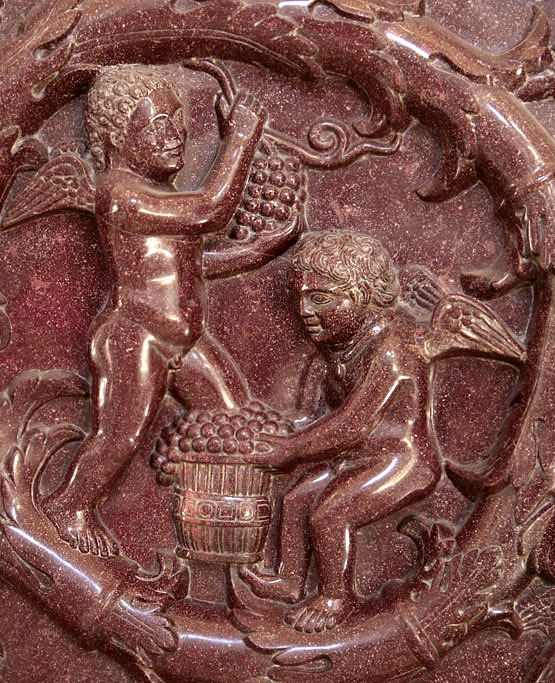
–Detail of Constantina Sarcophagus