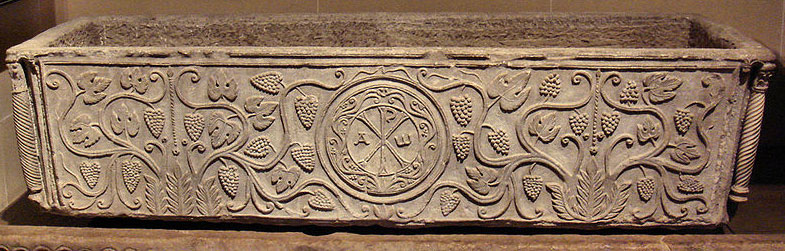
DIONYSUS – CHRISTIAN SARCOPHAGI
(Miscellaneous)
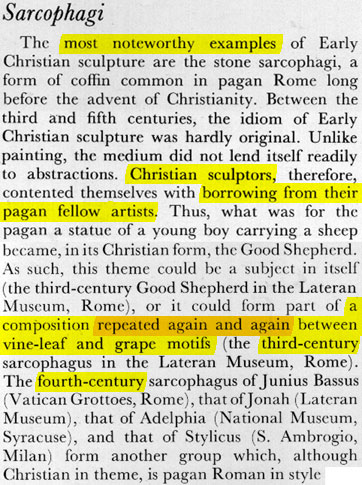
A World History of Art, Pischel, 1968, pp. 146-147, “Early Christian Art | Sarcophagi”:
Santa Lorenzo Church, Italy:
http://roma.katolsk.no/lorenzofuori.htm, Churches of Rome: San Lorenzo fuori le Mura:
There are two ancient sarcophagi in the portico. Of special interest is a Christian one, possibly decorated in the 7th century on an older sarcophagus, with a relief depicting putti picking grapes. Contrary to the norm, it has no obvious Christian symbols. The vines and grapes are symbols of the Eucharist, but it was usually done in a less subtle way than this, and this is a rare example of art for art's sake on a Christian sarcophagus.
I reckon this is it:
http://rubens.anu.edu.au/raid3/new/stereo.source7Gb/italy/rome/churches/s_lorenzo_al_verano/11L.JPG:
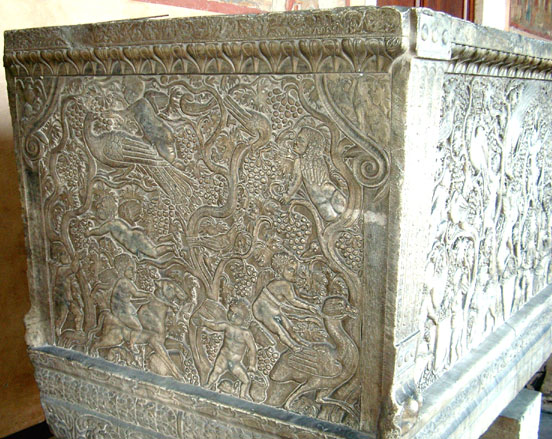
http://rubens.anu.edu.au/raid3/new/stereo.source7Gb/italy/rome/churches/s_lorenzo_al_verano/9L.JPG:
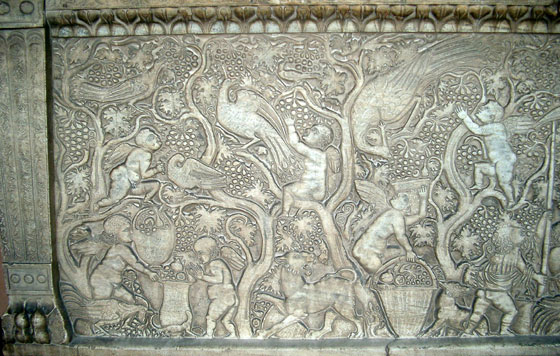
http://rubens.anu.edu.au/raid3/new/stereo.source7Gb/italy/rome/churches/s_lorenzo_al_verano/10L.JPG:
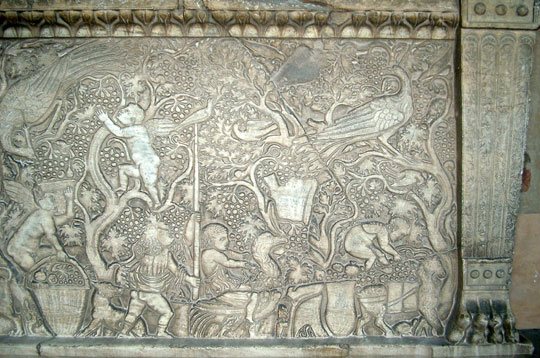
http://rubens.anu.edu.au/raid3/new/stereo.source7Gb/italy/rome/churches/s_lorenzo_al_verano/12L.JPG:
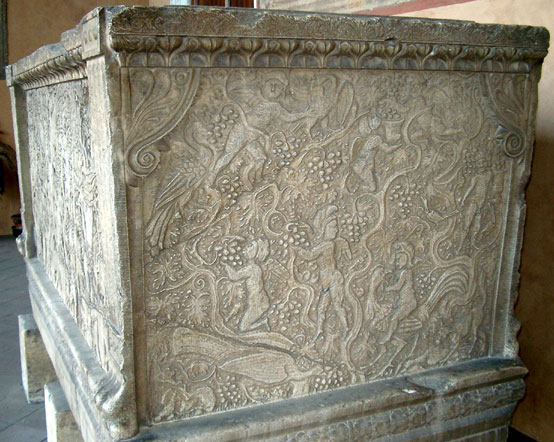
http://pro.corbis.com/, Search # SL002187, Detail of a Cloister Relief in San Lorenzo fuori le Mura Church, Rome, Christian art:
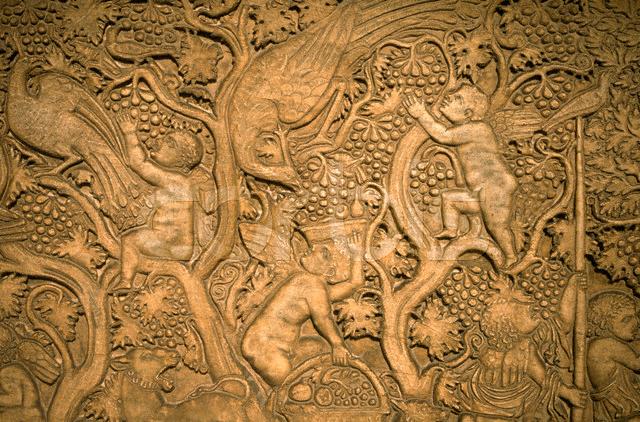
Search # SL002186:
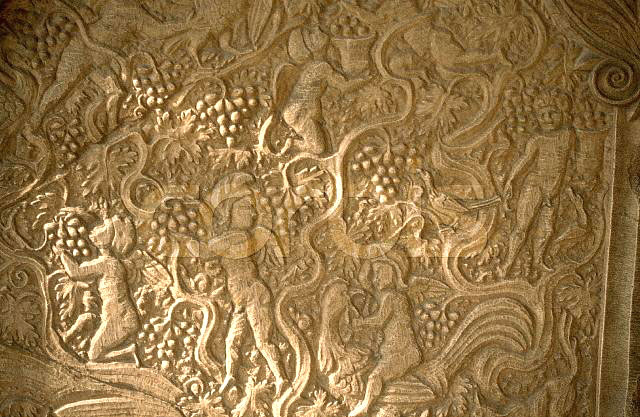
http://www.robertlandrum.com/location/italy/rome/Churches.html, Churches:
This sarcophagus also sits out in the portico of San Lorenzo.
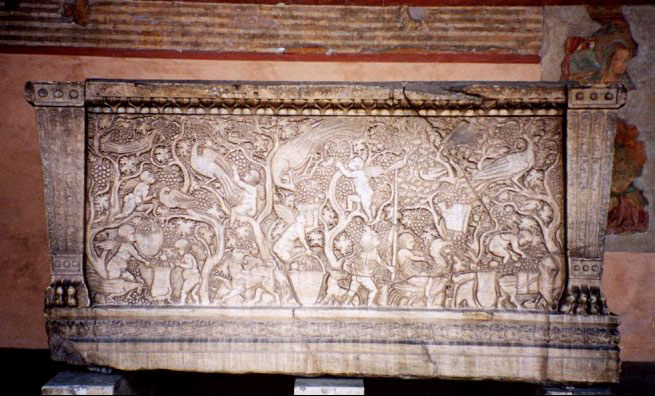
Sarcophagus, Sant’Ambrogio, Milan, Italy:
Late 4th century
The Origins of Christian Art, Gough, 1973, pp. 110-111, “From Constantine to Justinian”:
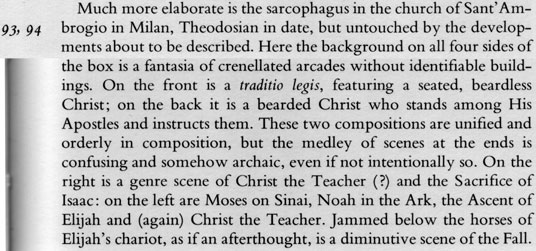
Pp. 110-111:

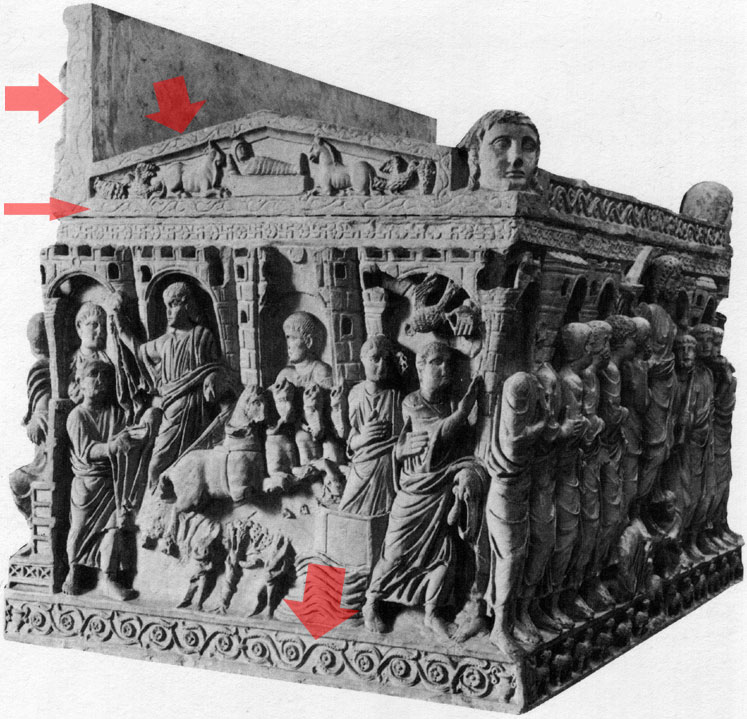
P. 110, illustration 93 [vine scrolls]:
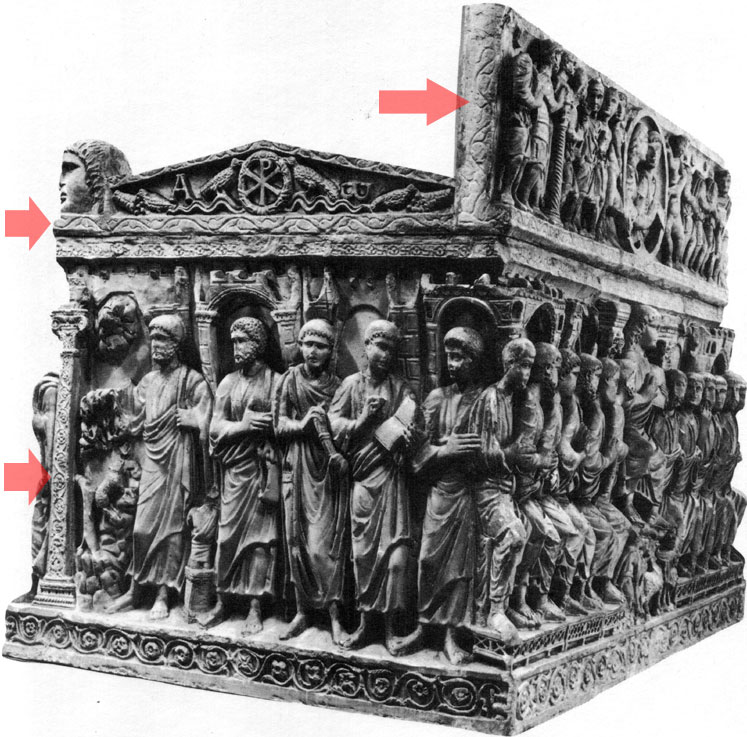
P. 111, illustration 94 [vine scrolls]:
P. 208, “List of Illustrations”:
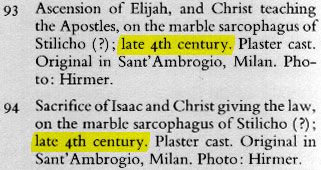
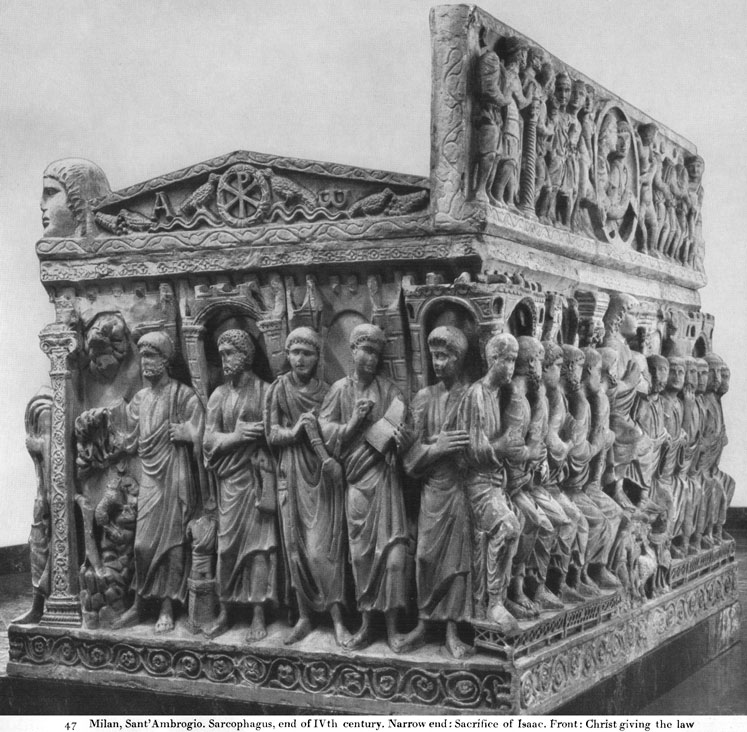
Early Christian Art: AD 200-395: From the Rise of Christianity to the Death of Theodosius, André Grabar, 1968, p. 263, “3. The Art of the Fourth Century | Sarcophagus Reliefs | 293. Sarcophagus: Standing Christ delivering the Law in the presence of the Apostles. Sant’Ambrogio, Milan” [Vine scroll]:
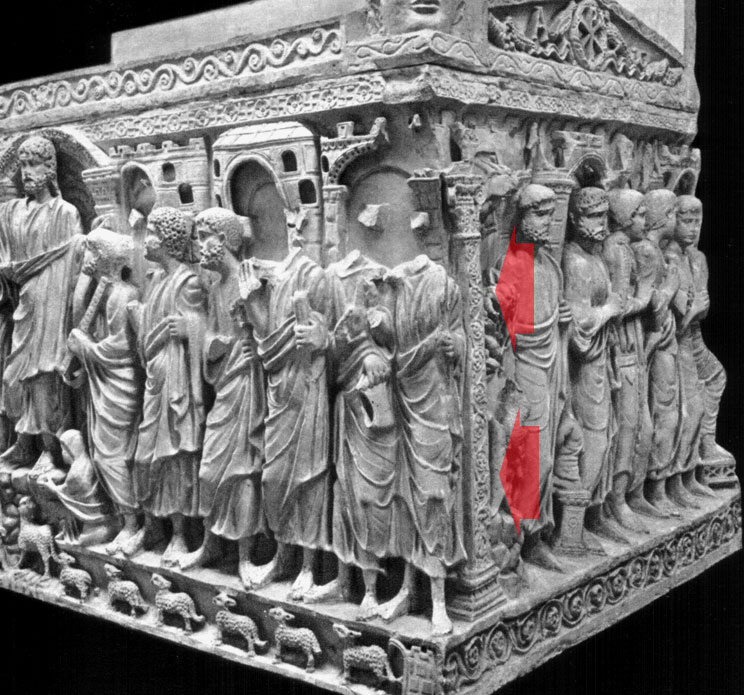
Early Christian Art, W. F. Volbach, 1961, plate 46, “Milan, Sant’Ambrogio. Sarcophagus, end of IVth century. Narrow end: Ascension of Elijah. Back: Christ teaches the Apostles” [Vines on fascia / cornice]:
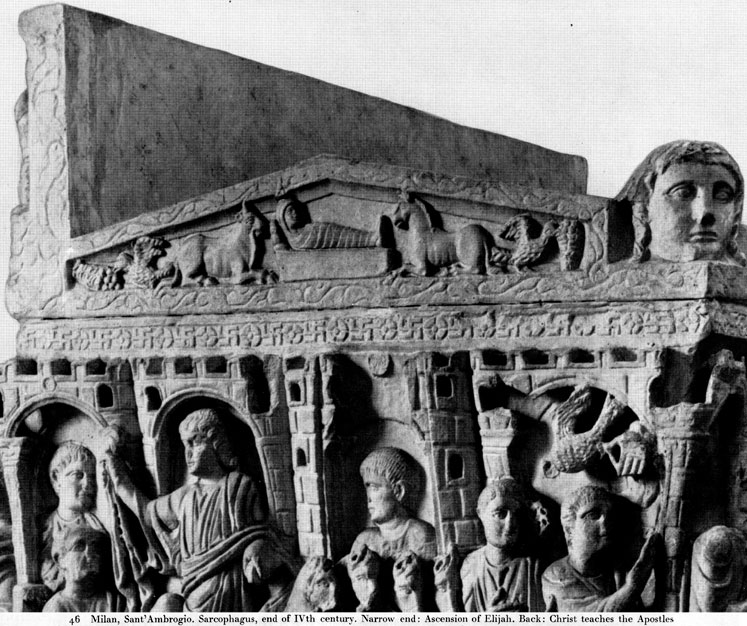
Early Christian Art, W. F. Volbach, 1961, plate 47, “Milan, Sant’Ambrogio. Sarcophagus, end of IVth century. Narrow end: Sacrifice of Isaac. Front: Christ giving the law” [Vines on the entablature’s cornice, raking cornice (pediment’s rafters), base frieze, columns, etc.]:
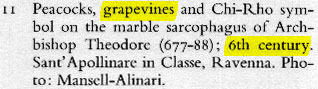
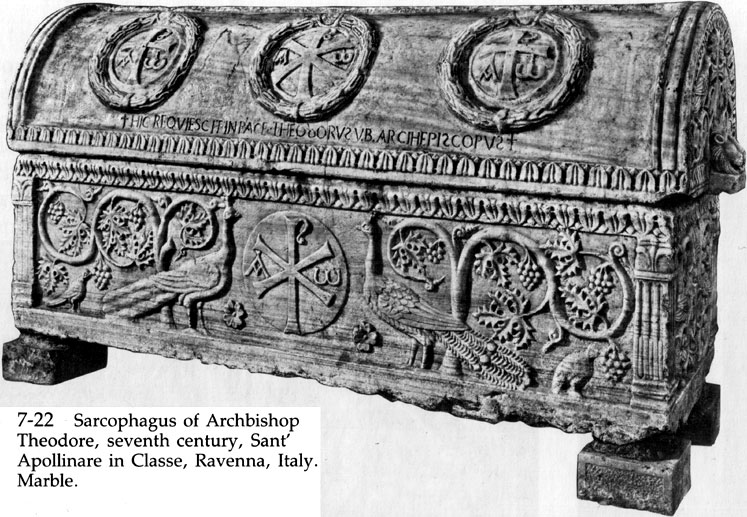
Sarcophagus of Archbishop Theodore:
From Sant’Apollinare in Classe, Ravenna, Italy, 7th century
Art of the Christian World: A.D. 200-1500: A Handbook of Styles and Forms, Christe / Velmans / Losowska / Recht, 1982, p. 48:
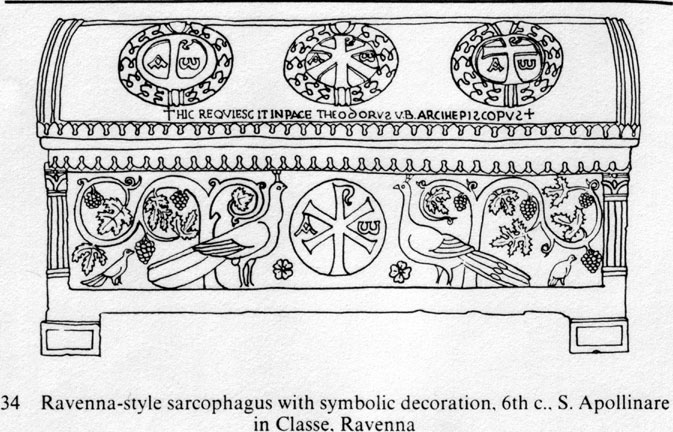
Art: An Introduction, Cleaver, 1972, pp. 147-148, figure 12-19, “Early Christian and Byzantine Art: 100-1453 | Byzantine Period: 500-1453”:
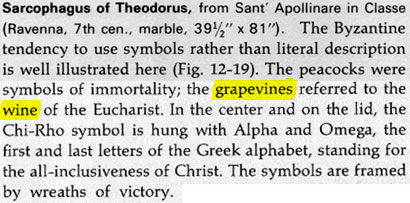
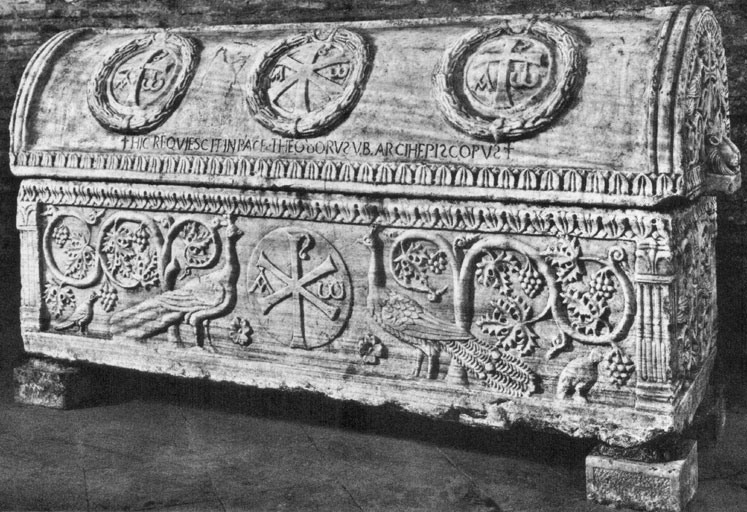
The Origins of Christian Art, Gough, 1973, p. 20, illustration 11, “Paganism baptized : Christian art before Constantine” [grape vines]:
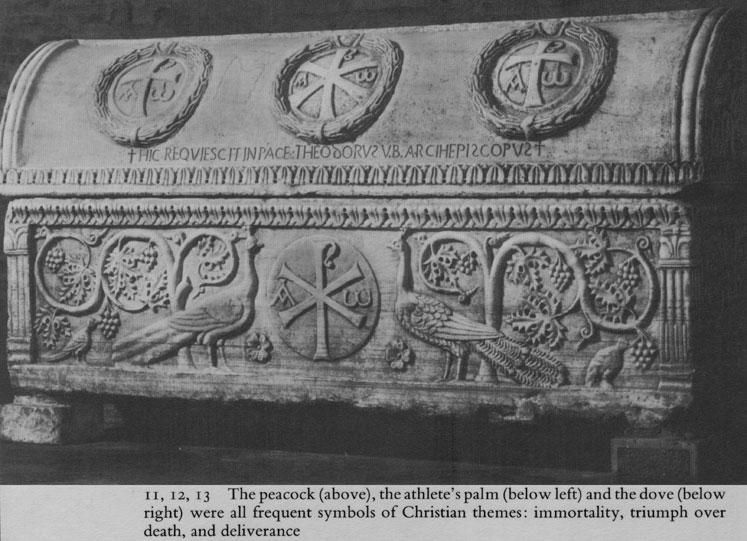
The Origins of Christian Art, Gough, 1973, p. 205, “List of Illustrations”:
Art Through the Ages, Gardner, 1986, p. 264, figure 7-22, “The Ancient World | Early Christian, Byzantine, and Islamic Art | Early Christian Art” (grape vines):
Early Christian and Byzantine Art, Beckwith, 1979, p. 123, illustration 100, “The Age of Justinian” [grape vines]:
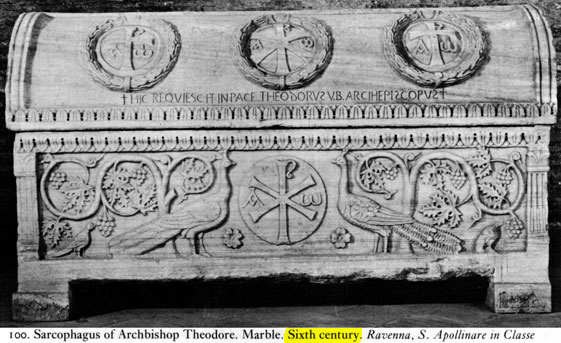
Interesting note about this book: The book is basically in chronological order, and there are many supportive pictures (Eros, vines, etc.) up to this page/date (p. 123 / sixth century). The remaining picture pages goes to p. 343 / fifteenth century, but show almost no supportive art. That’s 220 pages or nearly two-third of the remainder of the book.
Miscellaneous:
Early Christian Art: AD 200-395: From the Rise of Christianity to the Death of Theodosius, André Grabar, 1968, p. 255, “3. The Art of the Fourth Century | Sarcophagus Reliefs | 283. Italy. Sarcophagus: Christ delivering the Law, with Various Scenes. San Giovanni in Valle, Verona [Vine scroll on base frieze]”:
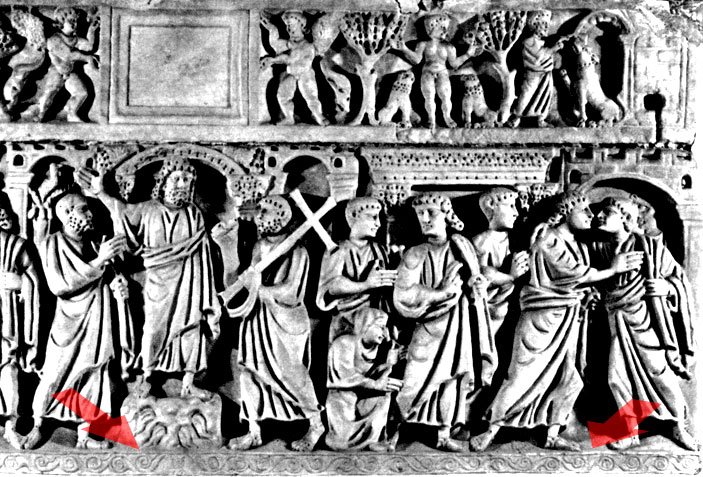
Medieval Art, Stokstad, 1986, p. 14, chapter 1, “Art in the First Centuries of the Christian Era | Christian Art Before Constantine”:
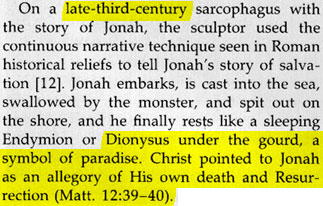
P. 15, illustration 12:
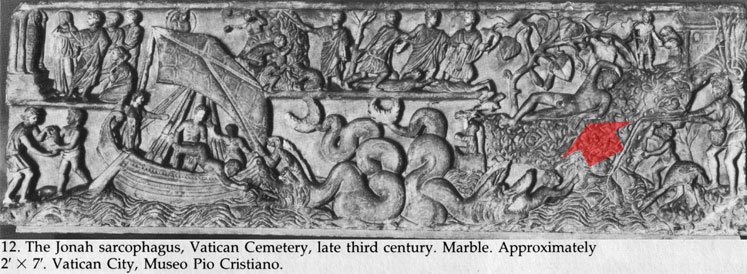
The Clash of Gods: A Reinterpretation of Early Christian Art, Mathews, 1993, pp. 30-31:

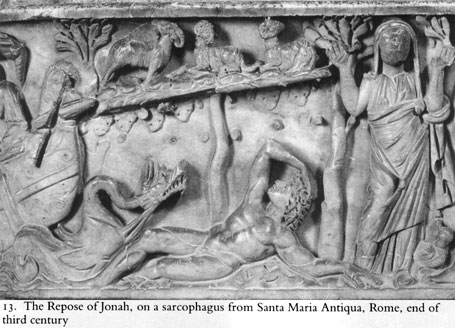
P. 32, figure 13:
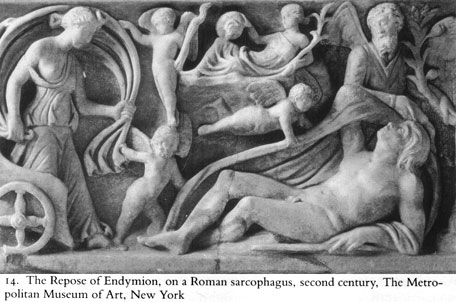
P. 32, figure 14:
Art of the Christian World: A.D. 200-1500: A Handbook of Styles and Forms, Christe / Velmans / Losowska / Recht, 1982, p. 49:
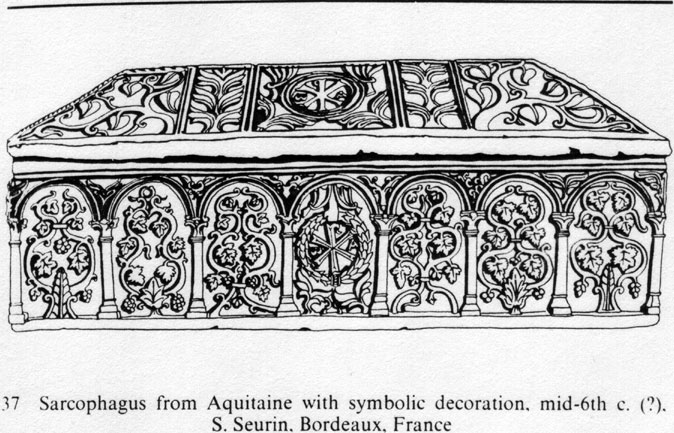
Early Christian Art, W. F. Volbach, 1961, plate 40, “Paris, Louvre. Chest-sarcophagus, VIth-VIIth century” [grape vines]:
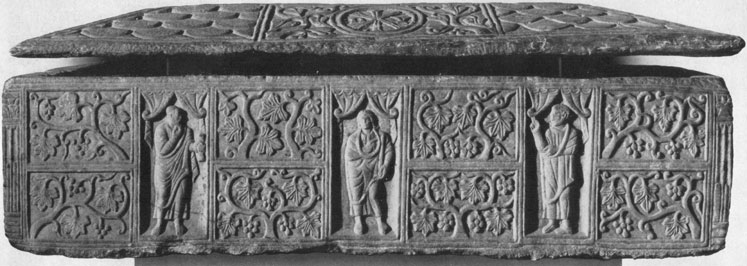
http://www.catacombsociety.org/vom/116.html, Vaults of Memory:
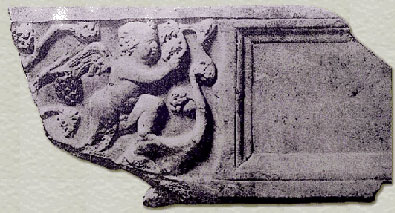
The Vine
The plant most frequently seen in art and alluded to in writing was the grapevine, brought to the Greek and Roman world by Dionysos, a god associated with resurrection and eternal life. From Homeric times, wine was poured on the remains of heroes and royalty, and grapevines were part of the funerary ritual. As the garden where the vine grew, the vineyard signified the "house of Israel" for the Jews and the Church for early Christians.
A Laboring Putto
116.
On a sarcophagus lid from the catacombs of
Villa Torlonia, a putto harvests grapes.
Pagan but Christian related:
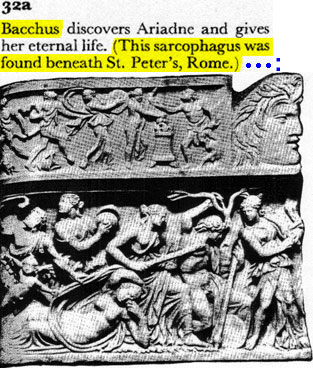
http://classics.furman.edu/~rprior/imgs/RCU4/4-071.jpg (via http://classics.furman.edu/~rprior/courses/RA/RAU4.html), Roman Archaeology: Roman Art, “in cemetery under St. Peters … Vatican relief of Dionysus and Ariadne from a sarcophagus in Tomb Z”:
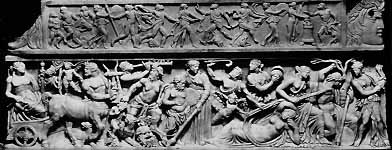
The World of Rome, Grant, 1960, figure 32a:
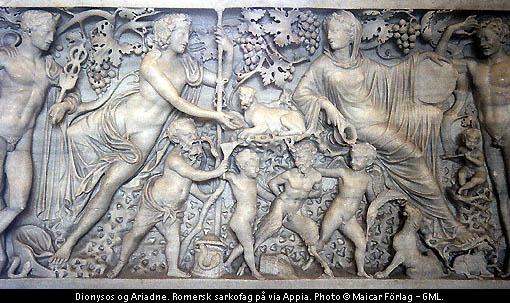
http://homepage.mac.com/cparada/GML/000Free/000Dionysus/source/24.html, Dionysus Album, “Dionysos og Ariadne. Romersk sarkofag pa via Appia. Ny Carlsberg Glyptotek, Copenhagen”:
Imperial Rome and Christian Triumph, Elsner, 1998, p. 151, illustration 100, “‘Mythological’ sarcophagus, Rome, c. AD 200. Marble. The Walters Art Gallery, Baltimore”:
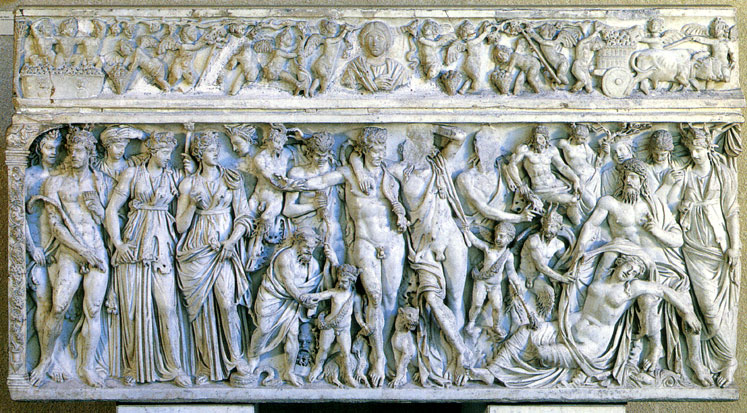
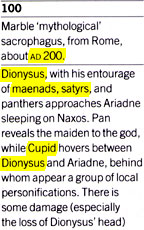
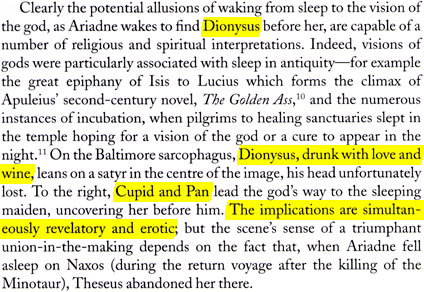
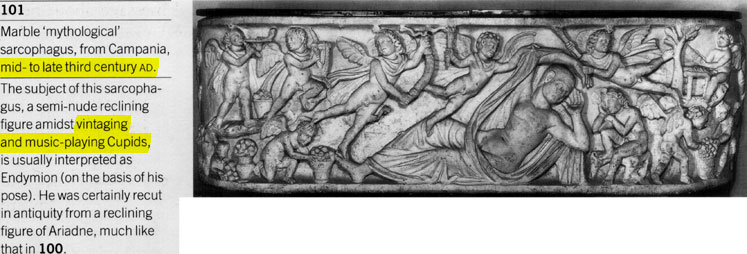
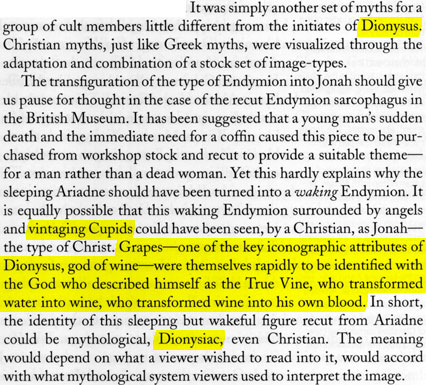
P. 153, illustration 101:
Another Christian one added 2-2-11:
(Appended so the numbered file names of all images above don’t change, for people who have already linked to them.)
http://en.wikipedia.org/wiki/File:SarcophagusSoissonFrance6thCentury.jpg (via http://en.wikipedia.org/wiki/Chi_Rho), Chi Rho, “Sarcophagus with Chi Rho symbol and Alpha and Omega, 6th century, Soissons, France.”: