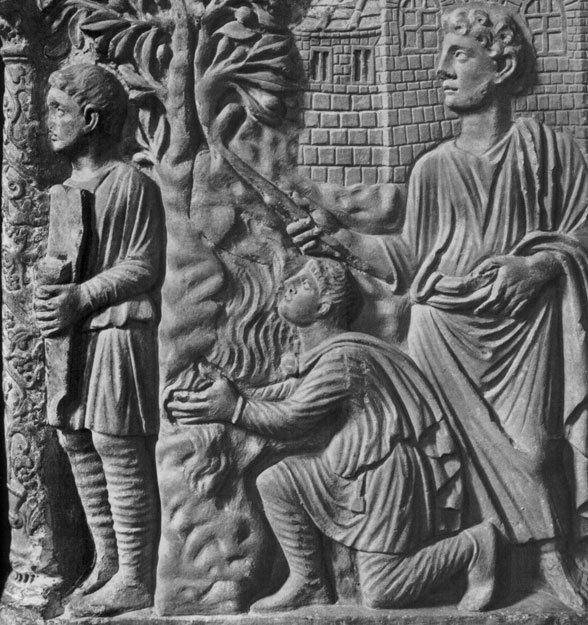
SARCOPHAGUS OF JUNIUS BASSUS
359 AD
http://www.newadvent.org/cathen/03510a.htm (Catholic Encyclopedia), Early Roman Christian Cemeteries, “The Vatican Cemetery”:
The "Grotte Vecchie" and the "Grotte Nuove", or subterraneous chapels and galleries in the vicinity of the tomb of St. Peter, cover the site of this ancient Christian cemetery; in them lie buried also a number of popes; St. Gregory I, Boniface VIII, Nicholas V, Alexander VI. The rich sarcophagus of Junius Bassus, important for early Christian symbolism, is in the "Grotte Nuove"
Eros and vines on columns:
Early Christian Art, W. F. Volbach, 1961, plate 41, “Vatican, Grottoes of St. Peter’s. Sarcophagus of the Roman Prefect Junius Bassus (d. 359)” [Eros & grape vines on columns]:
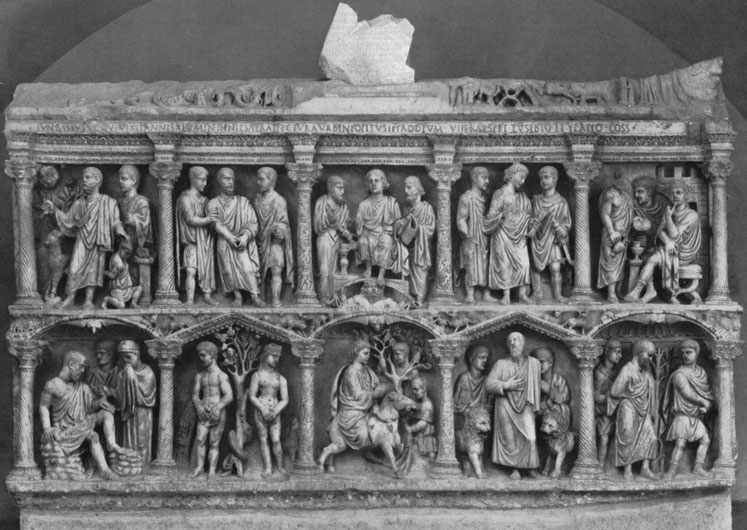
…
Plate 42, “Vatican, Grottoes of St. Peter’s. Sarcophagus of Junius Bassus. Above (below at top): Christ as Judge between SS. Peter and Paul. Below (below at bottom): Christ’s entry into Jerusalem” [Eros & grape vines on columns]:
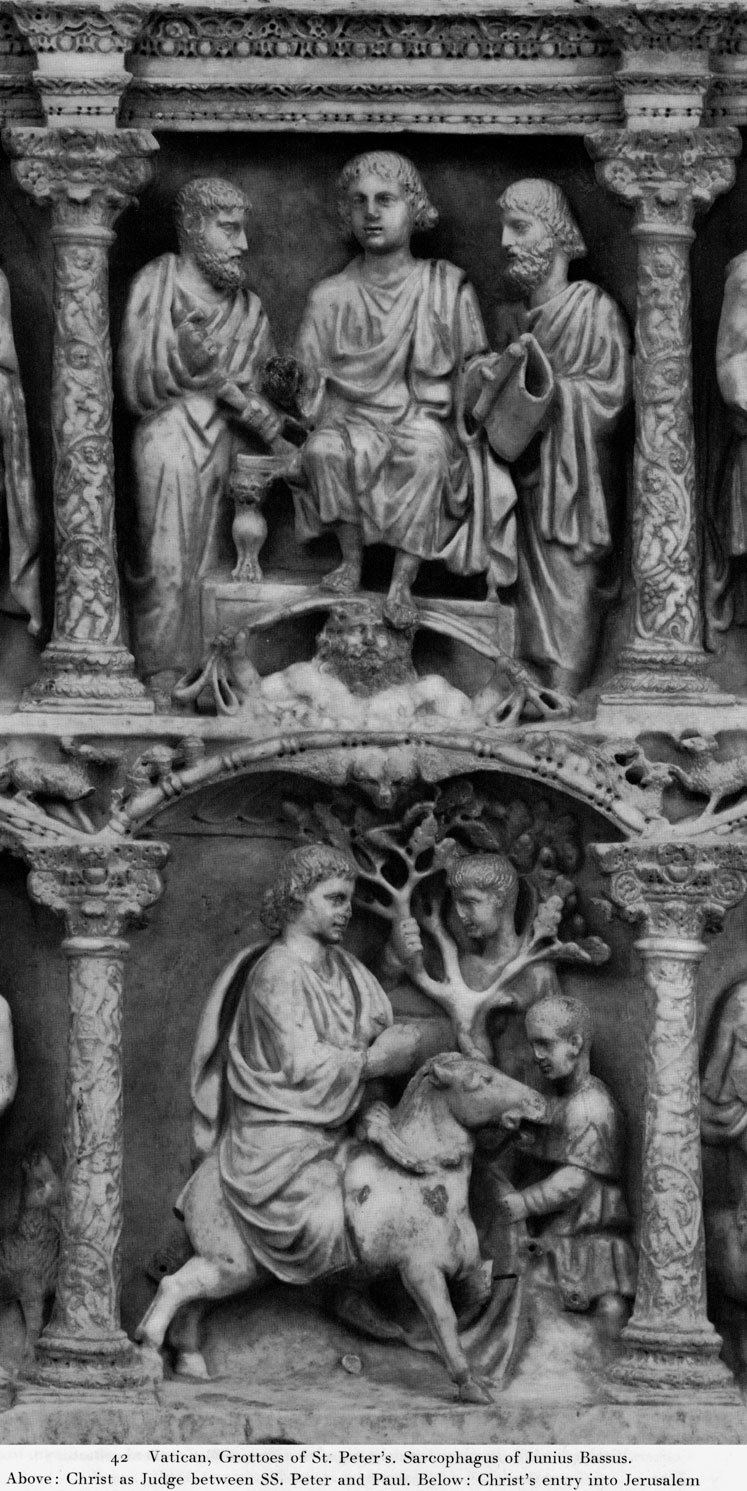
…
Plate 43, “Vatican, Grottoes of St. Peter’s. Sarcophagus of Junius Bassus. Adam and Eve” [Eros & grape vines on column]:
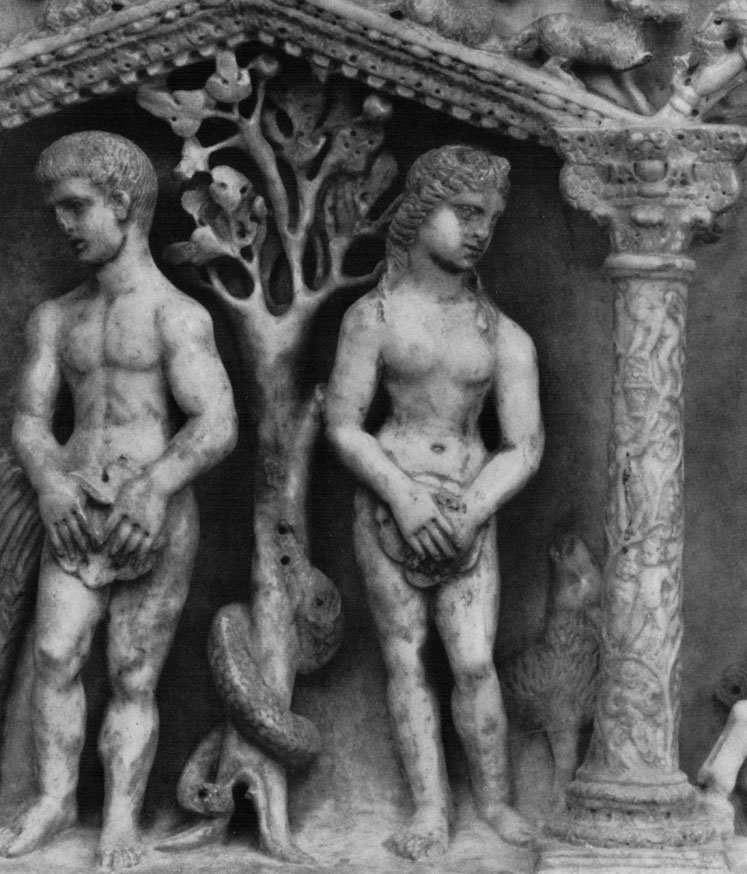
The reason this kind of art is available is because when you walk into a room and see grape vines on Christian art, you think there’s a grape vine. But, in the pagan classical period, when someone walked into a room and saw a grape vine in Christian art, they would think that they honor Dionysus / Bacchus, the pagan god of the vine. The Early Christians must have been inspired by God to know what would be accepted today and what would not be acceptable today. The same with Eros: he’s a little kid: today’s ignorant mind can’t see him as a threat. And, since it takes a two-step thinking process to grasp the correlations, most people aren’t going to be able to get it. Plus, the emotional acceptance would be far too much for anyone today to be able to bear, including the ones who would like to see a free / open sex society based on “unconditional” love: Just because something logically fits, doesn’t mean people are going to be able to just overrule their gut trust in today’s overwhelming corrupt religious teachings.
Early Christian Art: AD 200-395: From the Rise of Christianity to the Death of Theodosius, André Grabar, 1968, p. 238, “3. The Art of the Fourth Century | Sarcophagus Reliefs | 264. Sarcophagus of Junius Bassus, detail: Entry of Christ into Jerusalem. Grotte Vaticane, Vatican City” [grape vines]:
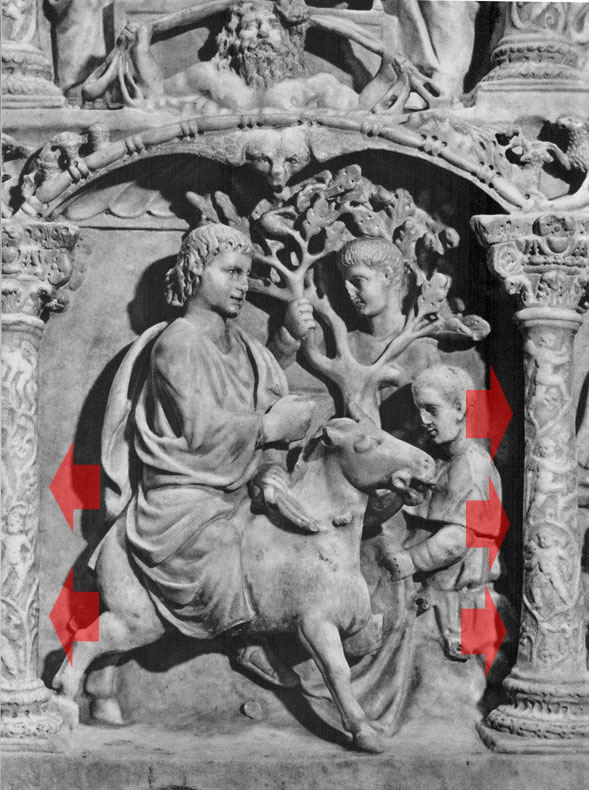
P. 46, “41. Rome. Sarcophagus of Junius Bassus. Grotte Vaticane, Rome”:
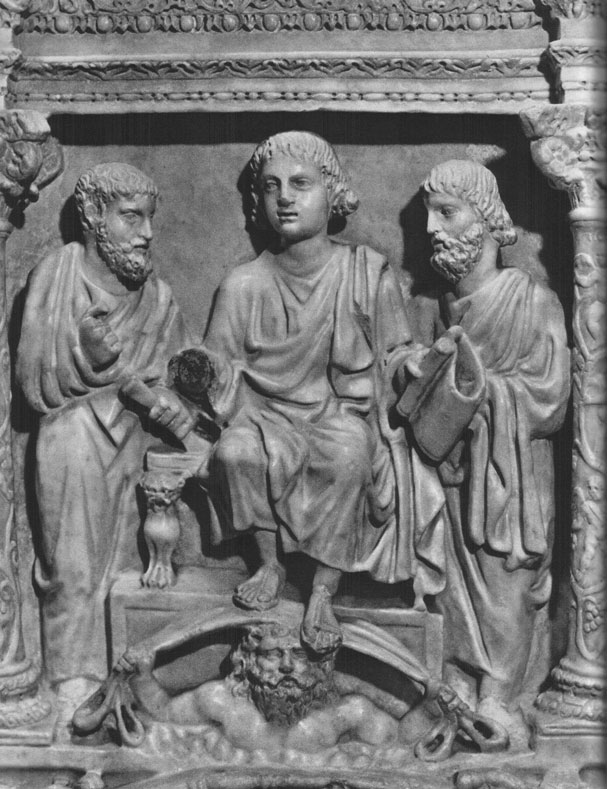
http://vandyck.anu.edu.au/introduction/earlychristian/L22-02b.htm (via http://vandyck.anu.edu.au/introduction/earlychristian/earlychristian.html), Detail: Sarcophagus of Junius Bassus:
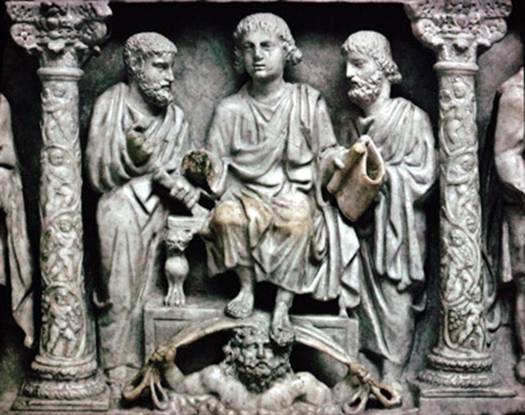
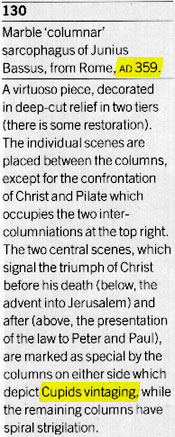
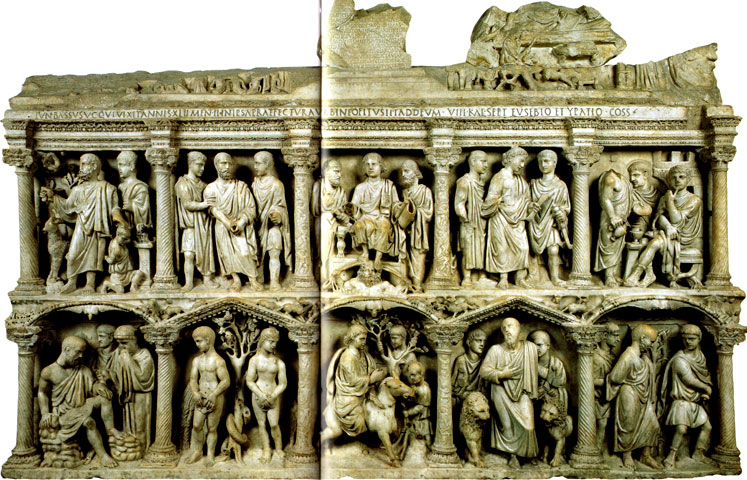
Imperial Rome and Christian Triumph, Elsner, 1998, pp. 194-195, illustration 130, “Marble ‘columnar’ sarcophagus of Junius Bassus, from Rome, AD 359”:
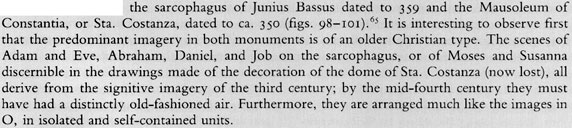
The Via Latina Catacomb, Tronzo, 1986, p. 67, “Cubiculum O—A Decoration for New Christians”:
P. 68:
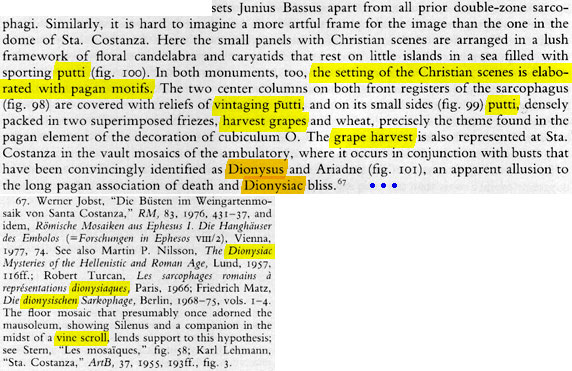
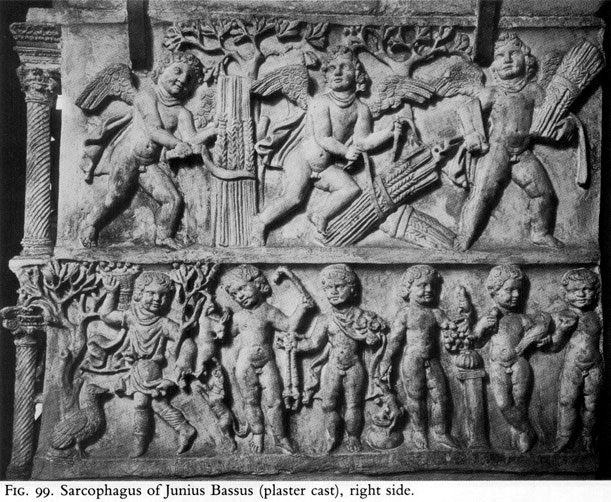
Figure 98:
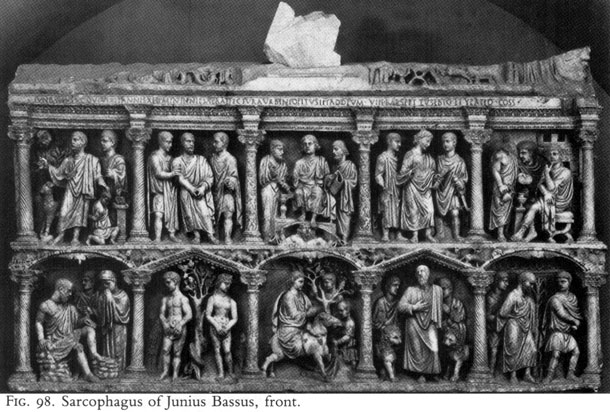
Figure 99 [Eros with arrows]:
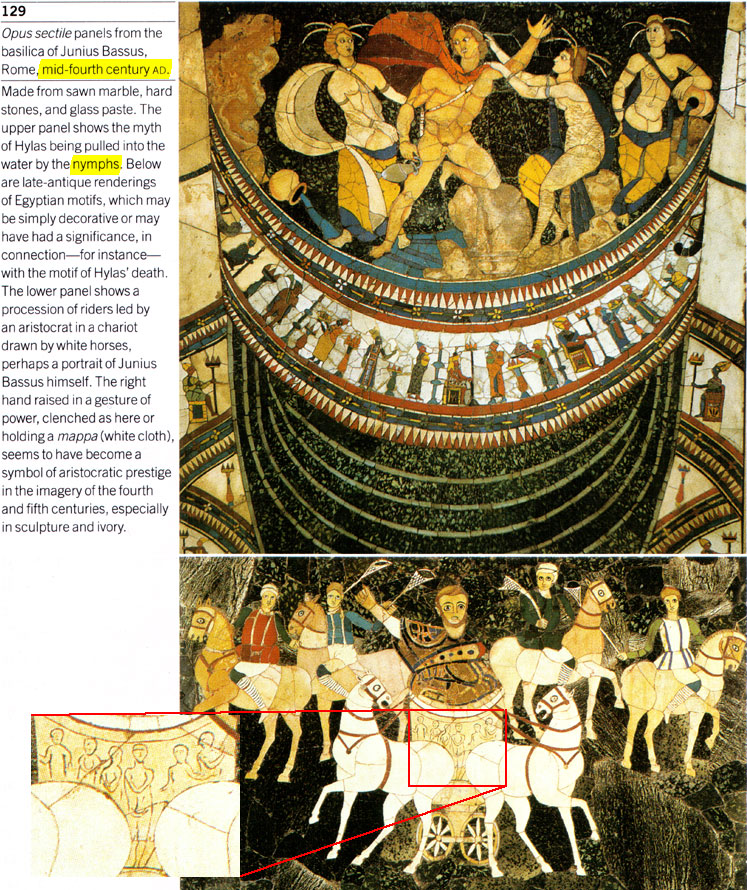
Basilica of Junius Bassus:
Imperial Rome and Christian Triumph, Elsner, 1998, p. 193, illustration 129, “Opus sectile panels form the basilica of Junius Bassus”:
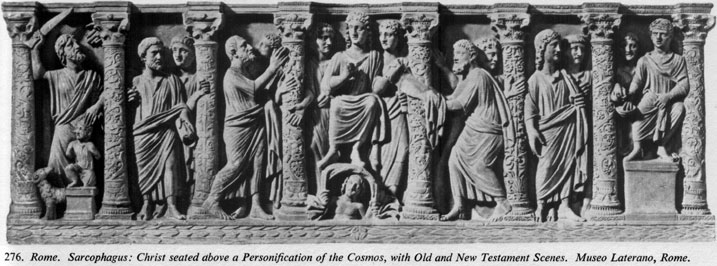
SIMILAR CHRISTIAN COLUMNAR SARCOPHAGUS:
Same kind of Eros and vines on columns, with two men just about to kiss
C. 350-360 AD
(For some / obvious reason I can’t find anything about this on the Internet. You see, Eros and vines aren’t going to tell anyone anything today, but the kissing will.)
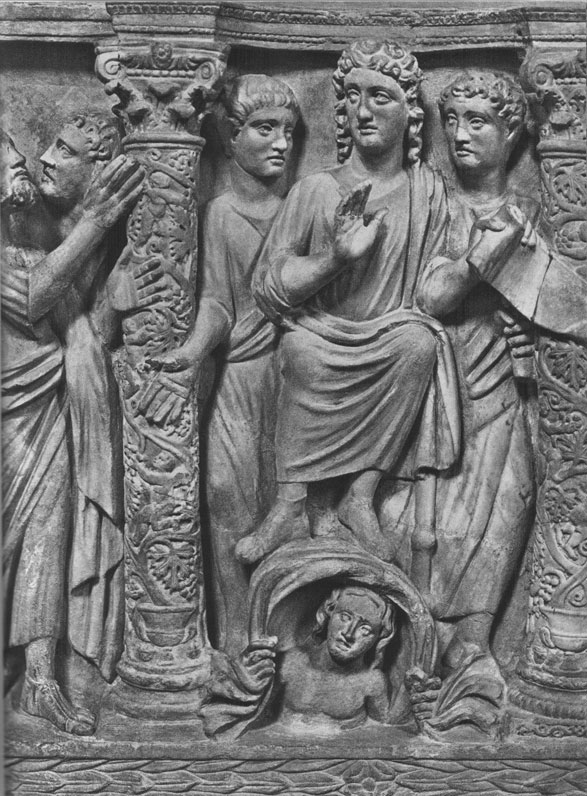
Early Christian Art: AD 200-395: From the Rise of Christianity to the Death of Theodosius, André Grabar, 1968, p. 277, “3. The Art of the Fourth Century | Sarcophagus Reliefs | 276. Rome. Sacophagus: Christ seated above a Personification of the Cosmos, with Old and New Testament Scenes”:
Enlargement:
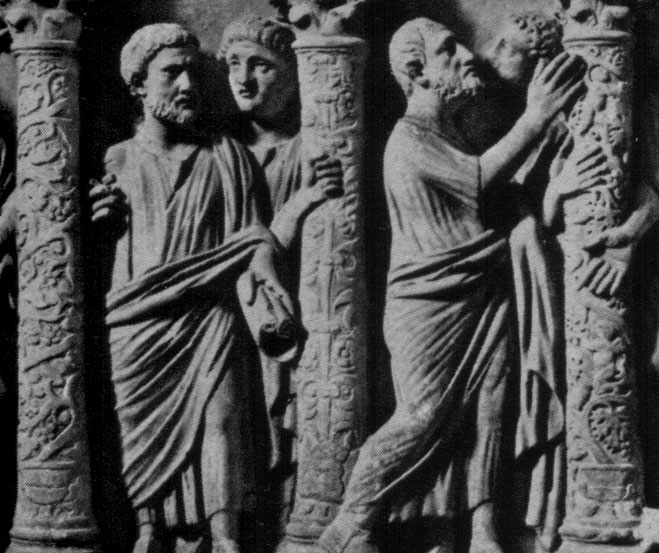
P. 250, “277. Rome. Sarcophagus, detail” [Eros with grapes and vines, which would have really sent a mixed message in classical times]:
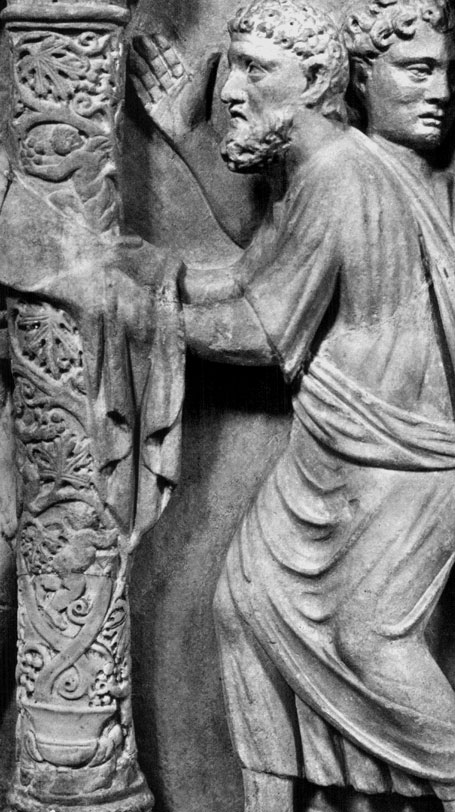
P. 251, “278. Rome. Sarcophagus, detail: The Judgment of Pilate [grape vines]:
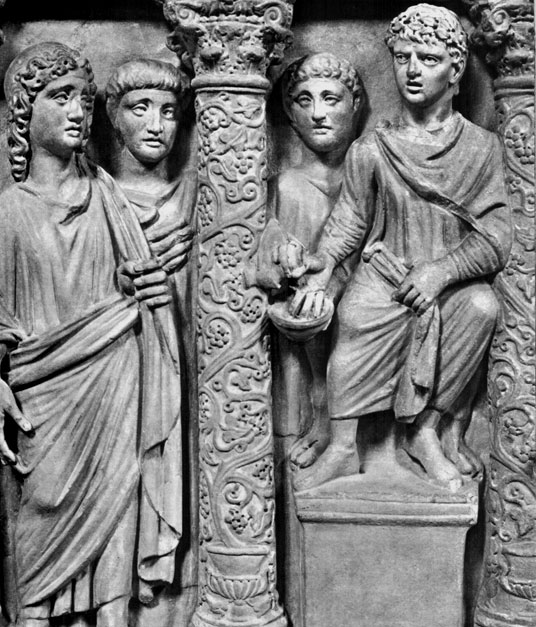
P. 252, “279. Rome. Sarcophagus, detail”:
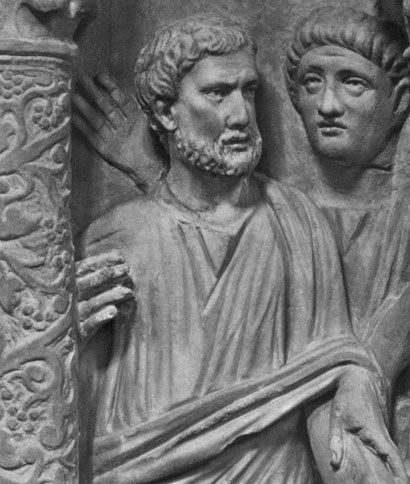
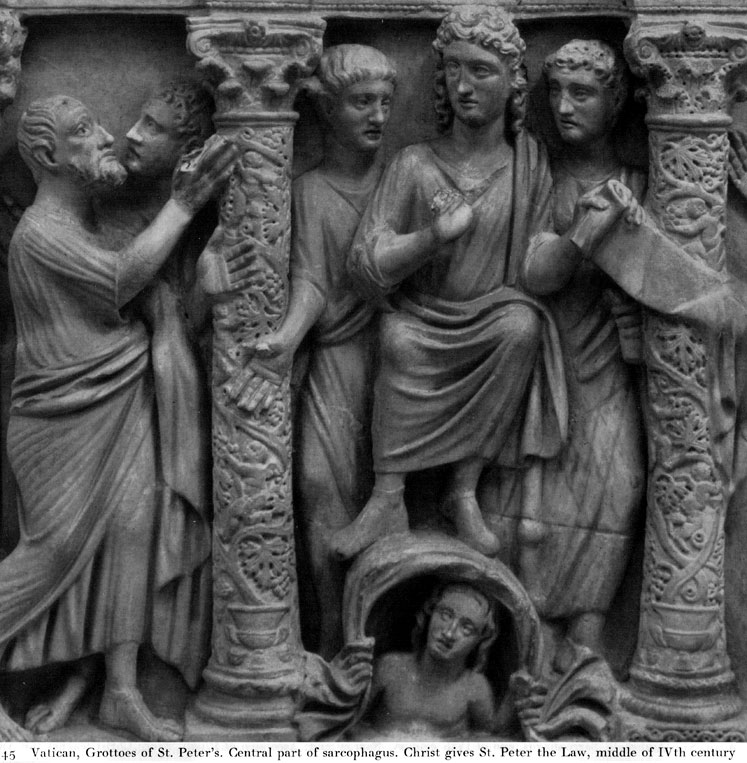
Early Christian Art, W. F. Volbach, 1961, plate 45, “Vatican, Grottoes of St. Peter’s. Central part of sarcophagus. Christ gives St. Peter the Law, middle of IVth century” [Eros & grape vines on columns]:
Early Christian Art: AD 200-395: From the Rise of Christianity to the Death of Theodosius, André Grabar, 1968, p. 35, “33. Rome. Sarcophagus, detail: Christ seated above a Personification of the Cosmos. Museo Laterano, Rome”:
The Clash of Gods: A Reinterpretation of Early Christian Art, Mathews, 1993, p. 90, figure 68, “The Trial of Christ before Pilate … c. 350-360”:
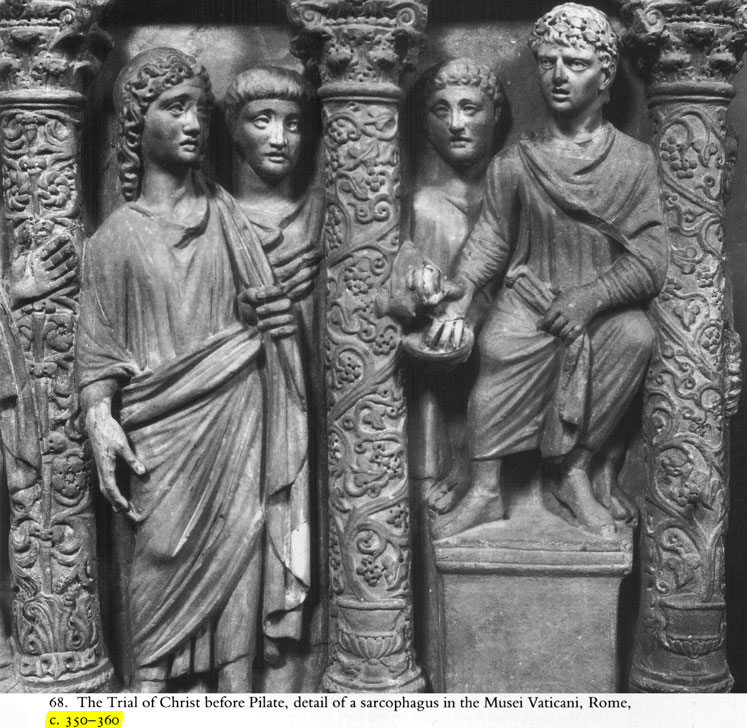
Right side:
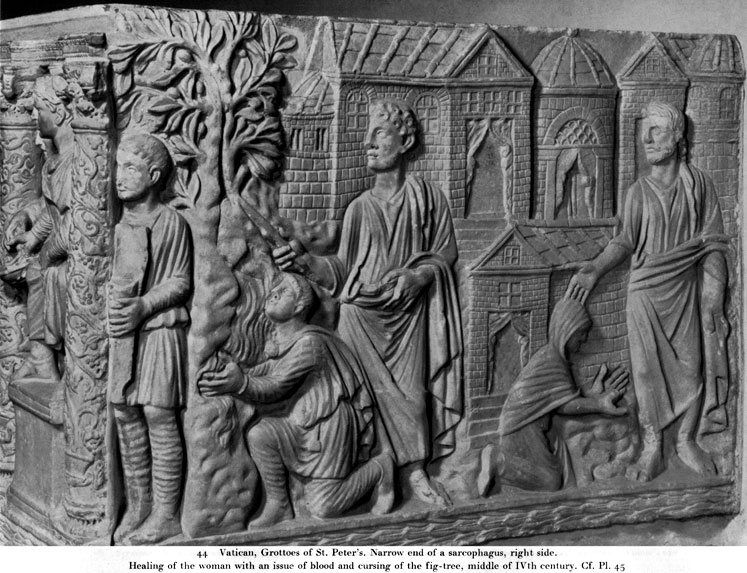
Early Christian Art, W. F. Volbach, 1961, plate 44, “Vatican, Grottoes of St. Peter’s. Narrow end of a sarcophagus, right side. Healing of the woman with an issue of blood and cursing of the fig-tree, middle of IVth century. Cf. Pl. 45” [Grape vines on columns]:
Early Christian Art: AD 200-395: From the Rise of Christianity to the Death of Theodosius, André Grabar, 1968, p. 253, “3. The Art of the Fourth Century | Sarcophagus Reliefs | 280. Rome. Sarcophagus, detail: Moses striking Water from the Rock. Museo Laterano, Rome”: