APHRODITE – DOVE
“The Holy Spirit” initially supported Jesus via the dove
(To avoid duplication, read all my many prior articles about Aphrodite telling of her symbolic association with the dove.)
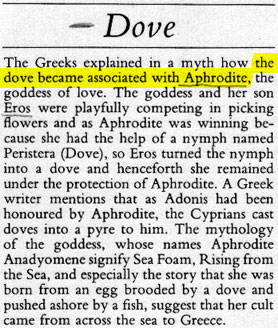
Encyclopedia of World Mythology, Warner, 1975, p. 212, “The Mythology of Animals | Dove”:
http://www.mothergoddess.com/completelist.htm, Names of the Goddess, “Ancient Greece”:
Aphrodite - Greek Love Goddess who sailed the seas in a scallop shell. Queen of the Sea. Her Sacred metal is copper. Goddess of birth, life, love, death, time and fate, reconciling man to all of them through sensual and sexual mysticism. Patroness of arts and letters, craft and culture.The Dove was her totem.
…
Venus - Great Goddess in Her sexual aspect.
http://alex.edfac.usyd.edu.au/BLP/websites/ROBMATULEWICZ/gods.html, The Palace of Olympus:

Aphrodite's emblem was the dove.
http://www.christusrex.org/www1/ofm/mag/MAen9905.html, The Holy Land, “The Dove”:
To the Ancient Greeks, the dove was perceived as Aphrodite, the goddess of love and beauty, and thus also invested with erotic connotations. … The Romans sacrificed doves to Venus, the goddess of love and fertility. … The dove was also considered sacred to Adonis and Bacchus” as the "First Begotten of Love."
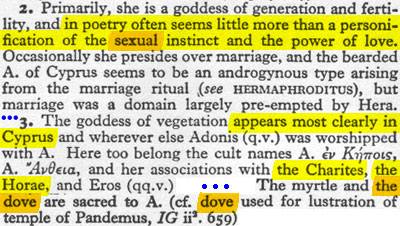
The Oxford Classical Dictionary, 1949, p. 67, “Aphrodite”:
http://www.plotinus.com/aphrodite_copy.htm, The Esoteric Mystery of Aphrodite in the Inner Process:
The Orphics called Aphrodite Pontogenis, meaning "born from the sea." … In another tradition, Aphrodite was born from a dove’s egg that fell from heaven.
http://www.triumphpro.com/easter_s_real_surprising_origin.htm, The Surprising Origin of Easter, “Day of a Pagan Goddess”:
The classic poets are full of the fable of the mystic egg of the Babylonians; and thus its tale is told by Hyginus, the Egyptian, the learned keeper of the Palatine library at Rome, in the time of Augustus, who was skilled in all the wisdom of his native country: "An egg of wondrous size is said to have fallen from heaven into the river Euphrates. The fishes rolled it to the bank, where the doves having settled upon it, and hatched it, out came Venus, who afterwards was called the Syrian goddess" -- that is, Astarte. Hence the egg became one of the symbols of Astarte or Easter; and accordingly, in Cyprus, one of the chosen seats of the worship of Venus, or Astarte, the egg of wondrous size was represented on a grand scale (The Two Babylons, pp. 108-109). …
“Easter Sunrise Services”:
Hence the custom of not eating fish on Friday stems also from ancient pagan times, in honor of the goddess of fertility, Freya, or Venus. …
“The Earliest Easter Story”:
This ancient legend, very widespread in the Middle East, traveled to Phoenicia and Syria, where Tammuz was called Adon and Inanna was called Astarte. In Greece, they became known as Adonis and Aphrodite. The original legend underwent many changes in its passage to other countries, but the essential theme of autumnal death and vernal resurrection remained. In Asia Minor, Adonis was called Attis and his wife-mother was Cybele, Rhea or Dindymene.
http://www.newmoontradingco.com/moon/fullmoonscorpio.htm, The Blue Moon Tarot:
Aphrodite is called the daughter of Dione, Goddess of the Oak tree in which an amorous dove nested. Doves and sparrows are known for their lust and passion; … Other mother goddesses having the symbol of the dove were Isis and Aphrodite.
http://ccwf.cc.utexas.edu/~perlman/myth/images/aprpahos.jpg (via http://ccwf.cc.utexas.edu/~perlman/myth/lecture13.html):
Slide: Coin representing the temple of Aphrodite at Paphos (n.b. the tripartite shrine)
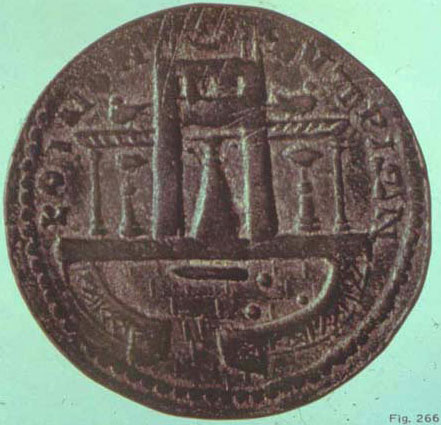
With doves.
http://www.cyprusexplorer.globalfolio.net/eng/paphos/object/aphrodite_sanctuary/coin/index.php (Cyprus Explorer), The Sanctuary of Aphrodite:
Roman coins depict the Paphian temple as a tripartite sanctuary which shows in its central hall a conical idol.
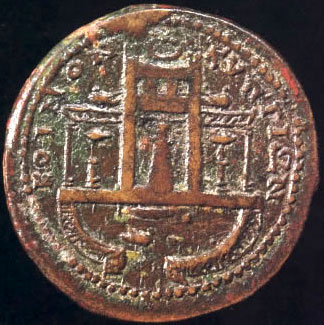
With doves.
http://www.wildwinds.com/coins/sg/sg5786.html, Sear Greek Coins and their Values (SG) Number sg5786:
Timarchos, Paphos AE16. Before 309 BC. Diademed head of Aphrodite left / dove standing right on scepter, * & Cypriot letter above.
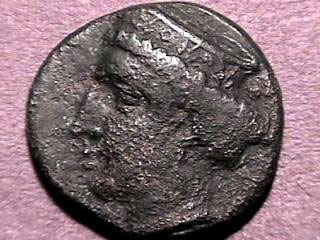
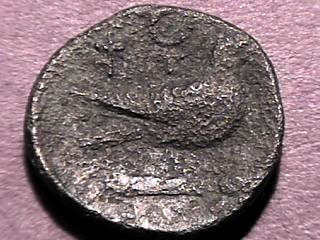
http://www.wildwinds.com/coins/sg/sg0782.html, Sear Greek Coins and their Values (SG) Number sg0782:
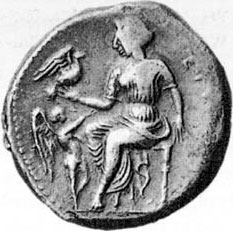
Eryx, Sicily, AR Litra. c 400 BC. Aphrodite seated left, dove on extended arm:
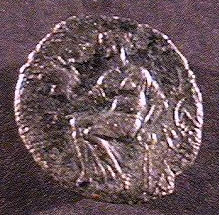
http://www.bio.vu.nl/home/vwielink/WWW_MGC/Area_III_map/Eryx_map/descrEryx_4drachm.html, tetradrachm of Eryx, 400 BC ca.:
Aphrodite seated with dove, Eros standing before:
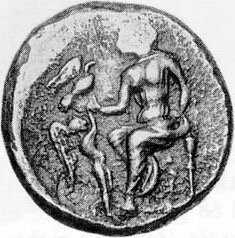
http://www.bio.vu.nl/home/vwielink/WWW_MGC/Area_III_map/Eryx_map/descrEryx_4drachm1.html, tetradrachm of Eryx, 400 BC:
Aphrodite seated with dove, Eros standing before, ERUKINON:
http://web.uvic.ca/grs/bowman/myth/images/haifa/h101.jpg (via http://web.uvic.ca/grs/bowman/myth/gods/aphrodite_i.html), Aphrodite: Gold Finger ring, 4th century BC:
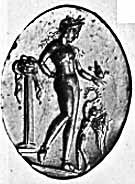
With dove.
http://www.angelfire.com/art/archictecture/gods/fig34w.jpg (via http://www.angelfire.com/art/archictecture/gods.htm), The Olympian Gods:
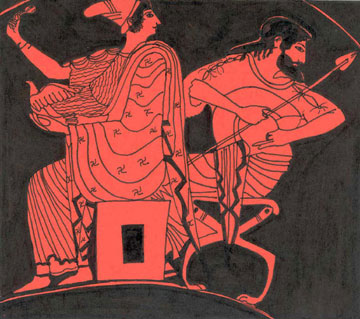
Aphrodite seducing Ares with dove and flower:
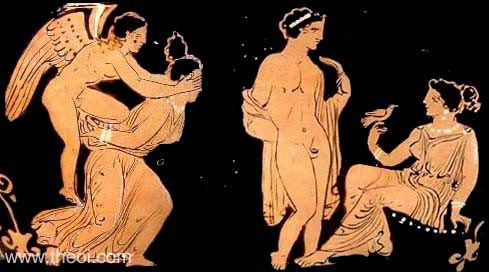
http://www.theoi.com/image/K32.6Eros.jpg (via http://www.theoi.com/IllustrationK4.html), Gallery: Myth in Classical Art, “K32.6 Eros, Woman, Man, Aphrodite”:
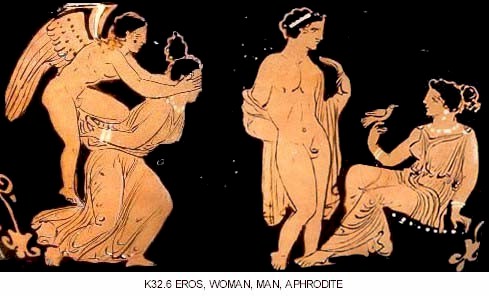
Aphrodite with dove … Painter: Workshop of the Ilioupersis Painter, Date: ca 375 - 350 BC
http://www.theoi.com/Gallery/K32.6.html, K32.6 APHRODITE & EROS:
SUMMARY
An Eros playing ephisdremos (piggy-back) with a woman, drives her in love towards her suitor. The man is accompanied by a seated Aphrodite, holding a dove in her hand.
Museum Collection: Museum
of Art, Rhode Island School of Design, New
York City, USA
Catalogue
Number: RISD
25.089
Beazley
Archive Number: N/A
Ware: Apulian Red Figure
Shape: Skyphos
Painter: Workshop of the Ilioupersis
Painter
Date: ca
375 - 350 BC
Period: Late Classical
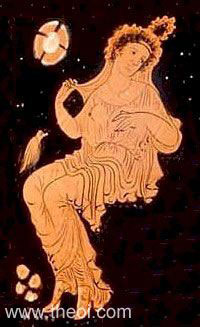
http://www.theoi.com/Gallery/K10.5.html, K10.5 APHRODITE:
SUMMARY
Detail of Aphrodite from a painting depicting her and Apollon seated in heaven watching over a couple (either Paris and Helene, or Amphiaraus and Eriphyle). The goddess has a dove or sparrow sitting on her lap, and holds the edge of her veil in her hand.
Museum Collection: Museum of Fine Arts, Boston, USA
Catalogue
Number: 1970.235
Beazley
Archive Number: N/A
Ware: Apulian Red Figure
Shape: Krater, volute
Painter: The Iliupersis Painter
Date: ca
365 - 355 BC
Period: Late Classical
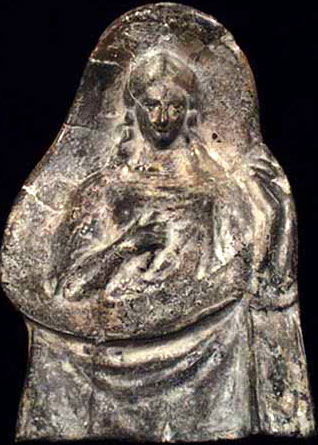
http://www.ancienttouch.com/greek_terracotta.htm, Greek Terracotta, “Greek Terracotta Protome IV c. B.C. Attica”:
There is no agreement between scholars in their opinions about the identity of this protome: it could be Aphrodite or a syncretic image of Kore-Aphrodite. Dove being Aphrodite’s attribute was adopted by deities of agriculture in Hellenism. (Dove in her right hand.)
http://www.pavlovsk.org/english/palace/collections/sculp2.html, Sculpture (page 2):
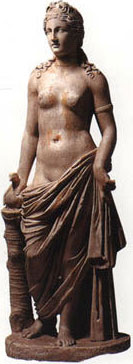
Aphrodite
with a Dove.
R.c. of a third century B.C.
http://www.ascsa.edu.gr/photo/AFC/site_search.asp?ID=Monte%20Casale, The American School of Classical Studies at Athens: The Alison Frantz Photographic Collection:
Description
:
Limestone statue, upper part, Aphrodite
with dove, front
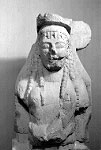
http://www.hellasweb.com/commun/seefs/IKAROS/babe.jpg (10-30-02), Aphrodite with doves:
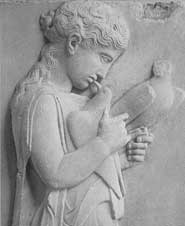
Eros: The God of Love in Legend and Art, Irene Korn, 1999, p. 37, “Venus and Cupid”:
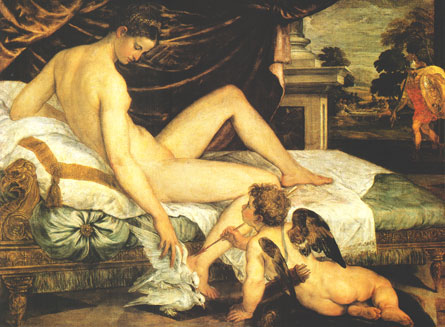
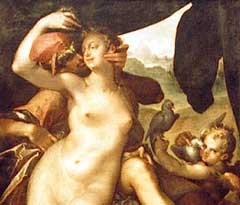
http://homepage.mac.com/cparada/GML/000Free/000VenusAmor/source/1.html, Venus and Adonis 1595-1597. Bartholomäus Spranger 1546-1611. Künsthistorische Museum, Wien, dove:
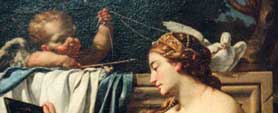
http://homepage.mac.com/cparada/GML/000Free/000VenusAmor/source/14.html, Simon Vouet 1590-1649, Charles Mellin 1600-1649: Die Toilette der Venus 1625-27. Gemälde Galerie Kulturforum, Berlin, dove:
http://www.mediterraneanpearls.com/missuniverse/spirit.html, The Spirit of Aphrodite:
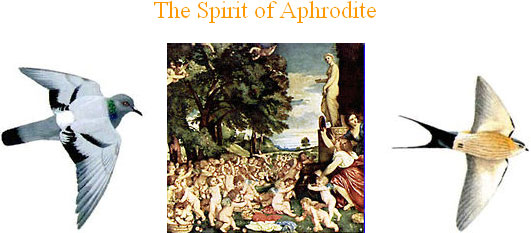
Doves.
http://www.dimensionsmagazine.com/images/exhibits/Delacroix/, Paul Delacroix:

Aphrodite and the Dove
http://www.dicara-cameos.co.uk/images/DOVE.JPG (via http://www.dicara-cameos.co.uk/myths_and_legends.htm), Myths and Legends:
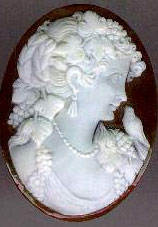
dove,(Aphrodite)
http://www.mythweb.com/gods/Aphrodite.html, APHRODITE:
Aphrodite was associated with the dove. Another of her sacred birds was the goose, on which she is seen to ride in a vase painting from antiquity.
But the dove seems to be the main one.
Eros: The God of Love in Legend and Art, Irene Korn, 1999, p. 36, “Venus”:
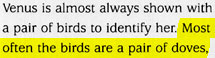
The Christian connection:
Mythology and deities are used only as definitions of words or phrases in the Bible, which otherwise don’t have an explanation:
Matthew 3:16-17, John Baptized Jesus:
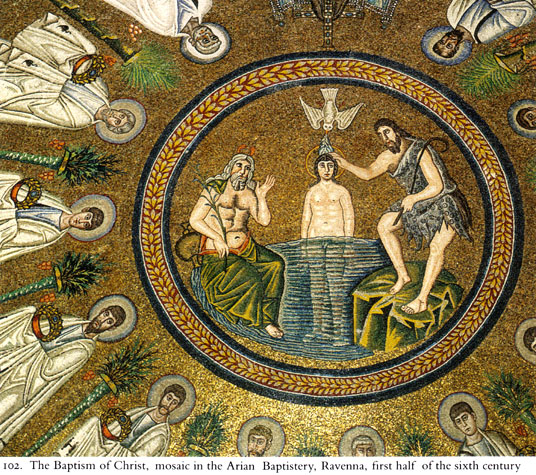
16When He had been baptized, Jesus came up immediately from the water; and behold, the heavens were opened to Him, and He saw the Spirit of God descending like a dove and alighting upon Him. 17And suddenly a voice came from heaven, saying, “This is My beloved Son, in whom I am well pleased.”
That symbology has to correlate directly with Aphrodite, and therefore in support of her sexual promiscuity. Otherwise, God shouldn’t use symbology that connects directly with a very famous deity and her attribution, if He’s against sex out of marriage.
History of Art, Janson, 1997, p. 246, “The Life of Jesus” (chronological events):

Webster’s NewWorld Thesaurus, 1985, p. 358, “Holy Ghost”:

http://www.moonspeaker.ca/Aphrodite/aphlegends.html, Legends of Aphrodite, “Aphrodite the Fate”:
At the beginning of each life, she sends a soul to each person, carried by a dove. When life is done and she comes as Death, Aphrodite gathers each soul back to herself, again carried by a dove. To help her in her work, the Romans kept sacred doves near burial catacombs referred to as dovecotes. … On the morning of the fourth day, the waters of Lake Acheron stirred and bubbled. And then before the astonished eyes of three fishers and seven women doing laundry on the beach, two doves burst from the water and flew away, to Aphrodite's Kyprian palace. It was in this way that the dove became Aphrodite's chosen soul carrier for her worshippers about to be reborn, and people shear their hair and put aside the symbols of their rank in mourning. From this too comes the three day and night vigil over the dead.
http://www.moonspeaker.ca/Aphrodite/aphroditemain.html, Aphrodite:
The Dove of Peace, 'Irene Pleione' was Aphrodite herself, the dove Goddess and mother of the Pleiades. In this aspect she was strongly connected to the underworld, and she shared the poppy and pomegranate with Demeter. The dove was considered a symbol of the vulva and a soul carrier by the Romans, so burial places were called dovecotes, 'Columbaria.' The ceremonial release of doves during the canonization of saints comes from the death-rebirth rites of Aphrodite.
The Woman’s Dictionary of Symbols and Sacred Objects, Walker, 1988, p. x, “Introduction”:
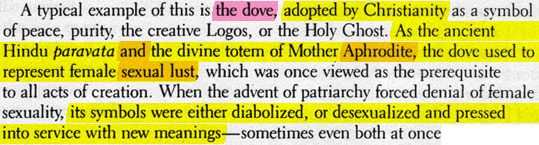
http://www.catacombsociety.org/vom/manna_fauna.html, Vaults of Memory, “The Dove”:
The Dove
 For
the pagans, the dove was an attribute of Aphrodite; in the Old Testament, Noah's dove
signified God's covenant with mankind; in the New testament, John the Baptist
likened the dove to the Spirit, the Holy Ghost, descending upon Jesus at his
baptism.
For
the pagans, the dove was an attribute of Aphrodite; in the Old Testament, Noah's dove
signified God's covenant with mankind; in the New testament, John the Baptist
likened the dove to the Spirit, the Holy Ghost, descending upon Jesus at his
baptism.
http://www.winshop.com.au/annew/Columba.html, Columba: Noah's Dove, “The symbology of doves”:
Throughout Judeo-Christian symbolism the dove which culminates in the New Testament by representing the Holy Spirit - is basically a symbol of purity, simplicity and even, as when it brings the olive-branch back to Noah's Ark, of peace, harmony and re-found happiness. As with most depictions of winged creatures in the same cultural environment, it might be said that the dove stands for the sublimation of the instincts and, specifically, of the erotic instincts. The pagan context, with its different sense of values so far as purity was concerned, associated it rather than contrasted it with physical love, so that the dove, Aphrodite's bird, represented the pledge of love which the lover offered the object of his desire. … The dove is sacred to Adonis and to Bacchus/Dionysus as the First Begotten of Love and also to Venus as voluptuousness. … The dove is the symbol of purity and innocence. It is significant that in the pagan Mysteries the dove of Venus was crucified upon the four spokes of a great wheel, thus foreshadowing the mystery of the crucified Lord of Love.
Today’s “Christians” would agree that Jesus was the “Lord of Love”; but, they have removed the sexual part of the word, and everyone “just” believes them.
Matthew 21:12-13 [NKJV]:
12Then Jesus went into the temple of God and drove out all those who bought and sold in the temple, and overturned the tables of the money changers and the seats of those who sold doves. 13And He said to them, “It is written, ‘My house shall be called a house of prayer,’ but you have made it a ‘den of thieves.’ ”
Exactly who buys “doves”? I’ve never know of anyone who goes out to buy a dove, especially as a staple. Could Jesus be using the word “dove” symbolically? Let’s pursue that thought: A dove is the symbol for Aphrodite. Aphrodite was known for her promiscuous sex. So if someone sells promiscuous sex, would that be like “prostitution” or would that be like “free sex”?
John 2:16:
And He said to those who sold doves, “Take these things away! Do not make My Father’s house a house of merchandise!”
Is marriage conditional sex? Or, should I say: Is marriage the condition for sex according to the church? Why it is traditional for men to buy the woman’s dinner, even when just dating? What does the man eventually expect in return? According to Jesus, many of the things He said and did have a hidden symbolic meaning. Why would Jesus be specific to doves, and how could legitimate selling and buying be stealing (a “den of thieves”)? And, why did Jesus make such a scene about it, instead of His normal way of communicating a wrong? Today’s commentators don’t know why Jesus did this. Is open / free sex a way to mix more with others? Could “marriage” be stealing God’s natural way of us mixing more with others? Is mixing pleasure (especially mutual pleasure) with others spreading the Golden Rule more or less? Did Jesus preach the Golden Rule? Is legitimate selling and buying breaking the Golden Rule? Again, did Jesus preach the Golden Rule? Could God’s “house” be more than just one building? Could God’s house be the entire universe, or are there areas on this planet where God does not live, where you are free from God’s laws? (Yeah, it’s called any Protestant church.) I’ve been to lots of churches where they’re selling things. No one seems to be offended. The fig tree is an attribute of Juno / Hera, the pagan goddess of marriage. Jesus curses the fig tree both before and after the above dove incident (see also Mark 11:12-21). By the way, Mark 11:18 states that this incident is the reason why Jesus was crucified. Even if they really were selling doves, my point remains. Matthew 21:21 is Jesus speaking directly to me saying that if I “have faith” that marriage (“this mountain”) “be removed and be cast into the sea, it will be done,” meaning that my commentary is the only one that can beat the marriage standard, and save society. Also see Mark 11:22-23.
Most didn’t but a few of the pet stores I called sell doves, but mostly for their release at the end of weddings and funerals (for obvious Jesus correlations), which usually don’t survive long being born in captivity.
http://www.dove-release.com/, Alabama White Dove Release:

Oh… happy, happy, happy!
http://www.whitedovessfbayarea.com/, White Dove Release:
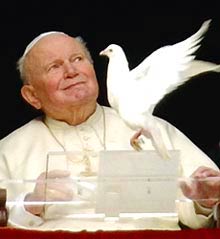
Of course, why should any animal who eats meat and fish care about kindness?
Early Christian Art: AD 200-395: From the Rise of Christianity to the Death of Theodosius, André Grabar, 1968, p. 287, “Documents”:
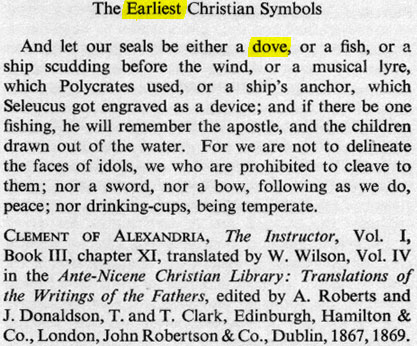
“Dove” is listed first.
http://www.atheistalliance.org/jhc/articles/AbrahamsenOrante.pdf, THE ORANTE AND THE GODDESS IN THE ROMAN CATACOMBS: Religious Symbols in the Catacombs:
Doves and other birds also figure prominently in catacomb art. Whether under the guise of Aphrodite or Astarte, the dove represented for pagans of the Graeco-Roman era the great goddess,32 while for Christians it was often equated with John the Baptist and the Holy Spirit.33 Therefore, the frequency of the dove’s appearance in the catacombs cannot be purely coinci-dental. In several instances (e.g., the catacomb of Priscilla, several times in the catacomb of Vigna Randanini, and in the catacomb of SS. Marcellino e Pietro), the dove is presented with an olive branch or roses.34
http://www.newadvent.org/cathen/03417b.htm (Catholic Encyclopedia), Roman Catacombs, “III. Inscriptions”:
Catacomb of Callistus, fourth century:
DASVMIA QVIRIACE BONE FEMINE PALVMBRA
SENe FELlE . . .
QVÆ VIXIT ANNOS LXVI DEPOSITA IIII KAL MARTIAS IN PACE
Cyriaca, a member of the noble Dasumian family, who died at the age of sixty-six years, is called a "dove without bitterness", a eulogy that is found on other female graves.
http://www.piney.com/AgapeSummary.html, The Agape or Agapae Pagan and Biblical Background:
The patriarchs became the most incensed over the sacred women of Agape. Among their symbols were the lotus, lily, and dove,
The Clash of Gods: A Reinterpretation of Early Christian Art, Mathews, 1993, p. 132, figure 102, “The Baptism of Christ”:
http://pro.corbis.com/, Search # AW011740, Detail of Holy Trinity Column by Fulop Ungleich and Antal Horger (stands opposite Matthias Church, Trinity Square, Budapest, Hungary), ca. 1710-1713, Christian art, Jesus Christ, God the Father, Dove, Eros:
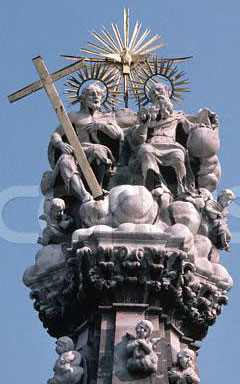
The Father and Son seated beneath the Holy Ghost, represented by a dove, on the Holy Trinity Column situated in the Buda district of Budapest, Hungary.
http://www.hereses.info/portail_du_domaine/legende-romaine-christianisme/mythologies_christianisees.htm, DE SACRO: HISTOIRE CRITIQUE DU CHRISTIANISME ROMAIN: La Légende romaine du Christianisme (OF SACRED HISTORY CRITICIZES ROMAN CHRISTIANITY: The Roman Legend of Christianity):

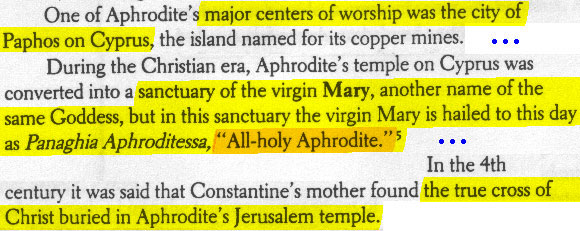
Entrée du Sanctuaire d'APHRODITE à Paphos près de l'île de Chypre
Translated from French:
Entry of the Sanctuary of APHRODITE at Paphos close to the island of Cyprus
Crosbie’s Dictionary of Puns, 1977, p. 142 “love” (in text):
When the tennis ball soared high above,
Nellie rose to receive it like a dove,
But the strain of her reach
Caused her panties to breach
And her partner to cry out, “That’s love!”
OTHER (non-dove) CHRISTIAN SUPPORT:
The Woman’s Encyclopedia of Myths and Secrets, Barbara G. Walker, 1983, pp. 44-45, “Aphrodite”:
http://pro.corbis.com/, Search # HG002175, Mosiac in House of Aphrodite, Bulla Regia (Africa), 3rd century A.D.:
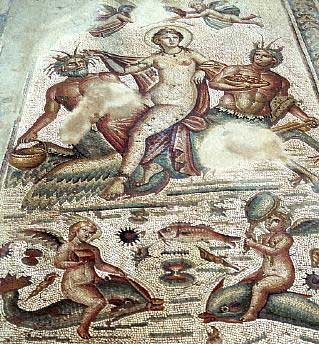
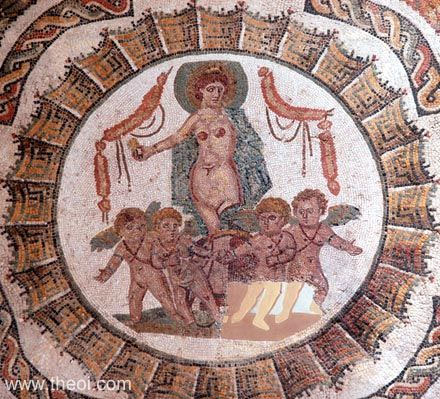
A mosaic depicting holy figures stand in the ruins of the House of Aphrodite in Bulla Regia, Tunisia.
There’s Aphrodite with a halo, in the 3rd century AD.
http://www.theoi.com/Gallery/Z10.9.html, Z10.9 APHRODITE & THE EROTES:
SUMMARY
The goddess Aphrodite crowned with a halo, drives a chariot drawn by four winged Erotes (love gods).
Museum Collection: Bardo
Museum, Tunis, Tunisia
Catalogue
Number: TBA
Type: Mosaic
Context: Thuburbo-Majus (Le Fahs)
Date: C4th
AD
Period: Imperial Roman
“Show me what kind of love have you got?” –The Eagles, 1976. I’d say it’d be that Aphrodite-sexual kind:
http://homepage.mac.com/cparada/GML/000Free/000Aphrodite/source/39.html, Aphrodite Album 39/54:
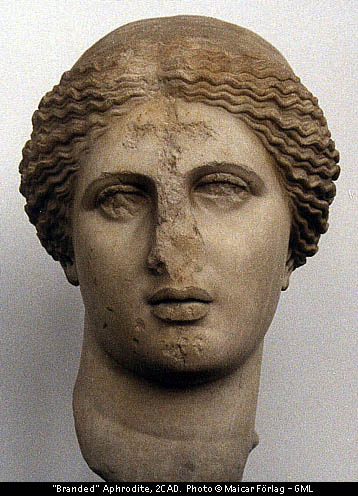
6228: Head of Aphrodite. Roman copy of an original of the 4C BC. The first Christians incised a cross on the forehead of the goddess. Found at the Roman Agora of Athens, 2C AD. National Archaeological Museum, Athens.
Again, the pagan deities of that era were the communication medium. So, that’s what “Christian love” was really all about – that is, including the sexual / promiscuous part.
http://www.tertullian.org/lfc/LFC10-11_de_corona.htm, C. Dodgson, Tertullian (Christian writer, 211 AD) Vol. 1. Apologetic and Practical Treatises. (1842). pp.158-186. De Corona, “III.”:
In all our travels and movements, in all our coming in and going out, in putting on our shoes, at the bath, at the table, in lighting our candles, in lying down, in sitting down, whatever employment occupieth us, we mark our forehead with the sign 40 of the cross 41.
…
41. f See on Cyr. Jerus. iv. 13. p. 40. xiii. 36. p. 161. ed. Oxf. (a passage resembling this) add Chrys. c. Jud. quod Christus sit Deus, c. 9. t. i. p. 571. ed. Ben. Hieron. Ep. 22. ad Eustoch. de Cust. Virg. §. 37. Ep. 130. ad Demetriad. §. 9. vita S. Paul. §. 7. Aug. Tr. 118. in Joh. fin. in Ps. 50. §. 1. Ps. 141. §.9.
Saints:
http://catholiconline.org/saints/saint.php?saint_id=1485, Catholic Online Saints, “St. Aphrodisius”:
Feastday: April 28
1st century
A martyr with Sts. Caralippus, Agapius, and Eusebius, also involved in ancient tradition. St. Gregory of Tours related a legend that Aphrodisius was an Egyptian. He supposedly sheltered the Holy Family when they fled into Egypt. Aphrodisius and his companions were martyred in Languedoc, France.
http://catholiconline.org/saints/saint.php?saint_id=1484, Catholic Online Saints, “St. Aphrodisius”:
Feastday: April 30
unknown (year/century)
An Egyptian martyr of Alexandria. Aphrodisius was a priest who was arrested for being a Christian. He died with thirty members of his parish.
http://www.coyotela.org/history.html, The Authentic Herstory [sic] of Prostitution: A Brief Chronicle of Sacred Whoredom:
THE WHORE-GODDESS AS CHRISTIAN SAINT
Realizing that they must keep the maternal energy of the Female Principle alive in order to maintain a strong church membership, medieval Christian mythographers parlayed the Whore-Goddess into dozens of bogus female saints, all tellingly made the "patrons of prostitutes." Among these were Saint Aphrodite (a christianization of the Greek sex-goddess and whore-mother, Aphrodite); Saint Maudline (a further christianization of Mary Magdalene); and the three sisters known variously as Saint Irene, Saint Agape, and Saint Chionia; or as Saint Hope, Saint Faith, and Saint Charity.
Google Search: cache:http://www.greekorthodoxicons.net/byzicons/B3-34-8.htm, Saint Aphrodite (Venus) – Category : Wooden & Ceramic Orthodox Icons:
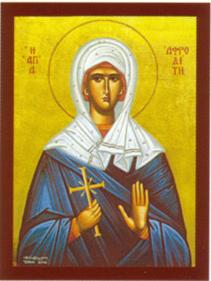
Epaphroditus (Philippians 2:25; 4:18, 23):
http://www.jcsm.org/StudyCenter/kjvstrongs/STRGRK18.htm, The KJV Bible: Strong’s Greek Dictionary, “1891”:
|
1891 |
EpafroditoV |
from epi - epi 1909 (in the sense of devoted to) and Aphrodite (Venus); Epaphroditus, a Christian:--Epaphroditus. Compare EpafraV - Epaphras 1889. |
http://www.jcsm.org/StudyCenter/kjvstrongs/CONGRK189.htm#S1891, The KJV Bible: The Greek Concordance, “1891”:
|
1891 |
EpafroditoV |
epafroditon epafroditou |
http://www.jcsm.org/StudyCenter/kjvstrongs/B50C002.htm#V25, The KJV Bible: Philippians: Chapter 2, “2:25”:
anagkaion
de hghsamhn epafroditon ton adelfon kai sunergon
kai sustratiwthn mou umwn de apostolon kai leitourgon thV creiaV mou pemyai proV umaV
2:25
Yet I supposed it necessary to send to you Epaphroditus,
my brother, and companion in labour, and fellowsoldier, but your messenger, and
he that ministered to my wants.
http://www.jcsm.org/StudyCenter/kjvstrongs/B50C004.htm#V18, The KJV Bible: Philippians: Chapter 4, “4:18”:
apecw
de panta kai perisseuw peplhrwmai dexamenoV para epafroditou ta par umwn osmhn euwdiaV qusian dekthn euareston tw
qew
4:18 But I have all,
and abound: I am full, having received of Epaphroditus
the things [which were sent] from you, an odour of a sweet smell, a sacrifice
acceptable, wellpleasing to God.
http://www.jcsm.org/StudyCenter/kjvstrongs/B50C004.htm#V23, The KJV Bible: Philippians: Chapter 4, “4:23”:
h
cariV tou kuriou hmwn ihsou cristou meta pantwn umwn amhn| proV filipphsiouV
egrafh apo rwmhV di epafroditou
4:23 The grace of our
Lord Jesus Christ [be] with you all. Amen. (It’s truncated)
Here it is:
Greek to English Interlinear: New Testament: King James Version, Berry, World Publishing, 1981, p. 520, Philippians 4:23:
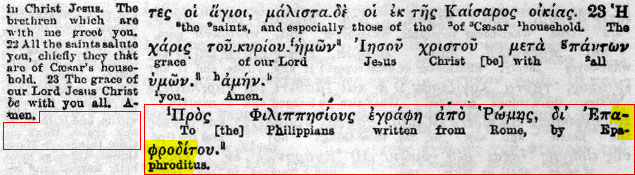
Huh! So Philippians was written by Epaphroditus (“devoted to Aphrodite”).
Orthrinos (Rev. 22:16)
http://www.jcsm.org/StudyCenter/kjvstrongs/STRGRK37.htm, The KJV Bible: Strong’s Greek Dictionary, “3720”:
|
3720 |
orqrinoV |
from orqroV - orthros 3722; relating to the dawn, i.e. matutinal (as an epithet of Venus, especially brilliant in the early day):--morning. |
The one Bible instance:
http://www.jcsm.org/StudyCenter/kjvstrongs/B66C022.htm#V16, The KJV Bible: Revelation: Chapter 22, “22:16”:
egw
ihsouV epemya ton aggelon mou marturhsai umin tauta epi taiV ekklhsiaiV egw
eimi h riza kai to genoV tou dabid o asthr o lamproV kai orqrinoV
22:16 I Jesus have sent mine angel to testify unto you
these things in the churches. I am the
root and the offspring of David, [and] the bright
and morning star.
To paraphrase: Jesus said that He is the “epithet of Venus.” An “epithet” is “A term used to characterize a person or thing.”