SIMON MAGUS
Simon Magus of Samaria / Simonians [Acts 8:9-24] (c. 37-50AD)
Particularly: Irenaeus (c. 115-202 AD), Against Heresies (Adversus Haereses) Book 1, Chapter 23.4 (c. 180 AD, written in Greek, only Latin available today)
http://en.wikipedia.org/wiki/Simon_Magus, Simon Magus, “Christian Tradition”:
He appears in the canonical Acts of the Apostles, verses 8:9-24
Peter seems to only criticize (or, corrects) the Christian believing and baptized Simon’s mistake of offering them money for the power to further share the Holy Spirit with others (kind of like what people used to be required to do for Catholic Church for forgiveness and salvation). Then Simon immediately repents in verse 24, with no further scolding from Peter. Again, Simon was in obvious error, and there is no indication he wished to oppose the Christian faith. In fact, verse 24 indicates he is fully willing to correct himself to the Christian teachings, and fears God for such. Simon Magus showed that he fully supported the Christian faith for himself and for the people of Samaria, as he was their miracle leader who turned Christian, as “he followed Philip everywhere.” Therefore, he had to have known about the (true) Christian sexual moral. In fact, this error, then scolding, then repentance was likely God caused, just to support what I’m stating here today; because, no other Christian today would write such a truthful and fitting commentary.
Many people today pay churches money with the hopes of personal salvation with God, so as to overrule Jesus’ “assured” Fair Afterlife Punishment. So, the money factor is a vast reality that, I agree with Peter, is not of the true heart. But then Acts 8:19 indicates that Simon’s concern wasn’t for himself, but was only to share the Christian teachings and magic / miracles with others. So, Peter makes a good point, but was likely too harsh with Simon.
http://www.1911encyclopedia.org/Simon_Magus (Catholic Encyclopedia, 1911), Simon Magus:
SIMON MAGUS (" Simon the Magician "; Gr. Ai ryos, a wizard), a character who appears in the New Testament and also in the works of the Christian Fathers. In Acts viii. 5-24 he is portrayed as a famous sorcerer in Samaria who had been converted to Christianity by Philip. His personality has been the subject of considerable discussion.
http://www.newadvent.org/cathen/13797b.htm (Catholic Encyclopedia, current), Simon Magus:
According to the testimony of St. Justin ("First Apolog.", xxvi), whose statement as to this should probably be believed, Simon came from Gitta (in the Pseudo-Clementine Homilies, II, xxii, called (Getthon) in the country of the Samaritans. At the outbreak of the persecution (c. 37 A.D.) of the early Christian community at Jerusalem that began with the martyrdom of St. Stephen, when Philip the Deacon went from Jerusalem to Samaria, Simon lived in the latter city.
…
In morals Simon was probably Antinomian, an enemy of Old Testament law [as Jesus was also in Matt. 5:38-48, etc.]. His magical arts were continued by his disciples; these led unbridled, licentious lives, in accordance with the principles which they had learned from their master. At any rate they called themselves Simonians, giving Simon Magus as their founder.
http://www.newadvent.org/cathen/13797a.htm (Catholic Encyclopedia), Simonians:
The Simonians used magic and theurgy, incantations, and love-potions; they declared idolatry a matter of indifference that was neither good nor bad, proclaimed fornication to be perfect love, and led very disorderly, immoral lives.
…
Eusebius ("Hist. eccl.", II, xiii) calls the Simonians the most immoral and depraved of mankind.
Irenaeus (c. 115-202 AD), Against Heresies (Adversus Haereses) Book 1, Chapter 23.4 (c. 175-185 AD):
http://books.google.com/books?id=QPvQUPMtFgQC&printsec=frontcover&dq=Ancient+Gnosticism:+Traditions+And+Literature&sig=4P0Q3z0G87ezVIFxhnMw5kRJpfY#PPA30,M1, Ancient Gnosticism: Traditions and Literature – Google Books Result, by Birger A. Pearson, 2007, pp. 31-32, “Heresiological Reports on Early Gnostic Teachers and Systems | Simon Magus (Foerster 1:27-32; 251-60”:
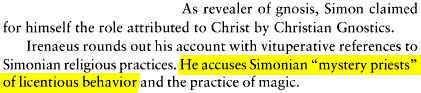
http://www.newadvent.org/fathers/0103123.htm, Adversus Haereses (Book I, Chapter 23): Doctrines and practices of Simon Magus and Menander, “4.”:
4. Thus, then, the mystic priests belonging to this sect both lead profligate lives and practise magical arts, each one to the extent of his ability. They use exorcisms and incantations. Love-potions, too, and charms, as well as those beings who are called "Paredri" (familiars) and "Oniropompi" (dream-senders), and whatever other curious arts can be had recourse to, are eagerly pressed into their service. They also have an image of Simon fashioned after the likeness of Jupiter, and another of Helena in the shape of Minerva; and these they worship. In fine, they have a name derived from Simon, the author of these most impious doctrines, being called Simonians; and from them "knowledge, falsely so called," 1 Timothy 6:20 received its beginning, as one may learn even from their own assertions.
Here’s the text in Latin:
http://books.google.com/books?id=9mBL7Uh7YPEC&pg=PA256&lpg=PA256&dq=%22Munera+amicitiae&source=web&ots=x9aHrcWpiA&sig=v-s70e_j_JuPGY4oGeY204rMImA#PPA486,M1, Munera amicitiae: studi di storia e cultura sulla tarda antichità offerti a Salvatore Pricoco – Google Books Result, by Rossana Barcellona, Teresa Sardella, Salvatore Pricoco, 2003, p. 486, “GIULIA SFAMENI GASPARRO: Eretici e maghi in Ireneo: l’accusa di magia come strumento della polemica anti-gnostica”:
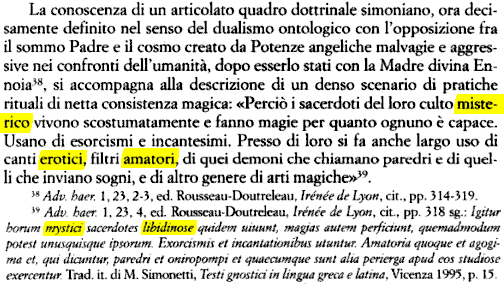
In text:
La conoscenza di un articolato quadro dottrinale simoniano, ora decisamente definito nel senso del dualismo ontologico con l’opposizione fra il sommo Padre e il cosmo creato da Potenze angeliche malvagie e aggressive nei confronti dell’umanita, dopo esserlo stati con la Madre divina Ennoia38, si accompagna alla descrizione di un denso scenario di pratiche rituali di netta consistenza magica: «Percio i sacerdoti del loro culto misterico vivono scostumatamente e fanno magie per quanto ognuno e capace. Usano di esorcismi e incantesimi. Presso di loro si fa anche largo uso di canti erotici, filtri amatori, di quei demoni che chiamano paredri e di quelli che inviano sogni, e di altro genere di arti magiche»?39 …
39Adv. haer. 1, 23, 4, ed. Rousseau-Doutreleau, Irenee de Lyon, cit., pp. 318 sg.; Igitur horum mystici sacerdotes libidinose quidem uiuunt, magias autem perficiunt, quemadmodum potest unusquisque ipsorum. Exorcismis et incantationibus utuntur. Amotoria quoque et agogima et, qui dicuntur, paredri et oniropompi et quaecumque sunt alia perierga apud eos studiose exercentur. Trad. it. di M. Simonetti, Testi gnostici in lingua greca e latina, Vicenza 1995, p. 15.
Translated from Latin:
La conoscenza di un articolato quadro dottrinale simoniano, ora decisamente definito nel senso del dualismo ontologico con l’opposizione fra il sommo Padre e il cosmo creato da Potenze angeliche malvagie e aggressive nei confronti dell’umanita, dopo esserlo stati con la Madre divina Ennoia38, si accompagna alla descrizione di un denso scenario di pratiche rituali di netta consistenza magica: «Percio i sacerdoti del loro culto misterico mystery vivono scostumatamente e fanno magie per quanto ognuno e capace. Usano di esorcismi e incantesimi. Presso di loro si fa anche largo uso di canti celebrate erotici erotica, filtri amatori amatory/love potion/anything which stimulates sexual passion, di quei demoni che chiamano paredri e di quelli che inviano sogni, e di altro genere di arti magiche»?39 …
39Adv. haer. 1, 23, 4, ed. Rousseau-Doutreleau, Irenee de Lyon, cit., pp. 318 sg.; Igitur Therefore horum these mystici sacred mysteries sacerdotes priests libidinose libidinous/lustful/wanton quidem indeed uiuunt resides, magias magic autem also perficiunt brings about, quemadmodum to the extent that potest be able unusquisque each one ipsorum themselves. Exorcismis exorcism et and incantationibus enchantments/spells utuntur make use of.
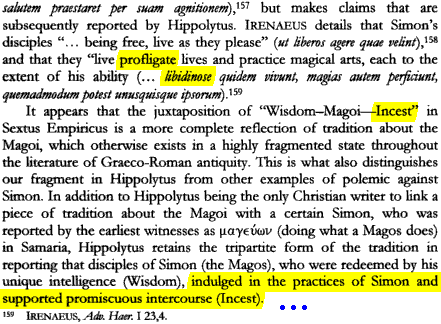
http://books.google.com/books?hl=en&id=qCs5PBDqRHUC&dq=the+first+gnostic+by+stephen+haar&printsec=frontcover&source=web&ots=VQJ9ERJvlt&sig=OtGVnlTov56w7jPyCIBwEQy0QzI#PPA291,M1, Simon Magus: The First Gnostic? – Google Books Result, by Stephen Haar, 2003, p. 291, “Evidence from Ancient Christain Writers | 3.2.4 Fragment 4: Hippolytus, Ref. VI 19,5”:
Miscellaneous:
http://books.google.com/books?hl=en&id=eX3oFohttG8C&dq=medieval+and+early+modern+traditions+by+alberto+ferreiro&printsec=frontcover&source=web&ots=7VAUo3GUJ9&sig=kiBxVB20w_WrRzXIUW-M9UOh7Mg#PPA105,M1, Simon Magus in Patristic, Medieval, and Early Modern Traditions – Google Books Result, by Alberto Ferreiro, 2005, p. 5, “Introduction”:

P. 50, “Typological Portraits of Simon Magus in Anti-Gnostic Sources”:
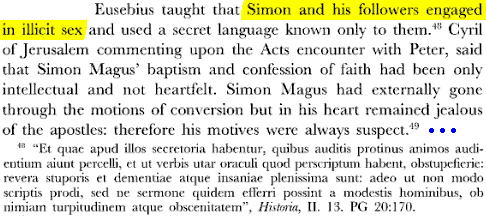
P. 105, “Jerome’s Polemic Against Priscillian in His Letter to Ctesiphon”:
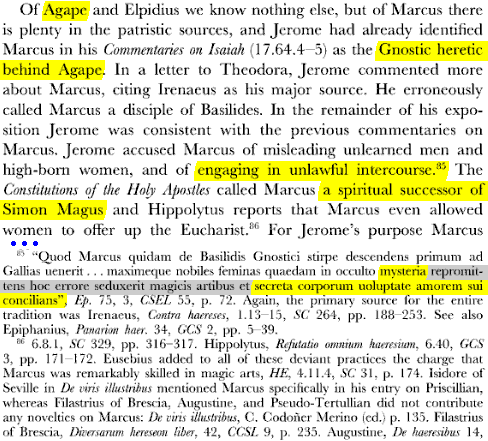
P. 106:

Translation from part of above Latin:
mysteria mystery/secret rite repromittens give formal undertaking hoc this errore error seduxerit lead away magicis magic artibus knowledge et and secreta secret/mystic rite corporum body uoluptate pleasure amorem sexual love sui his friends concilians unite”
They’re called “heretics” my later writers because they basically maintained the free sex morals.
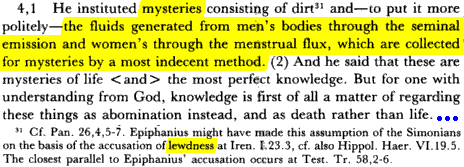
http://books.google.com/books?id=s9-utOHPLfEC&pg=PR23&lpg=PR23&dq=%22The+Panarion+of+Epiphanius+of+Salamis%22+simon+magus&source=web&ots=kBC3uRGZNB&sig=De0wgdLQzNzYYu5E61xp6D498t8#PPA57,M1, The Panarion of Epiphanius of Salamis – Google Books Result, by Epiphanius, “Section II | 21. Against Simonians,” p. 58 (“he” is Simon Magus):

P. 60:
http://www.gnosis.org/thomasbook/ch4.html, Beyond the Law: The Gnostic Apostle Thomas: Chapter 4, “Pearls in the Mud”:
According to early heresiologists, Simon Magus and his followers preached and practiced promiscuous intercourse, saying: "All the earth is earth, and it matters not where one sows, so long as one sows." What the world considered evil was of no concern to them. Having sanctified each other, they were redeemed and above the law.
http://books.google.com/books?id=5KkF2qbd92sC&pg=PA179&lpg=PA179&dq=%22simon+magus+demanded+promiscuous+intercourse+as+a+religious+ritual%22&source=web&ots=ro0rWIfC2m&sig=bzLk_enkAkTXyWRTOMcYfXhCqJo, Constantine's Bible: Politics And the Making of the New Testament – Google Books Result, by David L. Dungan, 2006, p. 179, “Notes | 61”:
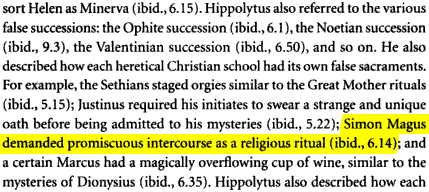
http://books.google.com/books?id=d9UF3PtRzDIC&pg=PA21&lpg=PA21&dq=(%22simon+magus%22%7Csimonians%7Csimonites)+(incest%7Corgy%7Corgies%7Corgiastic%7Clicentious%7Cpromiscuous)&source=web&ots=zwoMfP_cUa&sig=kPQlU-tHOCrK-x5kArfI07m0dm8#PPA21,M1, Simon Magus: His Philosophy and Teachings – Google Books Result, by G. R. S. Mead, 2003, p. 21:
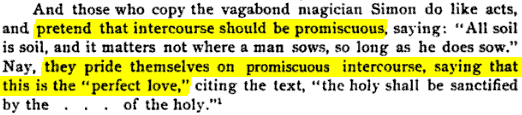
In text:
http://altreligion.about.com/library/texts/bl_meadmagus.htm, Simon Magus, “v. {Hippolytus (?)} (Philosophumena, vi. 7-20). Text: Refutatio Omnium Hæresium (ediderunt Lud. Duncker et F.G. Schneidewin); Gottingæ, 1859. | 19.”
And those who copy the vagabond magician Simon do like acts, and pretend that intercourse should be promiscuous, saying: "All soil is soil, and it matters not where a man sows, so long as he does sow." Nay, they pride themselves on promiscuous intercourse, saying that this is the "perfect love," citing the text, "the holy shall be sanctified by the ... of the holy." {38}
…
“Theodoretus (Hæreticarum Fabularum Compendium, I. i.). Text: Opera Omnia (ex recensione Jacobi Simondi, denuo edidit Joann. Ludov. Schulze); Halæ, 1769.”:
For which cause, indeed, those of his association ventured on every kind of licentiousness, and practised every kind of magic, fabricating love philters(a drink credited with magical powers) and spells, and all the other arts of sorcery, as though in pursuit of divine mysteries. And having prepared his (Simon's) statue in the form of Zeus, and Helen's in the likeness of Athena (“virgin”), they burn incense and pour out libations before them, and worship them as gods, calling themselves Simonians.
http://ccat.sas.upenn.edu/bmcr/2006/2006-03-13.html, Bryn Mawr Classical Review 2006.03.13: Jennifer Wright Knust, Abandoned to Lust: Sexual Slander and Ancient Christianity. Gender, Theory, and Religion Series. New York: Columbia University Press, 2006. Pp. ix, 279. ISBN 0-231-13662-5. $45.00: Reviewed by David M. Reis, College of Santa Fe (dreis@csf.edu):
The final chapter ("Illicit Sex, Wicked Desire, and the Demonized Heretic") demonstrates how Justin and Irenaeus advanced the production of an "authentic" Christian identity by developing family trees that identified the "true" members of the Christian genos. In this enterprise, Justin excises the Jews, most of whom had forfeited their membership in God's genos because of their slavery to desire and their rejection of Christ. Even worse, however, are the Christian "heretics," whom he places completely outside of the divine economy. These groups never enjoyed inclusion into God's people, a fact confirmed by their idolatrous practices and sexual immorality. Irenaeus supports this argument through his contention that all heresies derive from one "father," the idolatrous and licentious Simon Magus. The illegitimacy of these groups are then contrasted with true Christians, the spiritual inheritors of the Jewish genos and a people who trace their ancestry from God through Christ and the apostles. By slandering "others," these patristic authors assert that "their" Christians are members of the best genos and preserve the true teachings of God. Knust concludes by placing such arguments within the larger context of ongoing debates about the nature of Christianity, surmising that "the sorts of charges lodged against heretical insiders shifted in concert with the sorts of charges Christians as a group were facing, reflecting the unstable terrain of insider-outsider controversies and group definition" (162).
http://www.answers.com/topic/satan, “Satan”:
The Gnostic ascetic Saturninus, a contemporary of Simon Magus, wrote: ‘Marriage and generation are of Satan.’
Again, “Jesus” also commanded us not marry in Matt. 19:10-12 (see my earlier page on marriage). So, Simon fits with the true Gospel of Jesus.