CONSTANTINIAN VILLA
In Daphne (near Antioch):
c. 324-337 AD
http://www.findarticles.com/p/articles/mi_m0422/is_1_85/ai_99695885/pg_2, Finding Lost Antioch:
Sarolta A. Takacs's essay on pagan cults at Antioch appeared in the section "Religions: Pagan, Jewish, Christian" and prepared the viewer for the many statuettes of pagan deities--all found in domestic contexts--displayed in the exhibition. But the show itself also revealed the tentative emergence of Christianity. The visitor saw the beautiful Dionysos mosaic from the Constantinian Villa at Daphne juxtaposed with the Antioch chalice with its vine scrolls surrounding images of Apostles;
http://www.artnet.com/Magazine/reviews/stern/stern12-18-8.asp, Art from the East:
Dionysos, from the Constantinian Villa, Dapne, AD 324-337:
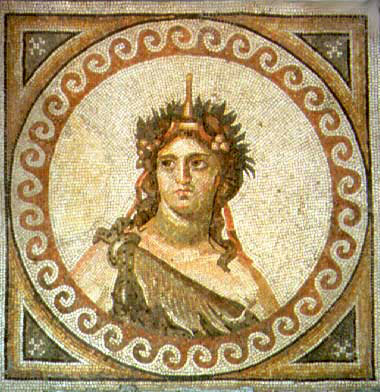
http://www.risd.edu/museum_small.cfm?Selection=http://www.risd.edu/artwork/museum/ancient_dionysus_hsm.jpg, Roman, Dionysus ca. AD 324-337, mosaic, By exchange with the Worcester Art Museum 40.195, From the triclinium of the Constantinian villa at Daphne, near Antioch:
http://www.bridgeman.co.uk/search/view_image2.asp?image_id=95383, Bridgeman Art Library:
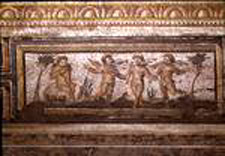
Three dancing putti accompanied by one playing the pan pipes, border detail from a mosaic pavement depicting the seasons and hunting scenes from the Constantinian Villa at Daphne, Roman, c.325-330 AD (marble, limestone and glass mosaic) … Keywords musician musical scene Constantine
http://cti.itc.virginia.edu/~jjd5t/ant-pics/03/pages/1997-vi-22.htm, Images of Antioch Mosaics – Constantinian Villa:
Note also panpipe:
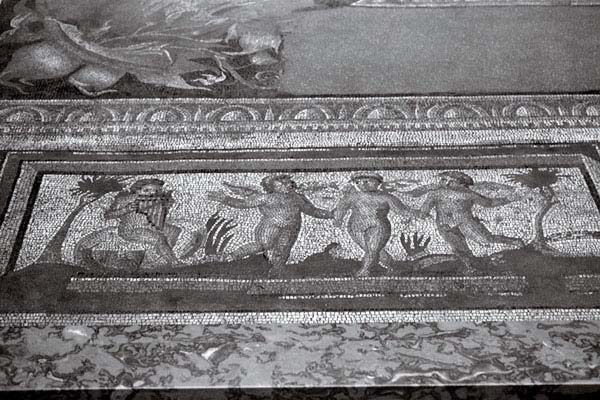
http://cti.itc.virginia.edu/~jjd5t/ant-pics/03/pages/1997-vi-23.htm, Images of Antioch Mosaics – Constantinian Villa:
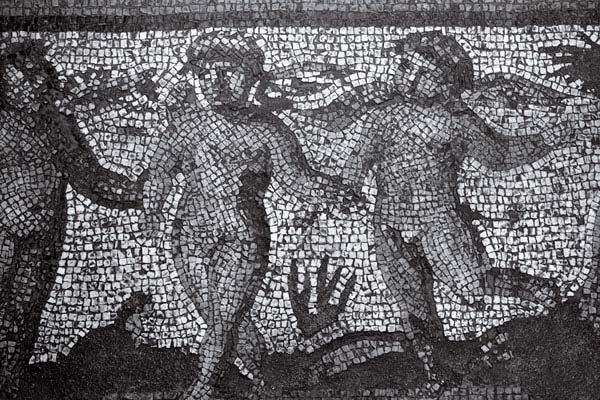
http://cti.itc.virginia.edu/~jjd5t/ant-pics/03/pages/1997-vi-26.htm, Images of Antioch Mosaics – Constantinian Villa:
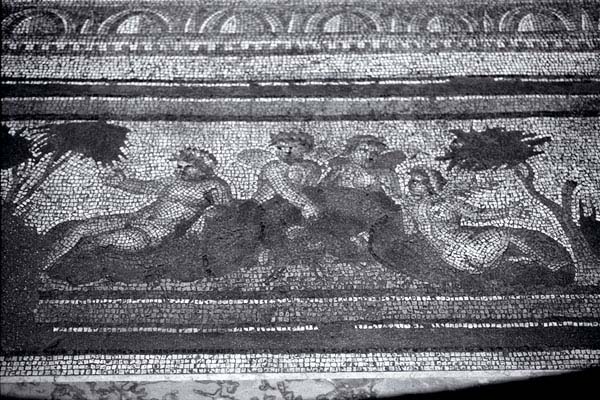
http://cti.itc.virginia.edu/~jjd5t/ant-pics/03/pages/1997-vi-27.htm, Images of Antioch Mosaics – Constantinian Villa:
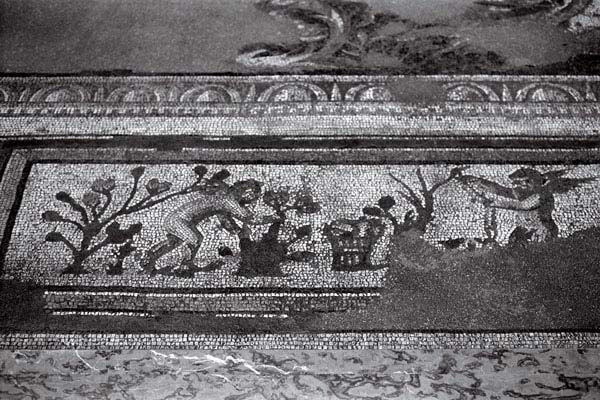
http://en.wikipedia.org/wiki/Antioch, Antioch:
the beautiful suburb of Daphne … The beauty and the lax morals of Daphne were celebrated all over the western world; and indeed Antioch as a whole shared in both these titles to fame. … When Julian [enemy of the Christians] visited the place in 362 the impudent [shameless / unchaste] population railed [objected / criticised] at him for his favour to Jewish and pagan rites, and to revenge itself for the closing of its great church of Constantine
http://www.pbc.org/dp/stedman/acts/0430.html, Expanding Horizons:
Antioch was also a place of culture. And sex was worshipped there. About five miles outside the city was the temple of Daphne, where sex was enthroned and worshipped through priestesses who were really religious prostitutes.
http://www.redlandbaptist.org/sermons/sermon20040704.htm, Christians First, “Sermon”:
Now Antioch was a major ancient metropolis. It was the third largest city in the empire, behind only Rome and Alexandria, with a population of about 500,000. It was the only city in the ancient world that had its streets lighted at night. Many trade routes passed through Antioch—but this not only made it a wealthy and culturally diverse city; it also made it a vile place—full of pagan worship and sexual immorality. One of the biggest contributors to Antioch’s depravity was the temple of Daphne that was located only five miles outside the city.
I understand Antioch well accepted early Christianity – a headquarters of Paul.