CASA CELIMONTANA
Under the Basilica SS. Giovanni e Paolo al Celio: Basilica of St. John and St. Paul (Rome)
C. 2nd century
http://roma.katolsk.no/giovanniepaolo.htm, Santi Giovanno e Paulo: Sts. John and Paul, “History”:
Below the church, there are 2nd and 3rd century Roman houses in which Christian's worshipped … (The first church here was built in the 4th century … known as Titulus Pammachii and was one of the first parish churches in Rome.) … The houses beneath the church, known as the "Case Romane", have been excavated, and the entrance to the excavations can be found just after the chapel of St Paul of the Cross. Work was begun by Fr. Germano Stanislaus in 1887, and completed in 1958. In 2001, administration was taken over by the Comune di Roma. They contain a number of paintings, both Christian and pagan, including frescoes of the 2nd and 3rd century.
http://www.lancelotrome.it/treasures.htm, Hotel Lancelot: Neighborhood Treasures:
on down to San Giovanni e Paolo , a square that has hardly changed since medieval times. Excavations beneath this church have revealed Roman houses of the first and second centuries used as places of Christian worship.
http://www.lottomatica.it/FILE/IT/COMUNICATI/C_16012002.asp (translated from Italian), Archaeology: they reopen to the public the Roman Domus To the Celio, under the basilica of it knows Giovanni and Paul to you:
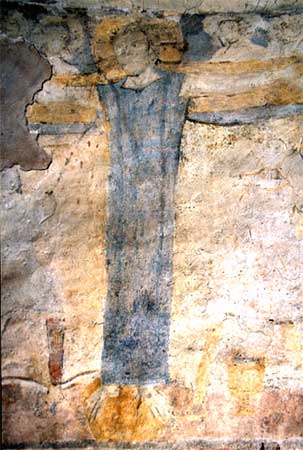
He was the 1887 when Germano Father from S. Stanislao, chancellor of the basilica of knows Giovanni to you and Paul, decreasing itself from a sepolcro dug under the pavement of the church, discovered the houses roman in which, second the tradition, lived and was martirizzati in the 362 knows Giovanni and Paul to you. And the discovery was extraordinary: beyond 20 ipogei atmospheres on more levels, with various architectonic shapes and walls frescoed, that they tell one cracked of roman life between the II and IV the century d.C. and also beyond, unknown testimony of the passage from the aganism (paganism) to the Christianity, evocative commistione of styles. … THE HOUSES: History - the complex, been born from the accorpamento at least three inhabited houses roman in the II sec. d.C., in the first half of the III sec. comes transformed in building porticato with botteghe to level of the road, retrobotteghe that they point out on a courtyard and spaces of rooms to the advanced plan. Between the end of the III and the beginnings of the IV sec., the entire block, found probably from an only owner, comes completely restructured and transformed in one large domus signorile: the openings on road come tamponate, the botteghe transformed in residential spaces, the courtyard in elegant frescoed ninfeo, originally to open sky. To this phase, second the more recent studies, would go back the decorative plan of the house. An ulterior transformation of the domus happens in the second half of IV the century, as a result of the translazione of reliquie or to a deposition of bodies venera you, than one late tradition makes to coincide with the persecution of Giuliano the Apostate. They would have been then martirizzati and buried in the house It knows Giovanni and Paul to you, and also It knows Crispo, Crispiniano and Benedetta to you. It comes realized the so-called one confessio, raised rectangular niche on the pianerottolo, frescoed with Christian subjects. In V the century it comes constructed the overhanging basilica, whose foundations cut the domus literally, that they come dismesse. Their frequantazione as continuous place of cult but also in the centuries succeeded to you: to the inside of one of atmospheres of the porch an oratory is gained, with frescoes of the high Evo Mean, between which one rare rappresentazione of the Crocefissione (crucifixion) with the dressed Christ. They follow the definitive one I bury and the oblivion. … IT FRESCOES: Ad.eccezione.dell' oratory of the Ss.Salvatore, the paintings still walls them present in the houses is attributable to 3 makes between the half of III the century and the end of the IV. Antichi they are those of the ninfeo with the scene of Proserpina and the paintings of the classroom of the geniuses (second half III sec.), the decorations to pretended marble, festoni of flowers, menadi and ox Bees in disposed atmospheres in parallel with the classroom of the geniuses and the classroom of orante (fine III, beginnings IV sec.); finally, the paintings of the confessio are datable to the IV sec.. According to other recent studies, the entire decorative apparatus instead would have had to an only owner who, com' is typical of the culture of the age, would indifferently use iconografici topics attributable to the pagana tradition (geniuses, ox Bees, etc.) and to the new Christian currents (orante and philosophers). One more full adhesion to the Christianity would be expressed alone in the c.d. confessio. …
http://www.beniculturali.it/news/comunicati/immagini/DomusNinfeo.jpg (via http://www.beniculturali.it/news/comunicati/dettagliocomunicati.asp?Id=1019):
http://www.lottomatica.it/FILE/IT/COMUNICATI/C_16012002.asp (translated from Italian), Archaeology: they reopen to the public the Roman Domus To the Celio, under the basilica of it knows Giovanni and Paul to you (continued from above):
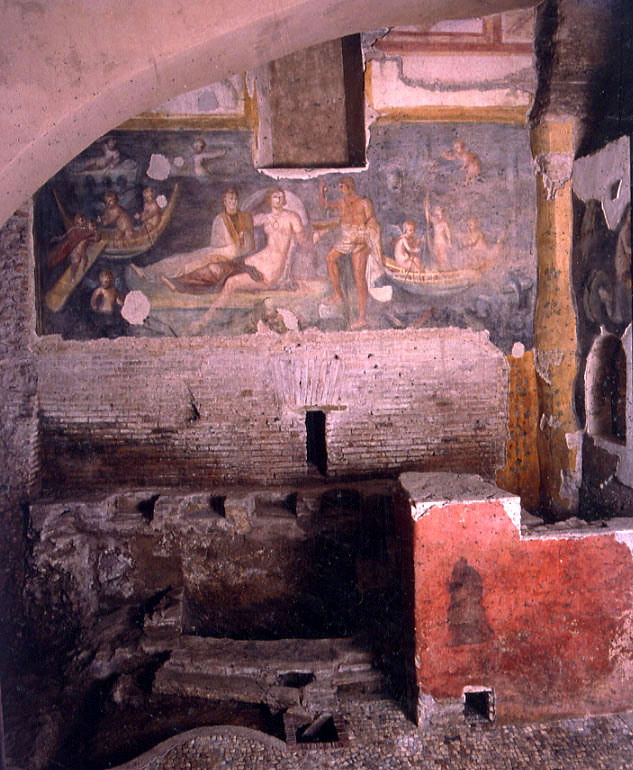
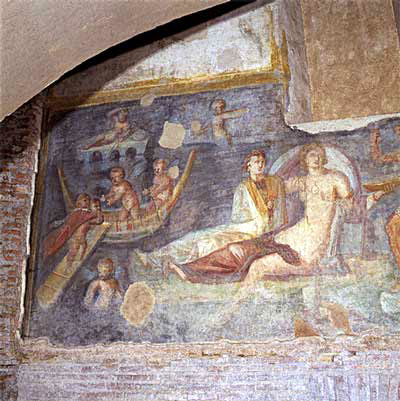
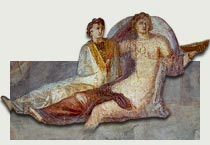
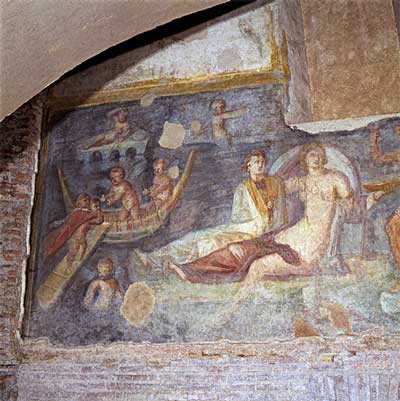
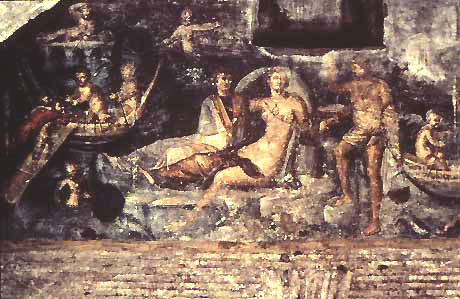
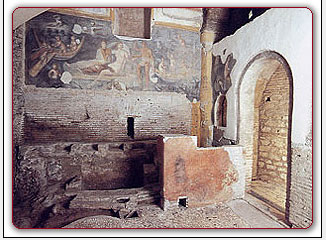
The ninfeo: these paintings are between most remarkable that the late antiquity has handed on to us, above all for celebre the marine scene with Proserpina and Dioniso, encircles you from small boats guided from eroti given over to the peach. …
http://www.beniculturali.it/news/comunicati/immagini/DomusStanza.jpg (via http://www.beniculturali.it/news/comunicati/dettagliocomunicati.asp?Id=1019) (Erotes and vine scrolls):
http://www.lottomatica.it/FILE/IT/COMUNICATI/C_16012002.asp (translated from Italian), Archaeology: they reopen to the public the Roman Domus To the Celio, under the basilica of it knows Giovanni and Paul to you (continued from above):
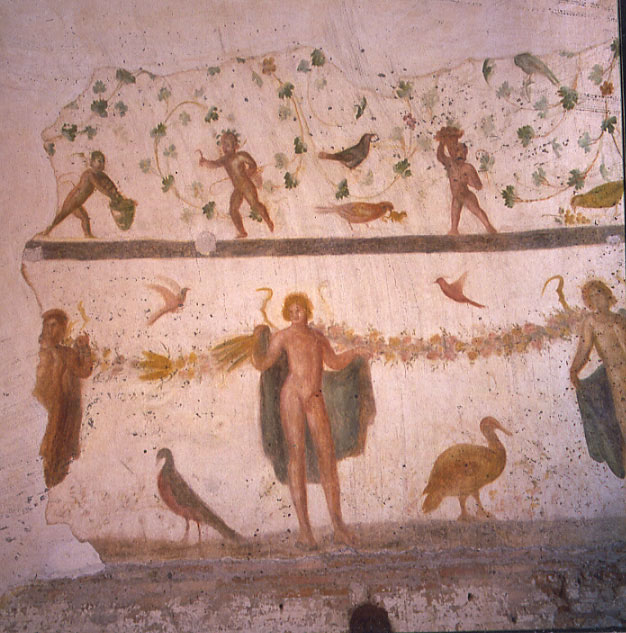
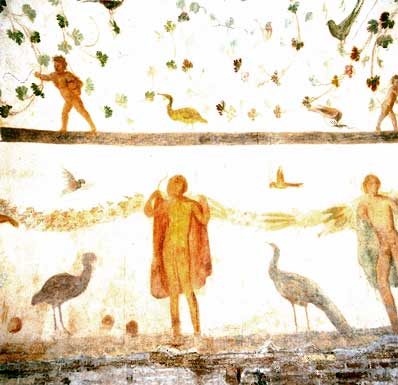
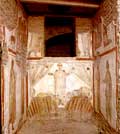
The classroom of the geniuses: the compositivo program makes reference the seasons, from the summer to the beginning of the autumn. In the advanced zone, with small eroti, grape harvest scene is represented one. In that inferior young geniuses, knots and supplies of cape, introduce the summery season, with all the wealth of the plants of the flowers and the harvests. Remarkable also the birds. The restoration has given back to the paintings leaves of the original compositiva and chromatic freschezza. …
http://www.beniculturali.it/news/comunicati/immagini/DomusOrante.jpg (via http://www.beniculturali.it/news/comunicati/dettagliocomunicati.asp?Id=1019) (vine scrolls):
http://www.lottomatica.it/FILE/IT/COMUNICATI/C_16012002.asp (translated from Italian), Archaeology: they reopen to the public the Roman Domus To the Celio, under the basilica of it knows Giovanni and Paul to you (continued from above):
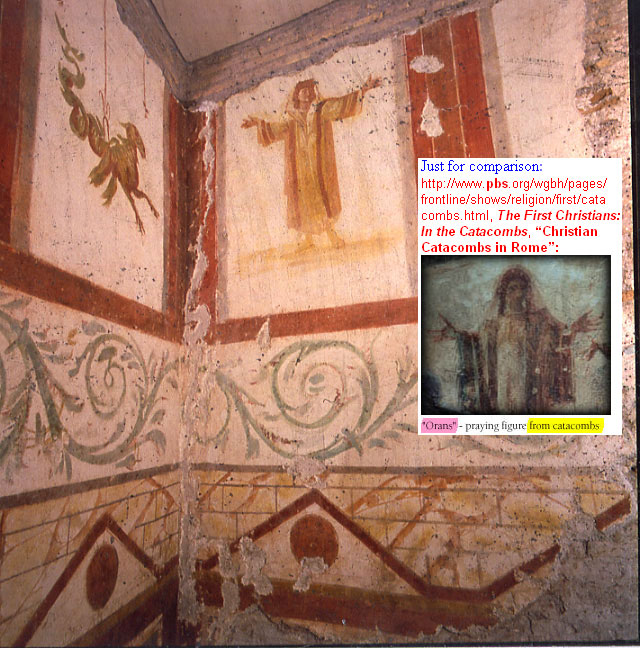
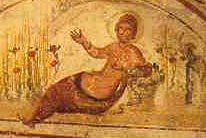
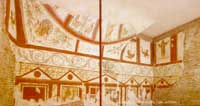
The classroom of the orante: therefore call for the figure to arms rises in religious attitude, than to some students has made to interpret all the atmosphere like place of a first one and hidden Christian cult. Various interpretations have been formulated for the presence, beside one decoration to festoni of flowers, monster navy, masks of theatre, goats and also philosophers.
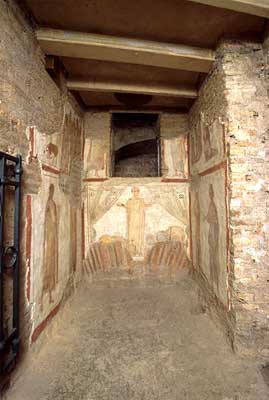
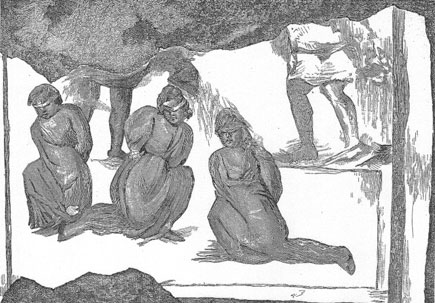
"confessio": it is the main Christian pittorico document of the house. It frescoes cover the wall of bottom and those lateral ones of the niche; the more interesting scenes and than clearer interpretation ritraggono three figures, a two male and feminine one, escorted from soldiers and beheaded.
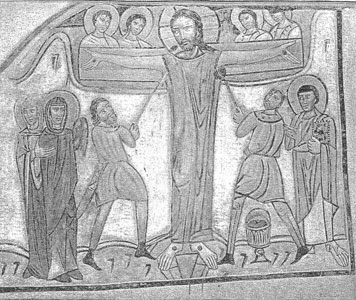
The oratory of the SS. Salvatore: of altomedievale age, painting with history of the life of Christ, after the restoration has been recovered the scene of the crocefissione (crucifixion) with the dressed Christ and the scene of the partition of the garment of the Christ.
http://www.italiannetwork.it/misc/italy_e.htm (8-1-02), “The Reopening of the Roman “Domus” in Rome”:
The ancient houses discovered in 1887 under the floor of the Basilica of San Giovanni e Paolo include twenty rooms and according to the tradition it was there that the saints John and Paul lived and were killed in 362. The “domus” enriched with several frescoes date to the second century a. D. and they tell us how life as to be like in that historical period. The houses had been closed in 1994 after some sections of the Nympheum collapsed. … A small chapel called “Confessio” and frescoes date back in fact to this period (noteworthy that one in the Nympheum depicting Proserpine and Dionysus). The basilica on top of the domus was built in the fifth century. … At present it is possible to visit several rooms among which the “Aula dei geni” with remarkable frescoes, “Aula dell’Orante” and the “Ninfeo”.
http://www.catholic.net/RCC/Peroidicals/Inside/05-97/churches.html (7-31-02), Dazzling Discoveries: The “titular churches” were Christianity’s earliest places of worship. Perhaps the earliest of all was the Basilica SS. Giovanni e Paolo on the Coelian Hill:
Excavations below the Basilica SS. Giovanni e Paolo reveal a complex of republican to imperial age Roman structures (1st to 3rd centuries), including shops (facing the Clivus Scauri), a thermal establishment, and a rich villa (or several villas) of at least 20 rooms. We can descend to this ancient subterranean world from inside the basilica. Grilled bridges with railings lead us over dizzying arches and rooms on at least three levels to the nympheum, an indoor water-garden with fountain, fine mosaic floor, and a truly beautiful pagan marine fresco (2nd century) in subaqueous hues. The adjacent triclinium, or dining room, is also pagan in spirit, with its (2nd-3rd-centuries) border of handsome youths, cavorting cupids, and realistically observed birds, ducks and peacocks. In the tablinum, or reception room, we finally discover, up in a corner, an obviously Christian symbol: an orante, or tunic-clad figure with arms outstretched in prayer (3rd century).
http://www.caseromane.it/pitture.html (translated from Italian), Roman Houses of the Celio (Case Romane del Celio):
I motivi decorativi che ornano le sale della domus , ricavate nelle originarie botteghe e retrobotteghe dell' insula , attingono ai temi tradizionali del repertorio classico.The decorative motifs that adorn the rooms of the domus, drawn in from the shops and back 'insula, draw the themes of the traditional classical repertoire. Frequente è il richiamo alle stagioni, come nella cosiddetta sala dei Geni, con festoni di fiori e frutta sorretti da Geni alati ei graziosi amorini vendemmianti su uno sfondo di uccelli, anche esotici, di straordinaria freschezza e vivacità cromatica. Is the frequent reference to the seasons, as in so-called hall of Genes (Geniuses) with garlands of flowers and fruit supported by Genes (Geniuses) and graceful winged cupids (amorini) vendemmianti on a background of birds, including exotic and extraordinary freshness and vivacity of colors.:
…
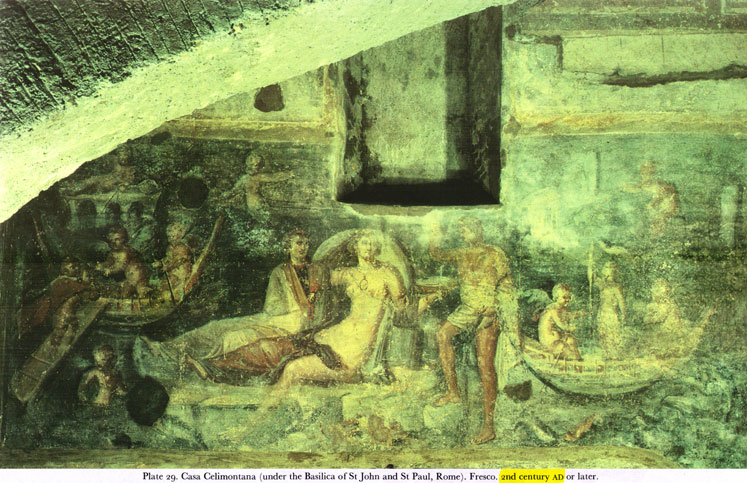
Un affresco di soggetto marino, considerato un gioiello della pittura tardoantica, copre le pareti del vicino ninfeo.A fresco of marine subject, considered a jewel of the late paintings, covering the walls of the nearby ninfeo. Campeggia una divinità femminile, diversamente identificata con Venere o Proserpina, accompagnata da un festoso corteo di amorini pescatori su colorate barchette lignee. Stands a female deity, identified with Venus or Proserpina, accompanied by a festive procession of fishing cupids (amorini) painted on wooden boats.:
|
|
Just for comparison: http://campus.belmont.edu/honors/catacombs/ arcosoliumE.jpg (via http://campus.belmont.edu/onors/ catacombs/catacombs.htm) (Belmont University), The Christian Catacombs of Ancient Rome: An Introduction:
In this context, however, the meaning is blurred, as no other purely Christian imagery is displayed, and several clearly pagan figures do appear: the Winged Victory to the left, the gorgon on the ceiling and the reclining Tellus, goddess of the earth and flowers. The goat kids on the ceiling could represent Christ, as the "scape goat" sacrificed for the Hebrew people. |
…
Of particular importance is the decorative program of the hall with the famous Orante appearing arms raised in an attitude of prayer, considered by many a sign of an early Christian use of the environments. (vine scrolls):
…
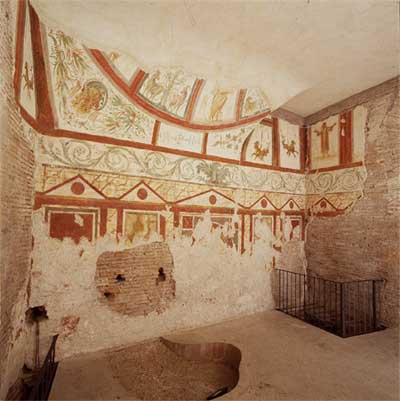
Nella piccola Confessio , ricavata a metà della scala che conduceva ai piani superiori, sono presenti preziose decorazioni pittoriche cristiane della seconda metà del IV secolo, legate dalla tradizione al martirio dei Ss. Giovanni e Paolo e dei Ss. Crispo, Crispiniano e Benedetta.In the small Confessio, cut in half of the ladder leading to the upper floors, there are precious Christian paintings of the second half of the fourth century, linked by tradition to the martyrdom of Sts. John and Paul and Sts. Crispo, Crispiniano and Benedetta.:
…
Alcuni ambienti delle domus continuarono ad essere frequentati ed in età medievale in un settore del portico venne ricavato un oratorio con affreschi di VIII - XII secolo tra i quali la rara rappresentazione della crocifissione del Cristo vestito.Some areas of the houses continued to be popular in the Middle Ages in an area of the porch was obtained with an oratory frescoes of VIII - XII century, including the rare representation of the crucifixion of the dressed Christ.:
…
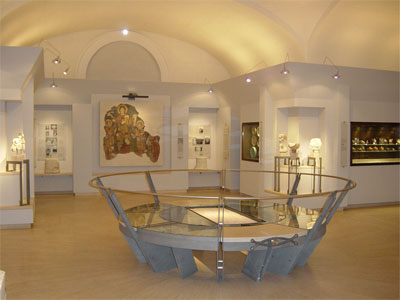
In the modern antiquarium, set up with innovative solutions, are the finds from excavations and the basilica.:
|
|
(At website, click:
|
 )
)
http://www.caseromane.it/storia.html (translated from Italian), Houses Roman of the Celio (Case Romane del Celio):
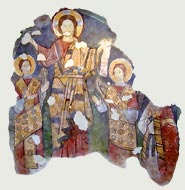
Beneath the basilica of SS. Giovanni e Paolo al Celio, founded at the beginning of the fifth century by Senator Pammachio, is an extraordinary complex of residential buildings of the Roman age.
 (http://www.caseromane.it/img/jesus.jpg)
La tradizione identifica questi luoghi con la casa in cui i Ss. Giovanni e Paolo abitarono e furono sepolti, dopo avervi subito il martirio sotto il regno dell'imperatore Giuliano l'Apostata (361-363 dC).Tradition identifies this place with the house in which the SS. John and Paul lived and were buried, after having suffered martyrdom under the reign of the emperor Julian the Apostate (361-363 AD).
Il complesso archeologico, scoperto nel 1887 da Padre Germano di S.The archaeological complex, discovered in 1887 by Father Germano S. Stanislao, rettore della Basilica dei Ss. Giovanni e Paolo al Celio ancora oggi officiata dai Padri Passionisti, svela un suggestivo itinerario attraverso oltre 20 ambienti ipogei su vari livelli, in parte affrescati con pitture databili tra il III secolo dC e l'età medievale.Stanislaus, rector of the Basilica of SS Giovanni e Paolo al Celio still officiated by the Passionist Fathers, reveals a fascinating journey through more than 20 underground environments on several levels, partly frescoed with paintings dating from the third century AD and the medieval age.
http://www.caseromane.it/ (translated from Italian), Houses Roman of the Celio (Case Romane del Celio):
Below the Basilica of Sts John and Paul
Ownership of the buildings of Worship - Ministry of Interior
http://www.caseromane.it/slide/im_pros.html (via http://www.ac-nancy-metz.fr/enseign/lettres/LanguesAnciennes/Ariane/fichiers/ariane_dionysos.htm), Images d'Ariane et Dionysos dans l'antiquité:
Nympheum the
home of Mount Caelius Roman fresco:
Figures
diversement interprétées : Vénus , Proserpine , L'île des
Bienheureux , Ariane et Bacchus, mais aussi la maîtresse de maison
assise entre sa confidente et un serviteur qui emplit sa coupe.Figures variously interpreted: Venus, Proserpine, The Island of the Blessed, Bacchus and Ariadne, but also the lady of the house sat
between his confidante and a servant who fills his bowl.
Vers
200 - 220 après J.-C.Around 200 - 220 AD
Rome,
sous l'église des Saints-Jean-et-PaulRome
under the church of Saints John and Paul
http://classics.furman.edu/~rprior/imgs/RCU4/4-106.jpg (via http://classics.furman.edu/~rprior/courses/RA/RAU4.html) (Furman University), Roman Archaeology: Roman Art, Roman Painting:
Marine landscape with Venus from a house on the Caelian Hill:
A Chronology of Western Architecture, Yarwood, 1987, p. 24, “Fourth-Century Early Christian Churches in Rome”:
A Handbook of Roman Art: A comprehensive survey of all the arts of the Roman world, Henig, Cornell University Press, 1983, p. 109:
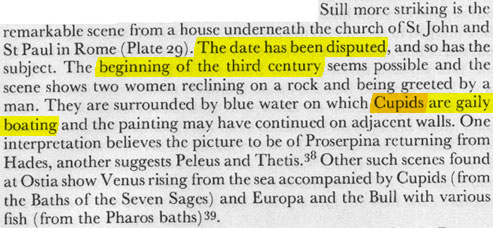 Plate
29:
Plate
29:
http://www.arcobaleno.net/cultura/LE%20DOMUS%20DEL%20CELIO%20riaperte%20dopo%20il%20restauro.htm (translated from Italian), Culture: The DOMUS Of the CELIO reopened after the restoration:
the Genes (Geniuses): This takes its name from the images of the frescoes, originally extended over the whole time, representatives of the Genes (Geniuses) summer surrounded by plants and flowers, and the Erotic vendemmianti representing the autumn. … We then move on to the so-called Ninfeo of Proserpina: it is a fountain on the wall of which stands the magnificent fresco depicting a woman, variously interpreted as Proserpina with his right or Venus with Ceres Peito (persuasion), yet the goddess Tethys Sea, which presents a cup to Dionysus which fills him with a whitish liquid. Il tutto immerso in un paesaggio acquatico con piccole imbarcazioni ed Eroti che lavorano, sullo sfondo un porticciolo in muratura. Rinvenuta nel 1909 al di sotto di un’altro strato di intonaco, o di una scialbatura che comunque ne impediva la visione, forse perché troppo pagano, presenta una qualità pittorica molto superiore rispetto al resto delle decorazioni, rimandando quasi alla grande pittura di età classica: si data alla fine del II-inizi III secolo dC La presenza di alcune strutture in muratura, fra cui una specie di bancone oggi interpretato come un pozzo, però privo di pedarole, lo ha anche fatto definire termopolium . All this nestled in a small boat with water and eroticism of work in the background in a harbor wall. Found in 1909 below another layer of plaster, or a scialbatura which will prevent the vision, perhaps because too pagan presents a pictorial quality much higher than the rest of the decorations, referring to the great painting almost old classic: this is dated at the end of the second-early to third century AD … Dating to the ninth century, are of rather poor bill, which has greatly affected the retention: originally represented episodes from the life of Christ. Oggi rimangono la scena della Crocifissione, con il Cristo vestito, cosiddetto alla siriaca, il cui unico altro esempio noto si trova nella chiesa di S. Today remains the scene of the Crucifixion, with Christ dressed, known as the Syrian
http://www.romeguide.it/FILES/visite/domusfoto/megalografiaCelioninfeo.jpg (via http://www.romeguide.it/FILES/visite/domus_romane.htm), LE DOMUS ROMANE AL CELIO (TO THE ROMAN DOMUS CELIO):
Dal cortile del ninfeo si accede agli ambienti del pianterreno, compresi tra questo e il clivus Scauri. Alcuni ambienti erano in origine taberne, che si aprivano sul portico esterno (che in epoca tarda fu chiuso con tramezzi, formando così degli ambienti antistanti). Altre stanze davano invece accesso al cortile e da qui alla casa più settentrionale, mentre un piccolo andito costituisce la gabbia della scala che portava agli ambienti superiori. In quella, prossima all'ambiente con il grande affresco - con il quale in origine comunicava direttamente (ora il muro di fondazione della chiesa obbliga a un grande giro per accedervi) - si può vedere una notevolissima decorazione a fondo bianco, con efebi che sostengono un festone vegetale, intramezzati da pavoni e da altri grandi uccelli. Nella volta sono rappresentati tralci e girali, tra i quali svolazzano eroti e uccelli. Il pavimento era rivestito di lastre di marmo, asportate in antico, ma delle quali restano le impronte. Questa notevole decorazione sembra contemporanea a quella del vicino ninfeo.
…
Gli Affreschi delle domus …
La domus di III-IV secolo è composta di 9 ambienti affrescati il cui significato è da tempo interpretato in modo disomogeneo. La presenza di una figura femminile orante all'interno di uno degli ambienti più significativi della casa ha spinto molti studiosi ad interpretare la decorazione parietale come un esplicito messaggio di fede cristiana dei proprietari e a credere che gli ambienti fossero stati utilizzati come segreto ritrovo delle prime comunità cristiane.
Translated from Italian:
From the courtyard of the ninfeo you access to the rooms of the ground floor, between this and the clivus Scauri. Alcuni ambienti erano in origine taberne, che si aprivano sul portico esterno (che in epoca tarda fu chiuso con tramezzi, formando così degli ambienti antistanti). Some areas were originally taberne, which opened on the porch outside (which was late in the period closed with walls, forming areas of the front). Altre stanze davano invece accesso al cortile e da qui alla casa più settentrionale, mentre un piccolo andito costituisce la gabbia della scala che portava agli ambienti superiori. Other rooms instead gave access to the courtyard and from there to the northernmost house, while a small andito is the cage of the staircase that led to the rooms above. In quella, prossima all'ambiente con il grande affresco - con il quale in origine comunicava direttamente (ora il muro di fondazione della chiesa obbliga a un grande giro per accedervi) - si può vedere una notevolissima decorazione a fondo bianco, con efebi che sostengono un festone vegetale, intramezzati da pavoni e da altri grandi uccelli. On that, next to the large fresco - with which originally stated directly (now the foundation wall of the church requires a great lap to access it) - you can see a highly decorated white with efebi supporting a festoon plant intramezzati from peacocks and other large birds. Nella volta sono rappresentati tralci e girali, tra i quali svolazzano eroti e uccelli. In turn are represented Girali and branches, among which birds fly and erotica. Il pavimento era rivestito di lastre di marmo, asportate in antico, ma delle quali restano le impronte. The floor was covered with slabs of marble, removed old, but which remain the fingerprints. Questa notevole decorazione sembra contemporanea a quella del vicino ninfeo. This outstanding contemporary decor seems close to that of ninfeo.
…
The Frescoes of the domus …
The domus of III-IV century is composed of 9 rooms frescoed whose meaning has long been interpreted unevenly. La presenza di una figura femminile orante all'interno di uno degli ambienti più significativi della casa ha spinto molti studiosi ad interpretare la decorazione parietale come un esplicito messaggio di fede cristiana dei proprietari ea credere che gli ambienti fossero stati utilizzati come segreto ritrovo delle prime comunità cristiane. The presence of a female figure praying inside one of the most significant of the house has led many scholars to interpret the parietal decoration as an explicit message of Christian faith and the owners believe that the environment had been used as a secret meeting place of the first communities Christian.
http://books.google.com/books?id=ziXjd1heumgC&pg=PA44&lpg=PA44&dq=%22Domus+Celimontana%22&source=bl&ots=WSYHv4T6JJ&sig=bAsSZdnFDAvloRwGHPGO3S9E3gE&hl=en&ei=QDbASeabE4aaMqHaiaEN&sa=X&oi=book_result&resnum=5&ct=result#PPA44,M1, The Architectural Setting of the Cult of Saints in the Early Christian West c. 300—c. 1200 –Google Books Result, by John Crook, 2000, p. 44, “II. The Physical Setting of Relic Cults up to c. 750 | SS. Giovanni e Paolo”:

La Casa Celimontana: Dei SS. Martiri: Giovanni e Paolo, Germano / Stanislao, 1894, Figura 7, p. 94:
Halos in “the classroom of the orante”:
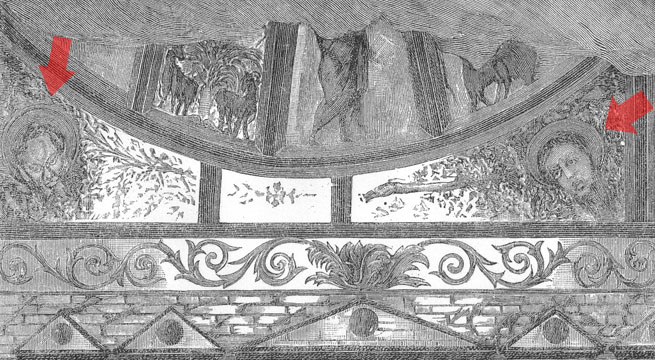
Figura 8, p. 96:
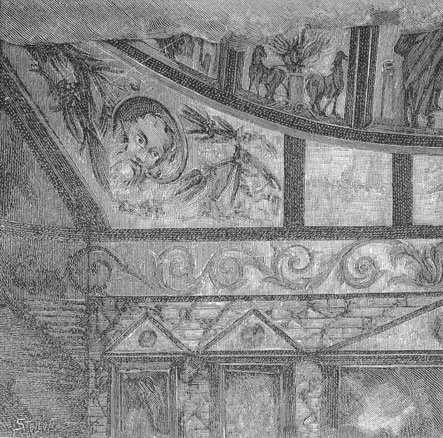
Figura 21, p. 138:
Christian Chi-Rho:
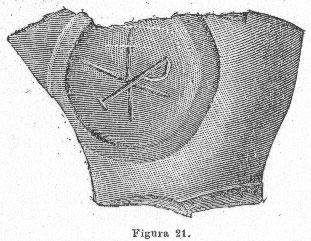
Figura 73, p. 422:
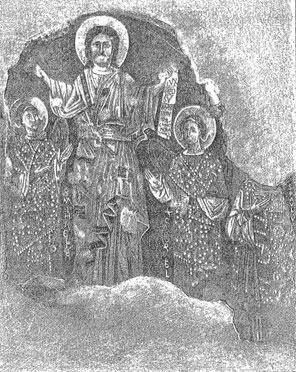
Figura 74, p. 426 (the crocifissione (crucifixion) of the dressed Christ):
http://digilander.libero.it/bob1971/Comu...di%20Roma/SP@RNews%20-%20Numero%2061.htm (translated from Italian) (8-2-02), A Found Again Route: The Roman Domus of the Celio:
that one of Proserpina and Dioniso that troneggiano on a marine scene, the Geniuses that incarnate the triumph of the seasons and those dell “dell orante classroom”. The paleocristiana phase is documented one rarest crocifissione (crucifixion) with the dressed Christ.
http://www.cittadinitalia.it/gallery/pages/g_000000037.htm (MINISTERO DELL’INTERNO), Il Ministero, Basilica SS. Giovanni e Paolo al Celio:
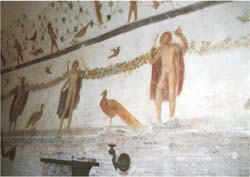
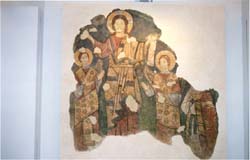
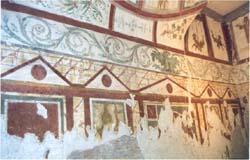
The Basilica of Saints John and Paul on the Caelian Hill, Prandi – Ferrari, 1958:
The Roman Houses on the Hill before the Basilica’s Erection, p. 15:
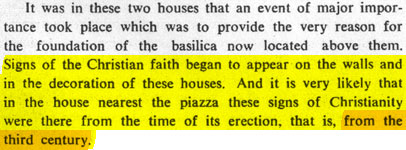
The Recent Excavations under the Basilica, p. 21-22:
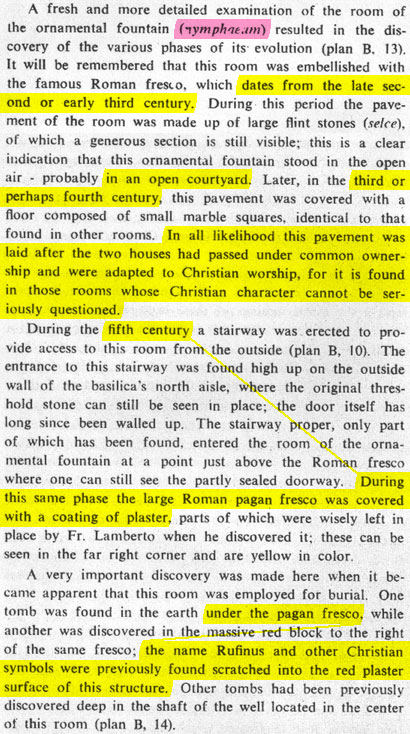
Fig. 31: Inscription Commemorating the Recent Explorations under the Basilica, p. 108:

Fig. 33: The Well Shaft and Ornamental Fountain Room, pp. 110-111:
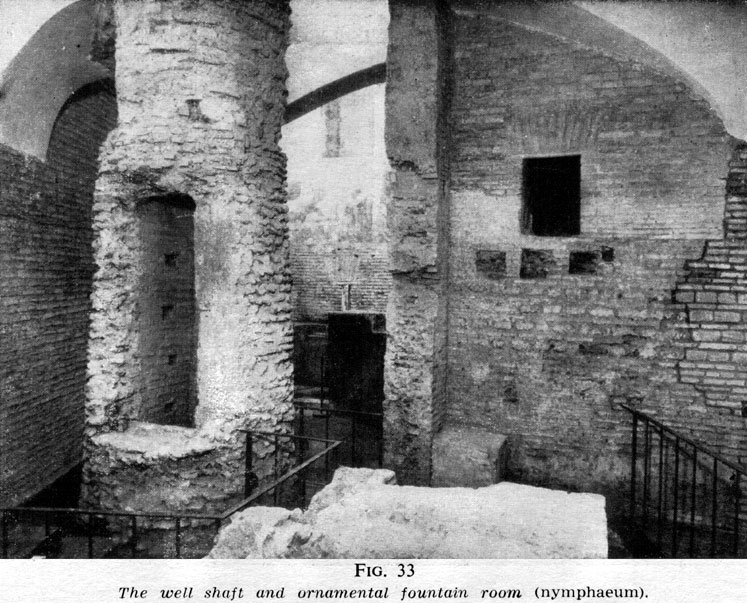
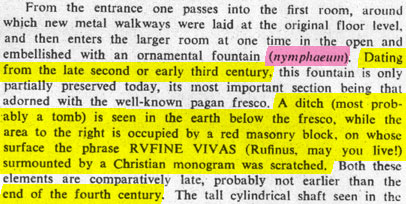
Fig. 34: Pagan Fresco from the Ornamental Fountain (Nymphaeum), pp. 112-115:
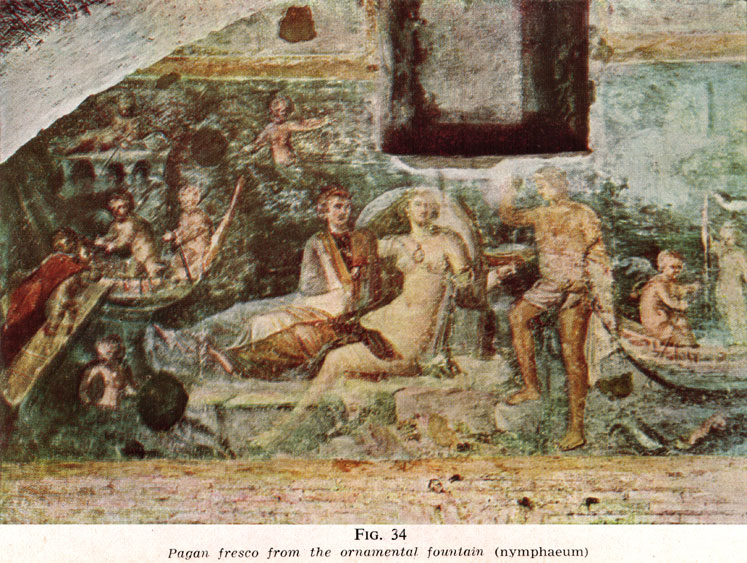
Fig. 38: The Fresco of the “Orans”, pp. 122-125:
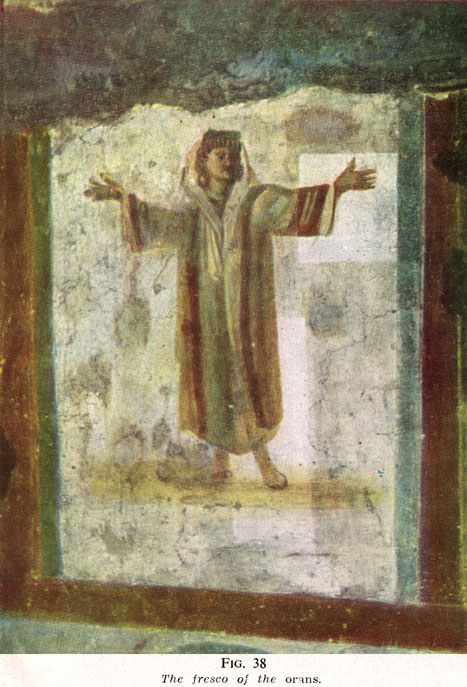
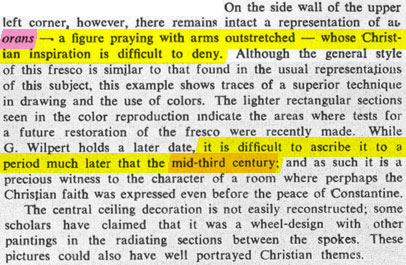
Fig. 40: The “Confessio” or Shrine, pp. 128-129:
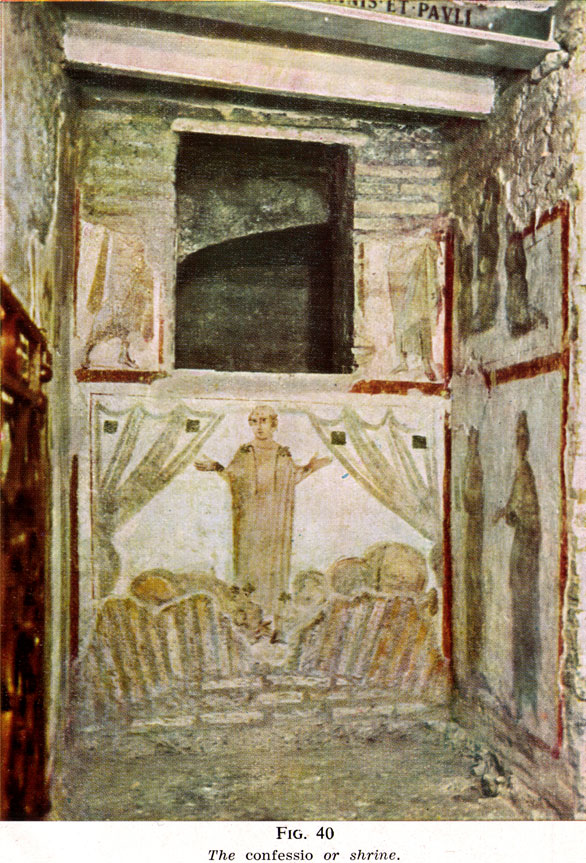
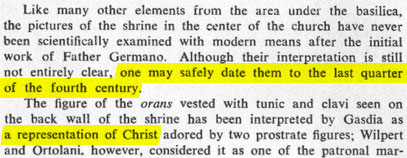
Fig. 42: Right Wall of the “Confessio”, pp. 134-135:
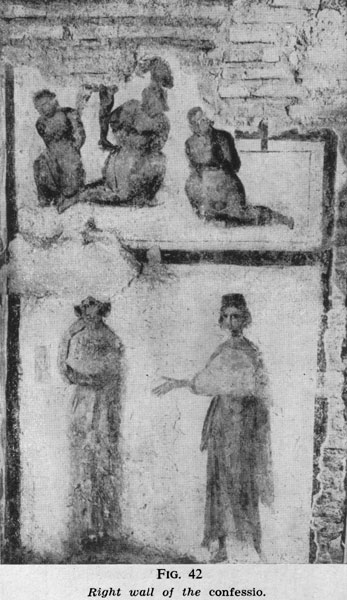
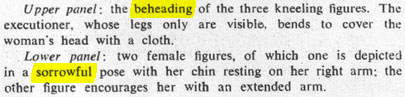
Sounds like the era prior to the end of the (Christian) persecutions.
La Casa Celimontana: Dei SS. Martiri: Giovanni e Paolo, Germano / Stanislao, 1894, Figura 44, p. 326:

Since the “pagan ninfeo / nymphaeum fresco” has Eros and naked adult figures, I think no one wants to say it could have been drawn by early Christians. There is a possibility that the earlier Christians used these pagan themes to describe their religion, mainly because pagan themes were the actual religious communication of the pagan / gentile world. As early Christians extensively did, recruiting the pagan gentiles very likely required dialogue or art to better communicate the Christian message. Recruiting pagan gentiles with a fresco of Eros and Dionysus would have given them a definite wrong idea, if Christian “love” had nothing to do with erotic / orgiastic sex, as we are taught today. Pagan themes were very likely used until Christians developed their own artistic motifs, because later Christian art seems to emanate from pagan themes. For example, Dionysus and Helios would be converted into an image of Christ, later themed with the personification of the crucifixion. Eros became a Christian angel / cherub. Possibly Venus / Proserpina converted to the Virgin Mary. If such is the case, since Dionysus and Eros both are definitely used in later Christian art, this pagan ninfeo / nymphaeum fresco would be, by far, the earliest known extant Christian art.
I speculate that the pagan ninfeo / nymphaeum fresco was covered with yellow plaster in the “fifth century” because after Catholic Emperor Theodosius’ decree of February 27, 380 AD the newly designated “Christian” authorities vastly persecuted pagans and their idols:
http://www.knowledgerush.com/kr/jsp/db/viewWiki.jsp?title=Library+of+Alexandria, Library of Alexandria, “Destruction of the pagan temples by Theophilus”:
In the late 4th century, persecution of pagans by Christians had reached new levels of intensity. Temples and statues were destroyed throughout the Roman empire, pagan rituals forbidden under punishment of death, and libraries closed. In 391 CE, Emperor Theodosius ordered the destruction of all pagan temples, and the bishop of Alexandria, Theophilus, complied with this request.
http://www.knowledgerush.com/kr/jsp/db/viewWiki.jsp?title=Library+of+Alexandria, Library of Alexandria, “Destruction of the pagan temples by Theophilus”:
In the late 4th century, persecution of pagans by Christians had reached new levels of intensity. Temples and statues were destroyed throughout the Roman empire, pagan rituals forbidden under punishment of death, and libraries closed. In 391 CE, Emperor Theodosius ordered the destruction of all pagan temples, and the bishop of Alexandria, Theophilus, complied with this request.
Again, they really don’t have any evidence that the earlier Christians didn’t draw the pagan ninfeo / nymphaeum fresco; but, if they didn’t, because of the later definite Christian art and ownership of the site, it would be like, today, building a church on the grounds of the Playboy Mansion.
“I am the true vine” –John 15:1. That would be like starting a religion today and saying “I am the true Hugh Hefner,” which would correlate to nudity themes. If they said “I am the true Archie Bunker,” then that would theme them with bigotry, racism and narrow-mindedness. I know, you still don’t get it.
http://www.geocities.com/hestia624/olympians-dionysus.html, Characters of Greek Mythology, “Dionysus”:
Dionysus is the God of the Vine. … Many city-states outlawed the wild, orgiastic rites of Dionysus.
Matthew 9:14-17:
14Then the disciples of John came to Him, saying, "Why do we and the Pharisees fast often, but Your disciples do not fast?" 15And Jesus said to them, "Can the friends of the bridegroom mourn as long as the bridegroom is with them? But the days will come when the bridegroom will be taken away from them, and then they will fast. 16No one puts a piece of unshrunk cloth on an old garment; for the patch pulls away from the garment, and the tear is made worse. 17Nor do they put new wine into old wineskins, or else the wineskins break, the wine is spilled, and the wineskins are ruined. But they put new wine into new wineskins, and both are preserved."
Here Jesus elaborates by saying that His orgiastic ways (“new wineskins”) are different and superior to Dionysus’ (“old wineskins”), so people will know that “the true vine” just matches the basic theme of Dionysus, not necessarily in the same exact manner. Jesus has to make use of what was available and closest to His theme. Again, Jesus’ main / superior theme is eliminating “looks discrimination”: “lust.” And the whole passage has something to do with when “the bridegroom will be taken away from them.” “The bridegroom,” of course, refers to marriage “taken away.” “Fasting” must be something you do once you are religiously pious. Ambiguously, “friends [‘sons’ in Greek] of the bridegroom” will never again “mourn” once marriage is eliminated, because he will never need to be without them. Or, it may allude to the fact that marriage, which leads to divorce, which leads to mothers and courts limiting fathers of the visitations of their children; where, in a free sex (non-conditional love) society, fathers would be able to visit their children as often as everyone likes, because direct paternal financial “requirements” would be eliminated. And the ex-wife wouldn’t have that “need” of not wanting their ex-husband around. – In a free-sex society, he wouldn’t be harping at her continually to get back together, or become dangerous because she won’t.
During the wedding in Cana (John 2:9-10), the “master of the feast” said, “Every man at the beginning sets out the good wine (happy sex in marriage), when the guests have well drunk, then that which is inferior (inferior wine – sex in marriage becomes dull); but you have kept the good wine until now (Jesus’ ‘good wine’: free-sex makes later sex ‘good’).” Concerning John 2:3-4 “they have no wine (happy sex),” Jesus tells his mother “My hour has not yet come” indicating that Jesus’ free-sex world is not at hand (but, the marriage standard sure was fully intact in the days of Jesus, because He is at “a wedding”).
Matthew 13:10-17:
10And the disciples came and said to Him, "Why do You speak to them in parables?"
11He answered and said to
them, "Because it has been given to you to
know the mysteries of the kingdom of heaven, but to them it has not been given.
12For whoever has, to him more
will be given, and he will have abundance; but whoever does not have, even what
he has will be taken away from him. 13Therefore I speak to them in parables, because seeing they do not see,
and hearing they do not hear, nor do they understand. (So to make it through Middle Age corruption.) 14And in them the prophecy of Isaiah is fulfilled, which
says:
"Hearing you will hear and shall not
understand,
And seeing you will see and not perceive;
15For the
hearts of this people have grown dull.
Their ears are hard of hearing,
And their eyes they have closed,
Lest they should see with their eyes and
hear with their ears,
Lest they should understand with their
hearts and turn,
So that I should heal them. (Isaiah 6:9-10)
16But blessed are your eyes for they see, and your ears for they hear; 17for assuredly, I say to you that many prophets and righteous men desired to see what you see, and did not see it, and to hear what you hear, and did not hear it.
Mark 4:10-12:
10But when He was alone, those around Him with the twelve asked Him about the parable. 11And He said to them, "To you it has been given to know the mystery of the kingdom of God; but to those who are outside, all things come in parables, 12so that 'Seeing they may see and not perceive, and hearing they may hear and not understand; lest they should turn, and their sins be forgiven them.'"
Matthew 16:3:
"Hypocrites! You know how to discern the face of the sky, but you cannot discern the signs of the times."
John 10:24-27:
24Then the Jews surrounded Him and said to Him, "How long do You keep us in doubt? If You are the Christ, tell us plainly." 25Jesus answered them, "I told you, and you do not believe. The works that I do in My Father's name, they bear witness of Me. 26But you do not believe, because you are not of My sheep, as I said to you. 27My sheep hear My voice, and I know them, and they follow Me."
Now I know that all the Church leaders today are fully aware of the meanings in all unclear parables: They all mean that Jesus paid the afterlife penalty for all their wrongs against others, past, present, and future. And they all feel good about that interpretation, so they are convinced that that is God assuring them that they are right. Plus, they are doubly convinced that they are right, because those interpretations bring in the most money to their church. “Thank you Jesus, thank you!” (Of course, I don’t know how many of these types have read this far; because, they probably stopped reading as soon as they realized that this website has nothing to do with them making any more money.)
http://www.NewMagneticInfraredScanReveals20thCenturyIcon.com/bs:
–Look what modern technology can uncover.
Nymphs:
http://www.pantheon.org/articles/n/nymphs.html (Encyclopedia Mythica), Nymphs:
They were worshipped in a nymphaeum, a monumental fountain which was raised in the vicinity of a well. The male counterpart of a nymph is the satyr.
http://www.the-pantheon.com/primative_beings.htm, “The Satyrs”:
The satyrs were rural creatures associated with the fields and woods and pictured as sporting with the nymphs, or joining with them in the orgies associated with Dionysus.
http://www.godchecker.com/pantheon/greek-mythology.php?deity=MAENADS:
MAENADS: 'The Raving Ones'. Often labelled as NYMPHS, they are the debauched female followers of DIONYSUS, who drives them wild with passion.
The Woman’s Encyclopedia of Myths and Secrets, Barbara G. Walker, 1983, p. 732, “Nymphs”:
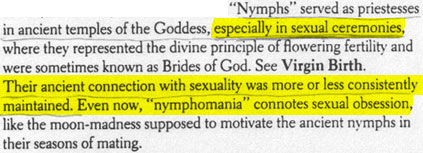
The Random House Dictionary of the English Language (Unabridged), 1987, p. 1333:
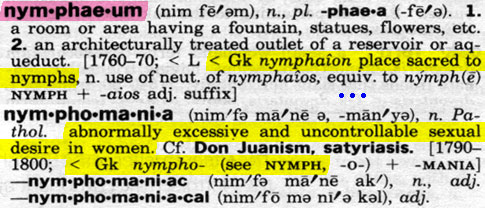
http://www.kl.oakland.edu/kraemer/edcm/n.html, An Etymological Dictionary of Classical Mythology:
nymphomania n
abnormal and uncontrollable sexual desire in women
http://www.worldbookonline.com/wb/Article?id=ar412180&st=Pan (subscription required), Pan:
Pan had many love affairs with nymphs
Encarta World English Dictionary, 1999, p. 1244, “nymphomania | mymphomaniac”:
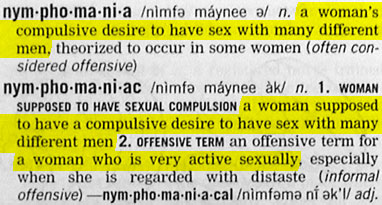
The Greek Anthology and Other Ancient Greek Epigrams, 1973, p. 412:

http://www.worldbookonline.com/wb/Article?id=ar397580&st=Nymph (subscription required), Nymph:
Nymphs were sometimes shy. But at other times, they were passionate lovers.
The Woman’s Encyclopedia of Myths and Secrets, Barbara G. Walker, 1983, p. 820, “Prostitution”:

Fundamentals of Human Sexuality, Katchadourian, 1989, p. 576, “Erotic Themes in Greek Mythology”:
Myth: Myth and Legends of the World Explored, McLeish, 1996, p. 549, “Sex”:
http://www.piney.com/Farmers-Branch-MusicB.html, Farmer's Branch Church of Christ Part B, “Here is what the MUSICAL JEWS believed” (regarding Dionysus):
Later on the god grew up amongst the nymphs (not especially well known for their chastity) and satyrs, a kind of creatures half-men half-goats, on Mount Nysa and traveled extensively throughout Asia (including India) and the Mediterranean world. He has discovered the wine spreading this knowledge everywhere he traveled. After many adventures he returned to Greece introducing his hedonistic practices subject of strong opposition.
Fundamentals of Human Sexuality, Katchadourian, 1989, p. 579, “Erotic Art and Literature”:
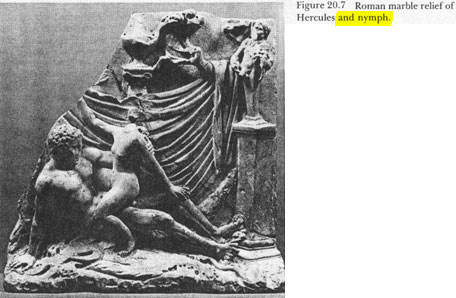
Fundamentals of Human Sexuality, Katchadourian, 1989, p. 588, “The Reformation”:
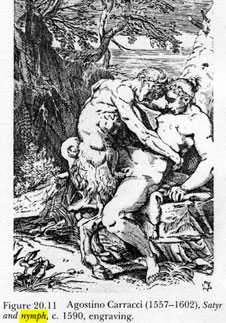
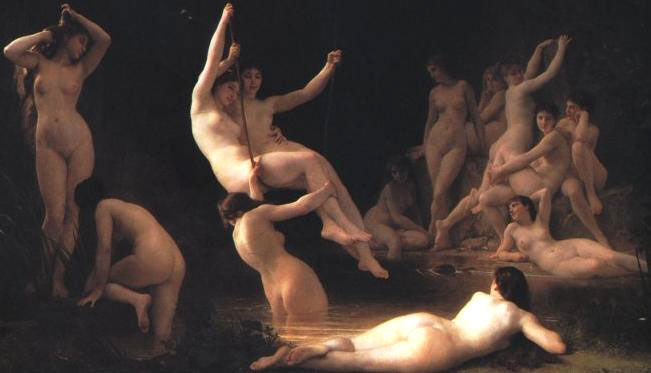
http://www.paleothea.com/Gallery/Nymphaeum.html, Nymphs, “The Nymphaeum, by William Adolphe Bouguereau”:
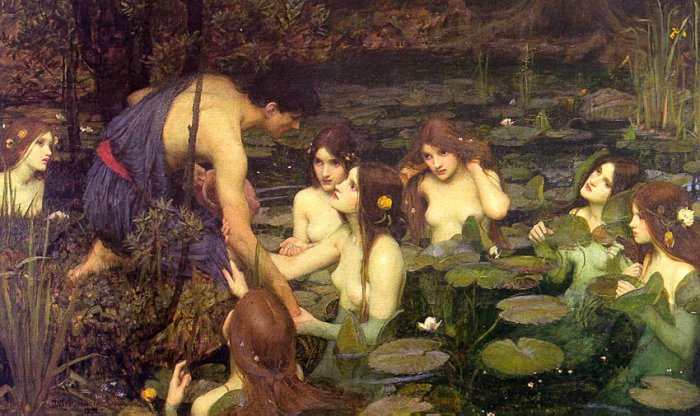
http://www.paleothea.com/Gallery/WaterhouseHylas.html, Hylas and the Nymphs, by John William Waterhouse:
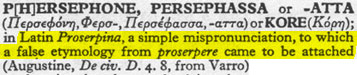
Proserpina/e / Persephone:
The Oxford Classical Dictionary, 1949, p. 666:
The Woman’s Encyclopedia of Myths and Secrets, Barbara G. Walker, 1983, p. 746, “Orpheus”:

http://www.angelfire.com/nj/mahkara/author.html, Poem Comments (by the author), “Modern Persephone and Proserpina”:
Danced as a bacchante (Modern Persephone), where a bacchante is a wild, manic, murderous, drunken follower of Dionysus (Bacchus) who used to rip people to shreds in their drunken orgies, daugher of God (Proserpina),
More Christian Orans picture examples:
http://www.owlnet.rice.edu/~huma103/dis2II.html (via http://www.owlnet.rice.edu/~huma103/dis2.html) (Rice University), “Orant: Orant--praying figure--(Donna Velata or veiled lady) [Female Orans between the Velatio and the Mother and Child], Catacomb of Priscilla [Chamber of the Velatio-end-wall], [mid] 3rd century”:
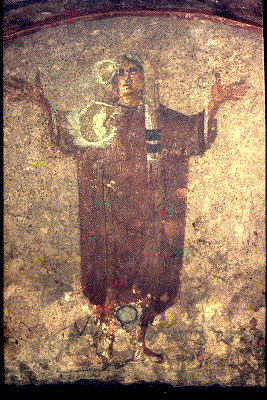
Early Christian Painting, Pierre du Bourguet, 1965, figure 19, “Female Orans between Two Shepherds”:
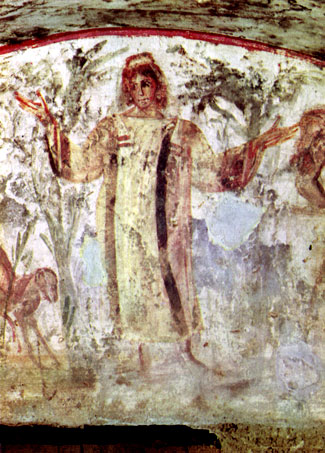
Early Christian Painting, Pierre du Bourguet, 1965, front cover (detail of figure 86), “Catacomb of St Peter and St Marcellinus | Susanna Molested | Late third century”:
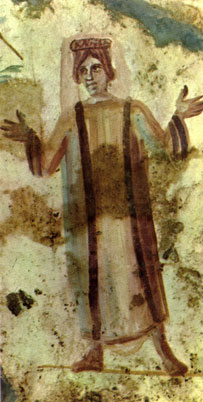
Outside the place (FYI):
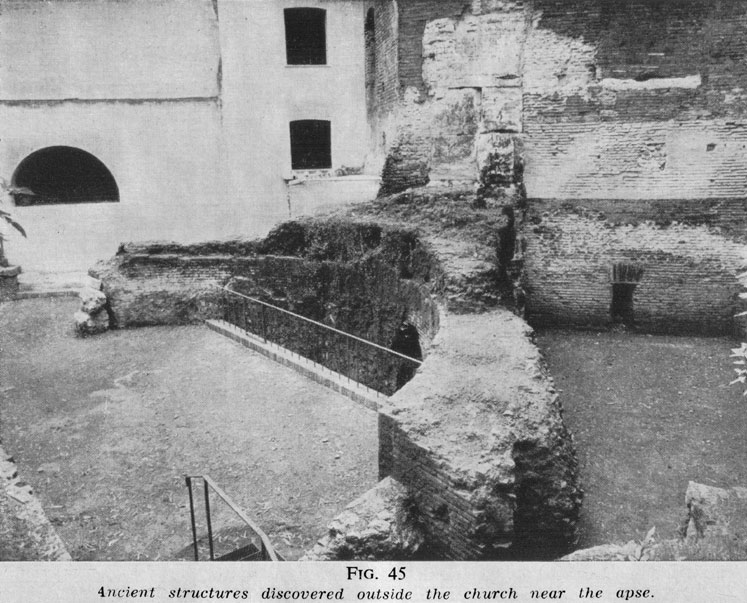
The Basilica of Saints John and Paul on the Caelian Hill, Prandi – Ferrari, 1958, fig. 45, p. 141:
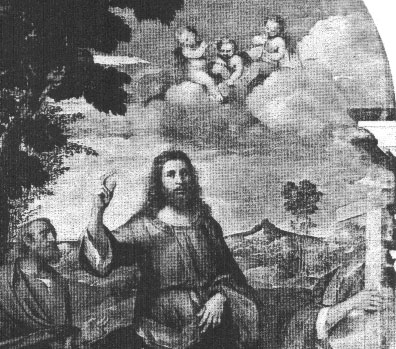
Basilica of Saints John and Paul, in Venice:
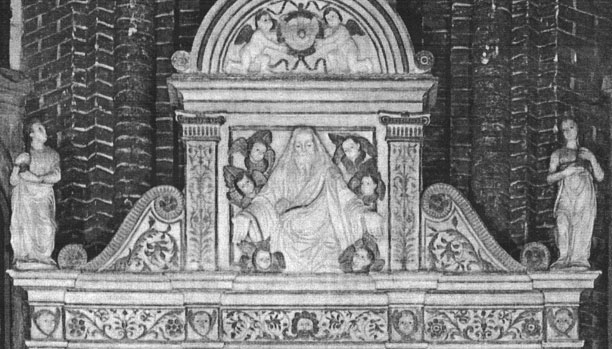
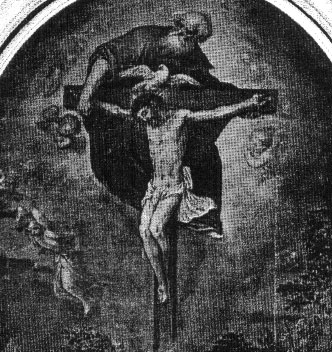
I mistaken ordered the following book via Interlibrary Loan, and discovered that there was a church of the same name in Venice. Of course I just wanted to see if there were any erotics / cupids there:
Venice Basilica of Saints John and Paul: History and Art, Caccin, 1990, p. 13:

p. 29:
p. ? (it’s not on my photocopy’s page):
p. ? (it’s not on my photocopy’s page):
p. 48: