DIONYSUS – EARLY PAGAN ART
Mosaics:
http://www.latein-pagina.de/ovid/ovid_m4.htm, “tanzende Bacchanten (Dionysosmosaik, Köln) Ovid”:
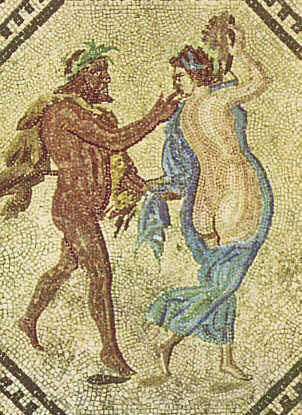
http://pro.corbis.com/, Search # PW004038, Roman Mosaic of Dionysus:
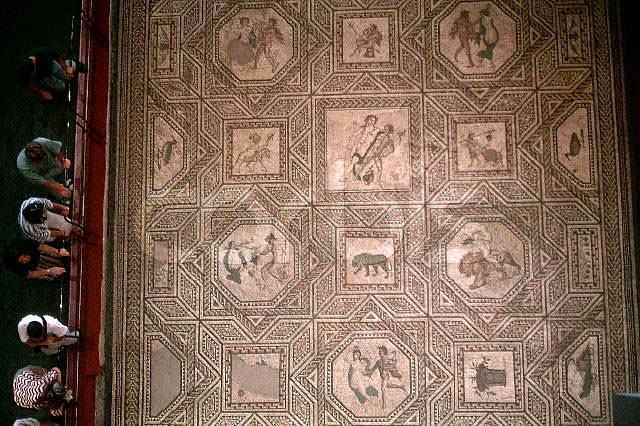
A crowd of students peer through a window to admire a Roman floor mosaic depicting Dionysus, the god of wine and fertility. Cologne, Germany.
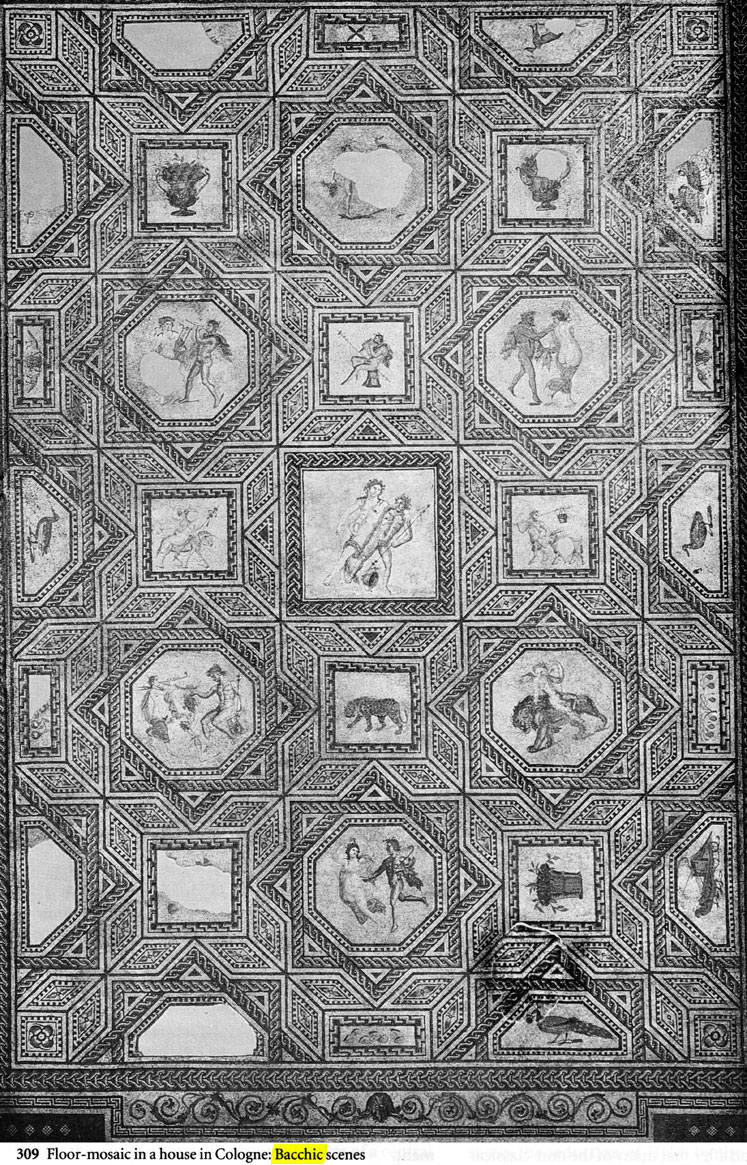
The Oxford History of Classical Art, Boardman, 1993, p. 313, illustration 309, “Floor-mosaic in a house in Cologne: Bacchic scenes” (third century, pagan art):
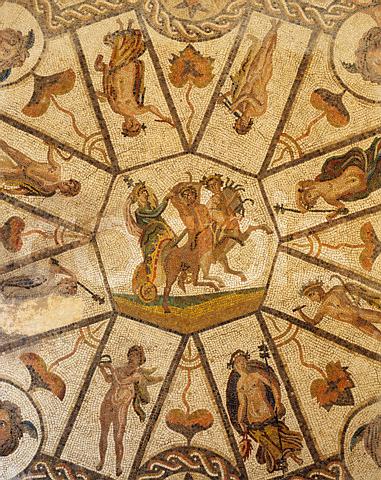
http://pro.corbis.com/, Search # CS010353, Roman Mosaic of Dionysus and His Court, Date Created: ca. 2nd-4th centuries:
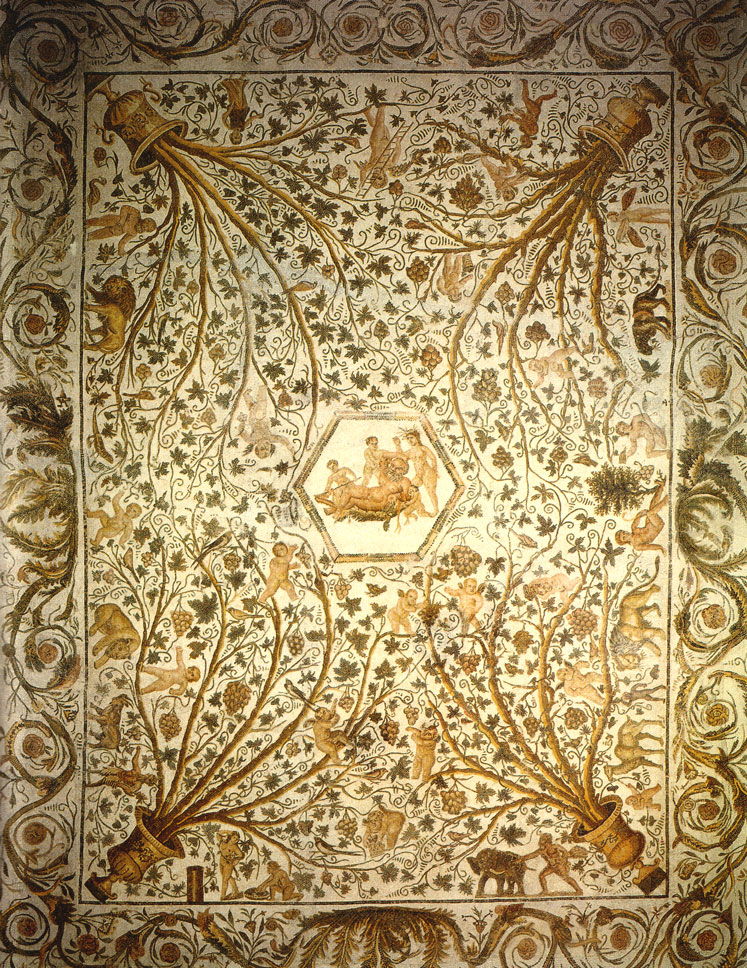
Ancient Mosaics, Ling, 1998, p. 83, illustration 58, “Roman Africa | Vine mosaic from El Djem … Cupids gathering grapes, while Dionysiac figures, including satyrs with wild animals, are depicted at the margins … Second half of third century AD. El Djem Museum” (pagan art):
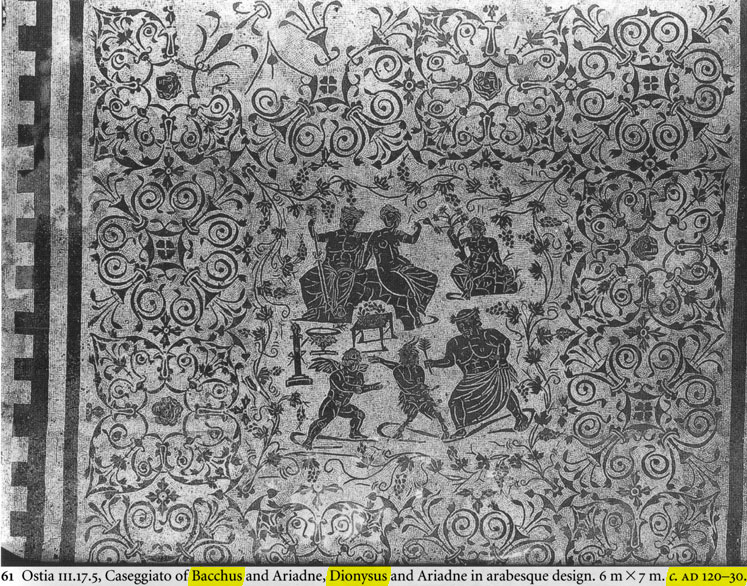
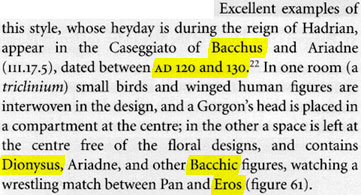
Mosaics of the Greek and Roman World, Dunbabin, 1999, p. 63, figure 61, “Ostia … Caseggiato of Bacchus and Ariadne” (pagan art):
Pp. 60-61:
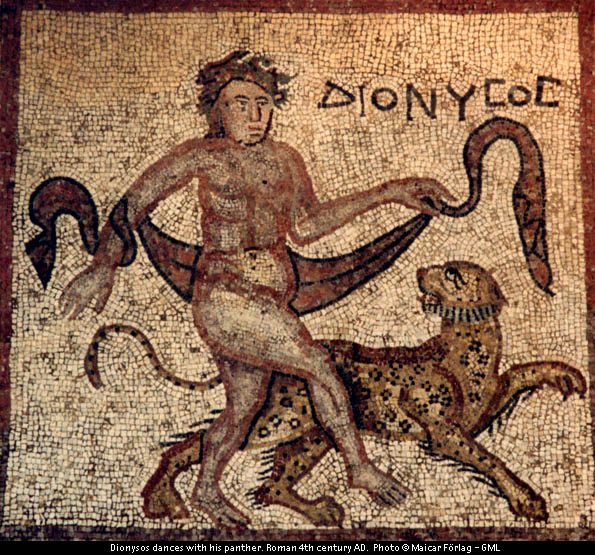
http://homepage.mac.com/cparada/GML/000Free/000Dionysus/source/45.html, Dionysus Album, “Dionysos dances with his panther. Part of panel from a mosaic pavement. Roman 4th century AD”:
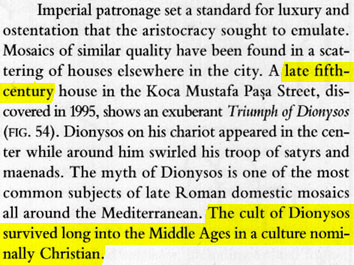
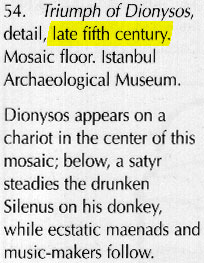
Byzantium: From Antiquity to the Renaissance, Mathews, 1998, p. 76, figure 54, “The Secular Domestic World” (late fifth century):
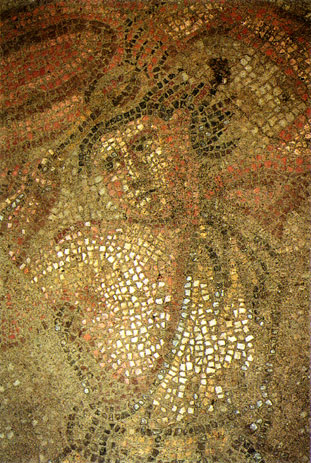
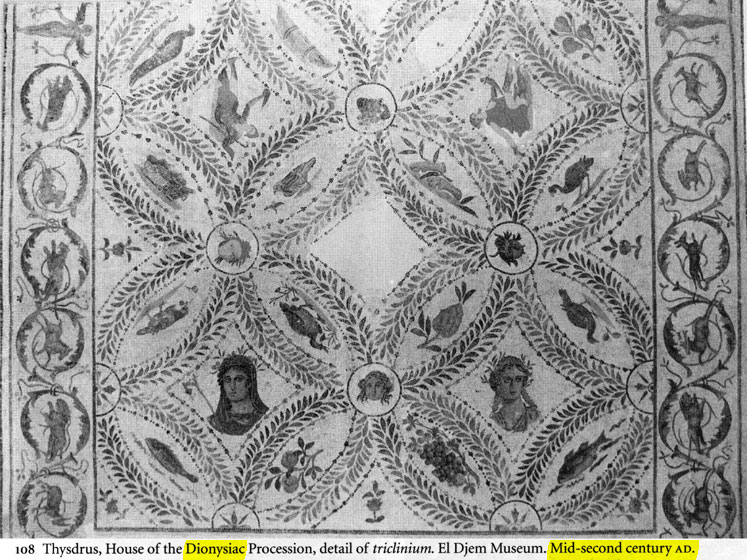
Mosaics of the Greek and Roman World, Dunbabin, 1999, p. 109, figure 108, “Thysdrus, House of the Dionysiac Procession” (pagan art):
http://bulfinch.englishatheist.org/b/chap21.html, Bulfinch’s Mythology: Bacchus – Ariadne, “Bacchus”:
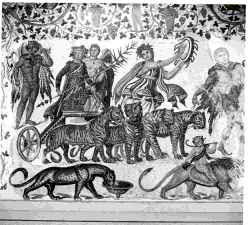
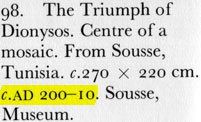
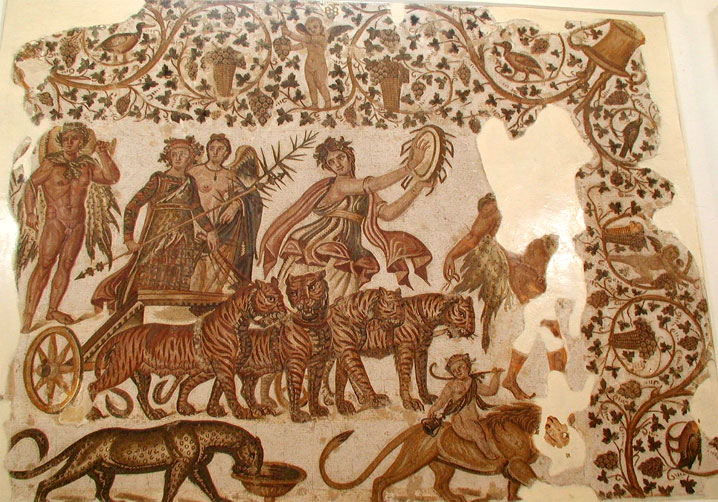
Third century CE mosaic from, Sousse in Tunisia, showing the triumph of Bacchus, a winged Victory stands behind him.
A Handbook of Roman Art, Henig, 1983, p. 126, illustration 98 (pagan art):
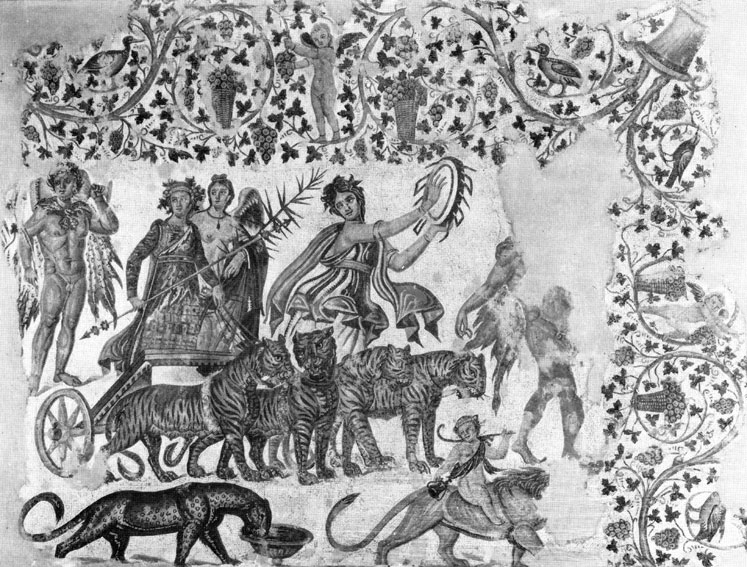
http://homepage.mac.com/melissaenderle/tunisia/sousse.html, Tunisia Images and Sights, “Sousse”:
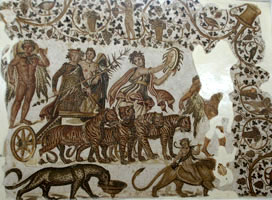
The museum in Sousse had a fine display of Roman mosaics such as The Triumph of Bacchus.
http://lexicorient.com/tunisia/sousse06.htm, Sousse: City Museum:
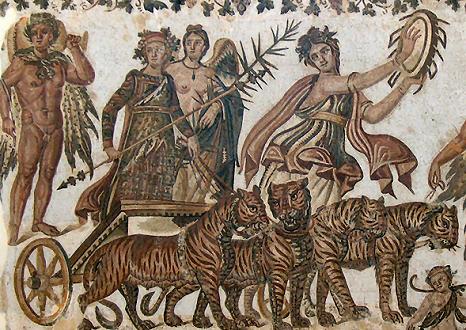
Triumph of Bacchus, with the Roman god of wine in a chariot pulled by tigers.
http://pro.corbis.com/, Search # RW005620, Roman Mosaic Depicting the Triumph of Bacchus Over the Indians, Date Created: ca. 3rd century A.D.:
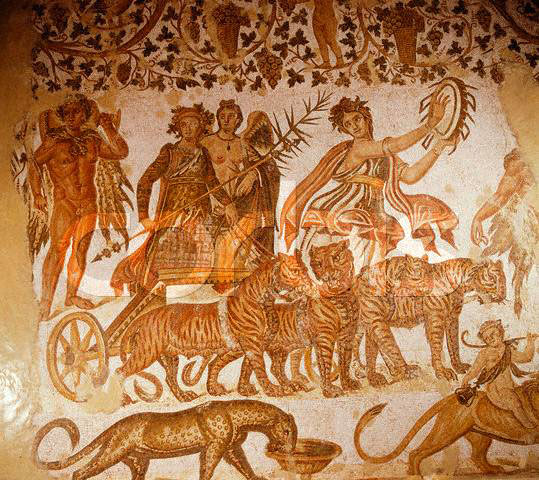
http://www.stoa.org/gallery/album21/P4140087, Soursse Museum, Triumph of Bacchus mosaic:
Paintings:
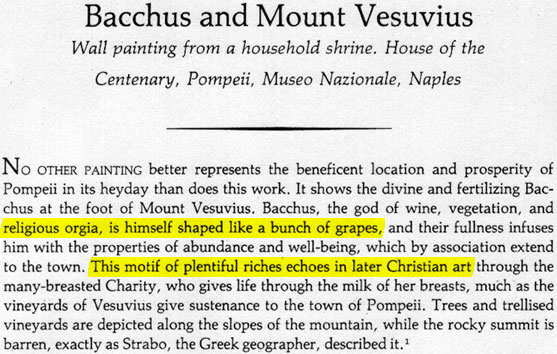
Great Treasures of Pompeii & Herculaneum, Feder, 1979, p. 14:
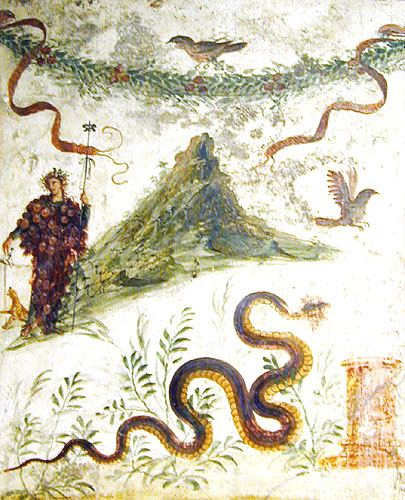
http://www.vroma.org/images/mcmanus_images/vesuvius_bacchus.jpg (via http://www.vroma.org/images/mcmanus_images/index7.html) (better copy than above book):
wall painting of Bacchus at the foot of Mt. Vesuvius; … from the lararium of the House of the Centenary in Pompeii; Roman, first century CE, Bacchus is covered with grapes,
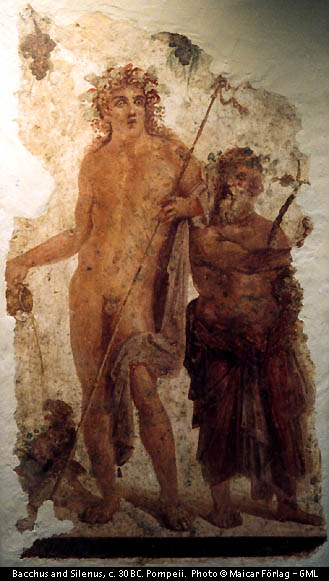
http://homepage.mac.com/cparada/GML/000Free/000Dionysus/source/46.html, Dionysus Album, “Panel from painted wall: the winegod Bacchus and his companion Silenus. Roman c. 30 BC. Pompeii”:
http://www.holycross.edu/departments/classics/jhamilton/mythology/dionysus/dionysus2.JPG (via http://www.holycross.edu/departments/classics/jhamilton/mythology/dionysus/), Dionysus, “Wall-painting of the Bacchanalian dance: Villa Pamfili, Rome, 1st cent. AD”:
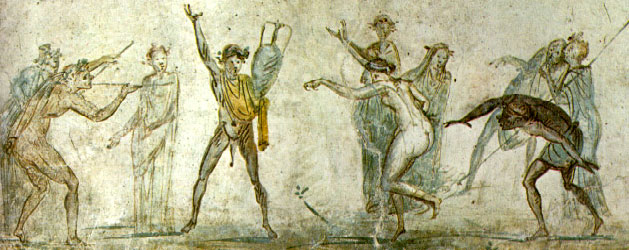
http://www.bstorage.com/Photo/Italy/Tarquinia/pages/12_B0309_0644.htm, Etruscan Tombs at Tarquinia, “Baccanti [Italian] Tomb”
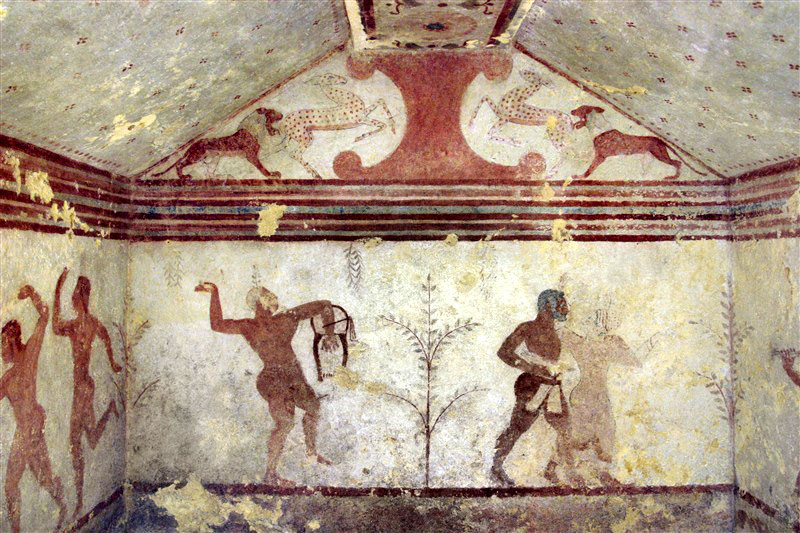
http://www.maravot.com/Etruscan_mural_bacchants.gif (via http://www.maravot.com/Etruscan_Murals.html), Etruscan Murals and Paintings, “Dancers, Tomb of the Bacchants, Tarquinia, ~510 B.C.”:
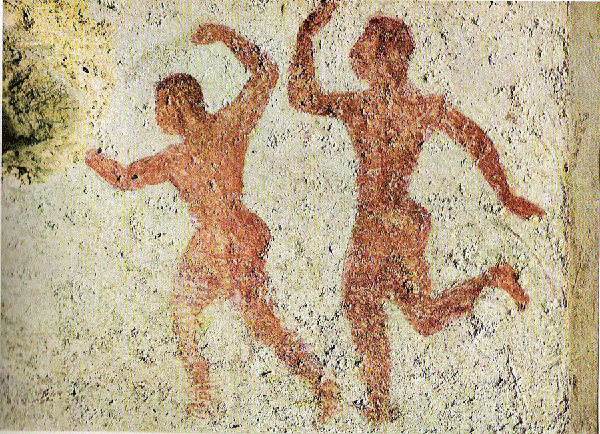
http://www.bstorage.com/Photo/Italy/Tarquinia/pages/12_L0309_0415.htm, Etruscan Tombs at Tarquinia, “Tomba dei Baccanti [Italian] (Tomb of the Bacchante)”:
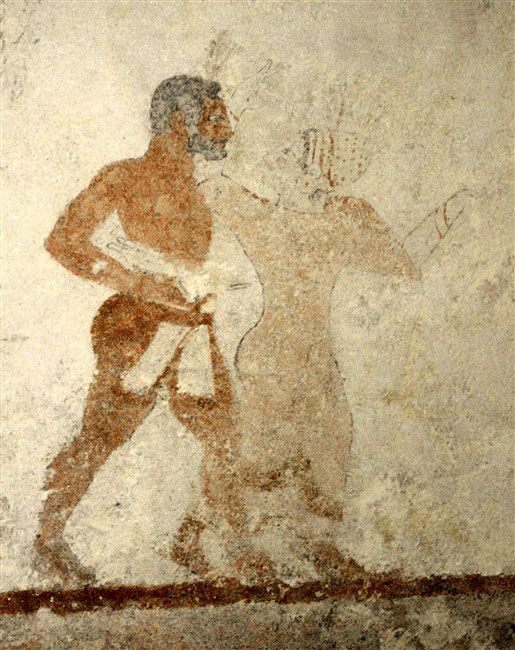
http://www.uco.es/~ca1lamag/Galerias/Dionisio.htm, “Dionisio con lira: Copa de vino de 500-480 a.C. [B.C.] Dionisio aparece todavía con aspecto maduro (con barba). Lleva corona de hojas de vid, y nébride moteada. Acompañado de sátiros.”
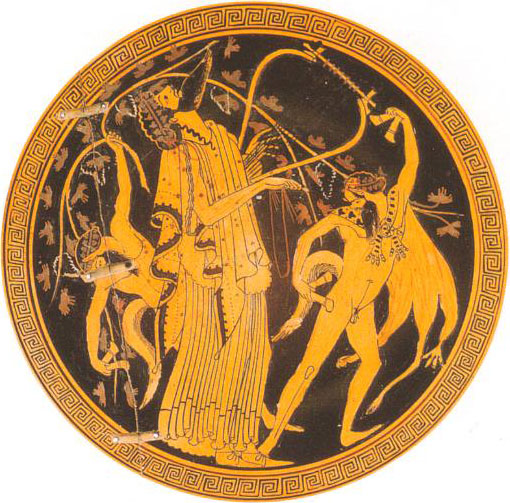
http://altreligion.about.com/library/graphics/bl_dionysus.htm; Dionysus, Bacchus Image gallery:
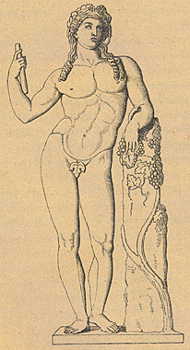
http://www.arches.uga.edu/~fvankeur/classical/late_hellen/16_adj.html (via http://fvankeur.myweb.uga.edu/classical/late_hellen/late_hellen.html), Classical and Hellenistic Greek Art, “Late Hellenistic Period, 160-30 B.C.”:
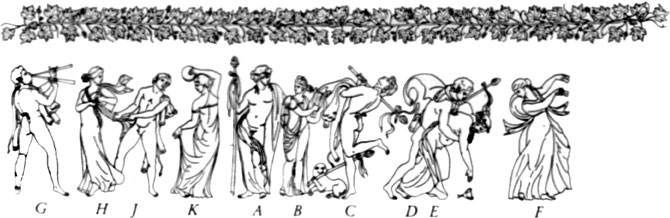
O Marble krater in Louvre and two
marble kraters from Mahdia shipwreck with satyrs & maenads and Dionysos and
Ariadne, made in Athens (marble), Neo-Attic (drawing of all the figures and
photos from Gisela Hellenkemper, Das Wrack, 1994)
Dionysian frieze from marble kraters
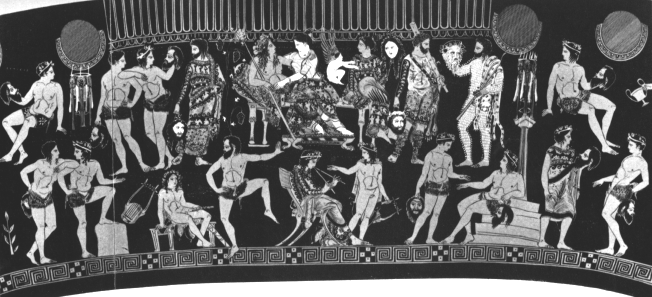
http://www.cs.utk.edu/~mclennan/BA/JO-CD.html, “Dionysian Meditations: The City Dionysia (Dionysia ta en Astei) or the Great Dionysia (Dionysia ta Megala)”:
:
http://www.personal.psu.edu/users/w/x/wxk116/eros/sexart/sex9.html (via http://www.personal.psu.edu/wxk116/eros/refs.html) (Pennsylvania State University), Erotic Art of Ancient Rome:
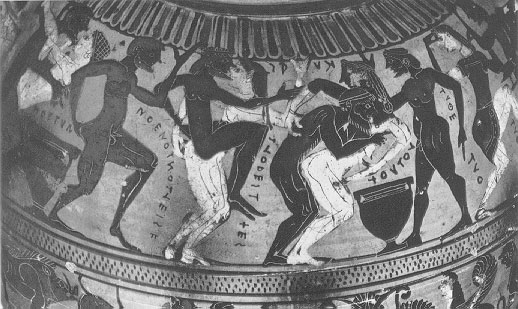
Scene from a Tyrrhenian amphora showing a scene from the Festival of Dionysius, 6th century BCE. From Munich, Staatliche Antikensammlung
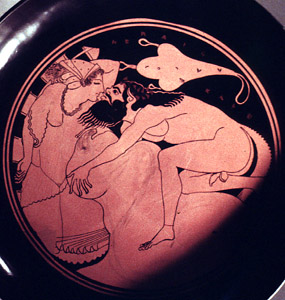
http://www.vroma.org/images/mcmanus_images/maenad_satyr2.jpg
(via http://www.vroma.org/images/mcmanus_images/index5.html, “red-figure tondo
of kylix: erotic—amorous satyr and maenad
Attic, c. 500-490 BCE”:
Object:
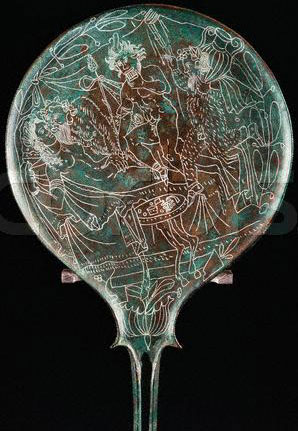
http://pro.corbis.com/, Search # IH050576, Back of a Mirror With a Dyonisiac Banquet, Date Created: mid 3rd-4th century B.C.:
Relief:
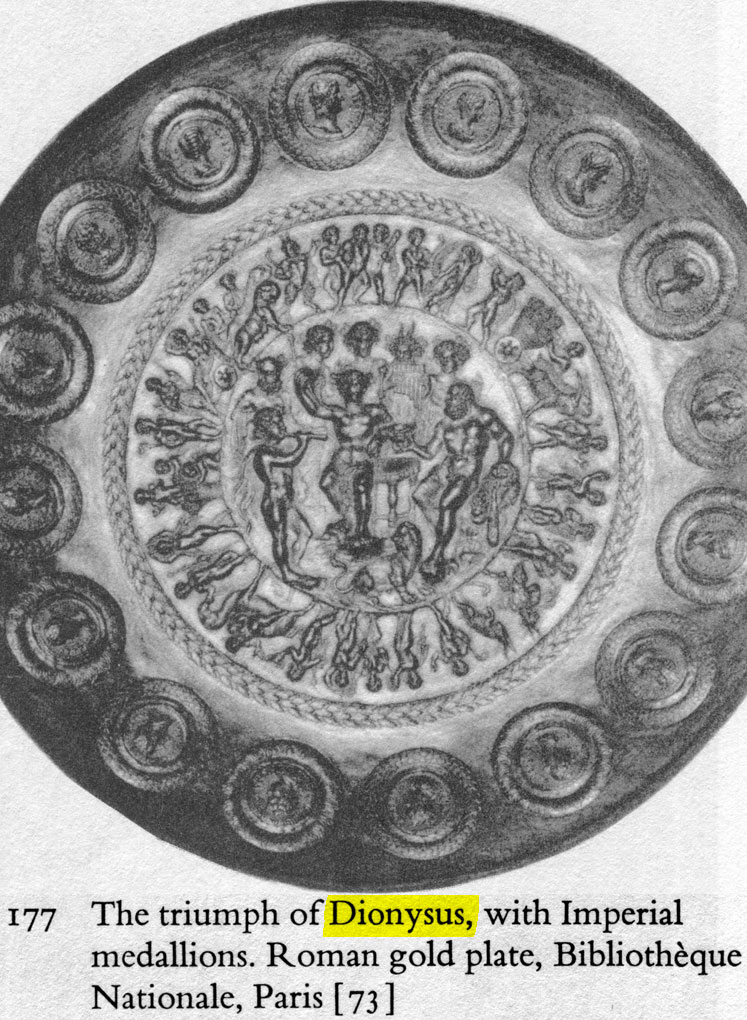
Christian Iconography: A Study of Its Origins, André Grabar, 1968, p. 73 (pagan art):
Illustration 177, “The triumph of Dionysus, with Imperial medallions”:
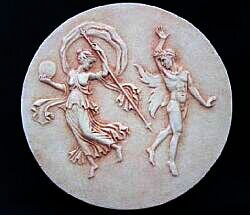
http://www.kalypsostore.gr/en/R6874.shtml, Dionysian Dance:
http://www.personal.psu.edu/users/w/x/wxk116/eros/sexart/sex8.html (via http://www.personal.psu.edu/wxk116/eros/refs.html) (Pennsylvania State University), Erotic Art of Ancient Rome:
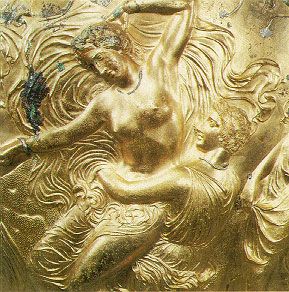
Bronze krater depicting the Festival of Dionysius, 4th century BCE. Museum of London.
http://www.recuperando.it/x_frame/fratemaclassica.htm, “il Dio Pan danzante: bassorilievo – baccanale [Italian]”:
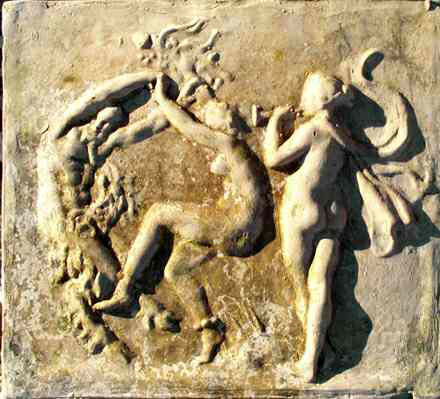
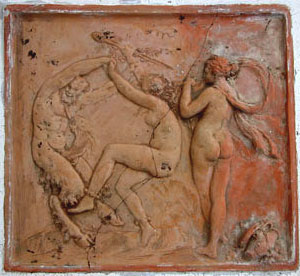
http://www.ac-nancy-metz.fr/enseign/lettres/LanguesAnciennes/Ariane/fichiers/ariane_aut_menades.htm, Art romain. Lènos (sarcophage) [Roman art. Lènos (sarcophagus)], Bacchanale (détails), Vers 160 après J.-C. [Towards 160 after J.C.]:
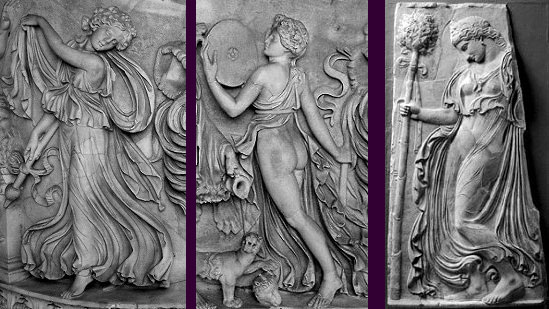
http://www.gipsoteca.net/LR60gipsotecaBassorilievi.htm, LR 60 Baccanti [Italian]: gesso bianco patinato antico (modern day depiction):
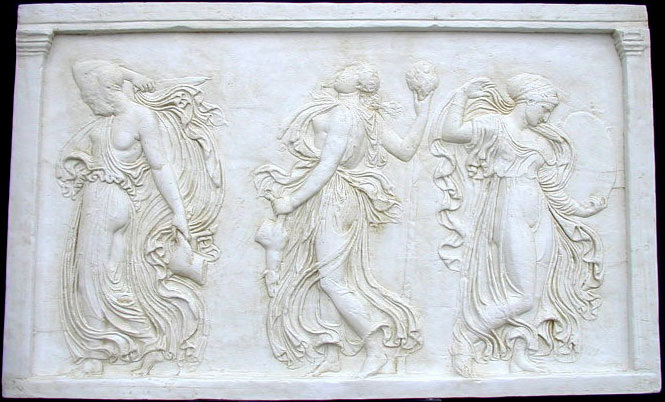
http://www.talariaenterprises.com/product_lists/greek_wall_pg2.html, Greco-Roman Wall Reliefs - Page 2, “Bacchanal Sarcophagus Relief”:
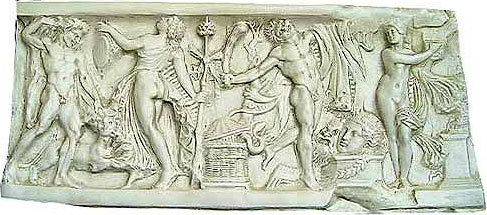
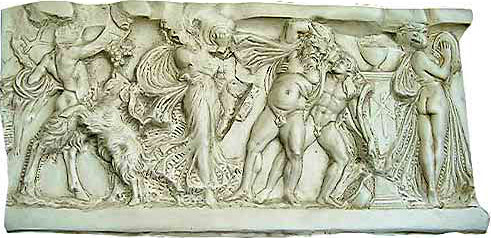
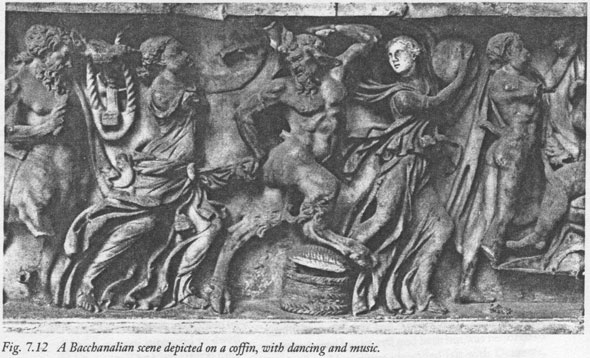
--Wow! What a gorgeous Roman Bacchanal Relief Left and Right Portions taken from a 1st century A.D. sarcophagus of an unnamed merchant. In the Roman world, many illustrations of the Bacchic mystery cult adorn wall paintings and reliefs. In this example, the frenzied followers dance and play instruments as part of the Bacchanalian festival.
“Dionysos Fauns and Bacchantes Dancing Relief”:
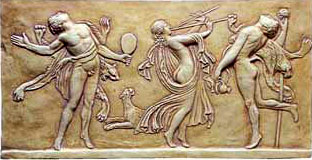
--This 19th century relief from the Louvre Museum illustrates a celebration by the fauns (male followers of Dionysos) and the Bacchantes or Maenads (women followers) frenzied with wine who rushed through woods and mountains swept away in a fierce ecstasy. They celebrated his orgies with drunkenness, nakedness, singing and sacramental feasting. The Gods of Olympus loved order and beauty in their sacrifices and their temples. The madwomen, the Bacchantes, had no temples so they went to the wilderness to worship.
“Dionysos Fauns Pressing Grapes Relief”:
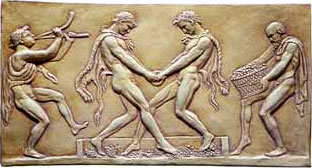
--This Neoclassical relief from the 19th century collection of the Louvre Museum represents the “Lenea” or festival of the wine-pressing which is an Athenian fertility celebration in honor of Dionysos (Bacchus)--the Dionysian mysteries being one of the main components of the old Greek religion. The followers of Dionysos likened the plucking, crushing and pressing of the grape to form a pleasing nectar to the progress of the soul, which is formed whole and then crushed and pressed into shape by the trials of its earthly adventures.
Put it this way: Any time you have people dancing naked, it’s sexual.
http://www.recuperando.it/pagine/im00237-02.htm, Scene Baccanti:
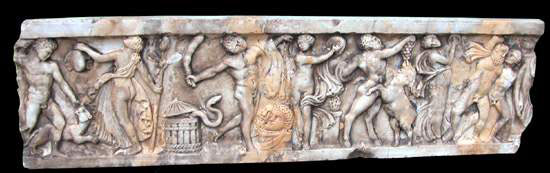
http://www.ac-nancy-metz.fr/enseign/lettres/LanguesAnciennes/Ariane/fichiers/ar_dio_sarco.htm, Dionysos et Ariane : sarcophages:
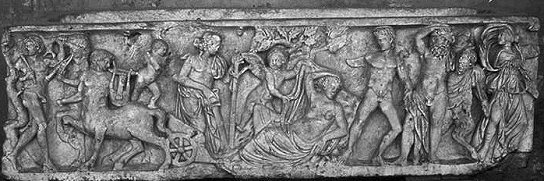
Sarcophage
romain :
Dionysos
découvre Ariane
Vers 170 - 180
après J.C.
Rome, Musée des Termes.
http://www.artandarchitecture.org.uk/images/full/6663faf08db9e15328dac8a216a4496a4e9ec287.html, Bacchanalia:
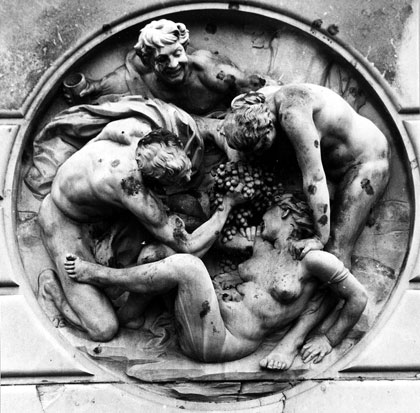
http://www.artandarchitecture.org.uk/images/full/8c7294d4b2b1988ba8d56f7cfbf7aa88b0764d5d.html, Bacchanalia:
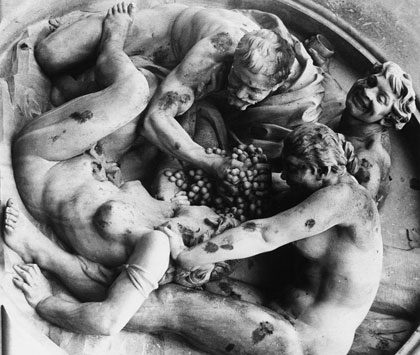
Updating… :
http://pro.corbis.com/, Search # 42-15234110:

Looks pretty sexual to me.
http://www.outsideedge.co.uk/stoneware.htm, Stoneware, “Baccanalia”:
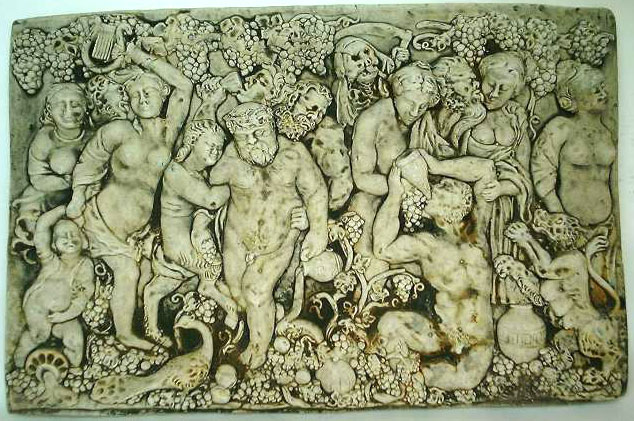
Handbook to Life in Ancient Rome, Adkins, 1994, p. 288:
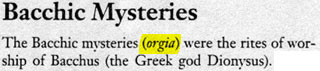
P. 289:
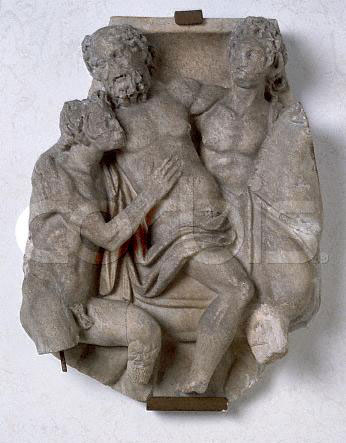
http://pro.corbis.com/, Search # AV003741, Ancient Roman Sarcophagus Fragment Depicting Dionysus, Date Created: mid-2nd century A.D.:
http://cgi.ebay.com/Exceptional-Ancient-Greek-Shield-Dionysus_W0QQitemZ6539913371QQcategoryZ1552QQrdZ1QQcmdZViewItem:
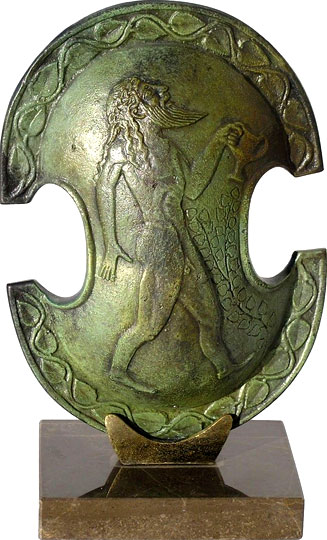
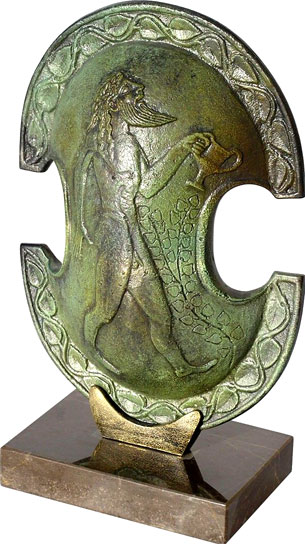
Reproduction of ancient Greek Shield on which there is the figure of God Dionysus …
The
shield was a key part of the equipment of the Greek hoplite warrior. Hoplite is
derived from the Greek word for a type of heavy shield, hoplon. Though small in
the early days of Greek warfare, Greek shields increased in size in middle to
later eras, evolving to a much larger round form and later still to a rectangular
shape.
The shield was made of multiple layers of metal (bronze, copper, or sometimes
tin), wood and tough linen, cloth or leather and could weigh as much as 15 to
20 pounds. A shield was one of the more complicated and valuable parts of a
Greek hoplite's arms and armor. Families of a warrior culture such as the
Spartans depended on re-use of the family shield if possible. Each hoplite
chose his own shield design.
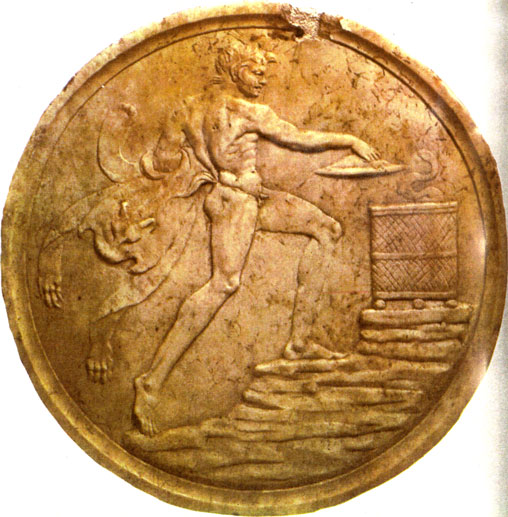
Man, Myth & Magic: The Illustrated Encyclopedia of Mythology, Religion and the Universe, Cavendish, 1995, vol. 13, p. 1810, “Mystery Religions”:

http://www.ancienttouch.com/greek_terracotta.htm, Greek Terracotta, GREEK TERRACOTTA MASK OF DIONYSUS, II c. B.C.:
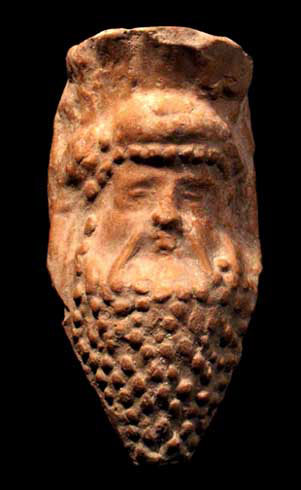
Bearded god wearing a stephane; headband ribbons hanging down on either side. His hair and long, wide beard depicted as grapes. Height 5.0” (12.7 cm). Restored from several large fragments.
http://pro.corbis.com/, Search # RW006900, Frieze With Carved Decorations in Leptis Magna, Libya, vines (& Eros), non-Christian:
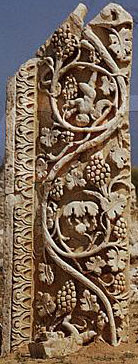
Decorative frieze from the Arch of Septimus Severus
Coins:
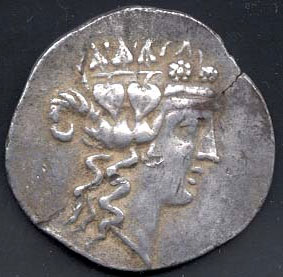
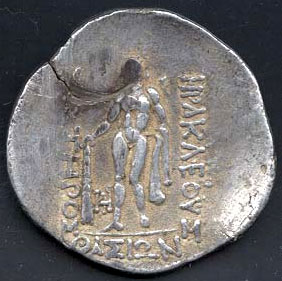
http://cgi.ebay.com/76-THASOS-AR-Tetradrachm-Dionysos-aVF_W0QQitemZ8345518741QQcategoryZ4738QQssPageNameZWDVWQQrdZ1QQcmdZViewItem, 76. THASOS, AR Tetradrachm. Dionysos. aVF:
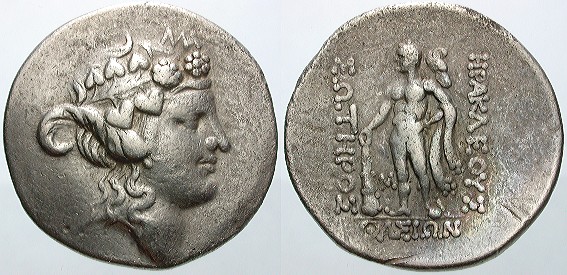
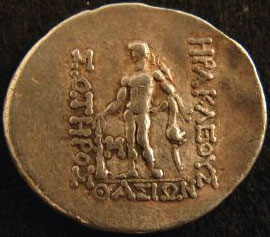
http://cgi.ebay.com/ws/eBayISAPI.dll?ViewItem&category=4738&item=8344974118#ebayphotohosting, Thasos, after 146 BC. AR Tetradrachm, Dionysos
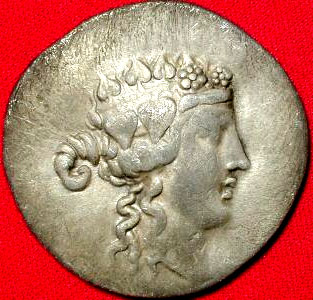
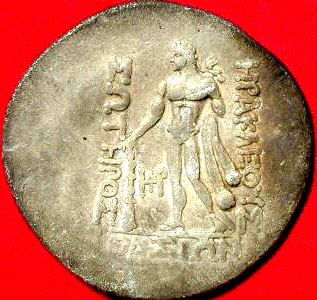
Thasos, after 146 BC. Silver Tetradrachm. Head of Dionysos rt., wreathed with ivy. / Herakles standing lt., leaning on a club and holding a lion's skin. Very large flan (37mm), toned.
http://cgi.ebay.com/Dionysos-Silver-Tetradrachm-AOD_W0QQitemZ3767316251QQcategoryZ37907QQssPageNameZWD1VQQrdZ1QQcmdZViewItem#ebayphotohosting, Dionysos Silver Tetradrachm AOD:
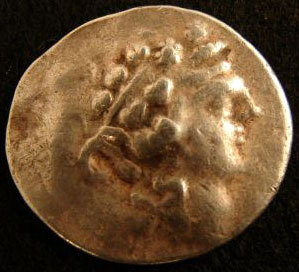
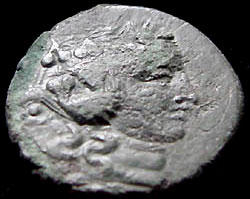
http://cgi.ebay.com/THRACE-Maroneia-Dionysos-Grapes-Chlamys-Spears-x069_W0QQitemZ8344655853QQcategoryZ4738QQssPageNameZWDVWQQrdZ1QQcmdZViewItem#ebayphotohosting, THRACE Maroneia Dionysos Grapes Chlamys Spears(x069):
Thrace- Maroneia, Wreathed Head of Dionysos Right, Dionysos Standing Holding Bunch Of Grapes, Chalamys and Spears. SngCop 644, AE 25. Impressive, heavy coin. A piece of Ancient History-
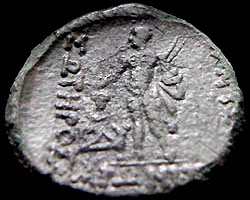
http://cgi.ebay.com/SILVER-ROMAN-COIN-HEAD-OF-DIONYSOS-Abt-148-BC_W0QQitemZ8329156905QQcategoryZ4734QQrdZ1QQcmdZViewItem, SILVER ROMAN COIN HEAD OF DIONYSOS Abt 148 BC, HERAKLES STANDING ON REVERSE:
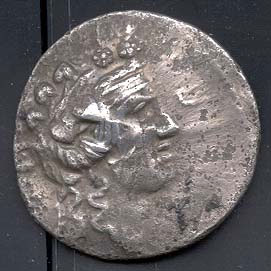
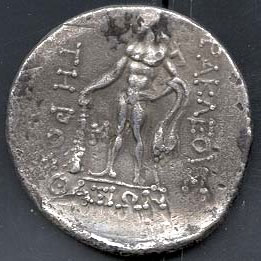
http://cgi.ebay.com/SILVER-ROMAN-COIN-HEAD-OF-DIONYSOS-Abt-148-BC_W0QQitemZ8329156880QQcategoryZ4734QQssPageNameZWD1VQQrdZ1QQcmdZViewItem#ebayphotohosting, SILVER ROMAN COIN HEAD OF DIONYSOS Abt 148 BC, HERAKLES STANDING ON REVERSE: