DIONYSUS – OTHER EARLY CHRISTIAN ART
3rd century (200’s) to 10th century (900’s)
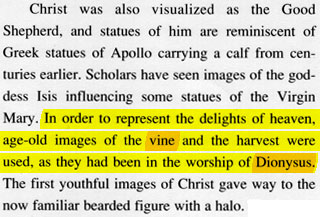
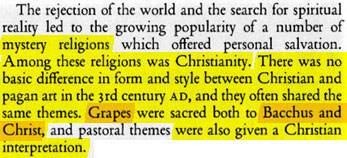
In addition to the vast number of Erotes / Cupids in early and later Christian art, out of all the many pagan gods, there’s a symbol of another reoccurring theme that’s used quite often: grapes and/or vines representing and supporting Dionysus / Bacchus, in that Christ is of a like characteristic:
Overview:
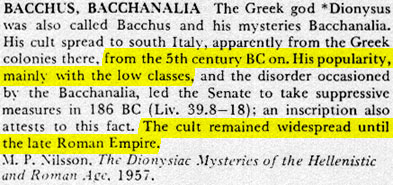
The Clash of Gods: A Reinterpretation of Early Christian Art, Mathews, 1993, p. 45:

Gods and Myths of the Romans, Mary Barnett, 1996, p. 106, “Rome and Christianity”:
3rd century (200’s):
The Origins of Western Art, Ann Powell, 1973, p. 202:
The Clash of Gods: A Reinterpretation of Early Christian Art, Mathews, 1993, p. 159, figure 124, “… Frescoes from the Baptistery at Dura Europos, c. 245” (grapes):
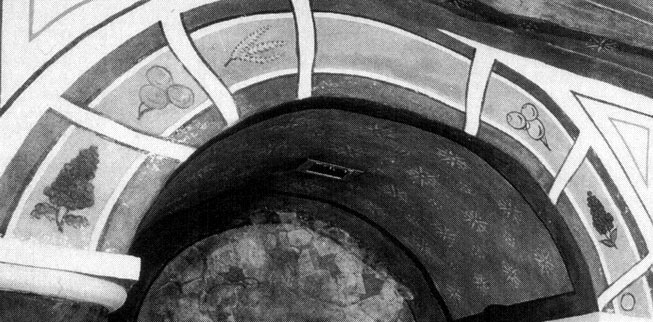
Early Christian Art: AD 200-395: From the Rise of Christianity to the Death of Theodosius, André Grabar, 1968, p. 68, “2. Christian Painting and Sculpture before the Peace of the Church | 59. Dura-Europos. ‘Christian House,’ Baptisery: Overall View”:
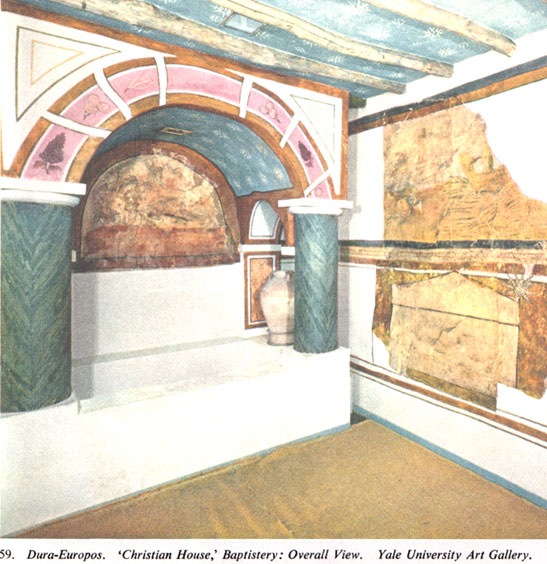
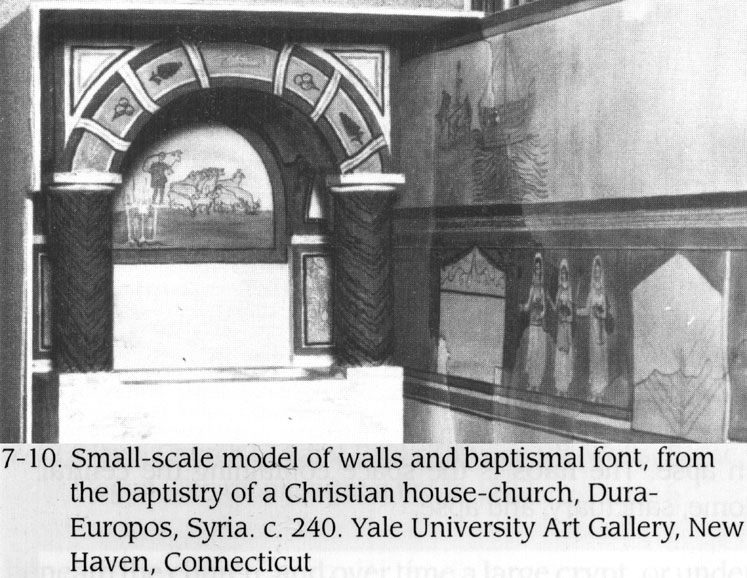
Art History, Stokstad, Revised Edition, 1999, Vol. 1, p. 297, figure 7-10, “Dura-Europos” [grapes]:
Mosaics of the Greek and Roman World, Dunbabin, 1999, p. 188, “Palestine and Transjordan”:
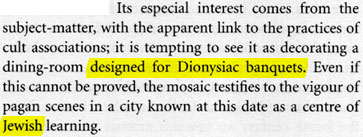
P. 189, figure 201, “Sepphoris” (4 miles NW of Nazareth):
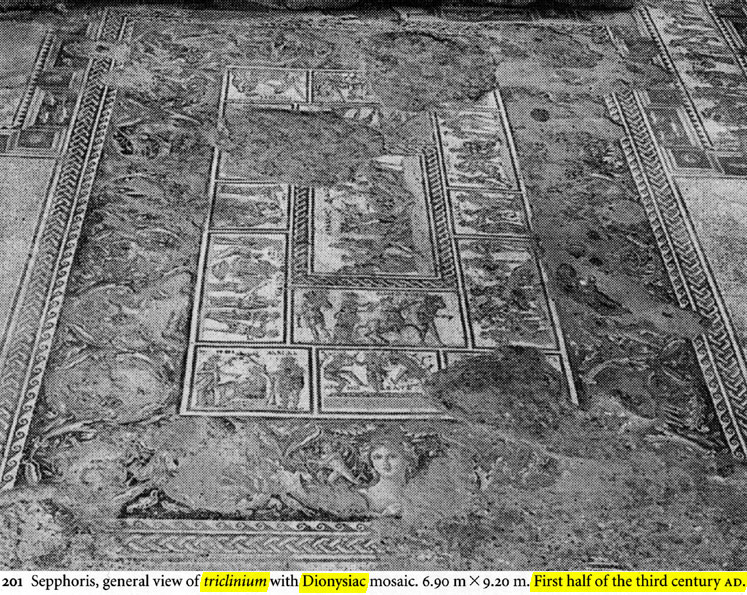
http://home.earthlink.net/~jburns31780/gasart.html, “Mosaic from Roman Sepphoris, Judaea, early 3rd Century C.E.”:
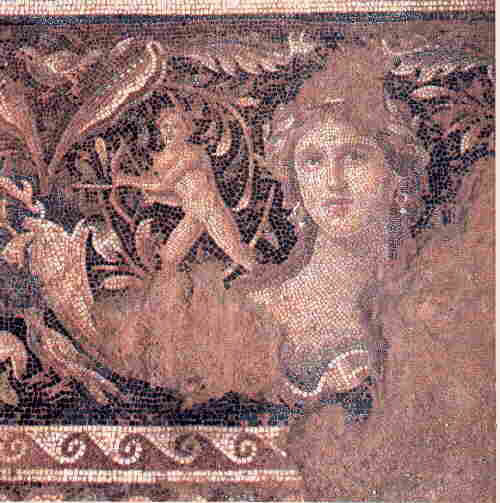
Familiar looking character there.
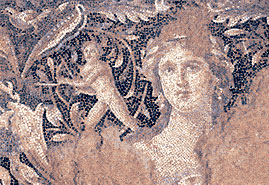
http://www.tfba.org/projects.php?projectid=11 (The Foundation for Biblical Archaeology), Sepphoris in Galilee, “Mona Lisa of the Galilee”:
4th century (300’s):
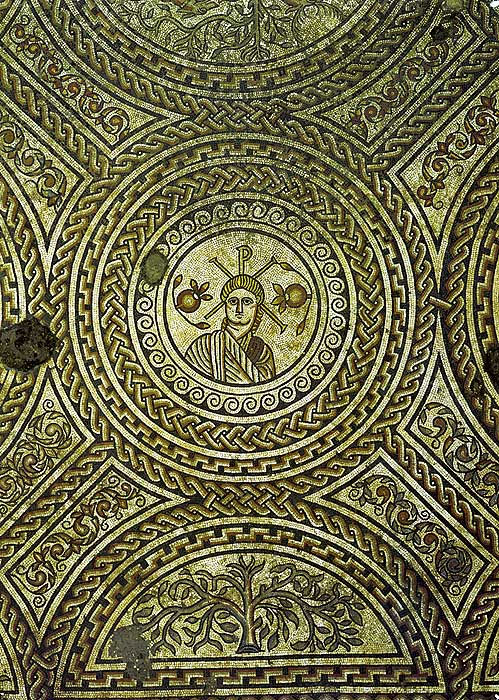
http://www.heritageexplorer.org.uk/web/he/imagebythemedetail.aspx?id=1793&crit=&ctid=35&large=1, Roman mosaic from Hinton St Mary, Dorset:
This mosaic is the earliest depiction of Christ found in Roman Britain and dates from the 4th century AD. The figure of Chirst is flanked by two pomegranates and lies on the Greek chi-rho (the first two letters of His name). The mosaic now lies in the British Museum.
(Chi-Rho & vine scrolls)
http://www.guardian.co.uk/artanddesign/2003/apr/19/art.artsfeatures, Jesus, the early years:
The Dorset Mosaic (detail): perhaps the oldest surviving image of Jesus.
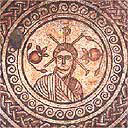
But here the artist must have had a real problem. There was no prototype, no model, no description. He had to invent Christ in order to show him. How do you represent a god that you have never seen? It is a testing conundrum, theologically and artistically. This artist must have seen and made images of Orpheus and Bacchus in similar mosaic floors. Orpheus would generally be wistful, young and artistic-looking. Bacchus would be energetic and sexy. Each would essentially be distinguished by his attributes: Orpheus would have his lyre, Bacchus a bunch of grapes or something similar. You would know who they were, not because of how they looked, but because of what they held. But this is difficult with Jesus. What is Jesus's physical attribute? He told his disciples that he was the way, the truth and the life, but it is very difficult to show any of these physically. He announced that he was the light of the world, but it is extraordinarily hard to show light in a mosaic. And although he did compare himself to a vine and his followers to branches, the vine was the property of Bacchus and could have led only to confusion.
http://idlespeculations-terryprest.blogspot.com/2007_02_01_archive.html, Hinton St Mary, Dorset:
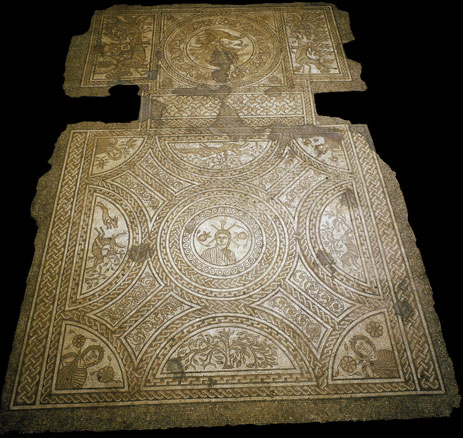
http://en.wikipedia.org/wiki/Hinton_St_Mary_Mosaic, Hinton St Mary Mosaic:
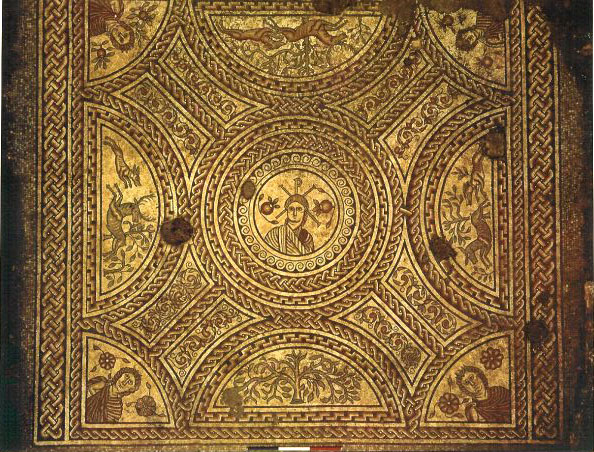
Early Christian Art: AD 200-395: From the Rise of Christianity to the Death of Theodosius, André Grabar, 1968, p. 44, “Forms and Aesthetic”:

http://www.flickr.com/photos/elissacorsini/1490149469/, Fragment of a Marble Tomb Relief with Christ Giving the Law in the Metropolitan Museum of Art, August 2007:
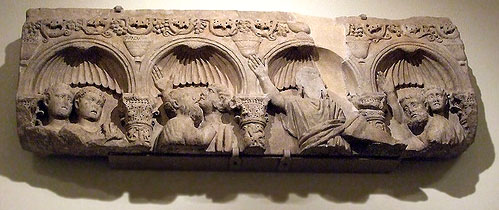
Fragment
of a Marble Tomb Relief with Christ Giving the Law
Byzantine, from Rome, Italy
Carved late 300s, in Rome
…
The
image of Christ's Giving of the Law, called the Traditio Legis, recognizes
Peter's role as the successor to Christ. Thought to have been developed in Rome, the scene shows Christ
offering an unfurled scroll containing the law to Saint Peter. To the left Saint Paul stands looking up to
Christ; four other apostles survive to the sides. The
relief is a Christian interpretation of the Roman sarcophagus type displaying
figures set within a series of niches framed by columns; the columns here are
decorated with putti in vine scrolls.
Text from the Metropolitan Museum of Art label.
http://www.flickr.com/photos/elissacorsini/1483807691/in/set-72157602330821377/, Marble Fragment of a Sarcophagus in the Metropolitan Museum of Art, August 2007:
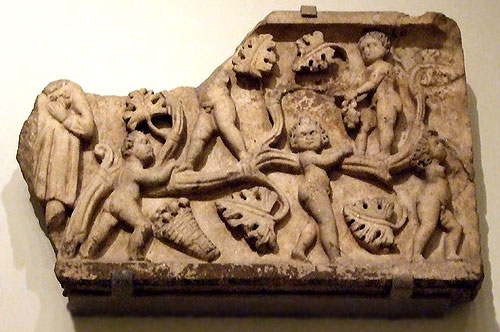
Marble
Fragment of a Sarcophagus with Putti in a
Grapevine
Roman or Byzantine
Carved 200-400 AD
…
Vines that supported grape-plucking putti, or figures of children, and baskets full of the fruit on Late Roman sarcophagi often refer to Dionysos, god of wine, and his promise of a blessed afterlife. Christians adopted the motif to represent a biblical passage (John 15:5), "I am the vine, you are the branches. Those who abide in me and I in them bear much fruit," and as a reference to the wine of the Eucharist service.
http://www.jesusneverexisted.com/melange.html, From Apollo to Jesus Christ!:
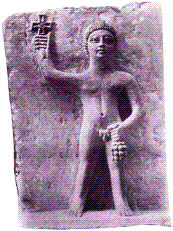
4th century Antinous, with Cross in one hand – and the grapes of Dionysus in the other!
(Stele from Antinoopolis, Egypt. Staatliche Museen, Berlin)
The Calendar and Hunting Mosaics of the Villa of the Falconer in Argos: A Study in Early Byzantine Iconography, Gunilla Åkerström-Hougen, Text, 1974, p. 107, “The Triclinium and the Sigma Table”:
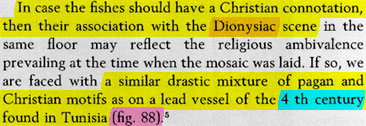
P. 153, figure 88, “Early Christian lead vessel from Tunisia” (grape vine):
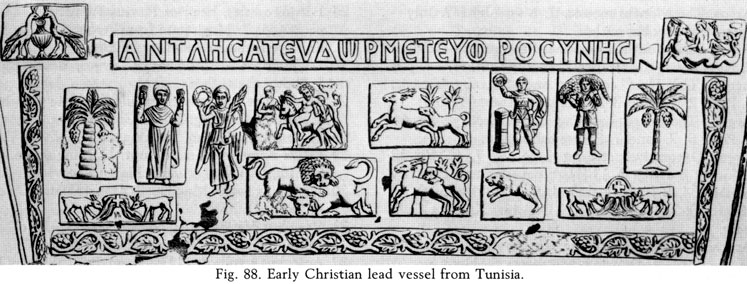
Christian Iconography: A Study of Its Origins, André Grabar, 1968, illustration 39 (grapevines):
Early Christian Painting, Pierre du Bourguet, 1965, figure 163 [Christian Alpha-Omega / Chi-Rho symbol & grapes]:
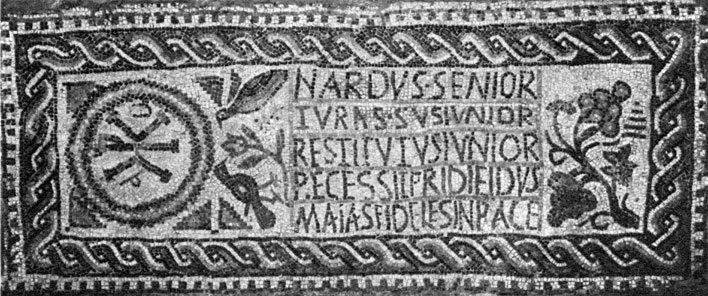
“List of Plates | Early Christian painting in other sites”:
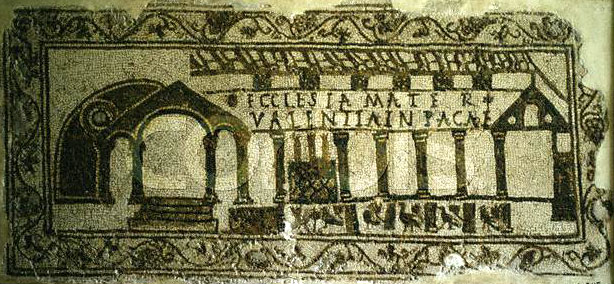
http://pro.corbis.com/, Search # VN002953, Mosaic of a Basilica, 4th century A. D., Christian art:
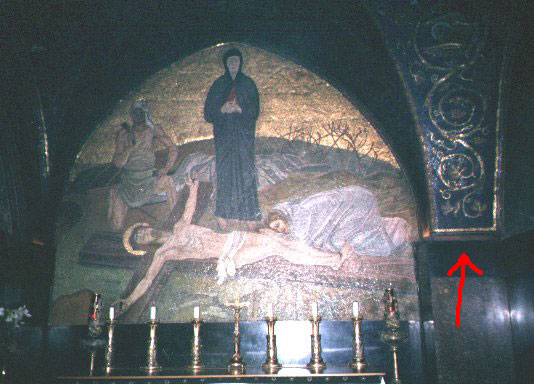
http://www.unf.edu/classes/freshmancore/coreabroad/pictures/ViaDolorosa/holysepulcher-latinchapel-NK1.jpg (via http://www.unf.edu/classes/byzantium/) (University of North Florida), Byzantium, Rome, Jerusalem: Church of the Holy Sepulchre, 4th Cent, with later rebuilding / holysepulcher-latinc..>:
Early Christian Painting, Pierre du Bourguet, 1965, p. 27, “The Subjects Represented | Profane Themes” (4th century ?):

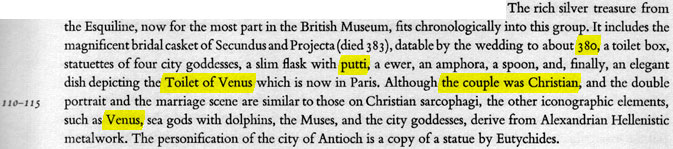
Early Christian Art, W. F. Volbach, 1961, p. 28:
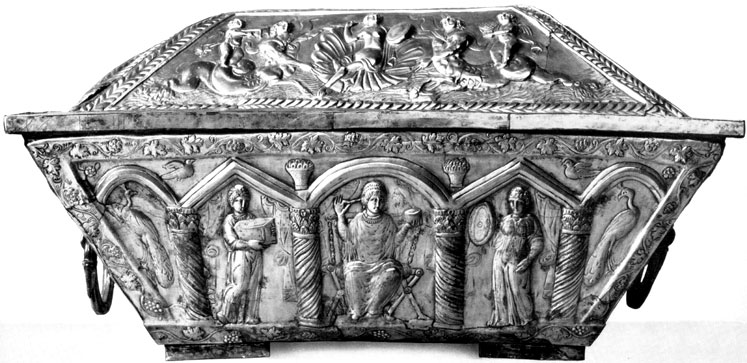
Early Christian Art, W. F. Volbach, 1961, plate 117, “London, British Museum. Part of Esquiline Treasure. c. 380. … general view of casket” [vine borders lower part]:
5th century (400’s):
Early Christian Painting, Pierre du Bourguet, 1965, figure 151 [grapes]:
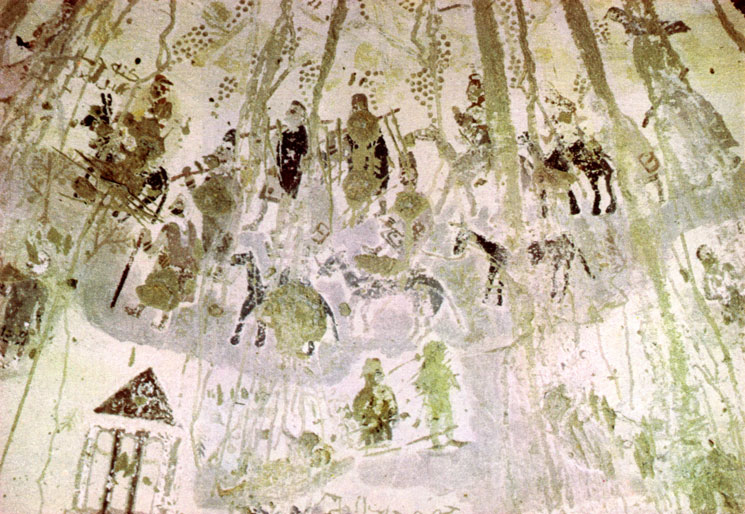
“List of Plates | Early Christian painting in other sites”:
Early Christian Painting, Pierre du Bourguet, 1965, figure 152 [grapes]:
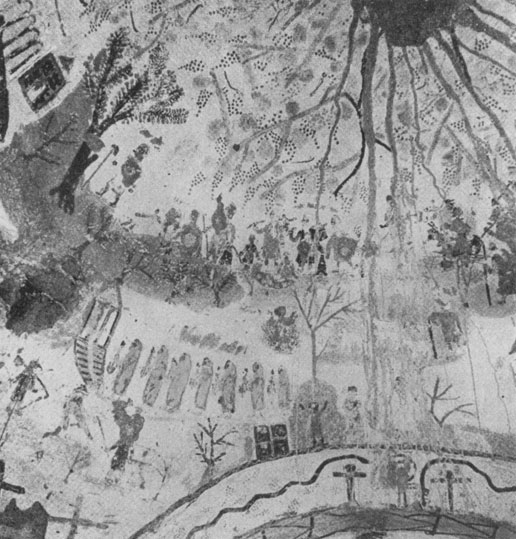
“List of Plates | Early Christian painting in other sites”:
Early Christian Painting, Pierre du Bourguet, 1965, figure 153 [grapes]:
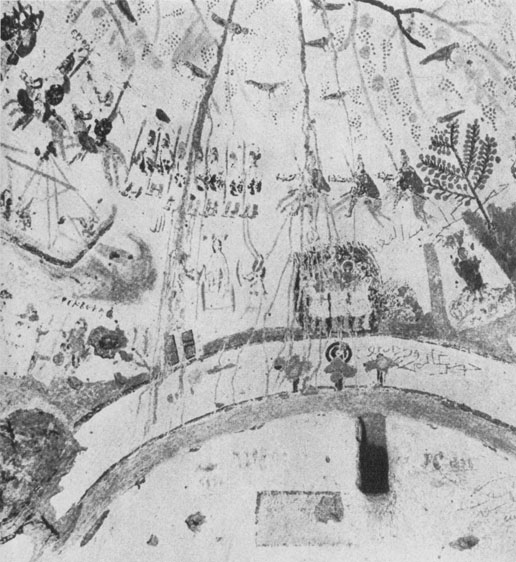
“List of Plates | Early Christian painting in other sites”:
http://www.egyptsites.co.uk/deserts/western/kharga/elbagawat.html, Egyptian Monuments: Cemetery of El-Bagawat:
About 3km from the centre of el-Kharga and 1km north of the Temple of Hibis is the early Christian cemetery of Bagawat. … Inside the Chapel of the Exodus, which is one of the earliest in the cemetery, the interior of the dome is decorated in two bands illustrating scenes from the Old Testament; Adam and Eve, Moses leading the Israelites through the Sinai desert in the Exodus, Pharaoh (Rameses II?) and his armies, Noah’s ark, Daniel in the lion’s den, Jonah and the whale and several other biblical episodes. In the Chapel of Peace, similar themes are depicted on the dome, including the Annunciation of the Virgin Mary and others, each identified in Greek. The interior walls are also painted with many Byzantine frescoes of grape vines, peacocks, allegorical figures and inscriptions. The purpose of the Christian tomb-chapels, like their ancient Egyptian counterparts, was for the reverence of the deceased.
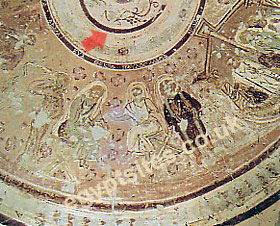
Early Christian Art, W. F. Volbach, 1961, plate 123, “Salonika, Hagios Georgios (church). Mosaic of the barrel-vault above the S.niche, c. 400” [grapes]:
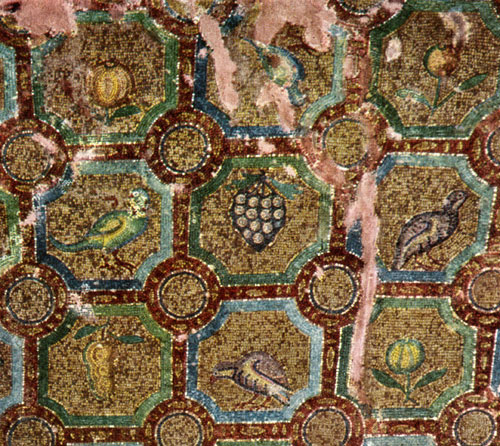
Mosaics of the Greek and Roman World, Dunbabin, 1999, p. 251 (pagan art… that offers “many” Christian parallels):
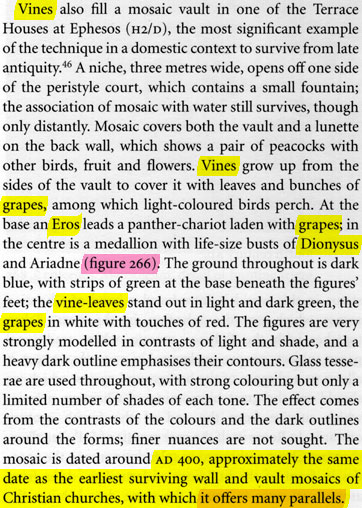
Figure 266, “Ephesos, Terrace House 2, Dwelling II… vines … Dionysus”:
The Roman Empire: Art Forms and Civic Life, Hans Peter L’Orange, 1985, pp. 222-223, illustration 134, “Rome, Lateran Baptistery” (440 AD):
Early Christian Art, W. F. Volbach, 1961, plate 76, “Istanbul, Archeological Museum. Part of drum of a column with vine and ornamental figures, Vth century. Above: Pair with sacrificial animals. Below: Baptism of Christ”:
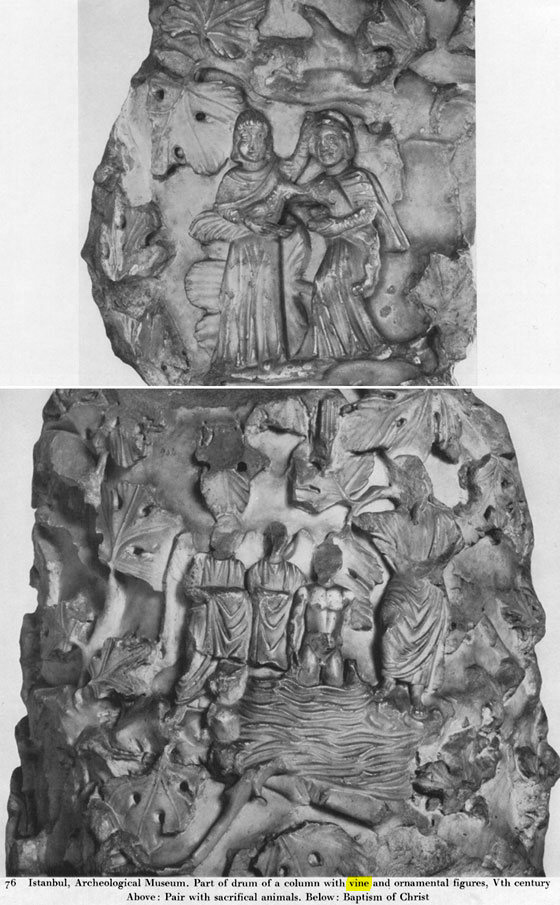
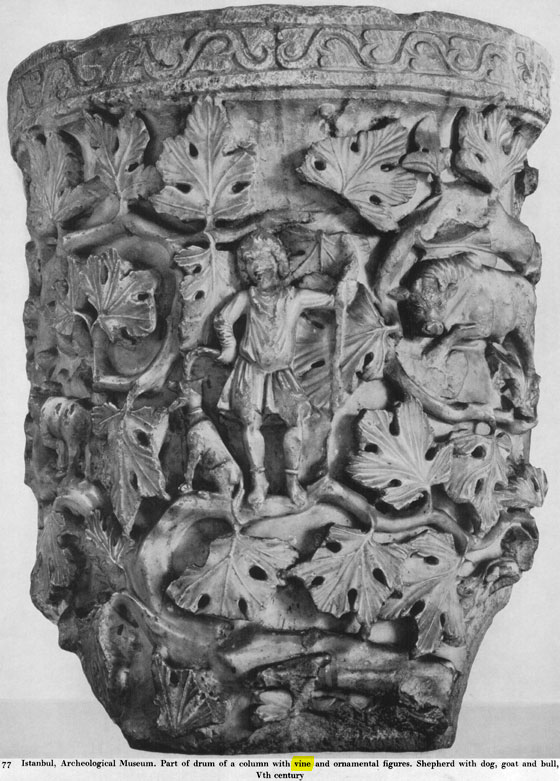
Plate 77, “Istanbul, Archeological Museum. Part of drum of a column with vine and ornamental figures. Shepherd with dog, goat and bull, Vth century”:
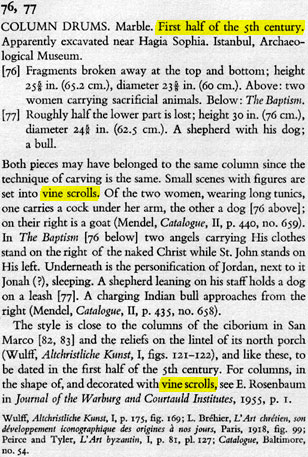
Early Christian Art, W. F. Volbach, 1961, p. 326, “Notes to the Plates”:
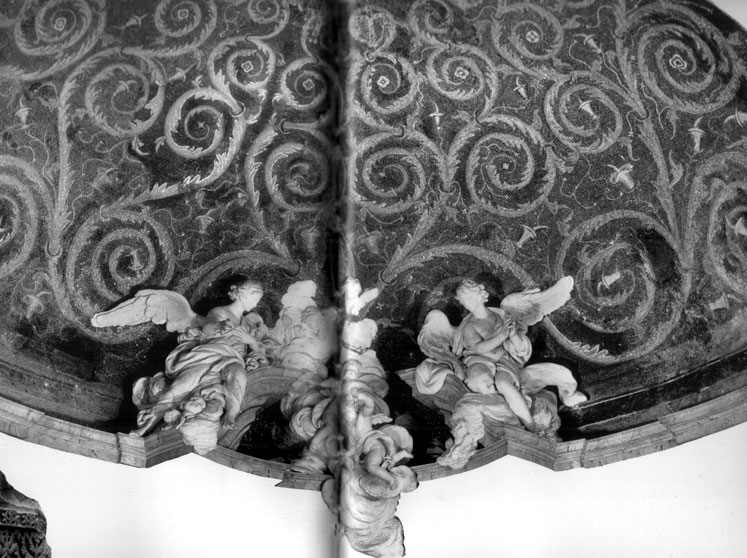
http://homepage.mac.com/paduan/PhotoAlbum26.html, Detail on presbytery, Grado Basilica, Grado, Italy (c. 450 ?):
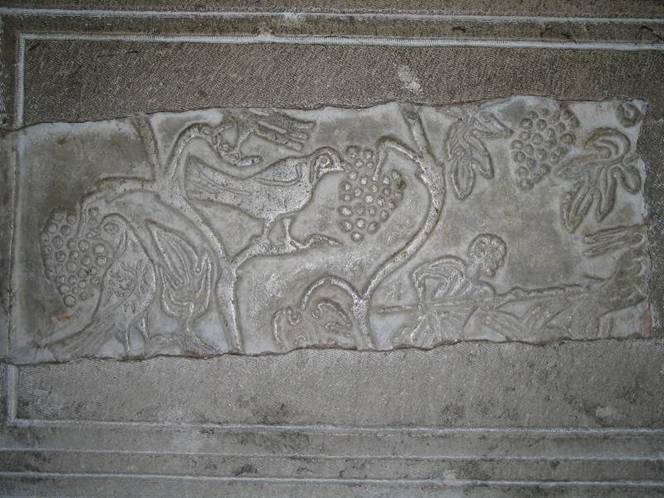
Early Christian Art, W. F. Volbach, 1961, plate 80, “Istanbul, Archeological Museum. Balusters with acanthus and ivy leaves. Mythological scenes at the ends, middle of Vth century [vines]”:
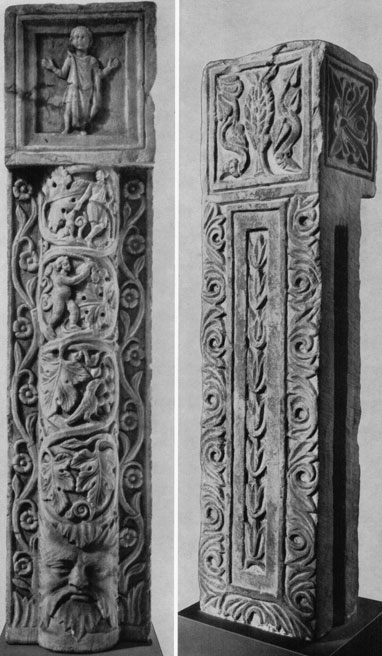
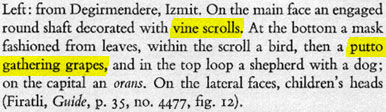
Early Christian Art, W. F. Volbach, 1961, p. 326, “Notes to the Plates | 80”:
http://pro.corbis.com/, Search # VN001628, Large Basilica of Heraclea Lynkestis: Narthex Floor Mosaic [detail], 5th century:
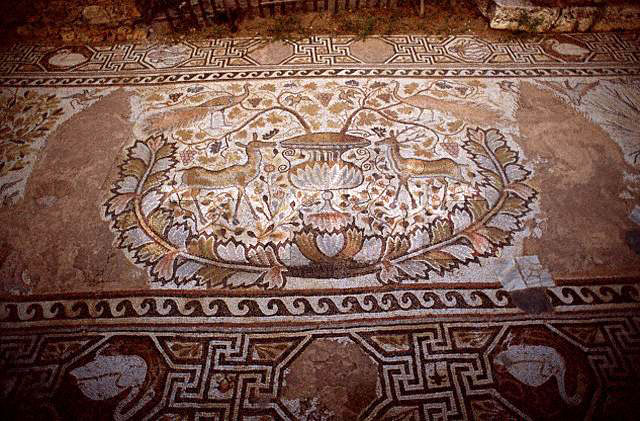
Grapes.
Origins of Western Art, Dr. Donald E. Strong, 1965, p. 47, “Early Christian Art | 5th century” (grape vines):
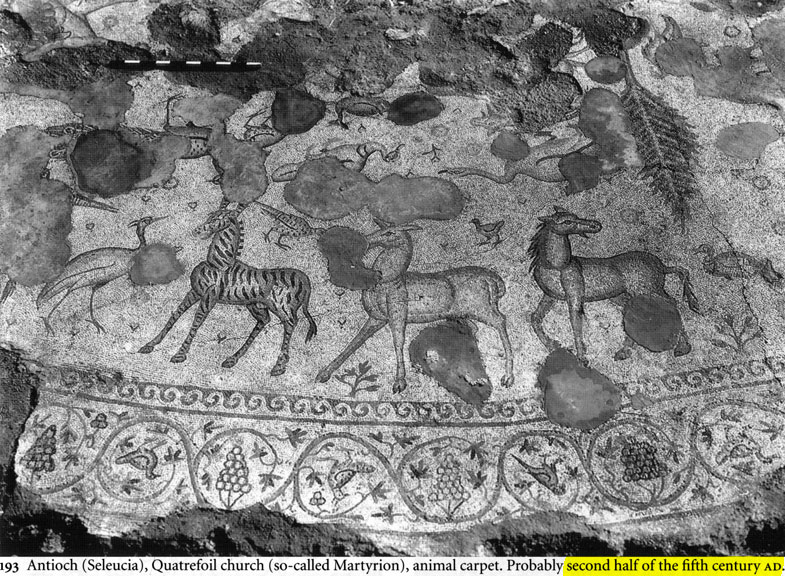
Mosaics of the Greek and Roman World, Dunbabin, 1999, p. 181, figure 193, “Antioch (Seleucia), Quatrefoil church (so-called Martyrion)” (Christian art):
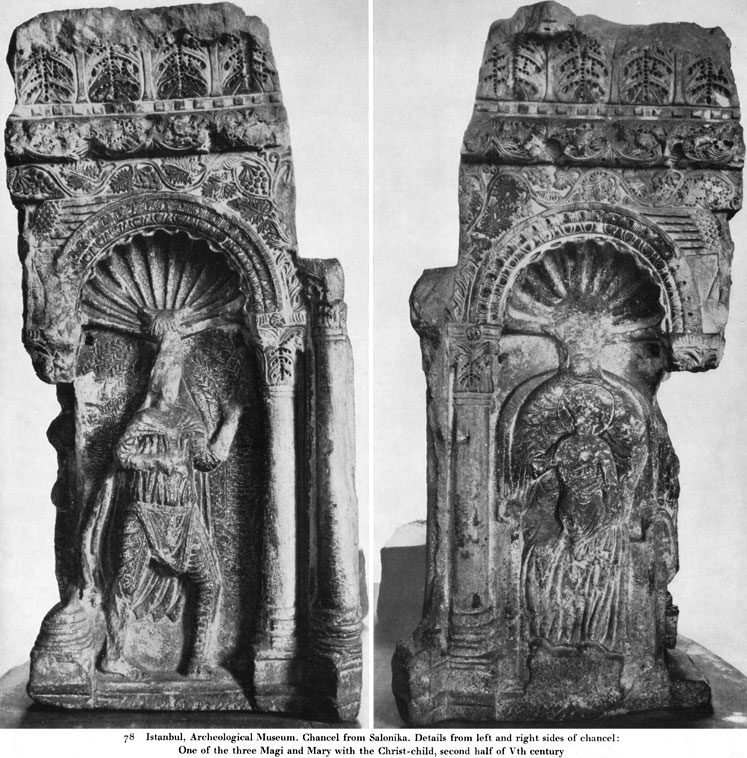
Early Christian Art, W. F. Volbach, 1961, plate 78, “Istanbul, Archeological Museum. Chancel from Salonika. Details from left and right sides of chancel: One of the three Magi and Mary with the Christ-child, second half of Vth century” [Grape vines above arches]:
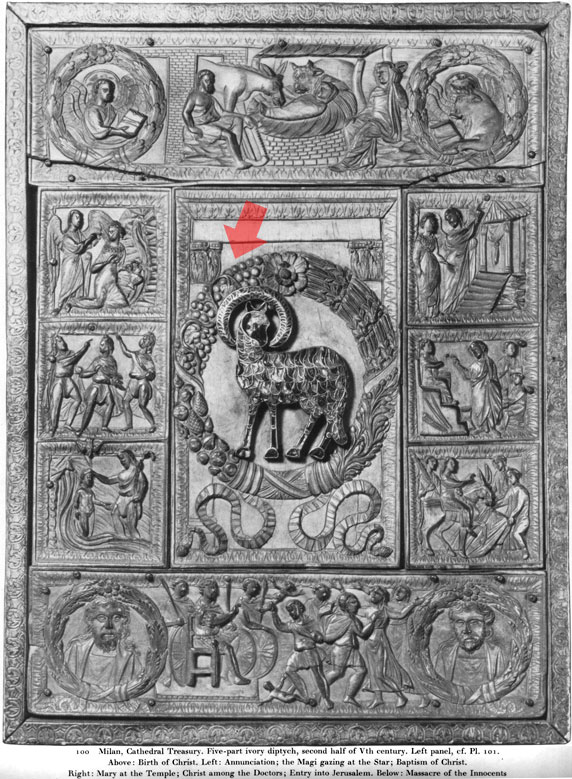
Early Christian Art, W. F. Volbach, 1961, plate 100, “Five-part ivory diptych, second half of Vth century” [grape vine]:
Early Christian Art, W. F. Volbach, 1961, plate 81, “Istanbul, Archeological Museum. Relief. Entry into Jerusalem, from the Church of St. John the Baptist in the Studios Cloister, Constantinople, late Vth century [grape vine]”:
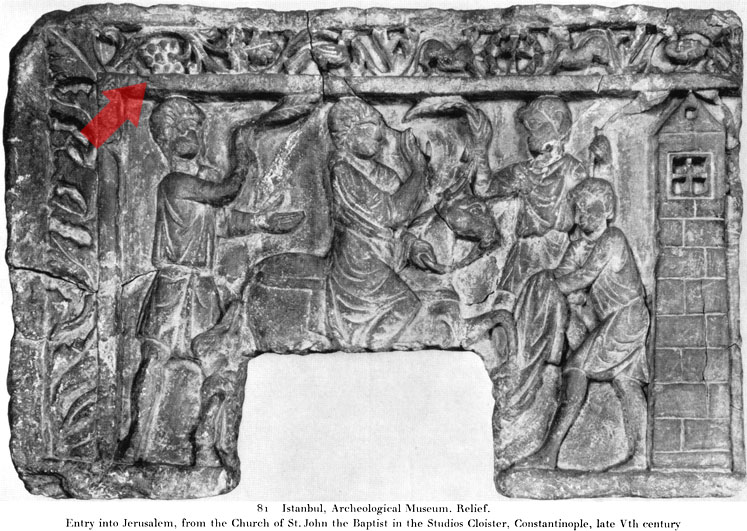
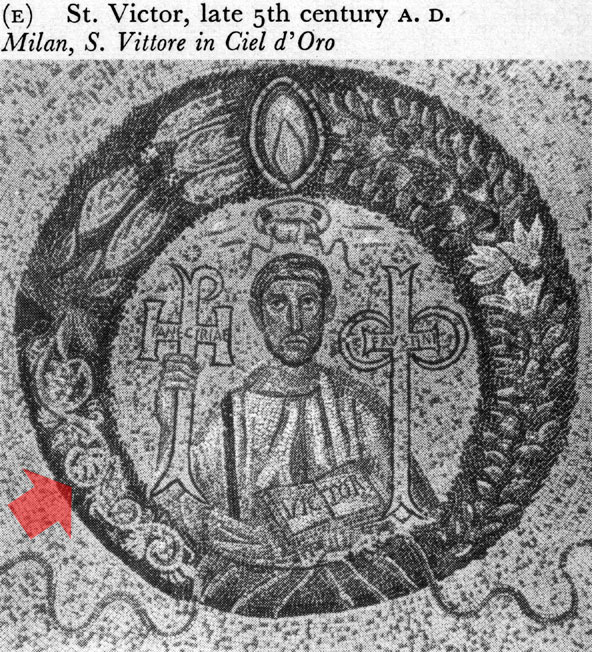
Early Christian Art, W. F. Volbach, 1961, p. 326, “Notes to the Plates”:
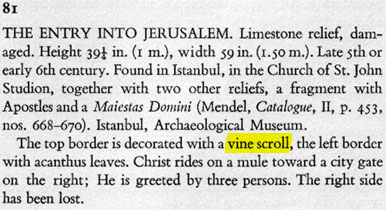
Origins of Western Art, Dr. Donald E. Strong, 1965, p. 51, “Early Christian Art | 5th century | St. Victor”:
6th century (500’s):
The Origins of Christian Art, Gough, 1973, p. 172, “Justinian and after” [ΧΡ/Α-ω surrounded by vine scroll]:
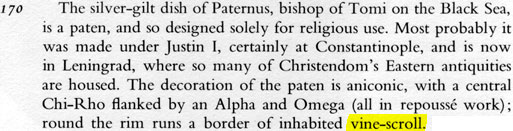
P. 173, illustration 170:
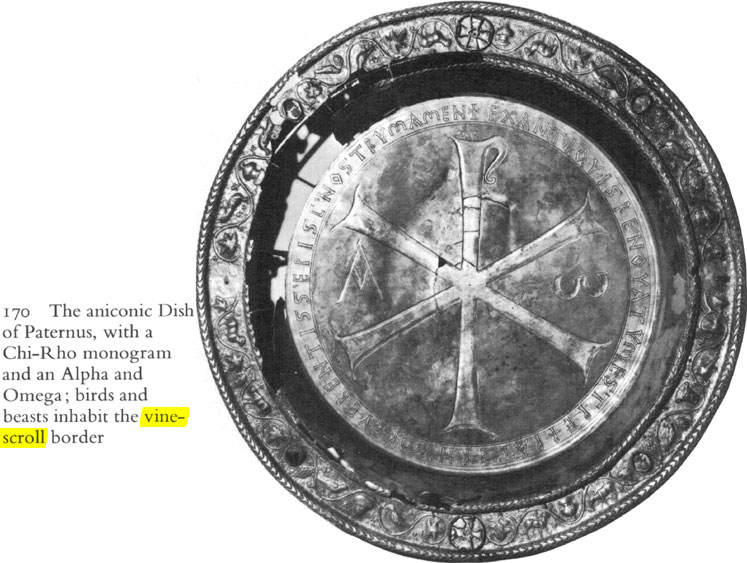
P. 211, “List of Illustrations”:
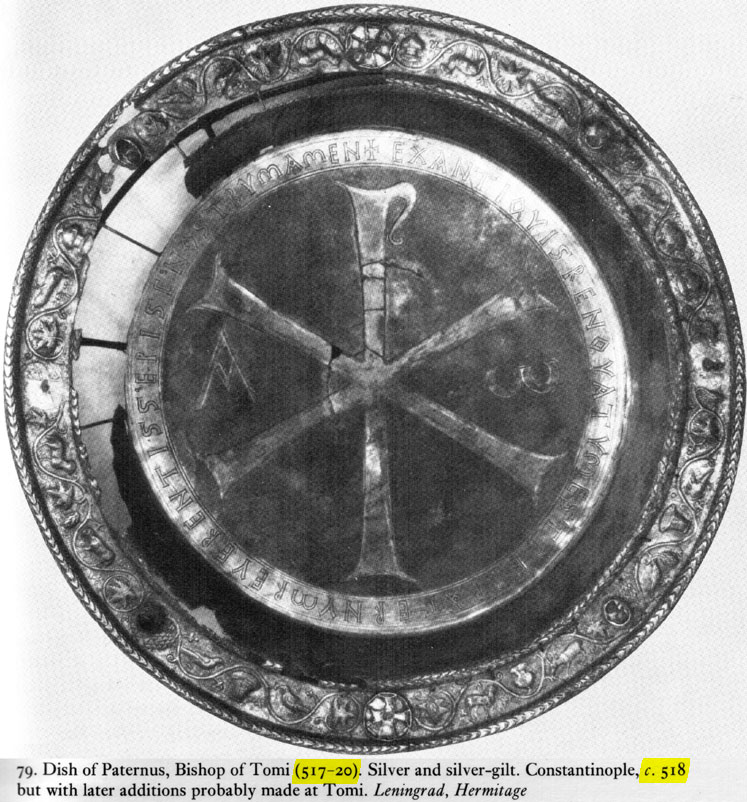
Early Christian and Byzantine Art, Beckwith, 1979, p. 98, “Early Christian Art: The Synthesis of the Secular and the Religious Image”:
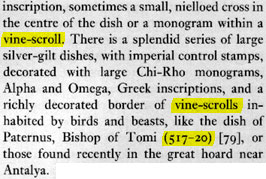
P. 97, illustration 79:
http://pro.corbis.com/, Search # RW006777, Floor Mosaic of the East Church of Apollonia, Libya, Early Byzantine, Christian art (c. 539 AD):
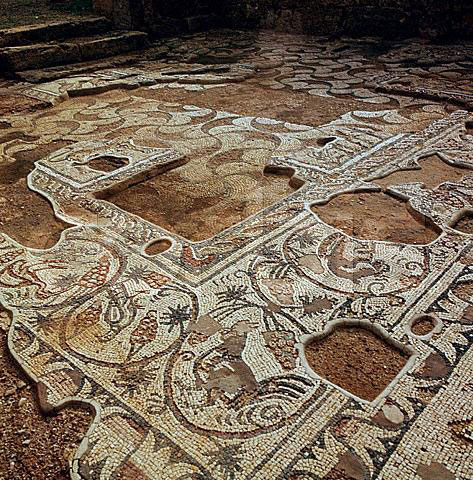
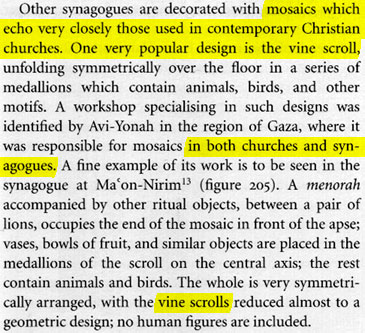
Mosaics of the Greek and Roman World, Dunbabin, 1999, pp. 192-193, “Palestine and Transjordan”:
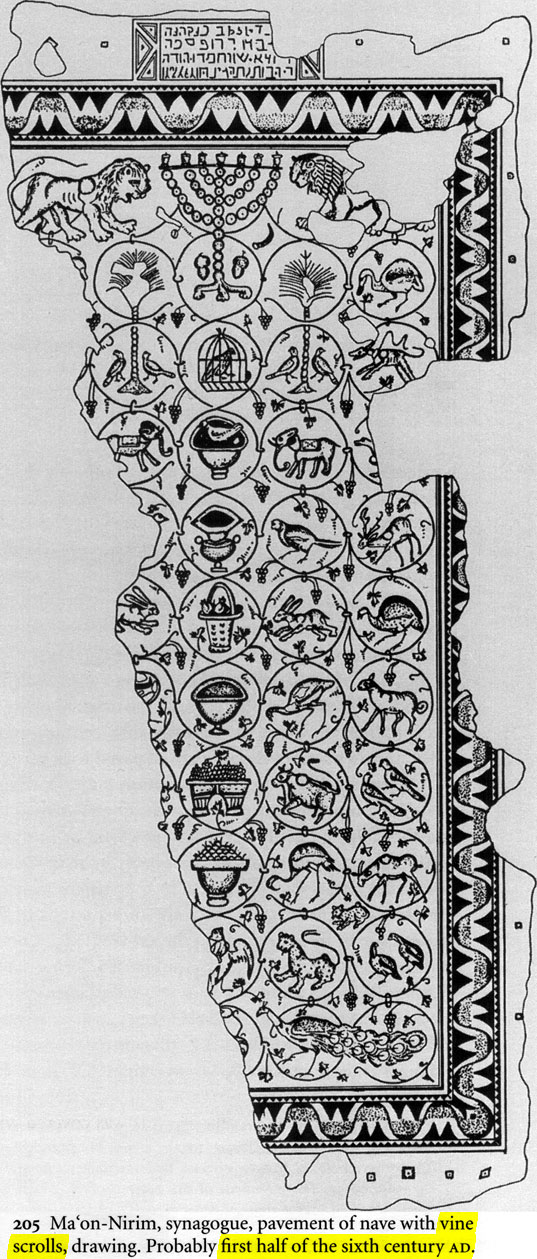
P. 193, figure 205, “Ma‘on-Nirim, synagogue … vine scrolls”:
http://www.catacombsociety.org/vom/119.html , Vaults of Memory:
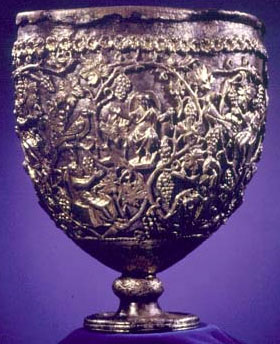
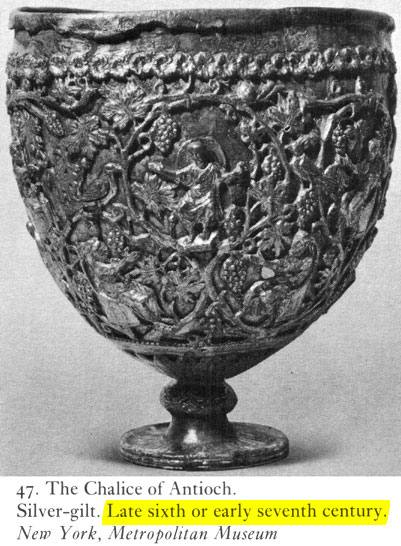
Antioch Chalice
119.
In a similar setting, Jesus assumes the
role of philosopher-teacher, enthroned apparently among the apostles, with whom
he is engaged in discourse under the shade of their vine. Silver gilt eucharistic cup of the first half of the sixth century. New York, Metropolitan Museum of Art.
Early Christian and Byzantine Art, Beckwith, 1979, p. 65, illustration 47, “Early Christian Art: The Eastern Provinces of the Empire and the Foundation of Constantinople” [grape vines]:
The Origins of Christian Art, Gough, 1973, p. 138, “From Constantine to Justinian”:
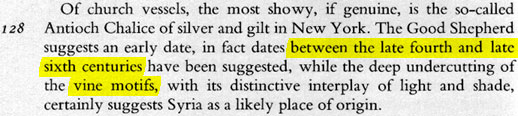
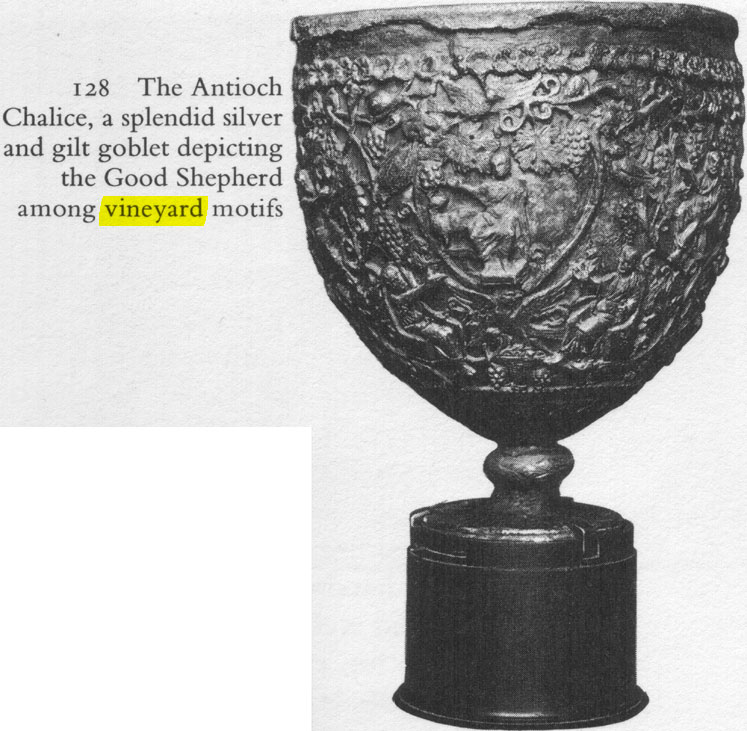
P. 139, illustration 128:
P. 209, “List of Illustrations”:
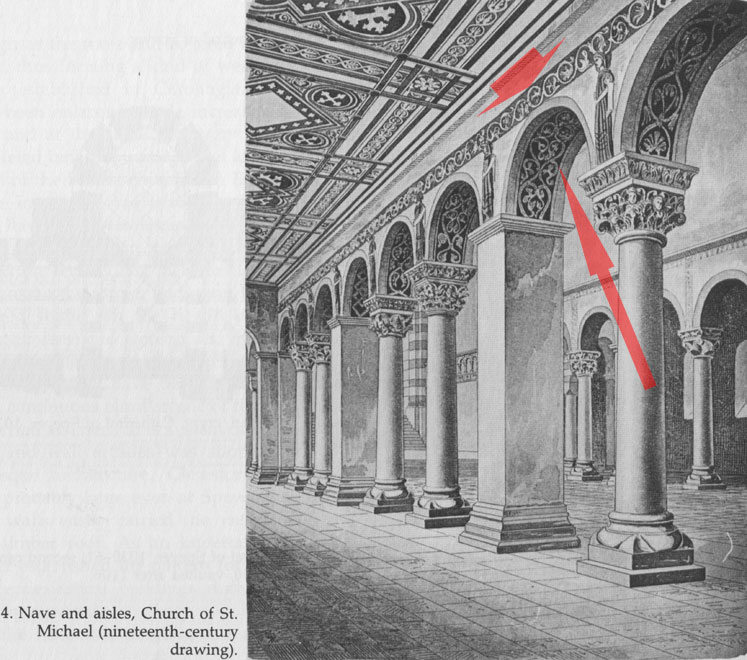
Medieval Art, Stokstad, 1986, p. 183, chapter 7, illustration 4, “Church of St. Michael” (my guess 6th century):
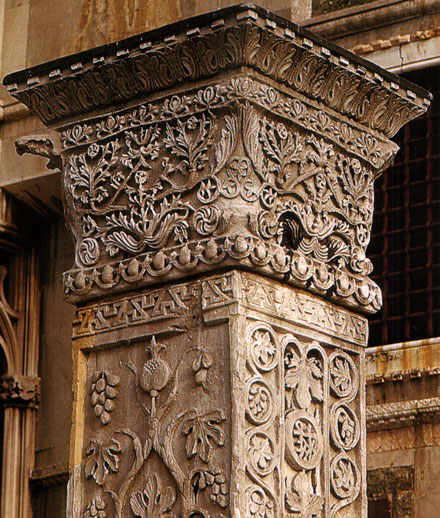
Early Christian & Byzantine Art, Lowden, 1997, p. 71, illustration 36, “Art before Iconoclasm | Emperors and Holy Men | Constantinople and the East | Sculpted pier from St. Polyeuktos, Constantinople, 524-7, reused, Piazzetta, Venice”:
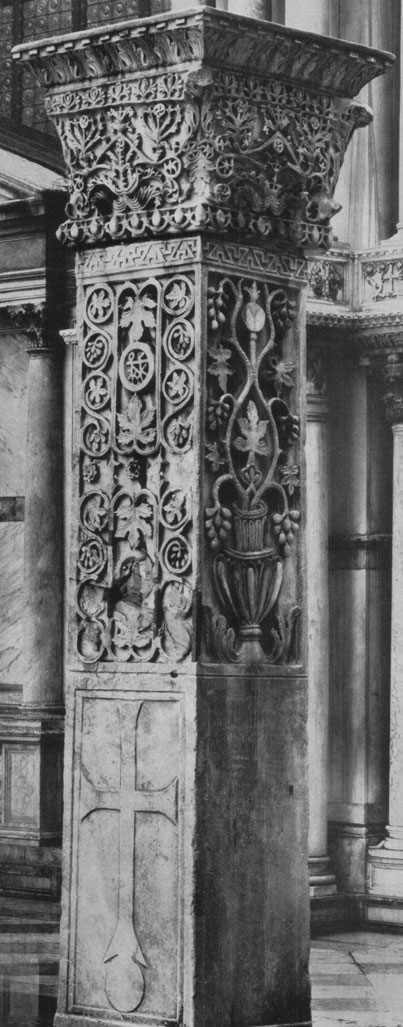
Early Christian Art, W. F. Volbach, 1961, plate 208, “Venice, before St. Mark’s. One of the two columns from San Giovanni d’Acri, VIth century” [grape vines]:
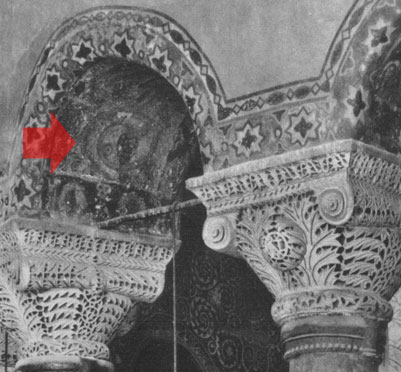
Early Christian Art, W. F. Volbach, 1961, plate 196, “Istanbul, Hagia Sophia. 532-537. Capitals and columns from the S. corner of the S. W. Gallery” [grape vine]:
http://www.touregypt.net/featurestories/jeremiah.htm, The Monastery of Jeremiah at Saqqara, “The Principal Church”:
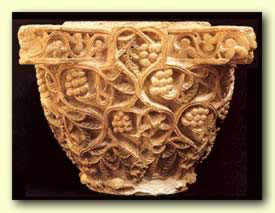
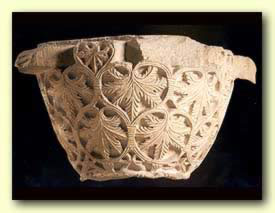
Left: Vine and grape cluster capital;
Right: Another type of capital found at the monastery dating to the sixth century
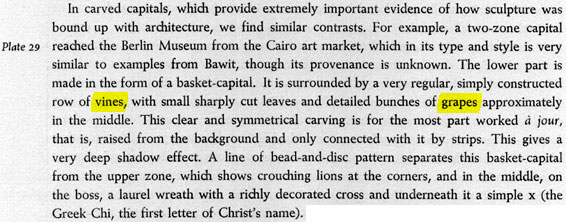
Coptic Art, Wessel, 1965, p. 28:
(http://www.answers.com/Coptic%20art, Coptic Art: Christian art in the upper Nile valley of Egypt. Reaching its mature phase in the late 5th and 6th cent.):
 :
:
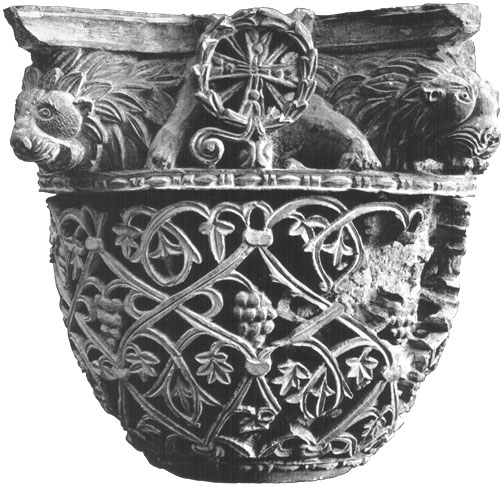
P. 33, plate 29:
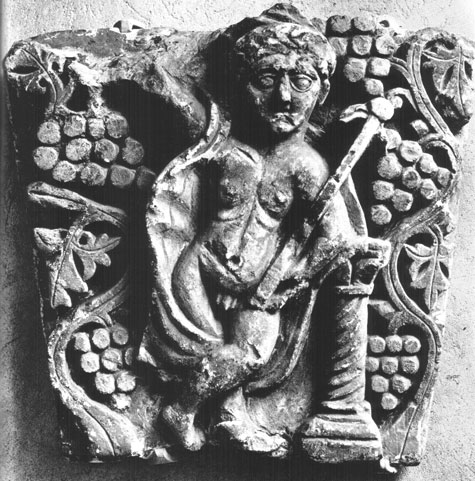
Pp. 60-61, plate 57:

P. 62, plate 58:
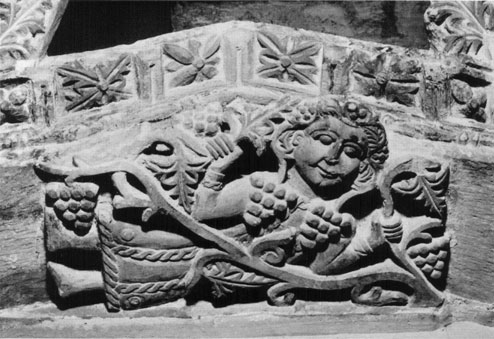
P. 62, plate 59:
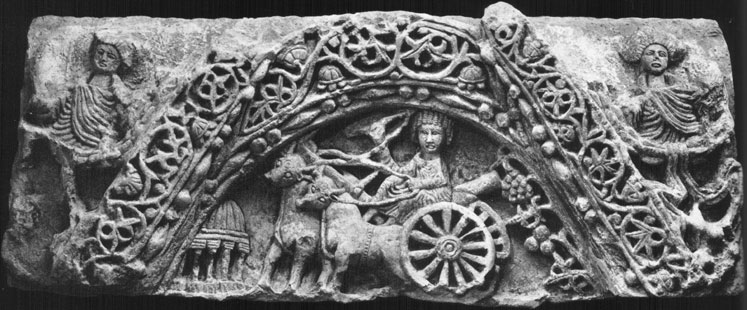
P. 116, plate 89:

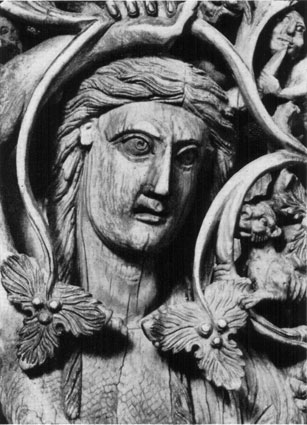
“List of Illustrations”:

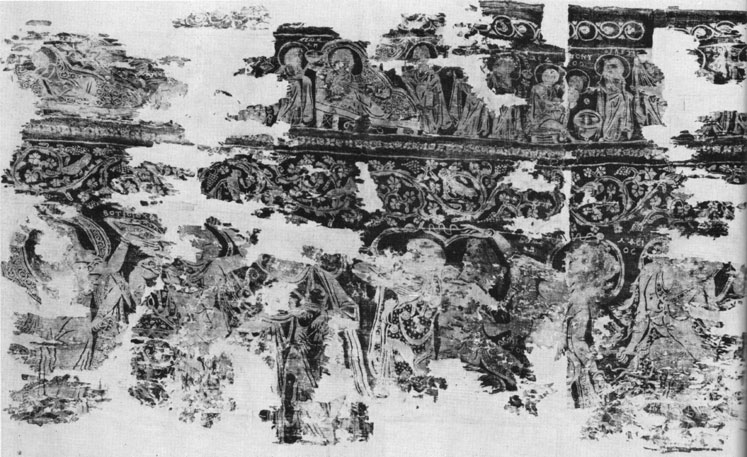
Pp. 182-183, plate 107:

Pp. 187, plate 110, “Youthful Bacchus”:

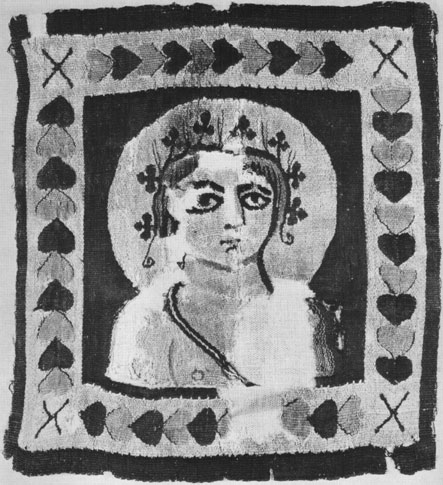
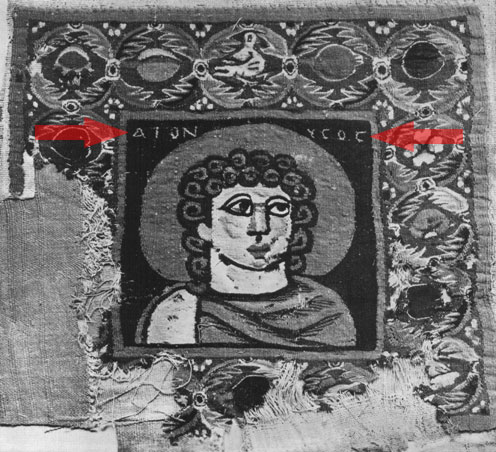
Pp. 188, plate 112, “Dionysos”:
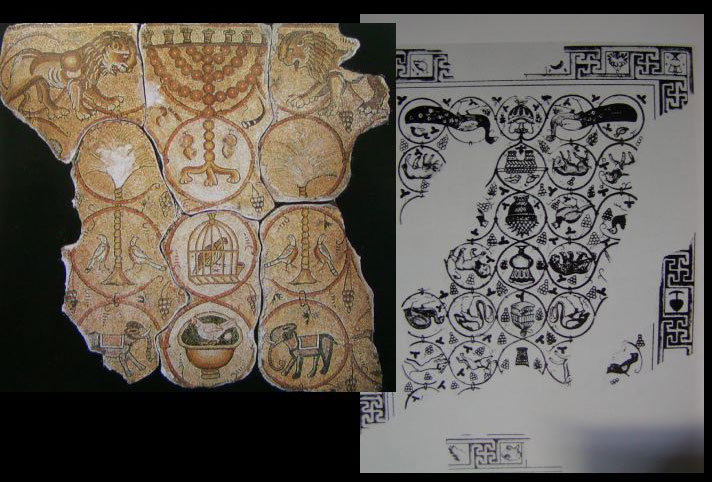
http://www.arthistory.upenn.edu/smr04/101910/Slide9.7.jpg (via http://www.arthistory.upenn.edu/smr04/101910/101910lecture9.html), Lecture 9: : Early Christian-Byzantine, “left: synagogue mosaic, c. 530 CE, Maon, Israel right: church mosaic, c. 6th cent. CE, Shellal, Gaza”:
http://armenianstudies.csufresno.edu/arts_of_armenia/detail/165.asp (California State University), Armenian Studies Program:
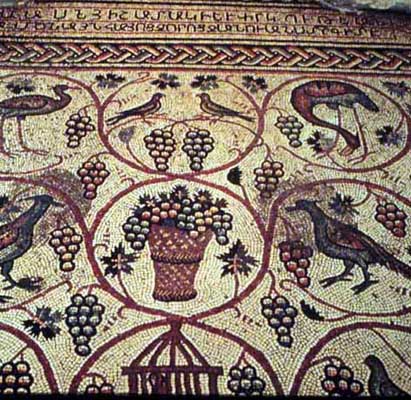
165. Mosaic with Armenian inscription, birds within a vine scroll, VIth century, funerary chapel of St. Polyeuctos, Musara Quarter, Damascus Gate, Jerusalem.
http://www.uwic.ac.uk/ICRC/issue004/armenianimages/fig007.jpg (via http://www.uwic.ac.uk/ICRC/issue004/armenian3.htm), “The Armenian Bird Mosaic (fig.7)”:
7. The Armenian Bird Mosaic, Jerusalem; a pavement mosaic from the sixth century.
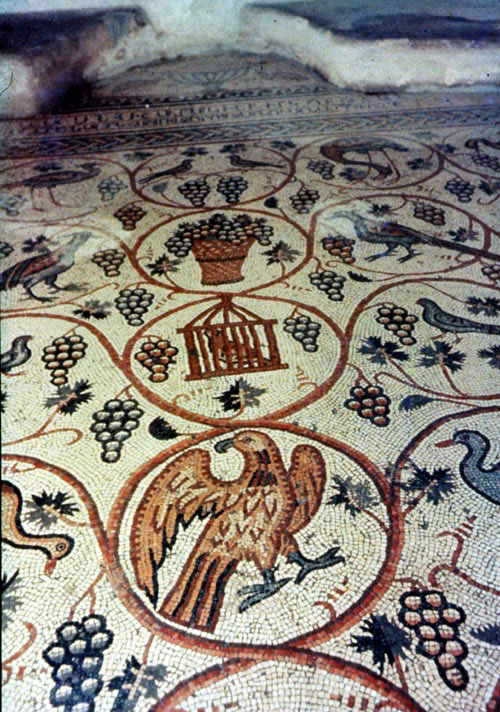
These images had symbolic significance in the language of early Christian art. The vine scrolls symbolized the blood of Christ. The image of the bird in the cage represented the soul imprisoned within the body. The basket of fruit was a sign for the flesh of Christ, while the birds were common images of the believers' souls.
So, Dionysus is the blood of Christ.
Mosaics of the Greek and Roman World, Dunbabin, 1999, p. 128, figure 131, “Sabratha, Basilica of Justinian” (Christian art):
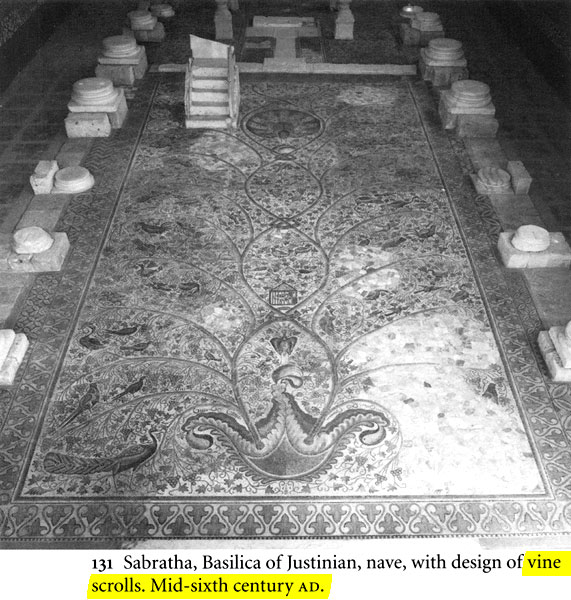
The Origins of Christian Art, Gough, 1973, p. 166, illustration 161, “Justinian and after” [grape vines]:
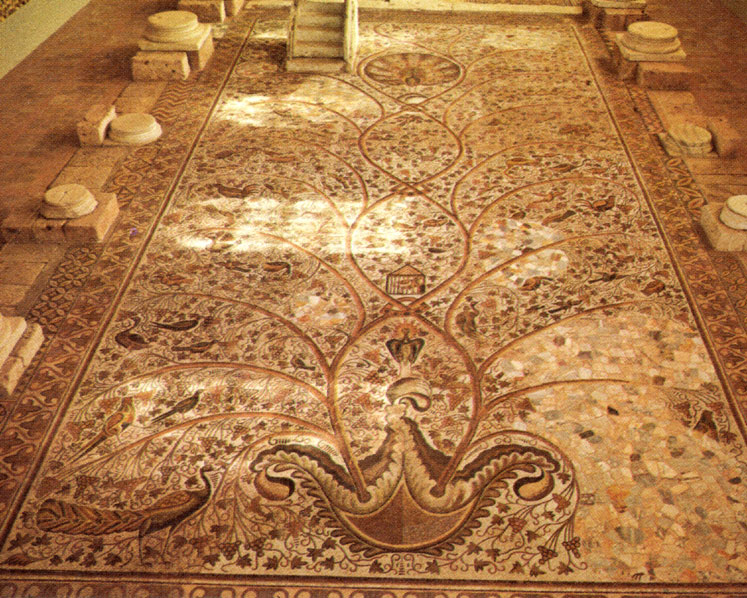
P. 210, “List of Illustrations”:

7th century (600’s):
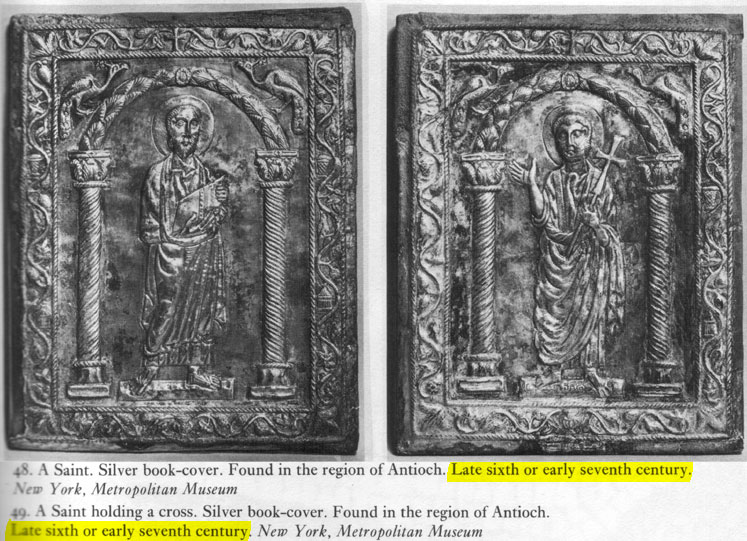
Early Christian and Byzantine Art, Beckwith, 1979, p. 65, illustrations 48 & 49, “Early Christian Art: The Eastern Provinces of the Empire and the Foundation of Constantinople” [vine borders]:
The Origins of Christian Art, Gough, 1973, p. 172, illustration 167, “Justinian and after”:
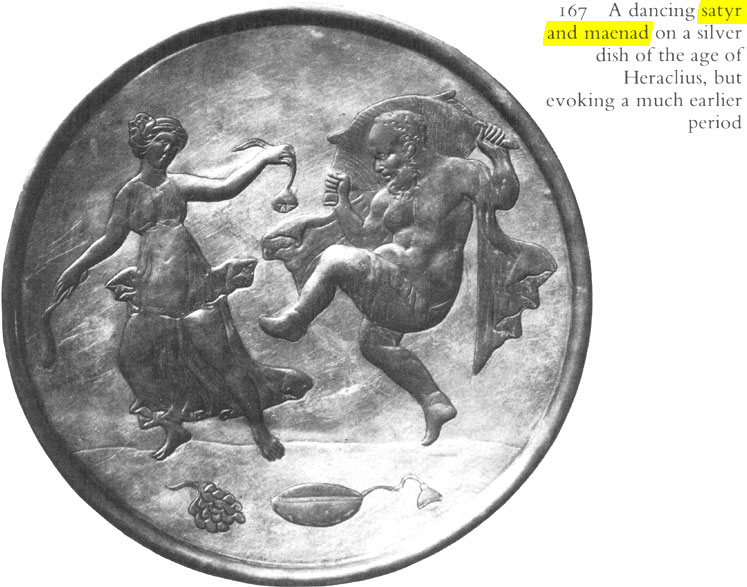
P. 211, “List of Illustrations”:

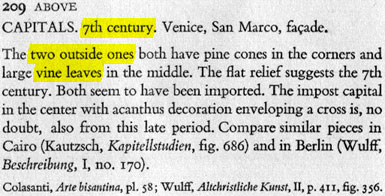
Early Christian Art, W. F. Volbach, 1961, plate 209, “Venice, St. Mark’s. Architrave and capitals from r. side-entrance on the W. facade” [vine leaves]:
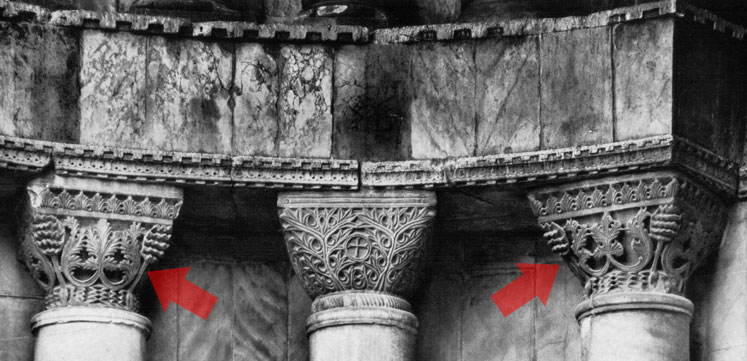
Early Christian Art, W. F. Volbach, 1961, p. 352, “Notes to the Plates”:
http://www.jesusneverexisted.com/melange.html, From Apollo to Jesus Christ!:
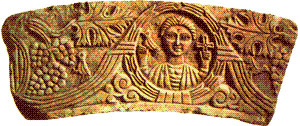
6th/7th century Coptic Christ, Egypt
– note the grapes of Dionysus!
8th century (700’s):
http://www.engl.virginia.edu/OE/Tour/Sculpture/Bewcastle.html, The Bewcastle Cross (late 7th or early 8th century):
The Bewcastle Cross (located in Cumbria, England) is carved from a single piece of stone. Its head is now missing; still it is a monumental piece of sculpture, standing fifteen feet high. Here one can see the west and south faces. At the top of the west face (here barely visible) is John the Baptist with the agnus Dei. Below that is Christ standing on two beasts (compare a similar panel of the Ruthwell Cross), and a panel containing a runic inscription, now only partly legible. At the bottom stands a man with a falcon: perhaps he is actually John the evangelist, whose symbol is an eagle. On the south face are classic vine-scroll and interlace patterns.
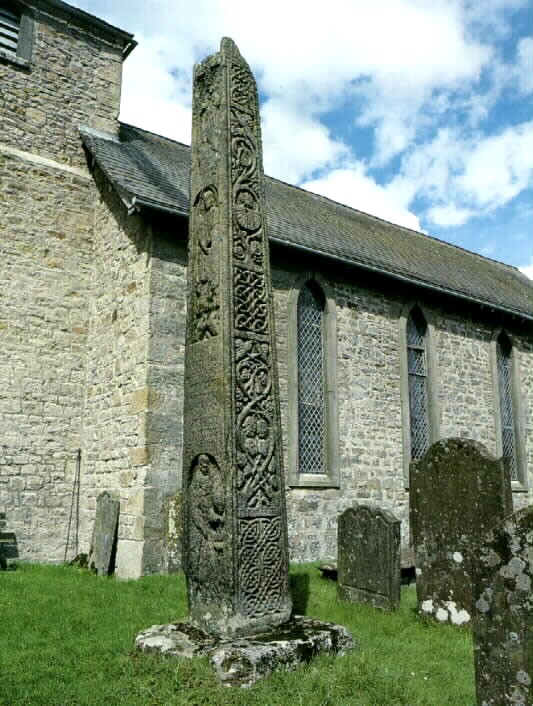
http://en.wikipedia.org/wiki/Ruthwell_Cross, Ruthwell Cross:
The Ruthwell Cross is an important Anglo-Saxon cross, also known as a preaching cross, dating back to the eighth century, when Ruthwell was part of the kingdom of Northumbria.
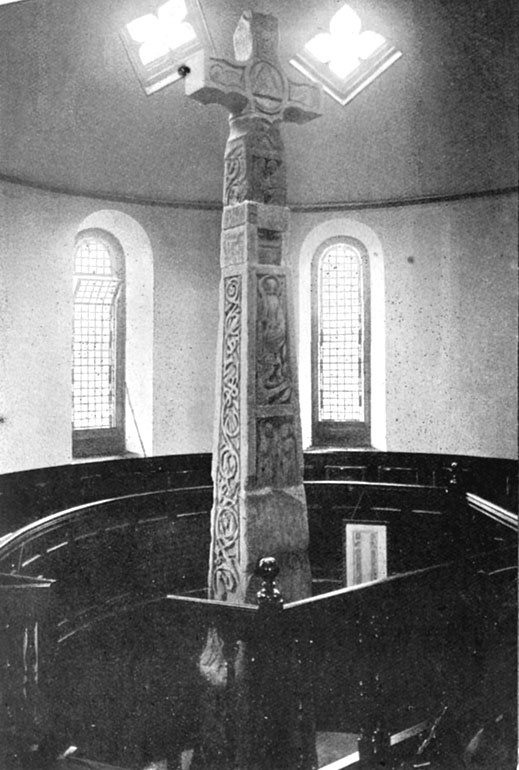
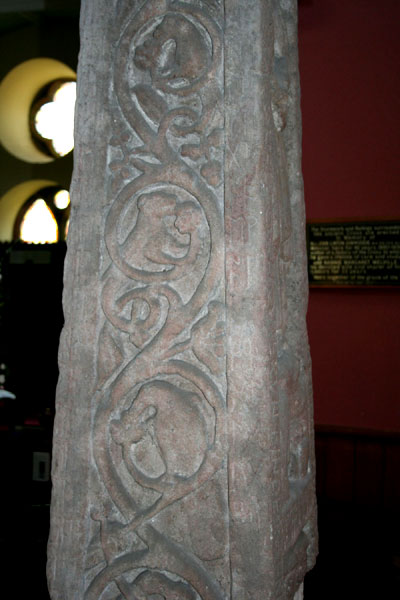
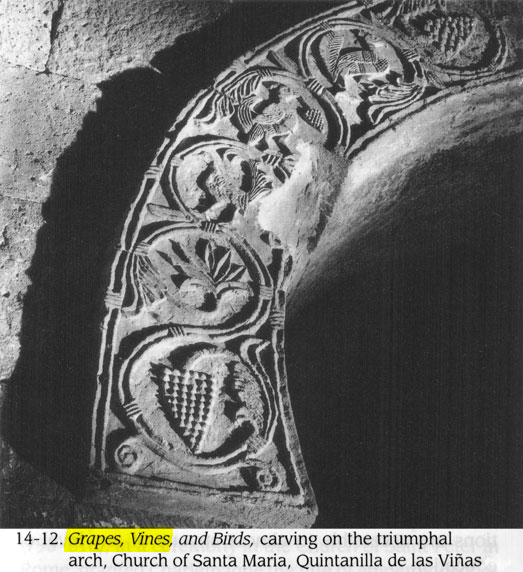
Art History, Stokstad, Revised Edition, 1999, Vol. 1, p. 489, figure 14-12, “Early Medieval Art in Europe | Christian Spain” (late seventh century or early eighth century):
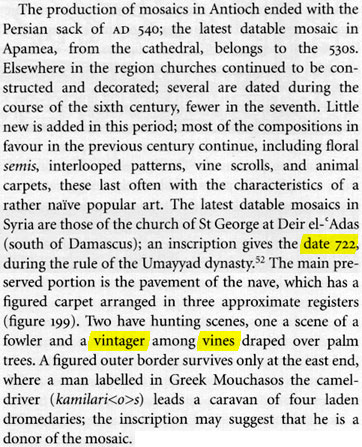
Mosaics of the Greek and Roman World, Dunbabin, 1999, pp. 184-185, “Syria and the east”:
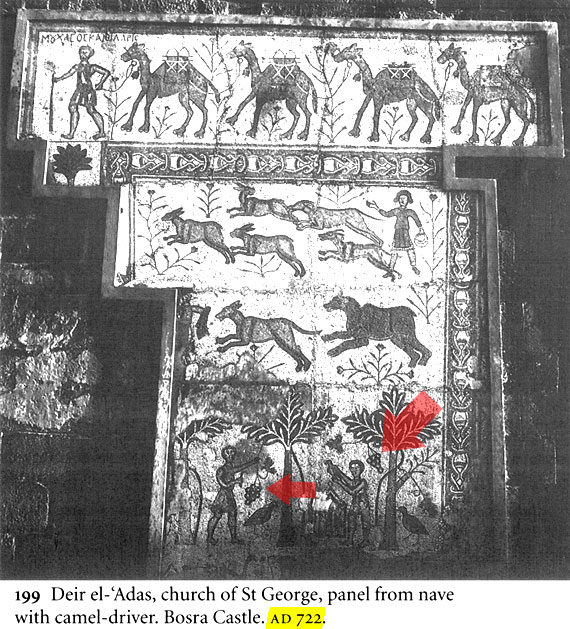
P. 185, figure 199, “Deir el-‘Adas, Church of St Georgo” (Syria):
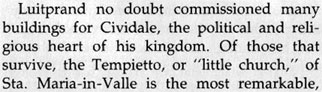
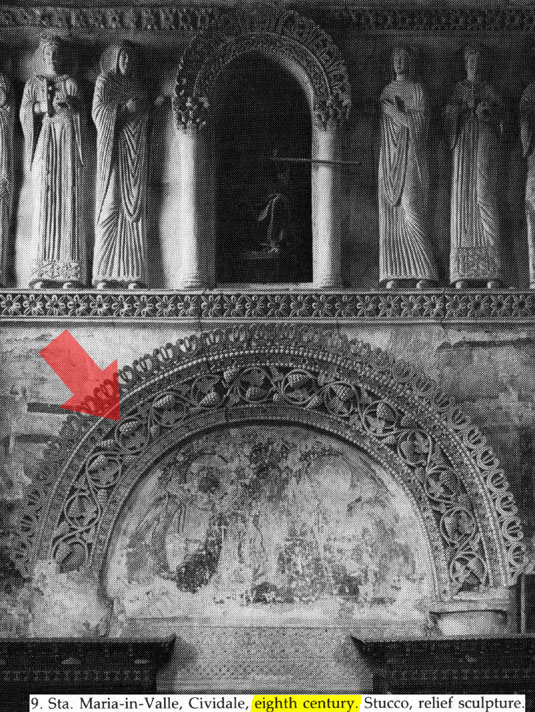
http://pro.corbis.com/, Search # EL003710, Detail of Plant Motif Border from Archway Relief with Six Female Saints in Il Tempietto Longobardo, Date Created: ca.760, Christian art, Vine, Wine grapes (photo rotated correctly):
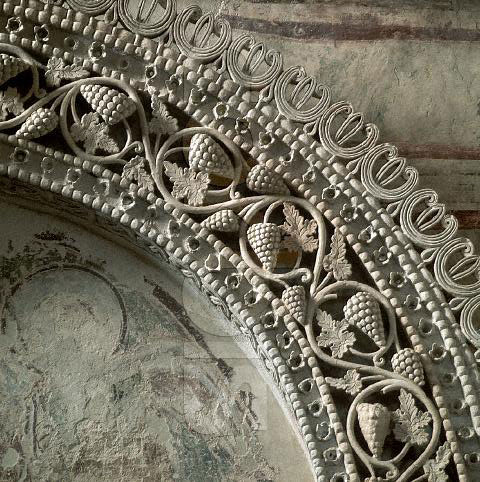
http://www.arengario.net/momenti/momenti27.html, Longobardi a Cividale:
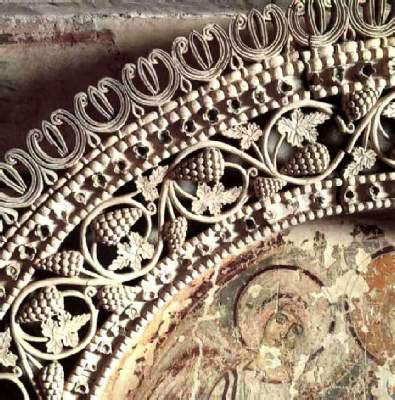
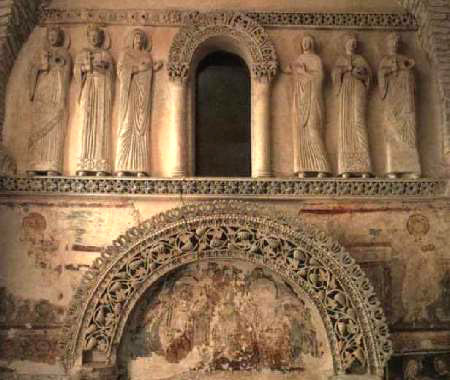
http://www.cividaleonline.com/tour/schede/tempietto.htm, Cividale del Friuli: Tempietto Longobardo (VIII sec.):
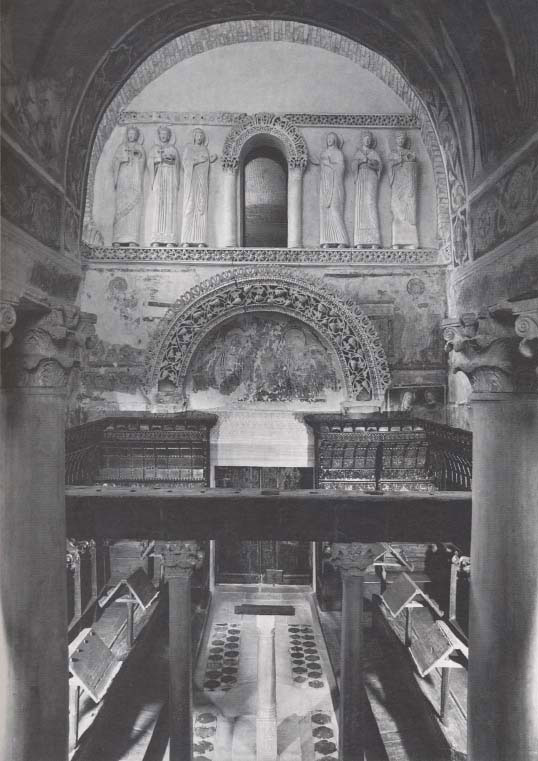
Medieval Art, Stokstad, 1986, p. 86, chapter 4:
P. 87, chapter 4, illustration 9:
9th century (800’s):
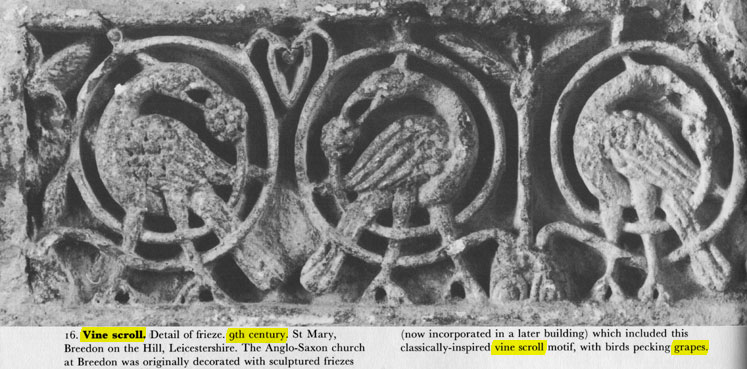
The Medieval World, Kidson, 1967, p. 38, figure 16, “Vine scroll … 9th century, St Mary, Breedon on the Hill, Leicestershire”:
10th century (900’s):
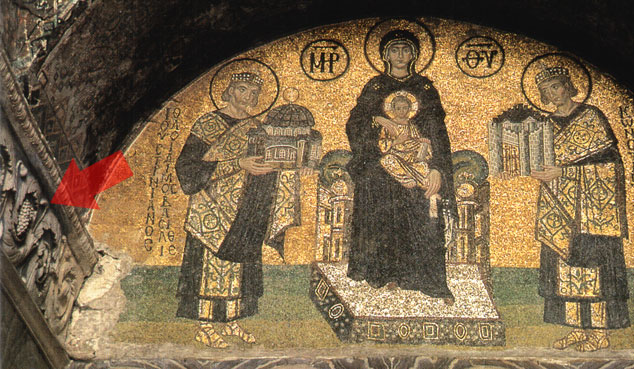
Early Christian & Byzantine Art, Lowden, 1997, p. 193, illustration 106, “Art after Iconoclasm | Orthodoxy and Innovation | Byzantine Art c.860-c.960 | The Theotokos and Child with Justinian and Constantine, early 10th century. Vestibule mosaic. St Sophia, Istanbul”:
The Origins of the Romanesque: Near Eastern Influences on European Art, 4th-12th Centuries, Atroshenko / Collins, 1986, p. 145, figure 92, “Church of the Holy Cross at Aght’amar (914-21)”:
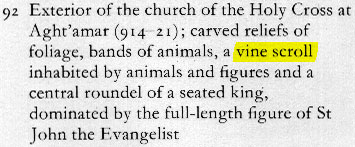
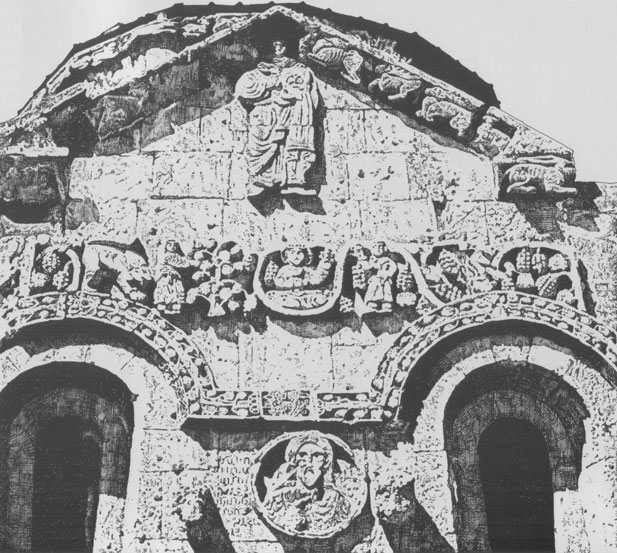
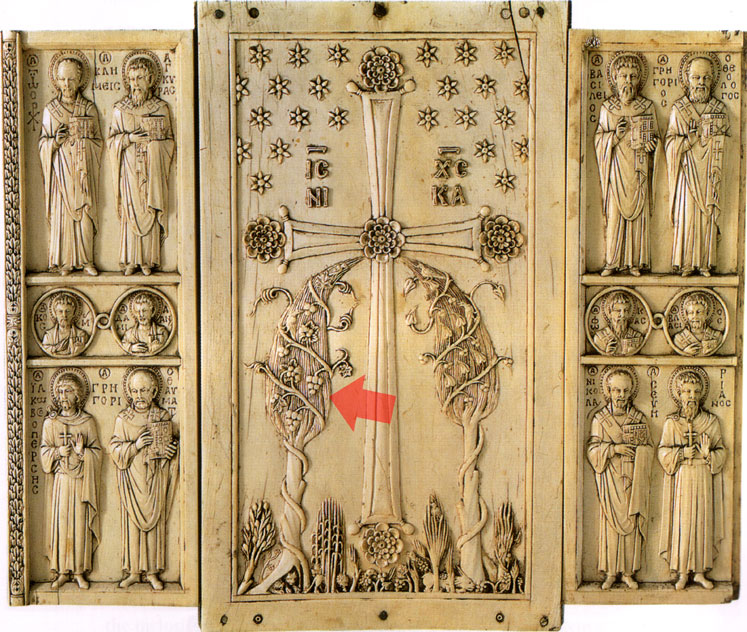
Early Christian & Byzantine Art, Lowden, 1997, p. 215, illustration 122, “Art after Iconoclasm | Orthodoxy and Innovation | Byzantine Art c.860-c.960 | Bishop saints and the Cross, Harbaville Triptych, back with exterior of wings, 10th century”:

Period but unknown date:
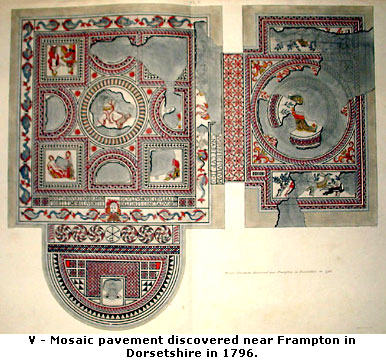
Mosaics of the Greek and Roman World, Dunbabin, 1999, p. 95, “Britain” (Frampton, Dorsetshire):
Is this it?:
http://www.georgeglazer.com/prints/antiquity/lysons/lysonsv.html
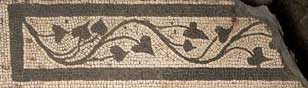
http://pro.corbis.com/, Search # MI001542, Roman Floor Mosaic With Grape Vines in a Church at Naples:
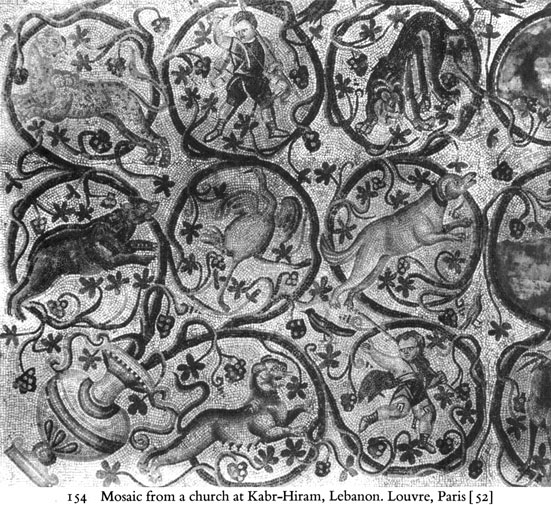
Christian Iconography: A Study of Its Origins, André Grabar, 1968, p. 52:

Illustration 154, “Church at Kabr-Hiram, Lebanon”:
http://www.unf.edu/classes/freshmancore/coreabroad/pictures/ByzantineMuseum/byzmusathensP-1010275.jpg (via http://www.unf.edu/classes/freshmancore/coreabroad/pictures/ByzantineMuseum/?C=N;O=A), Index of /classes/freshmancore/coreabroad/pictures/ByzantineMuseum, “byzmusathensP-1010275.jpg”:
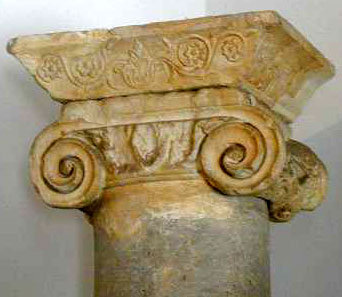
http://www.unf.edu/classes/freshmancore/coreabroad/pictures/ByzantineMuseum/byzmusathensP-1010301.jpg (via http://www.unf.edu/classes/freshmancore/coreabroad/pictures/ByzantineMuseum/?C=N;O=A), Index of /classes/freshmancore/coreabroad/pictures/ByzantineMuseum, “byzmusathensP-1010301.jpg”:
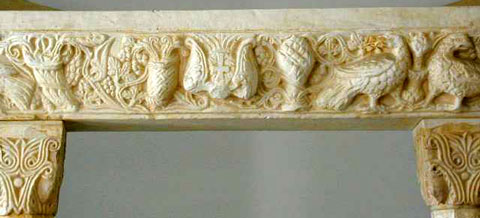
http://www.unf.edu/classes/freshmancore/coreabroad/pictures/ByzantineMuseum/byzmusathensP-1010285.jpg (via http://www.unf.edu/classes/freshmancore/coreabroad/pictures/ByzantineMuseum/?C=N;O=A), Index of /classes/freshmancore/coreabroad/pictures/ByzantineMuseum, “byzmusathensP-1010285.jpg”:
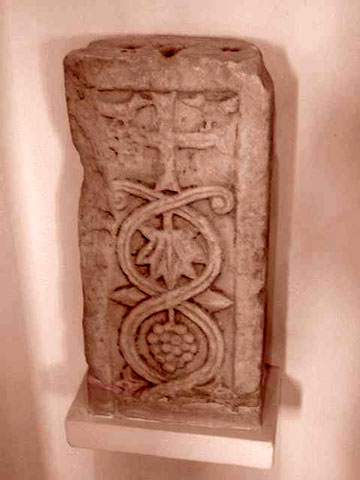
Santa Maria Maggiore in Bergamo, Angelini, 1968, p. 162 (grapevines / Eros) (Christian art):
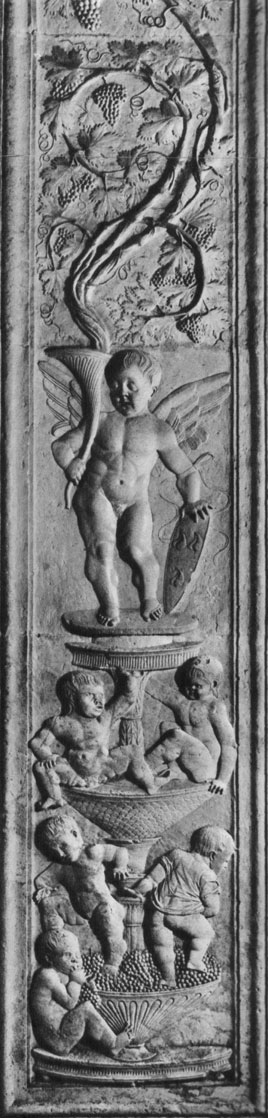
Alone of All Her Sex: The Myth and the Cult of the Virgin Mary, Warner, 1976, p. 276:

http://www.finearts.uvic.ca/historyinart/courses/ha321/extras.htm, The Rise of Western Christendom (Oxford 1997), “Glossary for R.M. Jensen, Understanding Early Christian Art”:
exegesis (Greek): meaning interpretation; in the context of
Christianity, it is used to mean the interpretation and elucidation of biblical
text, especially when an obscure passage is concerned. A whole class of
theological writing from Late Antiquity onwards has been dedicated to exegesis.
homily (Greek homilia): a type of sermon which comments on scriptural texts.
Hundreds of homilies of the early Church Fathers survive in written form.
Helios (Greek): the sun and, by extension, the Sun-God, associated mainly with
Apollo and Mithras in the Hellenistic and Roman religious traditions.
Bacchic: related to Bacchus, ie. the god
Dionysus. Apart from his association with wine, Dionysus was also the
patron god of theatre. Bacchic masks are grotesque masks worn by theatre
actors.
Illustrated Encyclopaedia of the Classical World, Yon’ah / Shatzman, Jerusalem Publish House, 1975, p. 93: