BAPTISM: ISIS
(Similar to Cybele, Dionysus, Aphrodite, etc.)
The New International Dictionary of New Testament Theology, Brown, Zondervan Publishing, 1975, vol. 1, p. 64, “Glossary | Mystery Religions”:

Vol 3 (1978), p. 1085, “Word”:
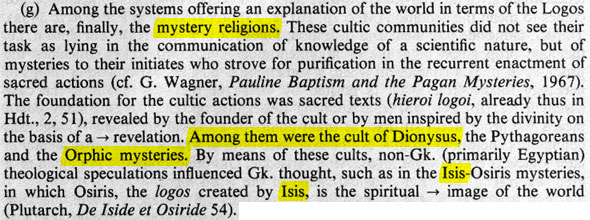
The Facts On File Dictionary of Religion, Hinnells, 1984, pp. 223-224, “Mystery-Cult”:
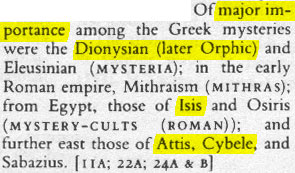
P. 224, “Mystery-Cults (Roman)”:
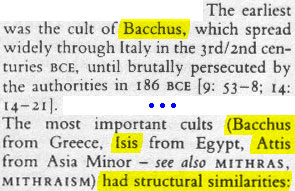
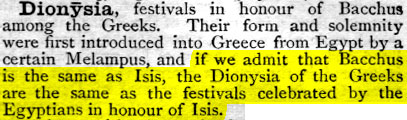
Bibliotheca Classica; or, A Classical Dictionary, containing A full Account of all the Proper Names, Lemprière, 1788, (no page numbers), “Dionysia”:
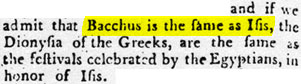
Translated from Elizabethan English:
and if we admit that Bacchus is the same as Isis, the Dionysia of the Greeks, are the same as the festivals celebrated by the Egyptians, in honor of Isis.
Lempriere’s Classical Dictionary, 1898, p. 206, “Dionysia”:
Sexualia: From Prehistory to Cyberspace, Bishop / Osthelder, 2001, p. 145, “The Phallic Rites of Isis and Osiris”:
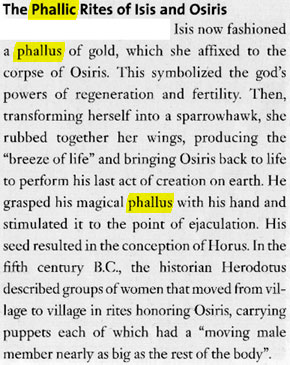
A “phallus” is a penis.
http://www.twainquotes.com/InstructionsInArt.html, Instructions In Art:
The work is imagined from Greek story, and represents Proserpine or Persepolis, or one of those other Bacchantes doing the solemnities of welcome before the altar of Isis upon the arrival of the annual shipload of Athenian youths in the island of Minos to be sacrificed in appeasement of the Dordonian Cyclops.
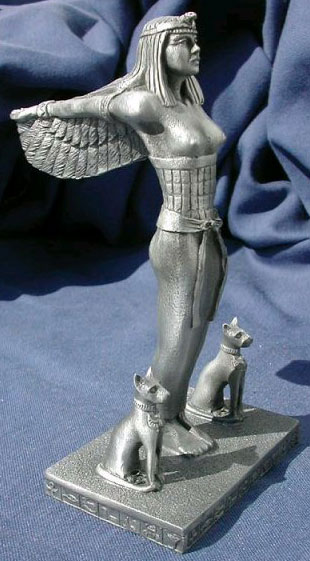
http://www.arwen.no/bilder/egypt/isis.jpg
The Woman’s Encyclopedia of Myths and Secrets, Barbara G. Walker, 1983, p. 45, “Aphrodite”:

Compared to the Virgin Mary:
Handbook to Life in Ancient Rome, Adkins, 1994, p. 290, “Isis”:
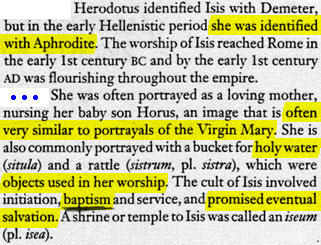
Divine Mirrors: The Virgin Mary in the Visual Arts, Katz, Oxford, 2001, p. 25, “Mary and the Ancient Goddesses”:
P. 134:
P. 230:
Gods and Myths of the Romans, Mary Barnett, 1996, p. 106, “Rome and Christianity”:
The Crucible of Christianity, Toynbee, 1969, pp. 236-237, illustration 1, “Paganism’s Death Struggle: Religions in Competition with Christianity”:
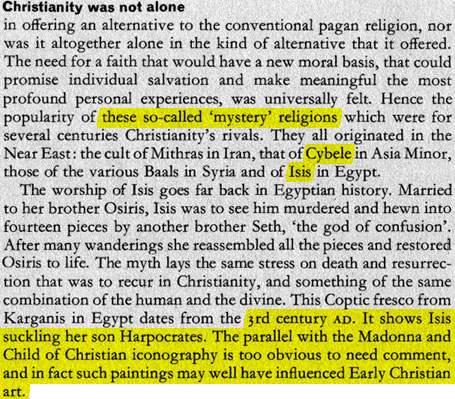
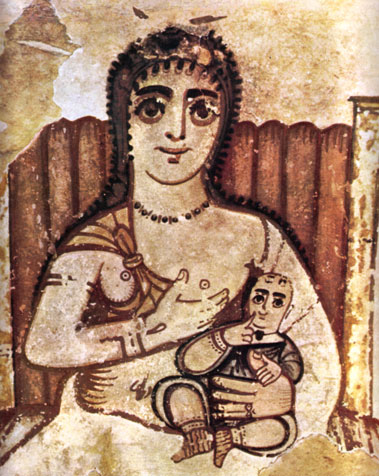
Imperial Rome and Christian Triumph, Elsner, 1998, p. 220:
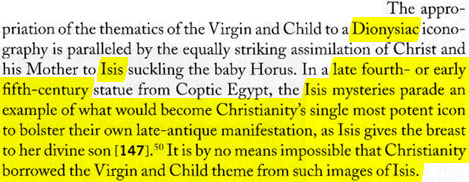
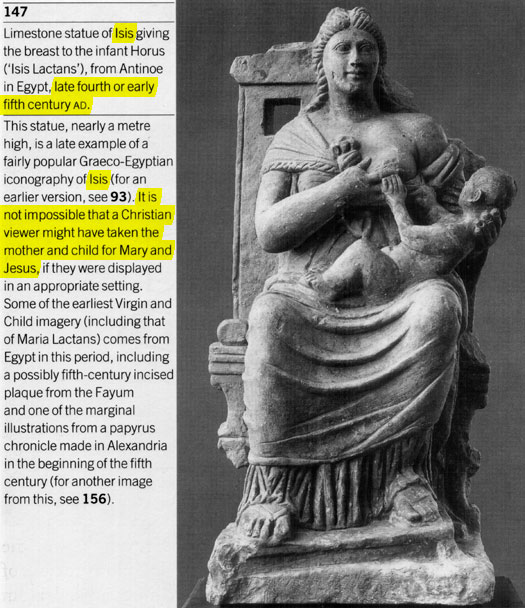
P. 221, illustration 147:
Early Christian Art: AD 200-395: From the Rise of Christianity to the Death of Theodosius, André Grabar, 1968, p. 44, “Forms and Aesthetic”:

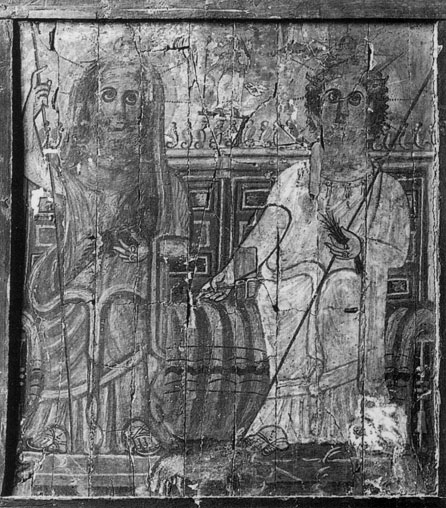
Byzantium: From Antiquity to the Renaissance, Mathews, 1998, p. 46, figure 29, “Suchos and Isis, c. 200”:
Isis Love is Agape (Christian) Love:
The New International Dictionary of New Testament Theology, Brown, Zondervan Publishing, 1976, vol. 2, p. 539, “Love | αγαπάω”:

http://www.geocities.com/Athens/Thebes/4610/lifelines/love3.html, The Love of God: From Life Lines, a monthly publication of Victory Christian Center. March/April, 1997:
The fourth main Greek word for love, agape, is the one predominantly used for love in the NT. TNIDNTT says:
The verb agapao appears frequently from Homer onwards in Gk. literature, but the noun agape is only a late Gk. construction. Only one reference has been found outside the Bible, where the goddess Isis is given the title agape....agapao in Gk. is often quite colourless as a word, appearing frequently as an alternative to, or in synonym with, erao and phileo, meaning to be fond of, treat respectfully, be pleased with, welcome....In the NT, however, agapao and the noun agape have taken on a particular significance in that they are used to speak of the love of God or the way of life based on it. (TNIDNTT, op.cit., pp.538,539)
http://oncampus.richmond.edu/~jbaker/symposium.html, Thoughts on Plato's' Symposium and the lectures from 1/7-1/15:
Can you describe the difference between these two types of love?
|
GOD OF LOVE |
CARITAS (Charity)
|
http://www.amesefc.org/sermons/sr021300.html, "Let’s talk about Love, Life, and Marriage":
The Greek dictionary stated, "The verb "erao" and the noun "eros" denote the love between man and woman which embraces longing, craving, and desire. Sensual ecstasy leaves moderation and proportion far behind…
From this word we get our term "erotic," meaning "devoted to arousing sexual love."
http://prairieviewchristian.org/Acrobat%20files/Agape.pdf, Agape:
14. There is one reference of agape outside the Bible where the goddess Isis is given the title agape (Oxyrhynchus Papyri, 1380, 109; 2nd century A.D.)